
Marine — History & Facts
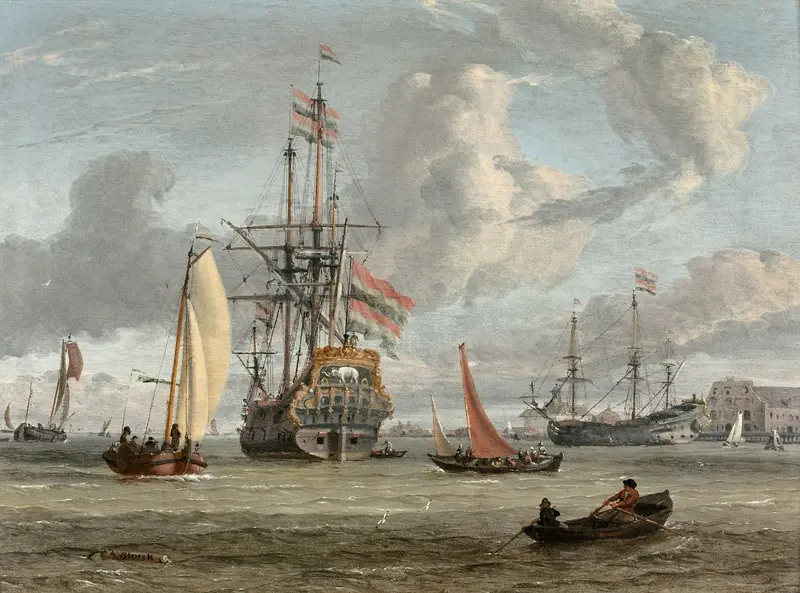
A restless energy animates the waters here: sails billow, flags snap, and the churning waves seem to pull the viewer directly into the heart of a bustling harbor. The artist, Abraham Storck, orchestrates a vivid scene where every vessel claims its own space and story. The eye is drawn first to the sweeping diagonal of the nearest boat’s sail, its dark silhouette cutting sharply against the sky.
Figures crowd the rowboat in the foreground, their gestures suggesting urgent purpose, while the proud ships behind them—rigging taut, decks busy—signal the ceaseless activity of maritime life. Storck’s handling of cloud and water, the interplay of shadow and reflected light, gives the scene a sense of movement and anticipation, as if the wind itself has just shifted. This is the world of late seventeenth-century Dutch marine painting, a genre that flourished in a nation whose fortunes were tied to the sea. Created in 1688, Marine belongs to an era when such works were prized by merchants and shipowners eager to commemorate their ventures or decorate their homes with reminders of the bustling ports that powered their wealth.
The painting now resides in the collection of the Bayerische Staatsgemäldesammlungen, a testament to the enduring fascination with the maritime past. History has kept few traces of the individual stories behind each ship and sailor here, but Storck’s composition invites us to linger, piecing together the rhythms and ambitions of a harbor at the height of its power.
More Artworks by Abraham Storck

The Muscovite legation visiting Amsterdam, 29 August 1697
Abraham Storck
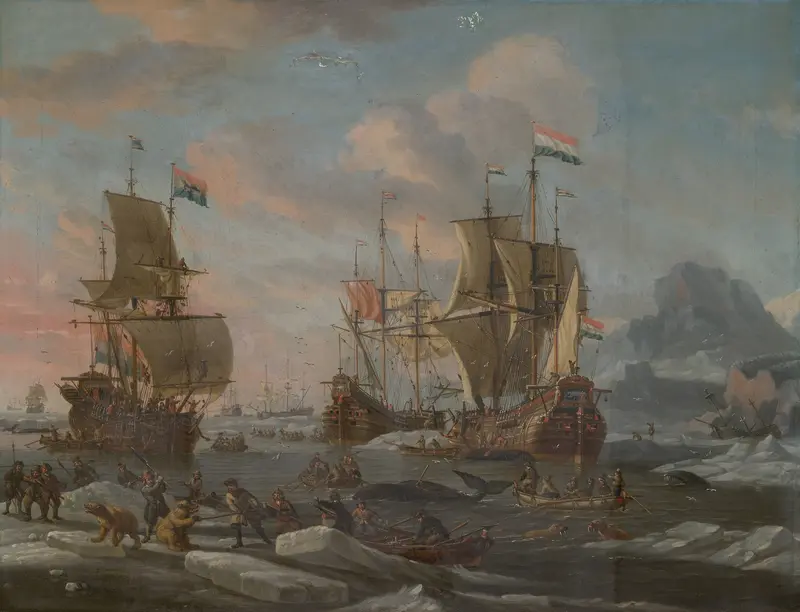
The Dutch Whaling Fleet
Abraham Storck
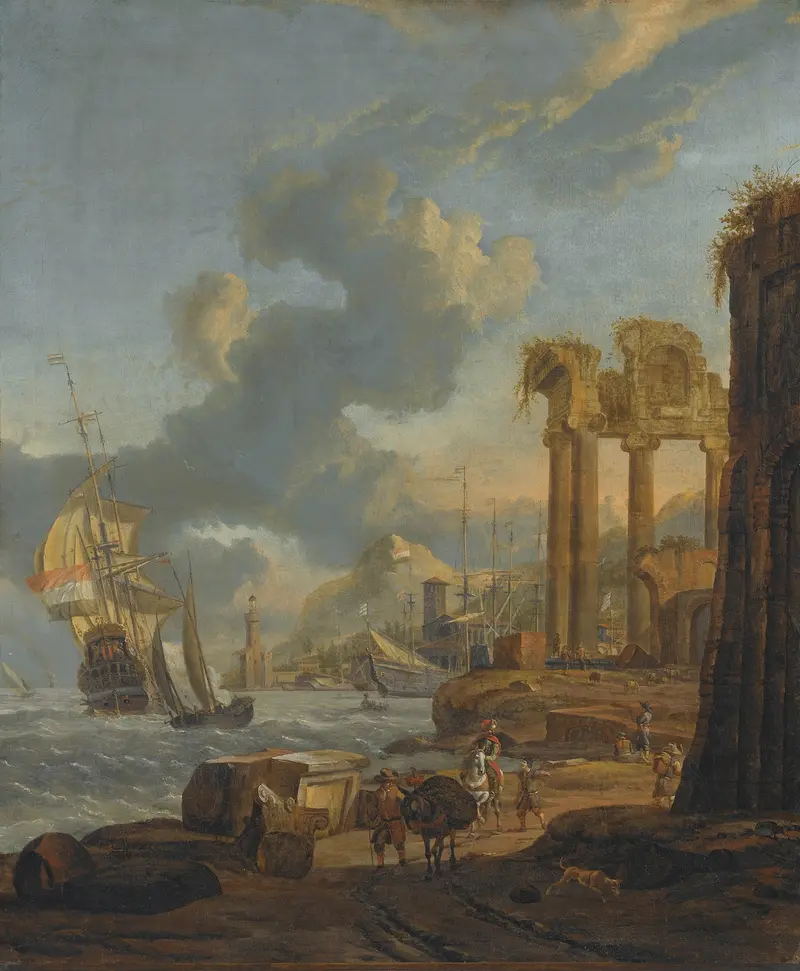
A Mediterranean Harbour Scene With Travellers On The Shore, A Dutch Man-Of-War On The Left
Abraham Storck
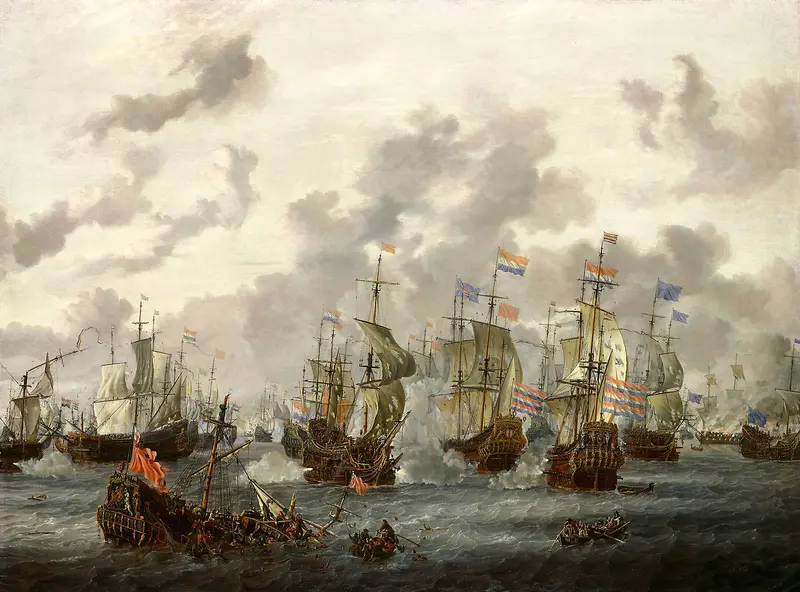
The Four Days’ Battle
Abraham Storck
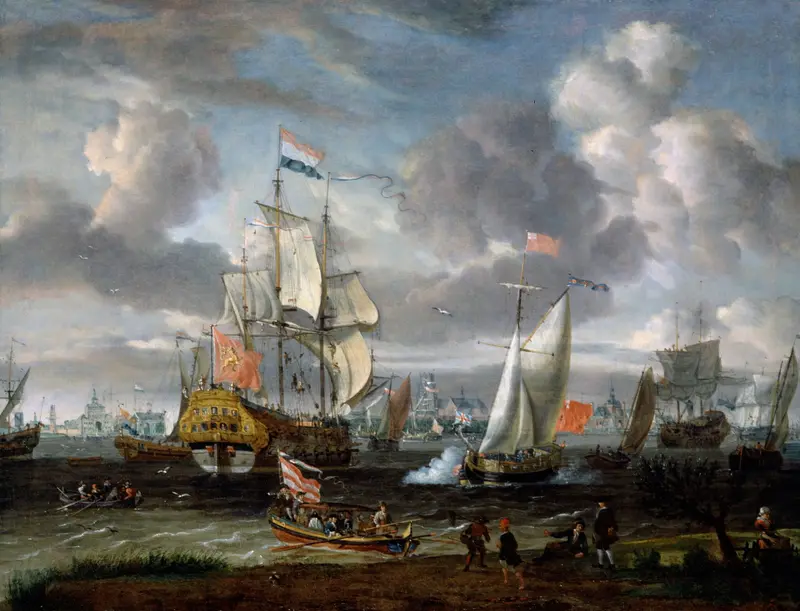
An English Yacht saluting a Dutch Man-of-War in the port of Rotterdam
Abraham Storck
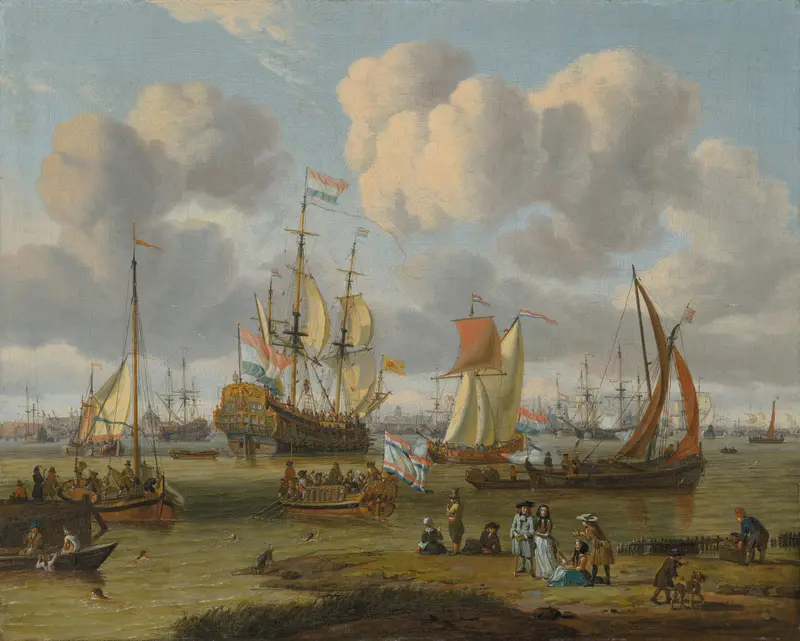
Shipping off Amsterdam with figures on a quay
Abraham Storck
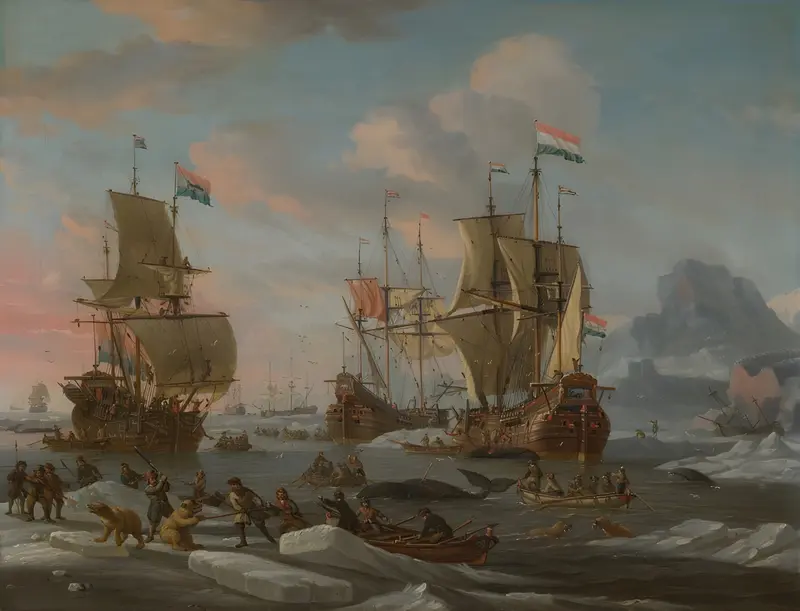
The Dutch Whaling Fleet
Abraham Storck
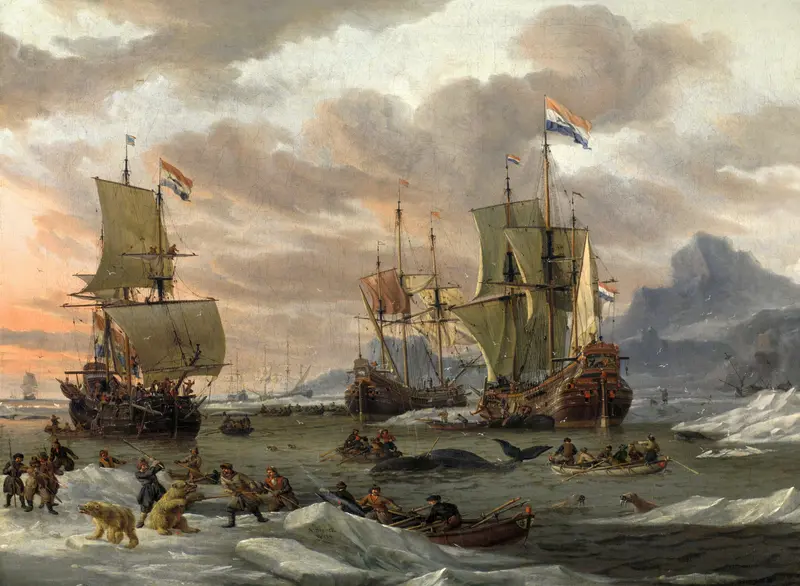
Whaling Grounds in the Arctic Ocean
Abraham Storck
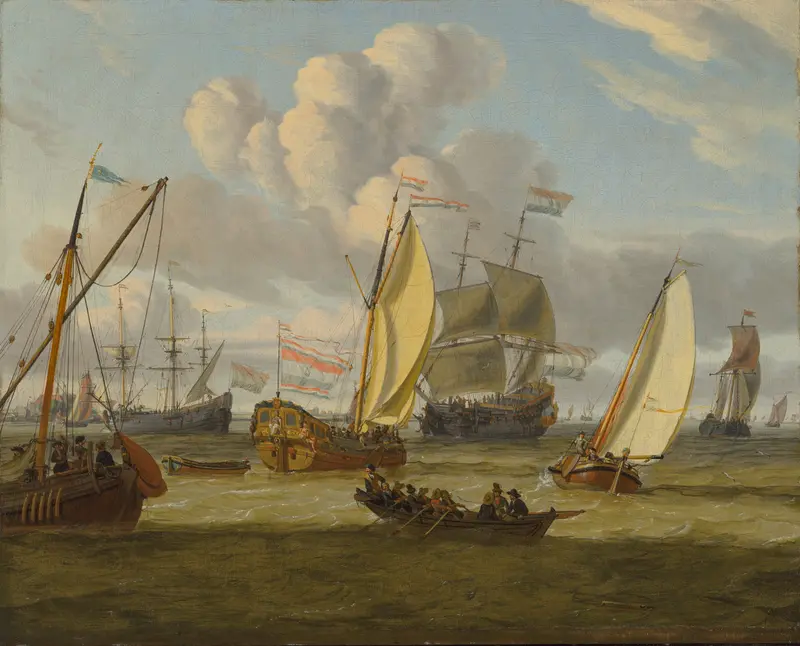
Shipping in an estuary
Abraham Storck
Grand navire de la couronne du Danemark près d’un littoral
Abraham Storck





