
Market Day, Roseau, Dominica — History & Facts
A swirl of bright white and striped cloth draws the eye first, as two elegantly dressed figures stride through the heart of a bustling open-air market. Every gesture in this scene seems to signal negotiation, pride, and the everyday theatre of commerce: a seated woman leans forward, arm extended, as if weighing the value of the goods before her; a vendor lifts a bolt of fabric, its folds catching the Caribbean light. The palette is warm and sunlit, with ochres and soft pinks, while the careful arrangement of figures—some standing, some seated, some intent on their own business—suggests a world where social boundaries and personal ambitions intersect in public view.
In the lower right, a flower seller’s basket spills color onto the earth, a quiet counterpoint to the central drama. Created around 1780, Market Day, Roseau, Dominica belongs to a genre that flourished in the colonial Caribbean, where artists like Agostino Brunias recorded the daily life of creole societies for European patrons hungry for images of distant colonies. Such paintings often served to both document and idealize the complex social fabric of plantation economies, where free and enslaved people, merchants, and landowners mingled in spaces like this. The work’s presence today in a digital collection—its source listed only as awFc53Ft1CdsQw at Google Cultural Institute—reminds us how history has kept few traces of the individual stories behind these scenes.
Yet the painting’s energy and detail invite the viewer to linger, searching each face and gesture for the rhythms of a world in flux.
More Artworks by Agostino Brunias
Indigenous Kalinago of St. Vincent [Aboriginal Caraibs of St. Vincents]
Agostino Brunias
View on the River Roseau, Dominica
Agostino Brunias
Francophone Women of Color and a Young Attendant, Dominica [French Mulatresses of Dominica in their Proper Dress]
Agostino Brunias
View on the River Roseau, Dominica
Agostino Brunias
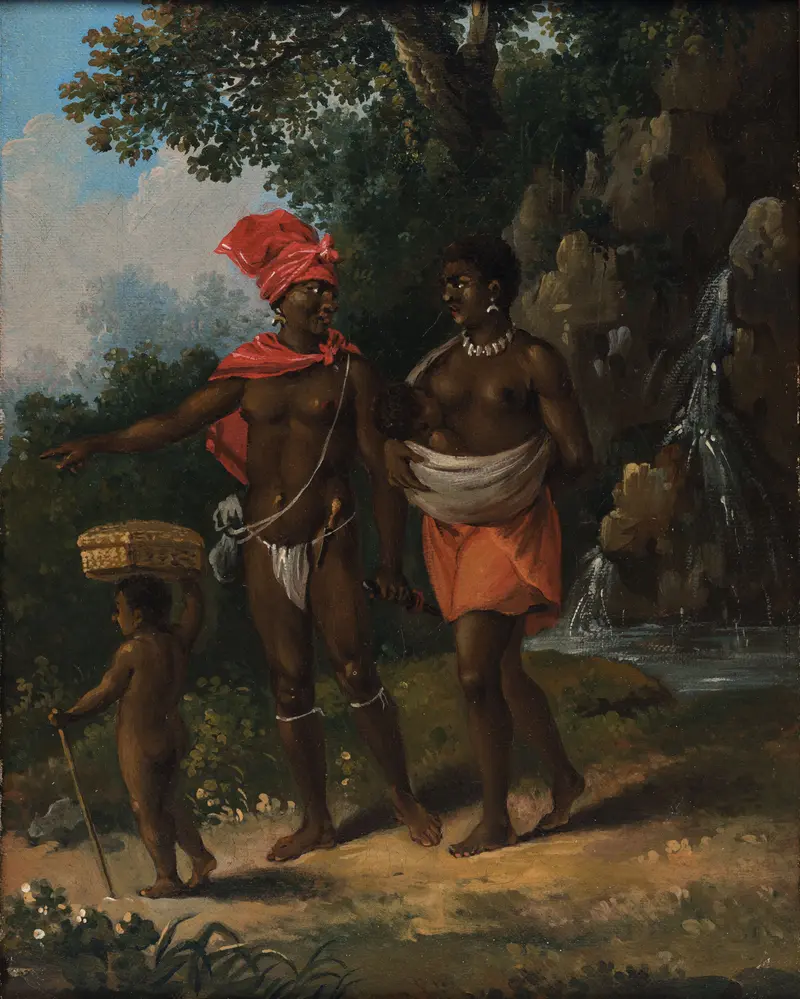
Garifuna Peoples of St. Vincent [Caraibs of St. Vincents]
Agostino Brunias
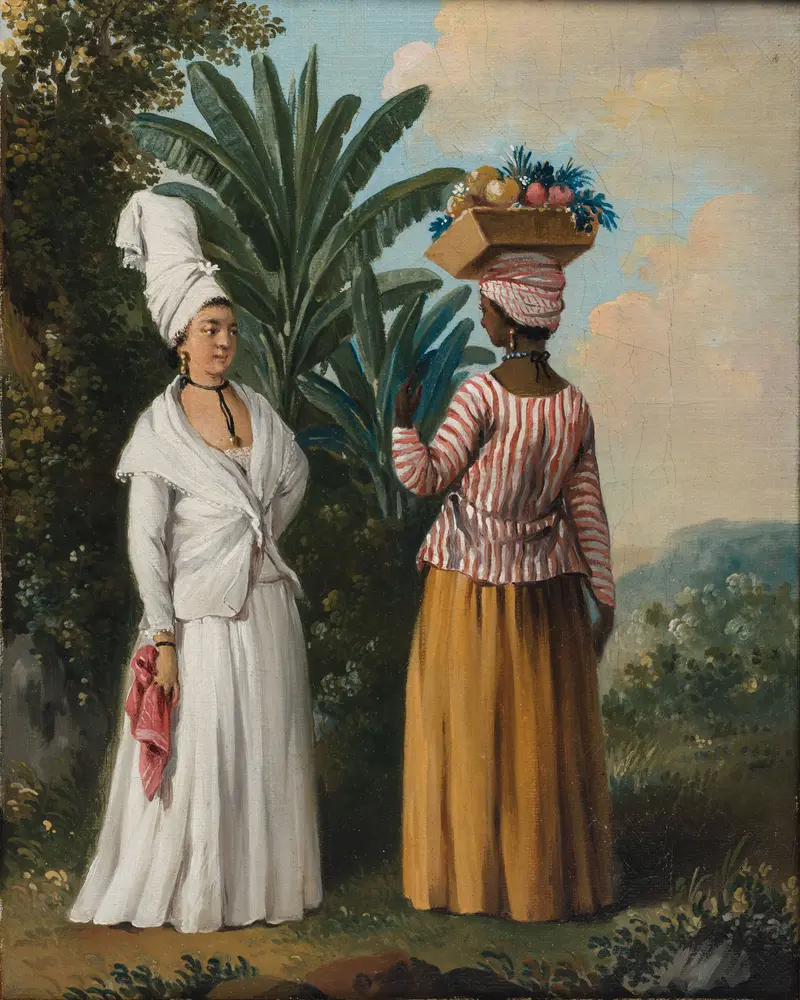
Two Women of Color, Dominica [French Mulatress of Dominica and a Negro Woman in their Proper Dress]
Agostino Brunias

Purchasing Fruit [A French Mulatress Purchasing Fruit from a Negro Wench]
Agostino Brunias

Women of Color Bathing and a Voyeur [Mulatresses and Negro Woman Bathing]
Agostino Brunias
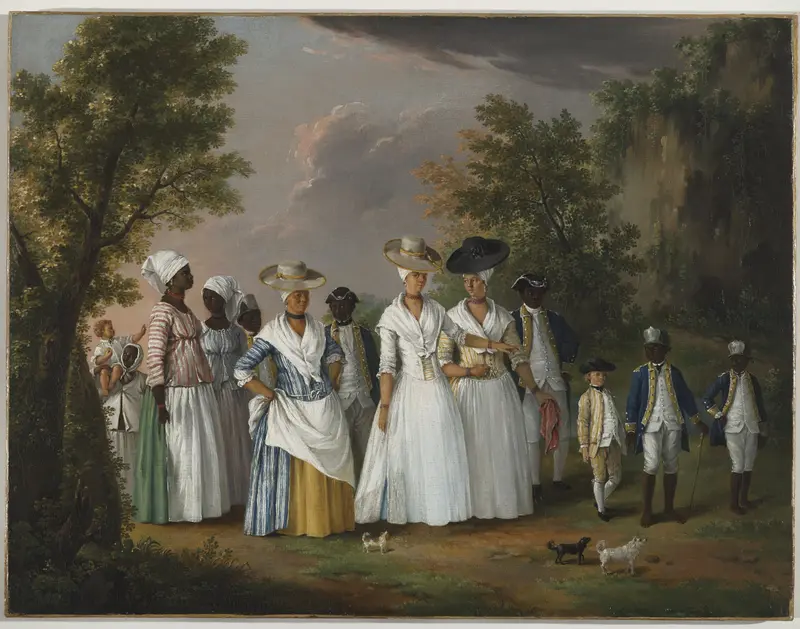
Free Women of Color with their Children and Servants in a Landscape
Agostino Brunias
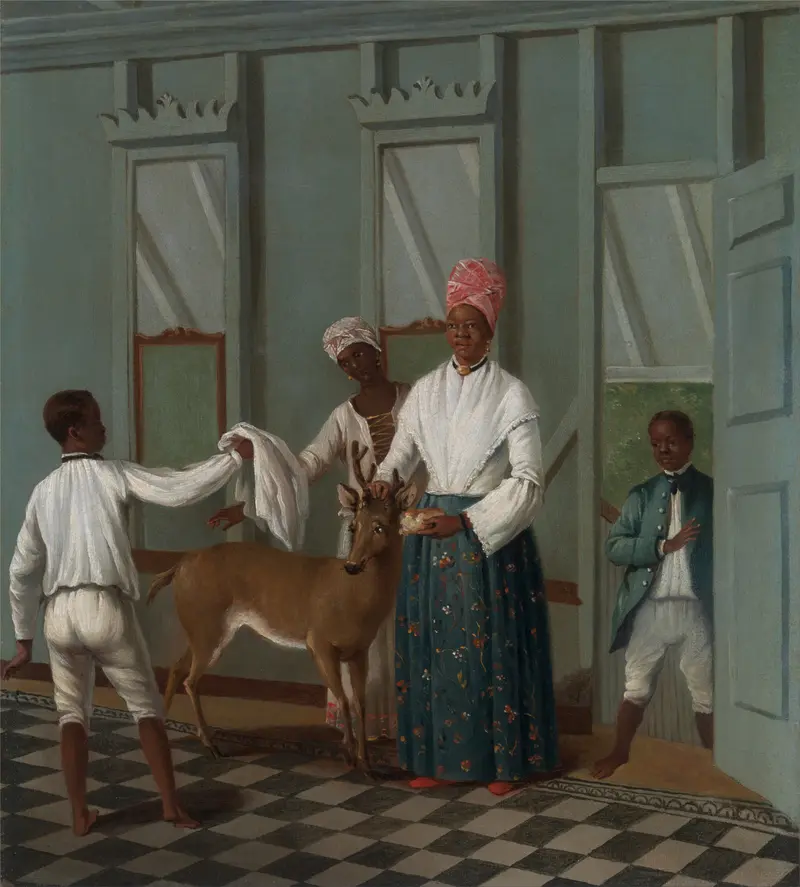
Servants Washing a Deer
Agostino Brunias
More Genre Scene Art

Banquet of the Officers of the St George Civic Guard
Frans Hals

Rembrandt and Saskia in the Scene of the Prodigal Son
Rembrandt van Rijn

Bal du moulin de la Galette
Pierre-Auguste Renoir

Quadrille at the Moulin Rouge
Henri de Toulouse-Lautrec

A Burial at Ornans
Gustave Courbet

When Will You Marry?
Paul Gauguin