
Marskramer en de Dood — History & Facts
What secret hides in the quiet of the canvas? In Marskramer en de Dood, the tension between life and death vibrates in a space that feels both intimate and eerily profound. Look to the left at the solitary figure of the merchant, his brow furrowed in contemplation. The rich colors of his clothing—a deep crimson complemented by the muted tones of his surroundings—invite a closer inspection. Notice how the light softly illuminates his features, creating a striking contrast against the dark, foreboding presence of Death looming behind him.
This duality is underscored by Holbein’s meticulous attention to detail, from the textures of fabric to the haunting gaze of the skeletal figure that signifies inevitability. In the juxtaposition of these figures lies the emotional heart of the piece. The merchant, representative of commerce and earthly pursuits, stands at the brink of his mortality, reflecting a universal anxiety about wealth, legacy, and the fleeting nature of life. The skewed perspective draws us into the intimate space between the two, evoking a tension that forces us to confront our own mortality.
Every object in the merchant's grasp—gold coins, luxurious fabrics—becomes a commentary on the futility of material possessions in the face of death. Created in 1538 amidst the Renaissance's burgeoning exploration of humanism and mortality, this work emerged from Holbein's tenure in Basel, a city thriving on trade and intellectual exchange. At a time when Europe was grappling with the Reformation and shifting perspectives on life and death, the artist captured an unsettling yet poignant reminder of the human condition, one that resonates through the ages.
More Artworks by Hans Holbein (II)
Browse all →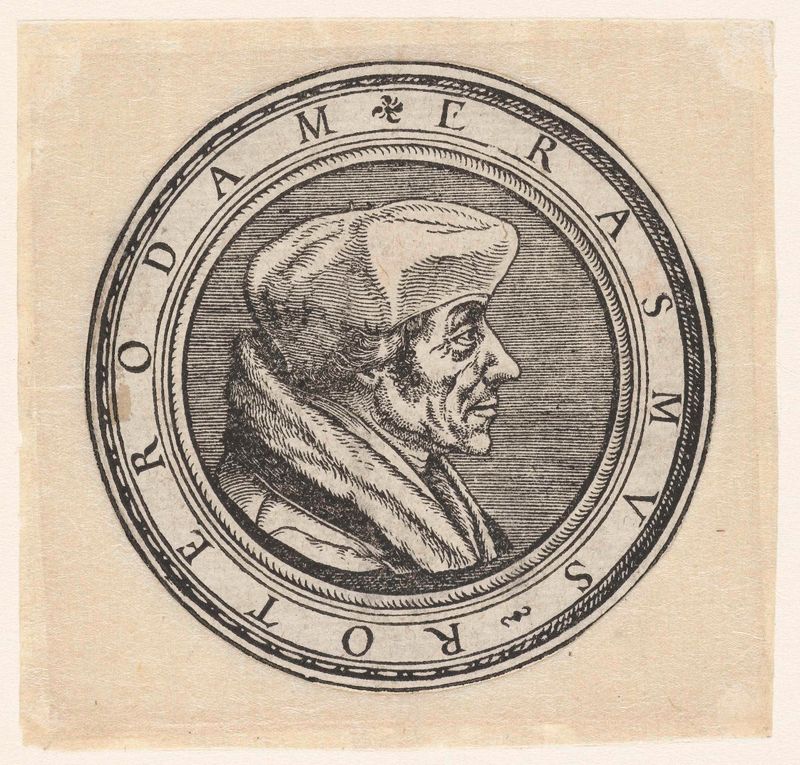
Portret van Erasmus
Hans Holbein (II)
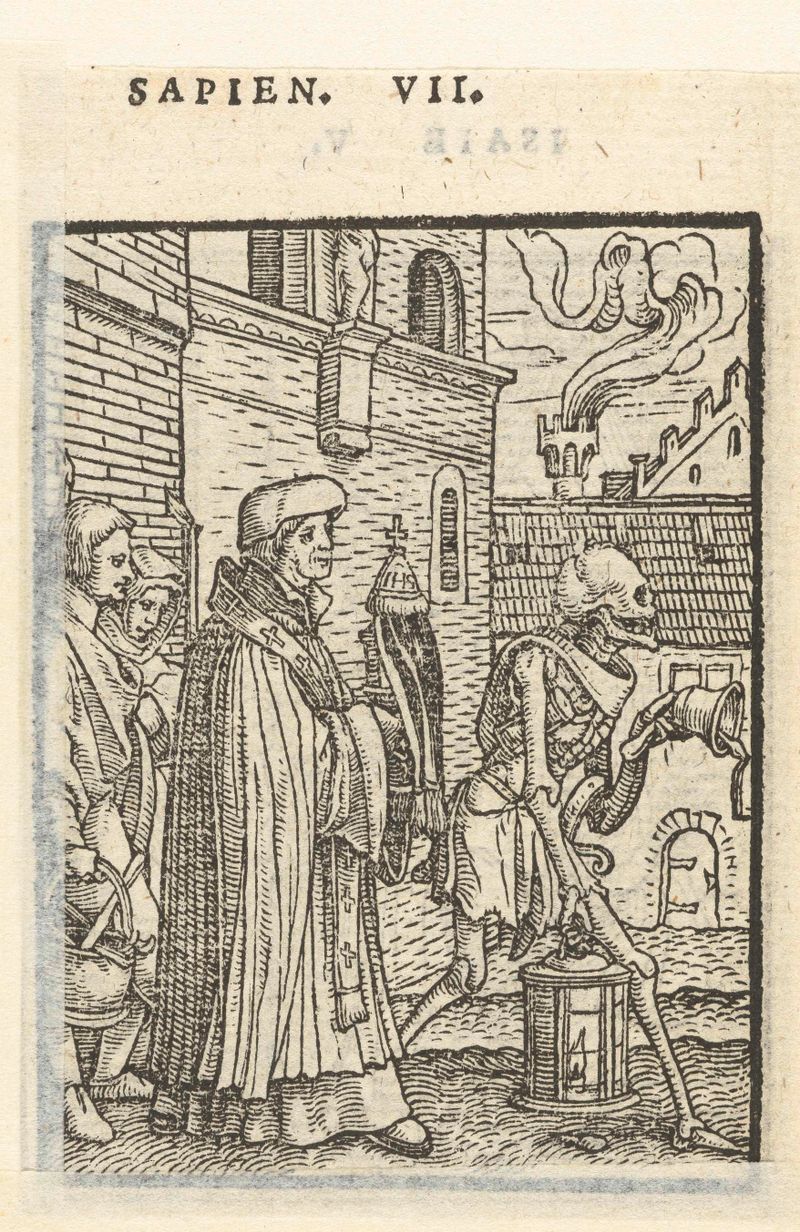
Priester en de Dood
Hans Holbein (II)
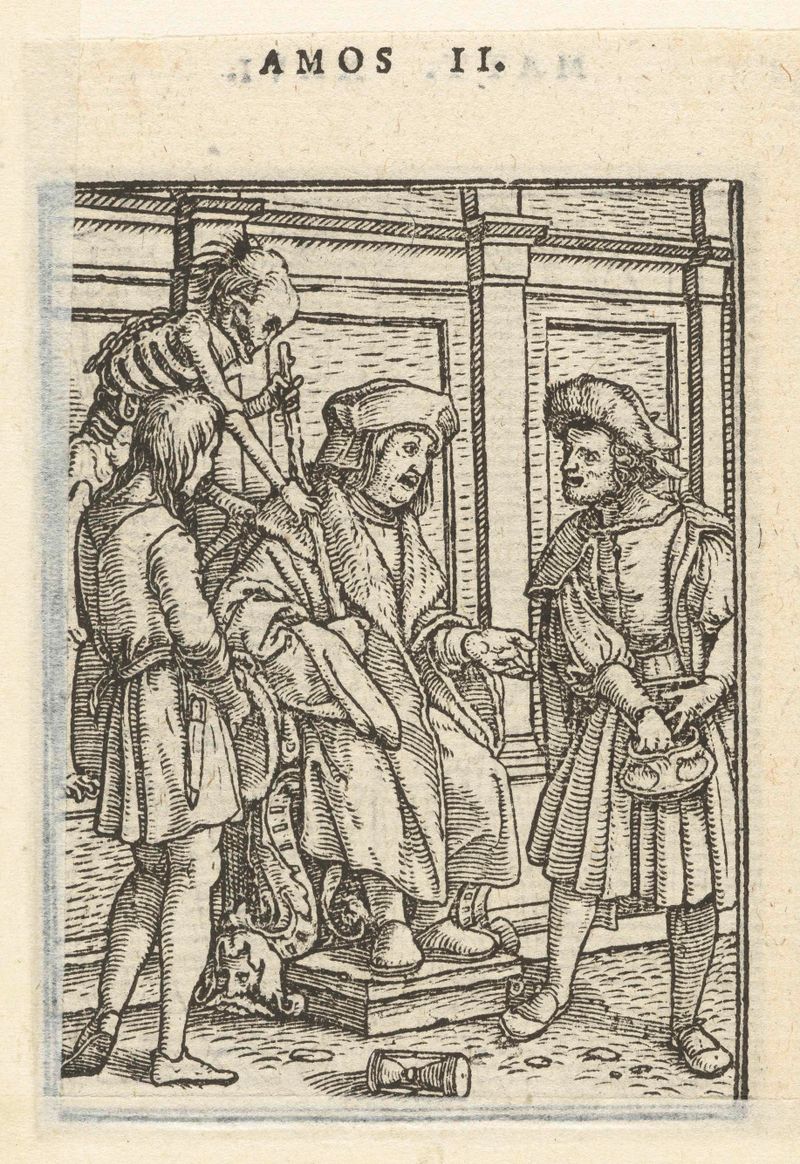
Rechter en de Dood
Hans Holbein (II)
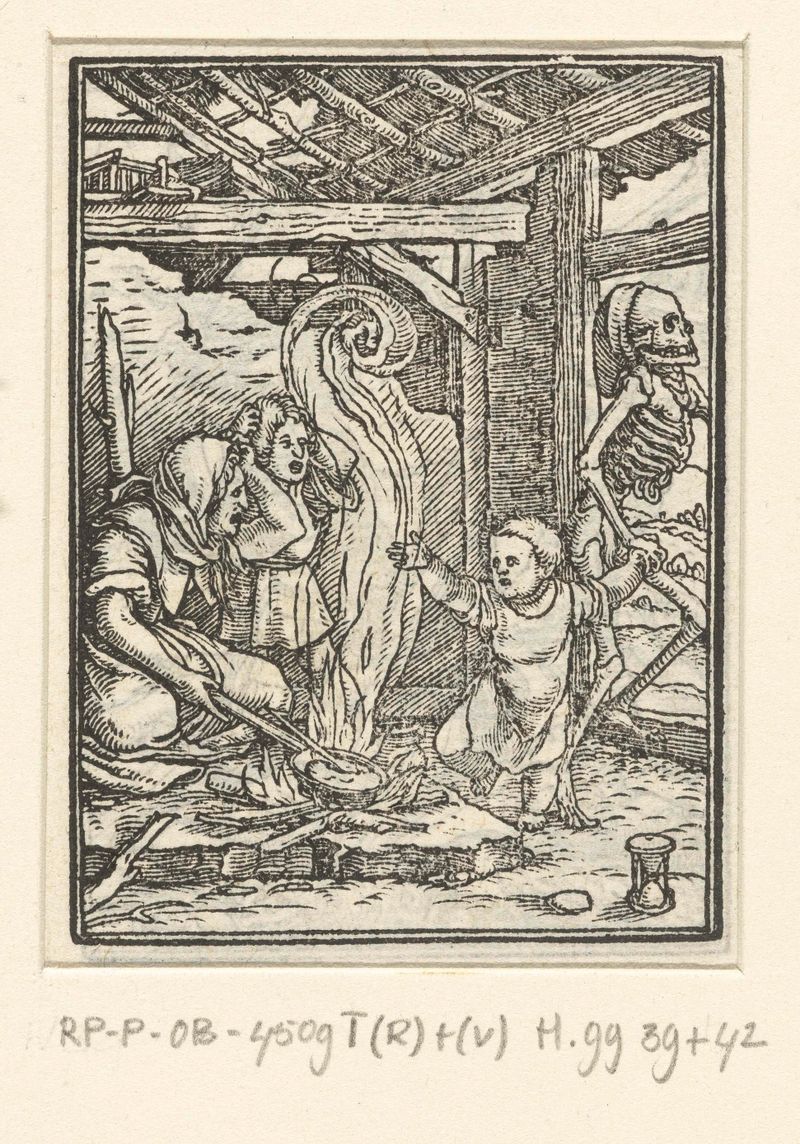
Kind en de Dood
Hans Holbein (II)
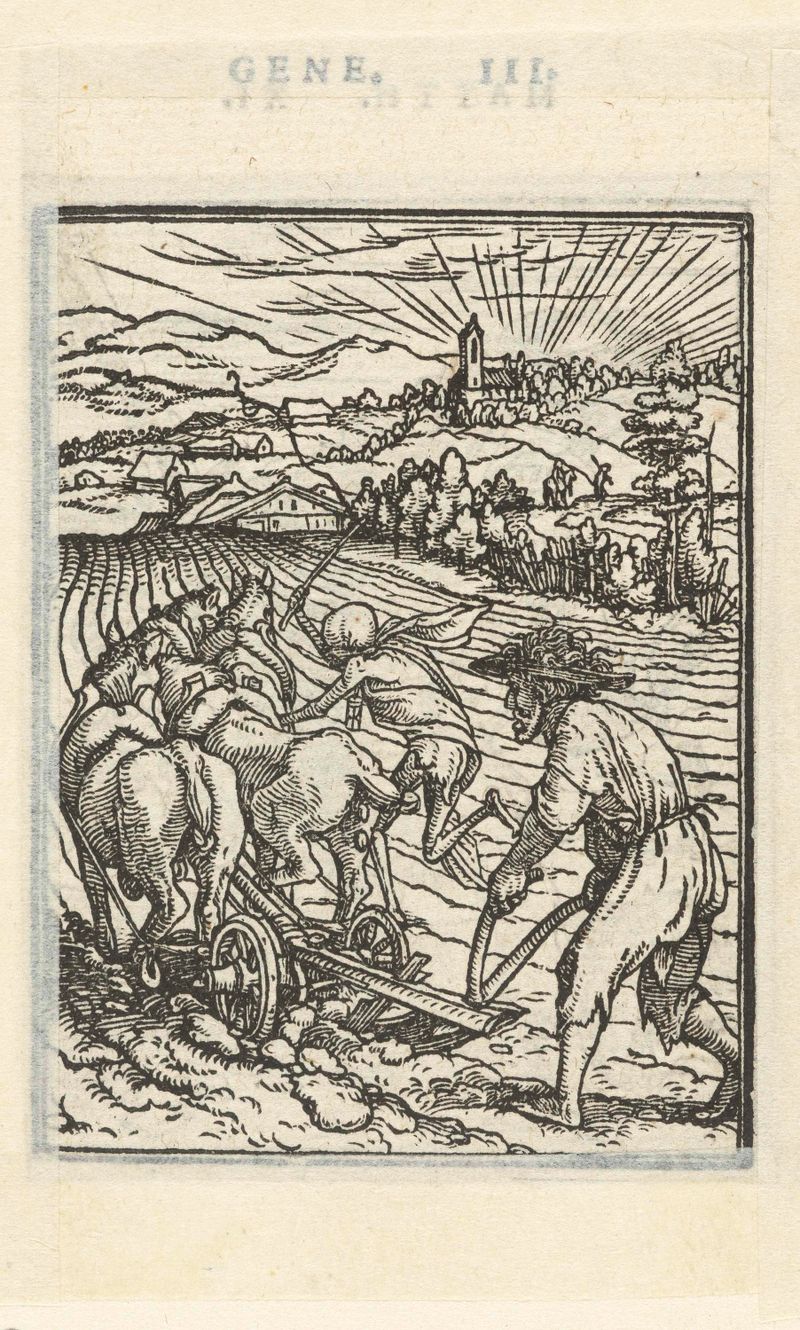
Boer en de Dood
Hans Holbein (II)
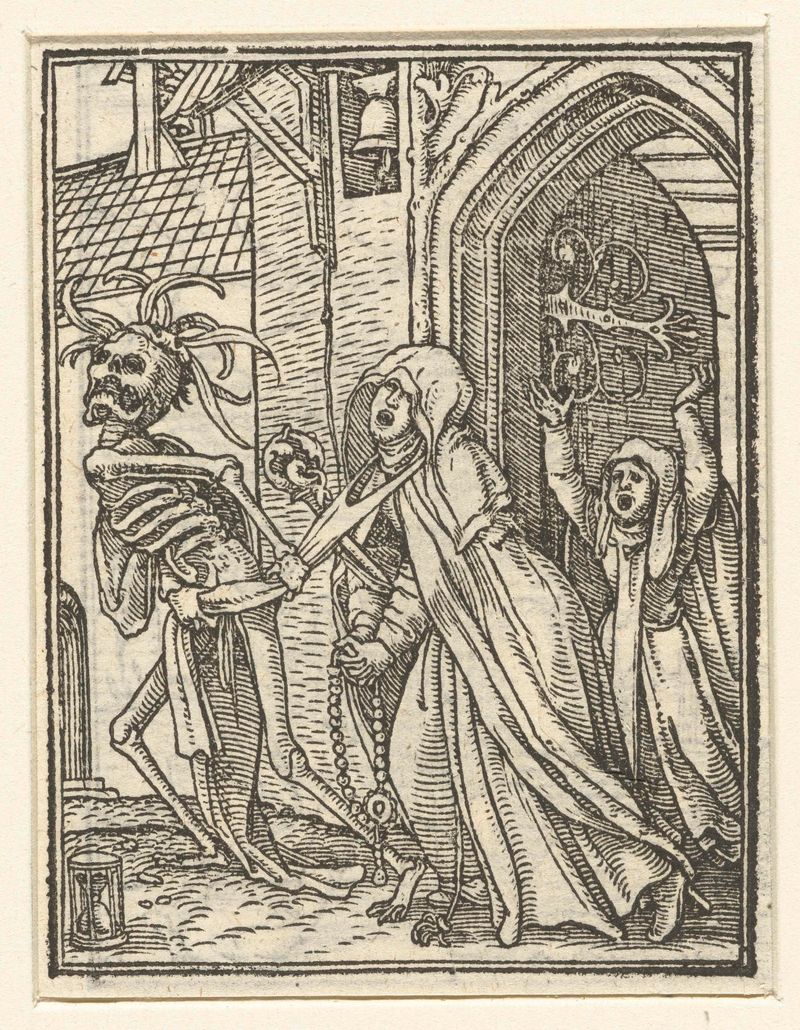
Abdis en de Dood
Hans Holbein (II)
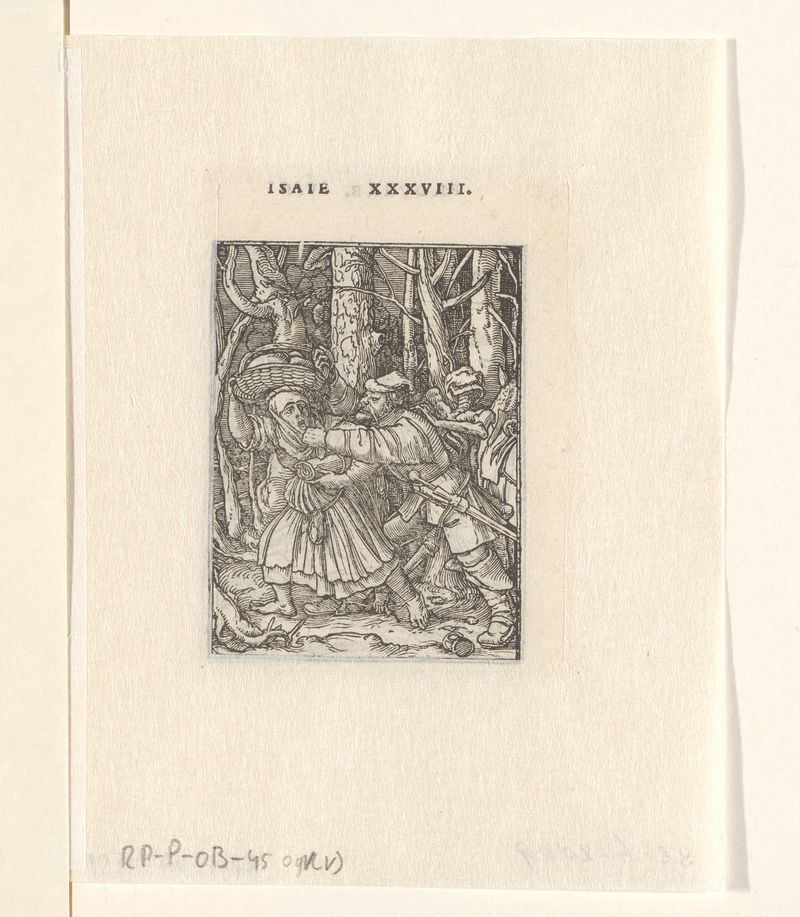
Dief en de Dood
Hans Holbein (II)
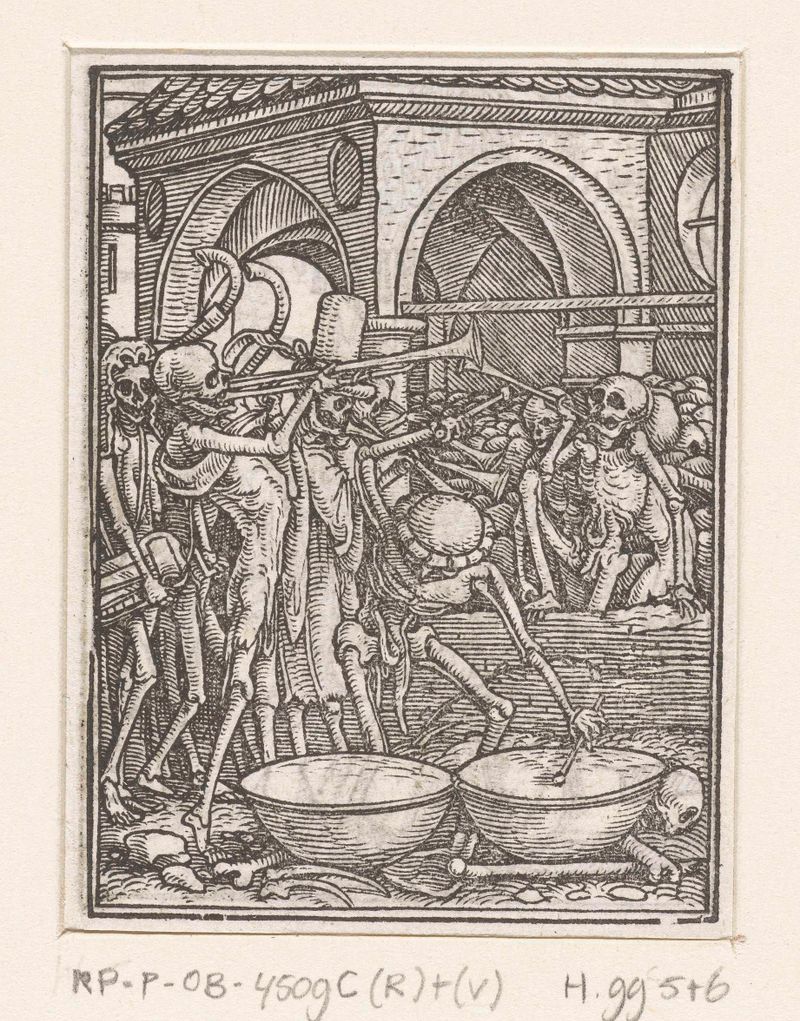
Skeletons Making Music from Dance of the Dead
Hans Holbein (II)
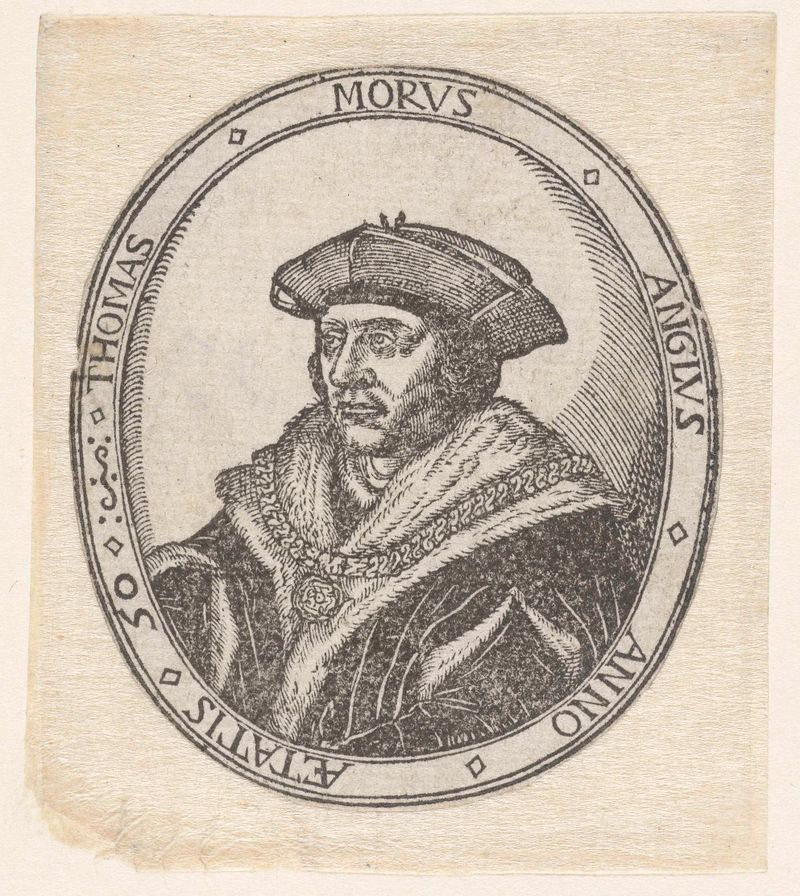
Portret van Thomas More
Hans Holbein (II)
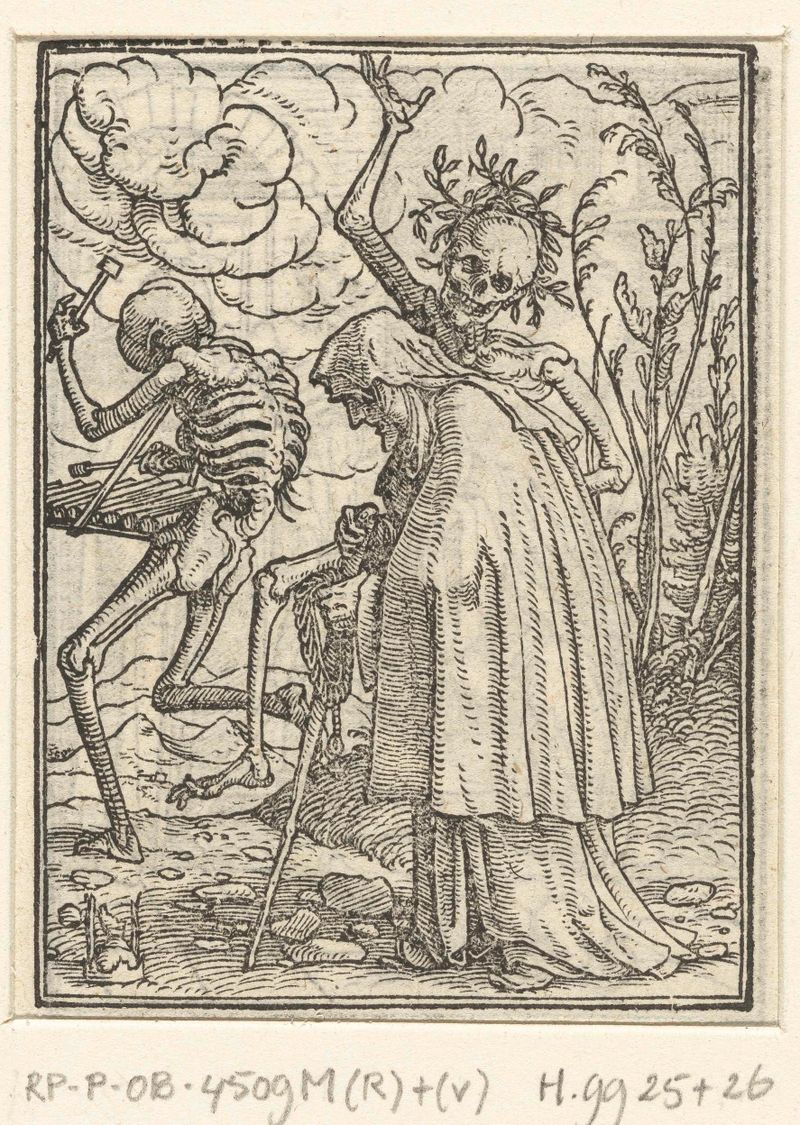
Oude vrouw en de Dood
Hans Holbein (II)





