
Mary with Holy Spirit — History & Facts
No document survives to confirm who first gazed upon Mary with Holy Spirit by Jan van Eyck in 1439, but its very existence has sparked continued debate: some scholars wonder if this is truly the last work completed by van Eyck before his death. The year itself is significant—1439 marks the end of a career that helped define the Northern Renaissance, and this painting’s uncertain medium only deepens its mystery. Unlike other Marian images from the period, no signed contract or commission record has been found, leaving its original patron and intended setting unknown.
The painting’s attribution to van Eyck rests on stylistic grounds, with its minute detail and luminous color echoing his other known works. The scene captures the moment of the Annunciation, when the Virgin Mary receives the Holy Spirit. Mary, seated or kneeling in a quiet interior, is visited by a radiant dove descending from above—an ancient symbol of the Holy Spirit. Her hands are crossed in humility, her gaze lowered, while a shaft of light falls directly upon her, signifying divine favor and the Incarnation.
The objects around her—a book of hours, a vase of lilies—signal her purity and devotion. Compared to the more theatrical Annunciations of Fra Angelico, van Eyck’s approach is intimate and still, focusing on the psychological weight of the moment rather than outward drama. The later history of Mary with Holy Spirit is as enigmatic as its origins. Without firm documentation, it is unclear how the painting traveled through the centuries—whether it adorned a private chapel, entered a princely collection, or survived periods of iconoclasm by luck or design.
Today, it stands as a testament to van Eyck’s enduring influence and the innovations of the Northern Renaissance, where the sacred was rendered with unprecedented realism. While its medium remains unidentified, the painting’s precision and luminosity continue to invite close study and admiration, securing its place among the most intriguing works attributed to Jan van Eyck.
More Artworks by Jan van Eyck

Adam
Jan van Eyck
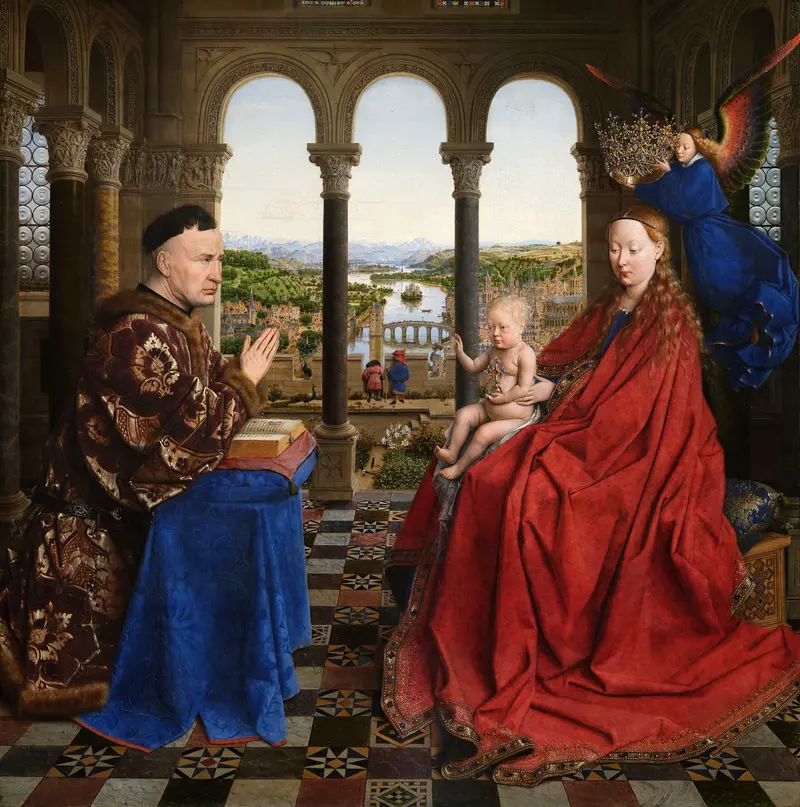
Madonna of Chancellor Rolin
Jan van Eyck
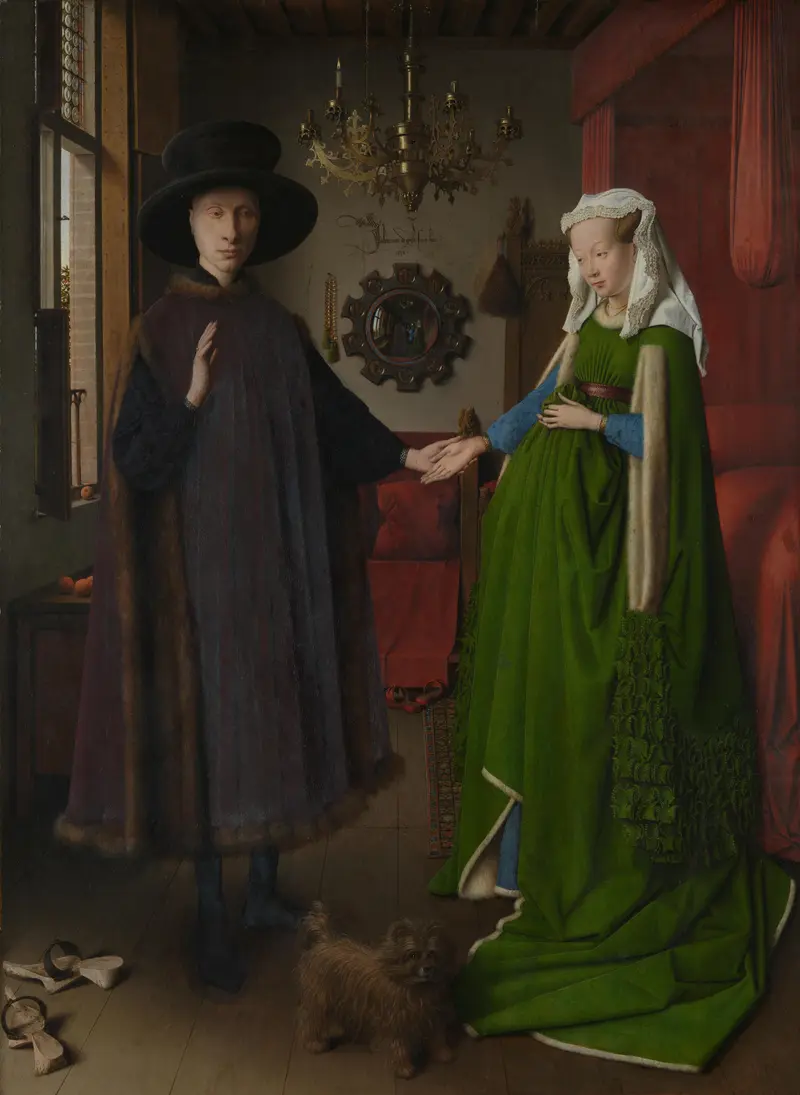
The Arnolfini Portrait
Jan van Eyck
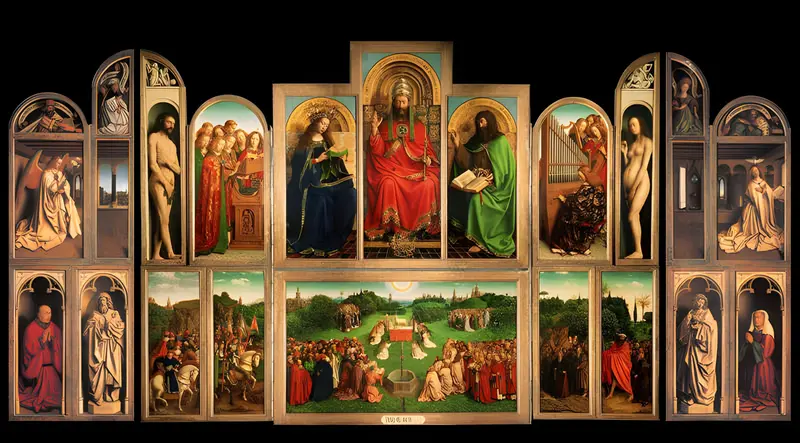
Ghent Altarpiece
Jan van Eyck

Dresden Triptych
Jan van Eyck
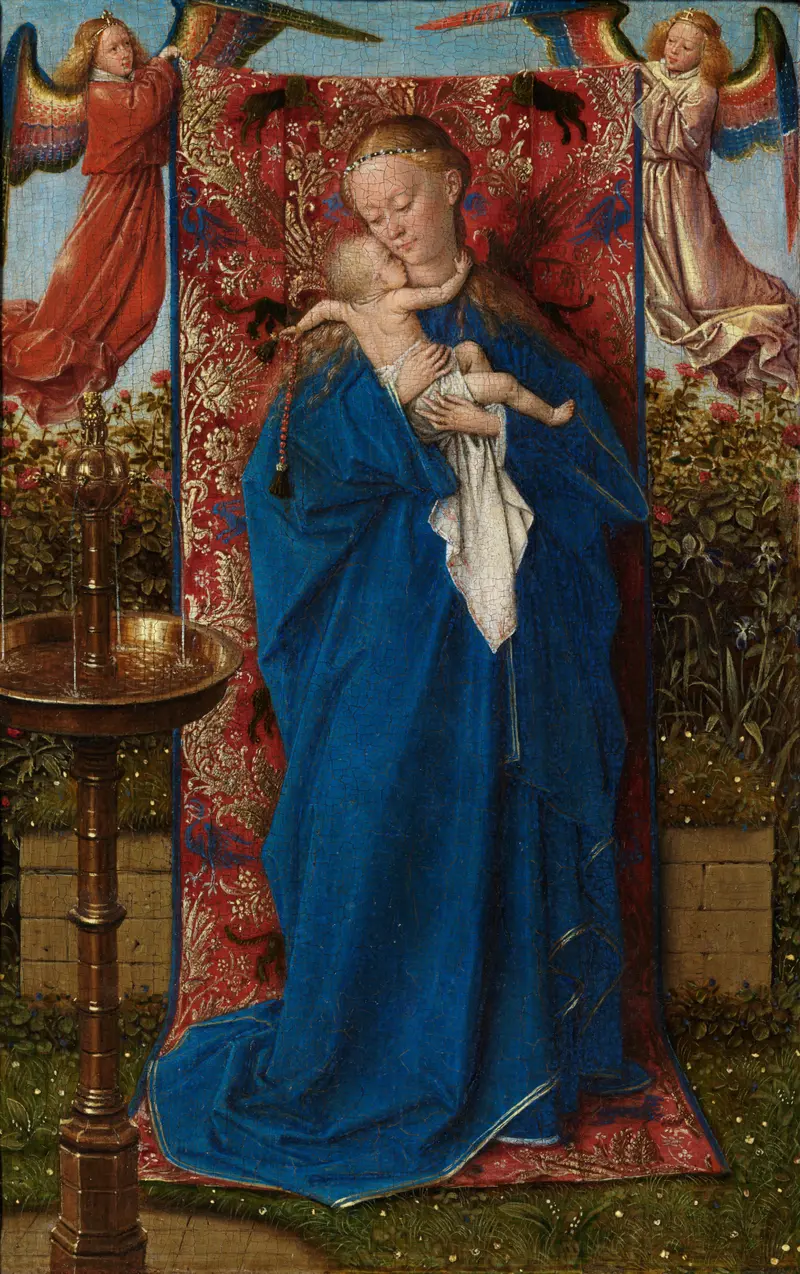
Madonna at the Fountain
Jan van Eyck

Madonna with Canon Joris van der Paele
Jan van Eyck

Prophet Zacharias; Angel of The Annunciation
Jan van Eyck
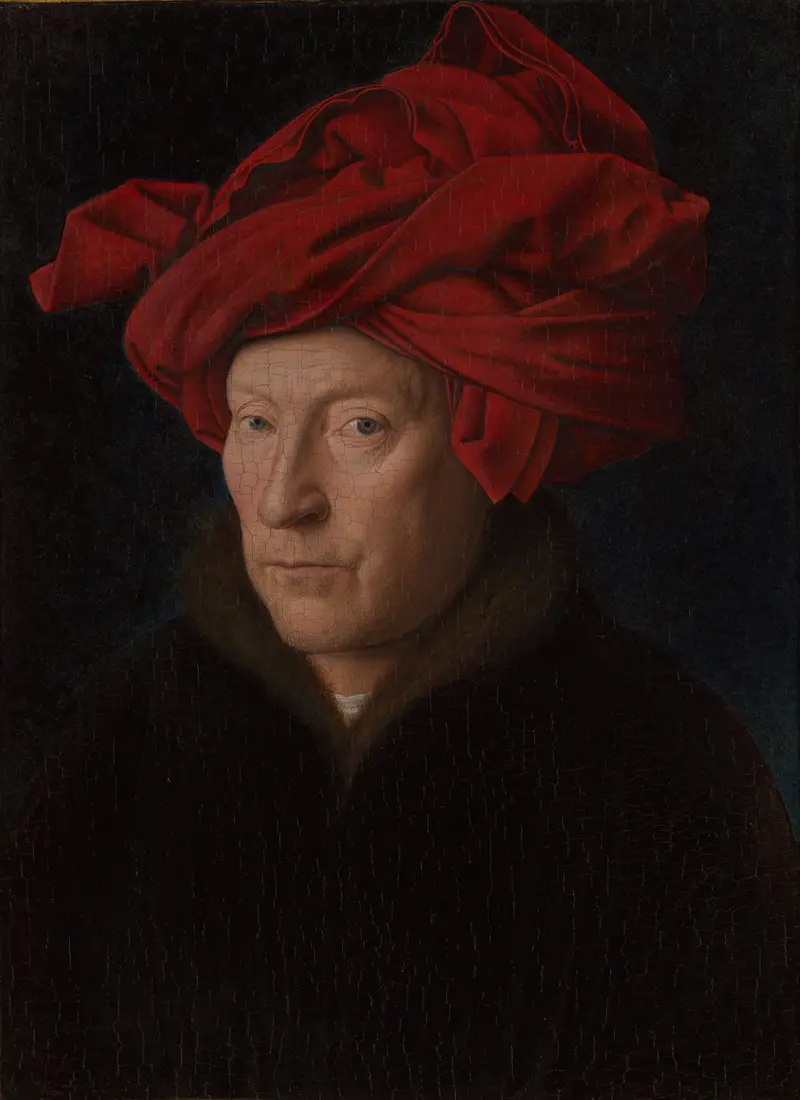
Portrait of a Man (Self Portrait?)
Jan van Eyck
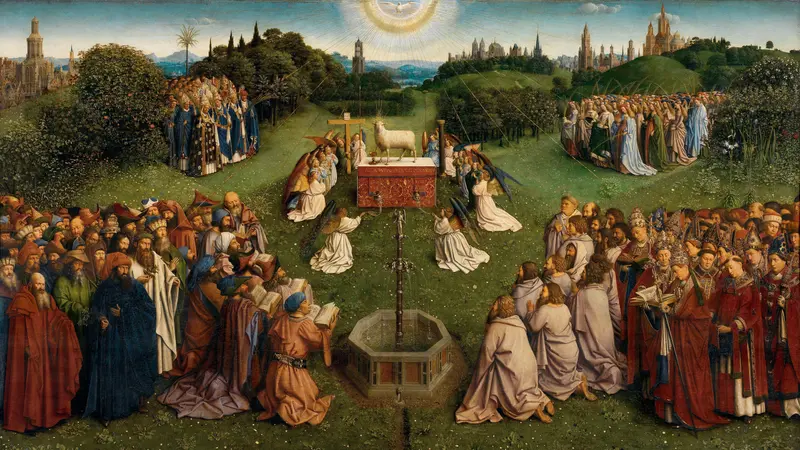
Adoration of the Lamb from the Ghent Altarpiece
Jan van Eyck





