
The Arnolfini Portrait: meaning and symbolism
The Arnolfini Portrait is an oil painting on oak panel by the Netherlandish painter Jan van Eyck (active 1422–1441), one of the supreme figures of the Northern Renaissance. Signed and dated 1434, it shows a richly dressed man and woman in a reception room: probably the Italian merchant Giovanni di Nicolao Arnolfini and his wife. The museum’s full title is Portrait of Giovanni(?) Arnolfini and his Wife; it is also called The Arnolfini Wedding. It belongs to the National Gallery in London.
- What it shows: a man in a broad black straw hat raises his right hand, apparently in greeting, while a woman in a green, fur-trimmed dress lays her hand in his left palm. Around them are a bed hung in red, a brass chandelier, oranges, a small dog and a convex mirror.
- The couple: probably Giovanni di Nicolao Arnolfini, an Italian merchant working in Bruges who would have been in his late thirties in 1434, and his wife, probably his second, whose name is unknown. Van Eyck painted the man again, older, in a portrait now in Berlin.
- Mirror and signature: the mirror reflects two men entering the room, and its frame holds ten tiny scenes of the Passion of Christ. On the wall above it is the inscription “Johannes de eyck fuit hic 1434” (“Jan van Eyck was here. 1434”).
- An arranged room: the room looks real, but there is not enough space for the chandelier, no fireplace, the bed is too short and the mirror seems impossibly large. Every object was chosen to show the couple’s wealth and status.
- How it was painted: infrared images show that the dog, the chandelier, the chair, the beads and the discarded shoes were added at a late stage. Van Eyck worked quickly, also with his fingers: a finger- or thumbprint is visible by the shadow of the dog’s leg.
- Medium, size and history: oil on wood (probably oak), 82.2 × 60 cm. Owned by Margaret of Austria by 1516 and later by the kings of Spain, it was bought by the National Gallery in 1842 for 600 guineas, its first Netherlandish painting.
Sources: National Gallery record (NG186) · National Gallery catalogue entry (Lorne Campbell) · National Gallery press release, “Van Eyck: The Portraits” · Wikidata Q220859
Questions and answers about the painting
What is the meaning of The Arnolfini Portrait?
The painting is a portrait of a wealthy couple, not a wedding scene. The National Gallery identifies them as probably Giovanni di Nicolao Arnolfini, an Italian merchant working in Bruges, and his wife, and says that every object in the room was chosen to proclaim their wealth and social status without risking criticism for imitating the aristocracy. For many years the picture was read as a marriage ceremony, most influentially by the art historian Erwin Panofsky in 1934, but the Gallery no longer accepts that reading.
Source: National Gallery record (NG186) · National Gallery catalogue entry (Lorne Campbell)
What do the objects in van Eyck’s painting symbolize?
Above all, the objects signal wealth. According to the National Gallery, oranges were extremely expensive, the large bed was the most costly piece of furniture in the house, and the brass chandelier, carved chair and oriental carpet complete the display. The Gallery’s audio description adds that a dog was a common sign of faithfulness in marriage. Many hidden-symbol readings go back to Panofsky, but the Gallery’s catalogue notes that the chandelier, the oranges, the discarded pattens and the dog were not in van Eyck’s underdrawing and were added later.
Source: National Gallery record (NG186) · National Gallery catalogue entry (Lorne Campbell)
What can you see in the mirror in the painting?
The convex mirror on the back wall reflects the room from behind: the backs of the couple and, in the doorway, two men coming in, one in blue and one in red. Its frame holds ten small scenes of the Passion of Christ. Just above it van Eyck wrote “Johannes de eyck fuit hic 1434” (“Jan van Eyck was here. 1434”), and the National Gallery asks whether the two men are van Eyck himself and his servant, arriving on a visit.
Source: National Gallery record (NG186) · National Gallery catalogue entry (Lorne Campbell) · Wikidata Q220859 (inscription)
Is the woman in van Eyck’s painting pregnant?
No. According to the National Gallery she is not pregnant, though she might look it: she is holding up the bulky folds of her long green dress in front of her, as ladies commonly did. The Gallery’s catalogue compares her with the virgin Saint Catherine in van Eyck’s Dresden triptych of 1437, who is posed and dressed in the same way. She was probably Arnolfini’s second wife, and her name is unknown.
Source: National Gallery record (NG186) · National Gallery catalogue entry (Lorne Campbell)
Where is the painting, and how big is it?
The Arnolfini Portrait belongs to the National Gallery in London, which bought it in 1842; its inventory number is NG186. It is painted in oil on an oak panel and measures 82.2 × 60 cm (about 32 × 24 inches). On 5 November 2026 the Gallery’s website listed it as not on display; from 21 November 2026 to 11 April 2027 it is shown in the exhibition “Van Eyck: The Portraits”, for the first time beside van Eyck’s later portrait of the same man, lent from Berlin.
Source: National Gallery record (NG186) · National Gallery: “Van Eyck: The Portraits” exhibition · National Gallery press release, “Van Eyck: The Portraits”
Is the painting in the public domain?
Yes. Jan van Eyck died in 1441, so his paintings are free of copyright everywhere. A faithful photograph of a public-domain painting adds no new copyright in the United States or the European Union, so you can download this image and use it in personal or commercial projects. Public Domain Images for Commercial Use explains how.
Source: Wikidata Q102272 (died 1441) · National Gallery press release, “Van Eyck: The Portraits”
More Artworks by Jan van Eyck

Adam
Jan van Eyck
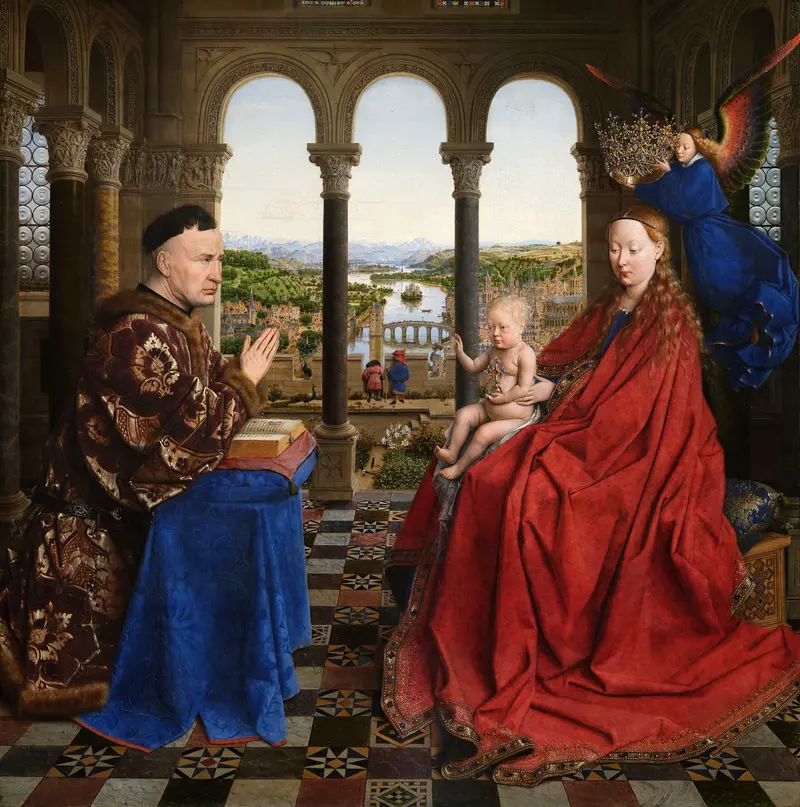
Madonna of Chancellor Rolin
Jan van Eyck
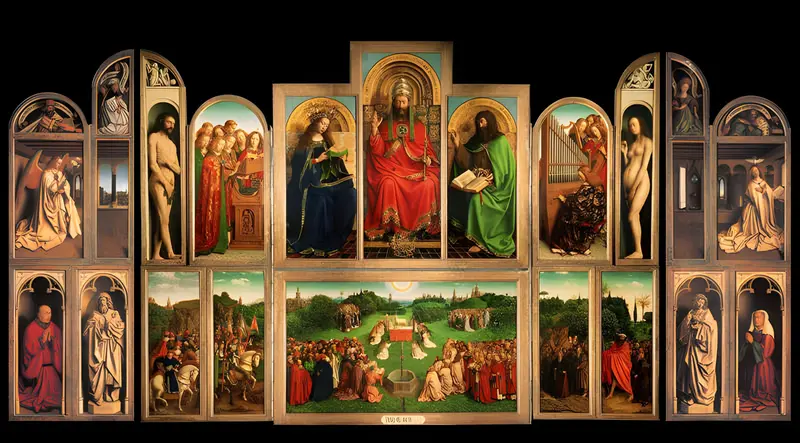
Ghent Altarpiece
Jan van Eyck

Dresden Triptych
Jan van Eyck
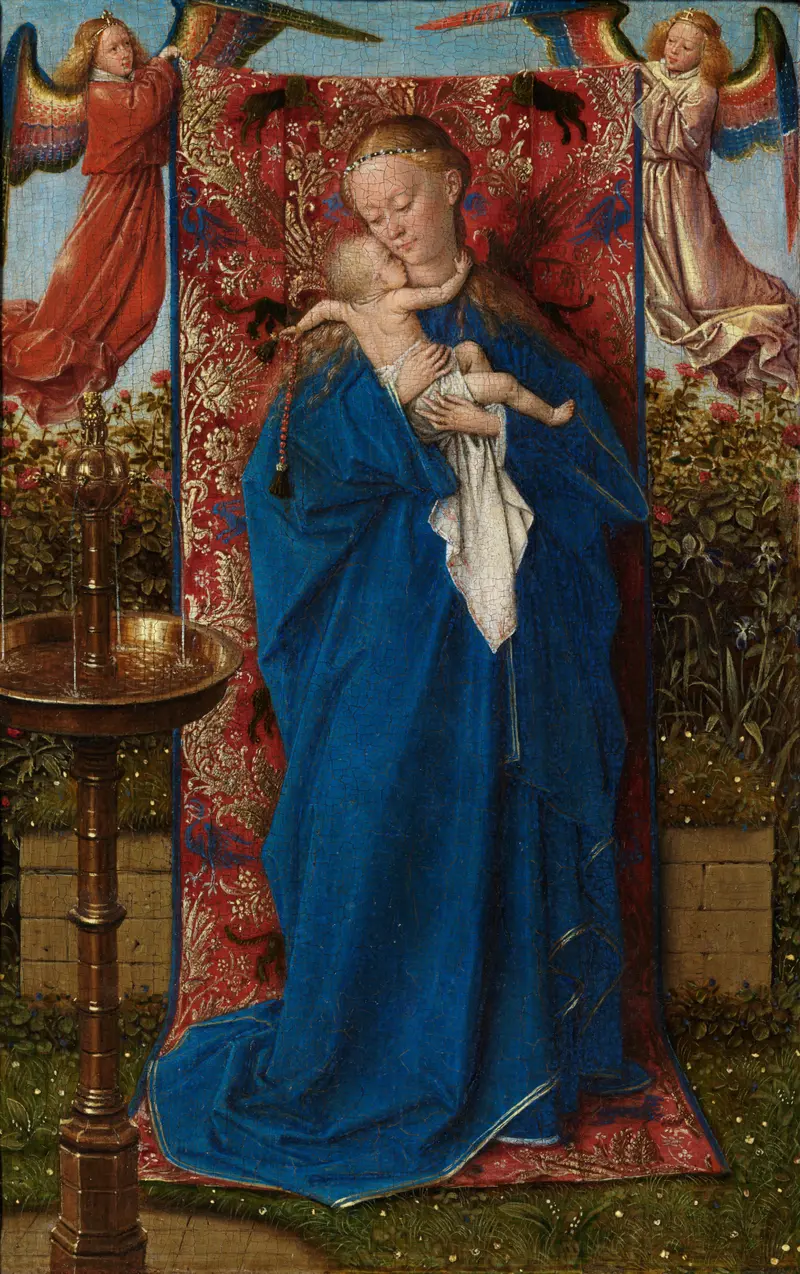
Madonna at the Fountain
Jan van Eyck

Madonna with Canon Joris van der Paele
Jan van Eyck

Prophet Zacharias; Angel of The Annunciation
Jan van Eyck
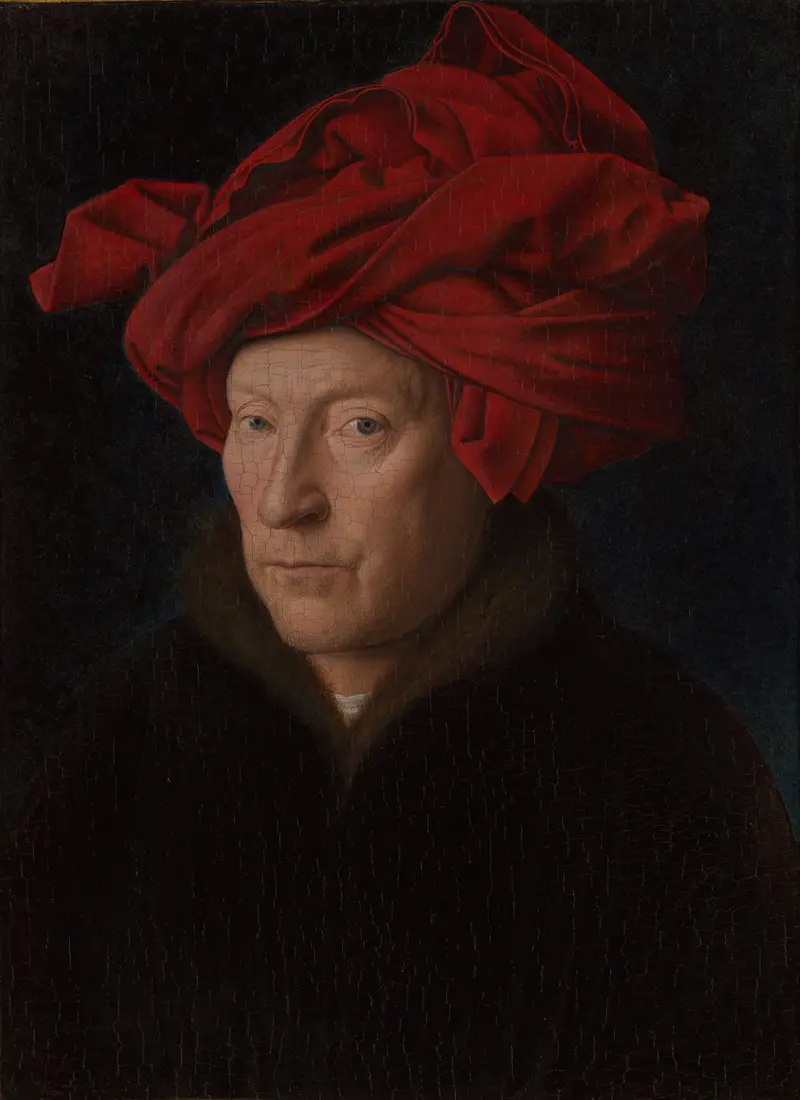
Portrait of a Man (Self Portrait?)
Jan van Eyck
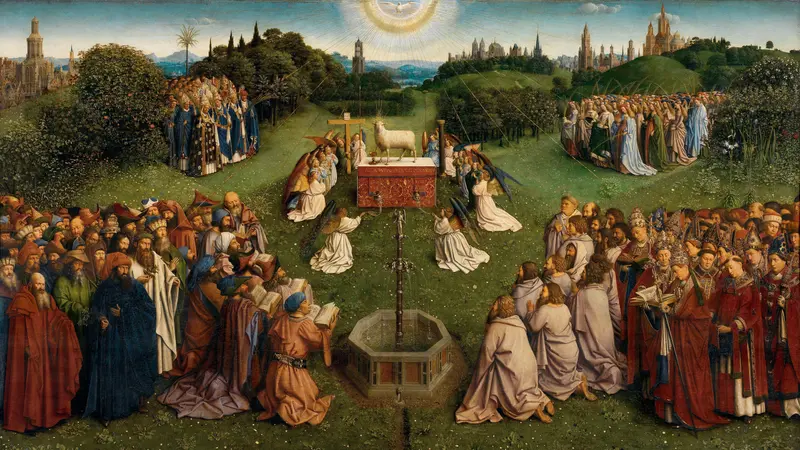
Adoration of the Lamb from the Ghent Altarpiece
Jan van Eyck
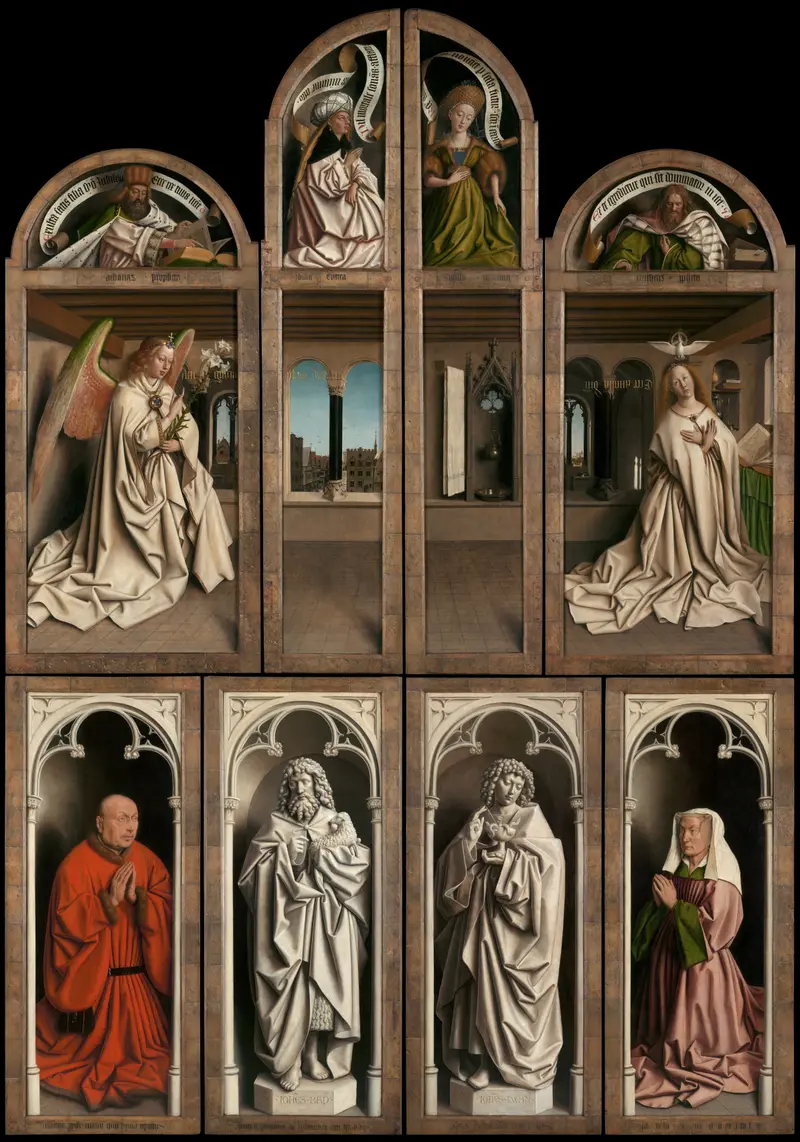
The Ghent Altarpiece (wings closed)
Jan van Eyck





