
Mediterranean harbor — History & Facts
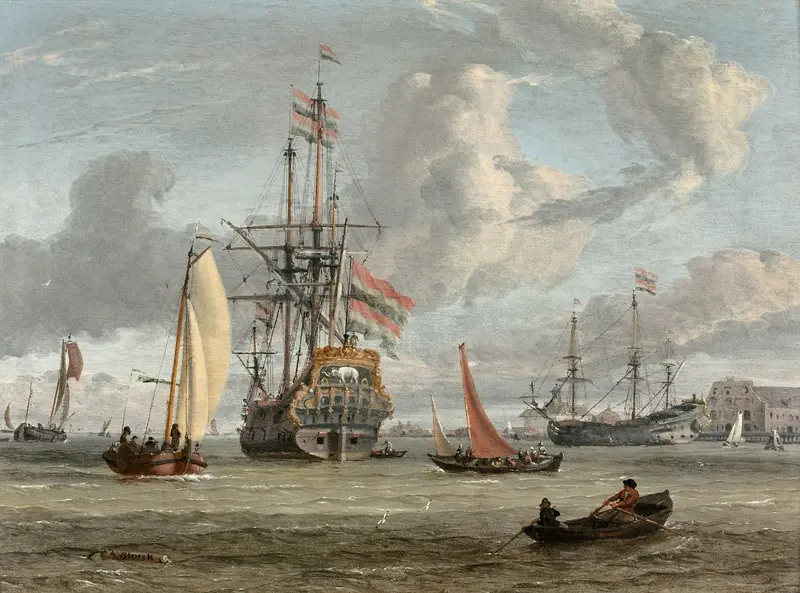
What first catches the eye in Mediterranean harbor is the sense of bustling activity framed by monumental architecture and a sky alive with shifting clouds. Your gaze is drawn from the grand, columned building at the right, across the stone quay where figures load and unload goods, to the ships anchored in the shimmering water. The sails, some taut with wind, others slack, signal a harbor in constant motion, while the central stone structure—part triumphal arch, part maritime monument—anchors the scene and hints at the mingling of commerce and civic pride.
The palette of warm ochres and cool blues bathes everything in a golden, late-day light, lending a sense of anticipation, as if a new ship might dock at any moment. Works like this, painted by Abraham Storck between 1659 and 1708, belonged to a world where Dutch and Flemish artists conjured Mediterranean vistas for patrons who might never travel so far south. These harbor scenes, often commissioned by wealthy merchants or displayed in city halls, celebrated the reach and ambition of seafaring nations. The imagined architecture and idealized ships reflect both the artist’s fascination with Italianate forms and the era’s pride in maritime prowess.
Today, Mediterranean harbor resides in the collection at http://collectie.boijmans.nl/object/2896, a reminder of how art could transport viewers to distant, sunlit shores and invite them to linger in the promise of arrival and departure.
More Artworks by Abraham Storck

The Muscovite legation visiting Amsterdam, 29 August 1697
Abraham Storck
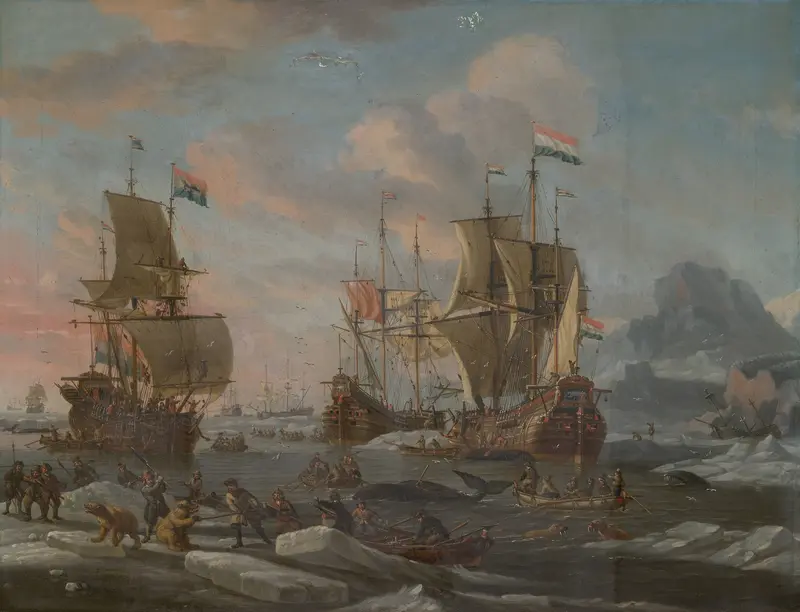
The Dutch Whaling Fleet
Abraham Storck
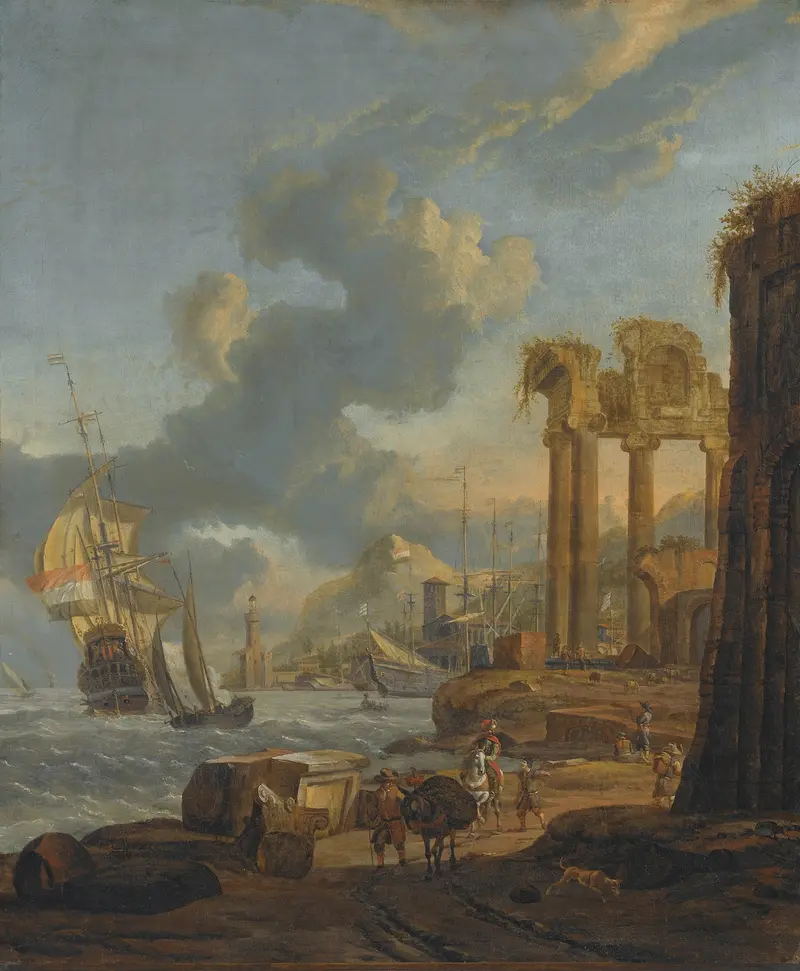
A Mediterranean Harbour Scene With Travellers On The Shore, A Dutch Man-Of-War On The Left
Abraham Storck
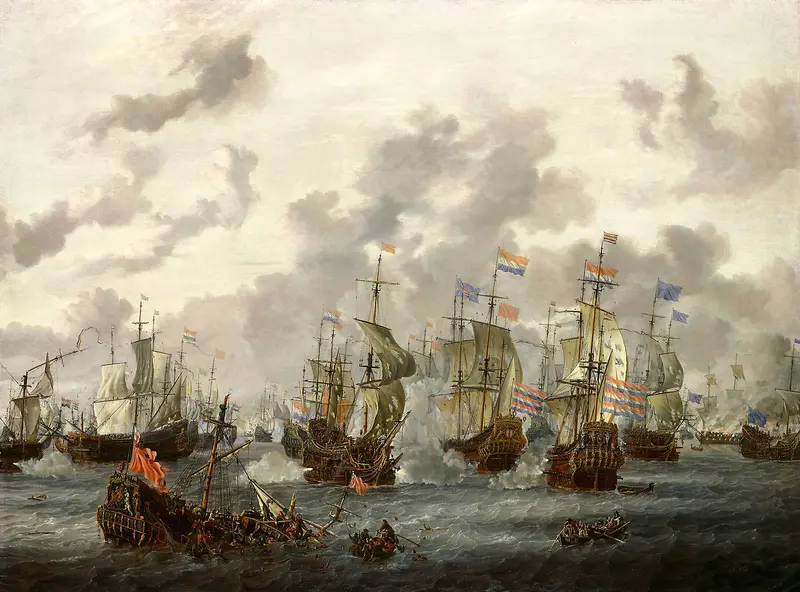
The Four Days’ Battle
Abraham Storck
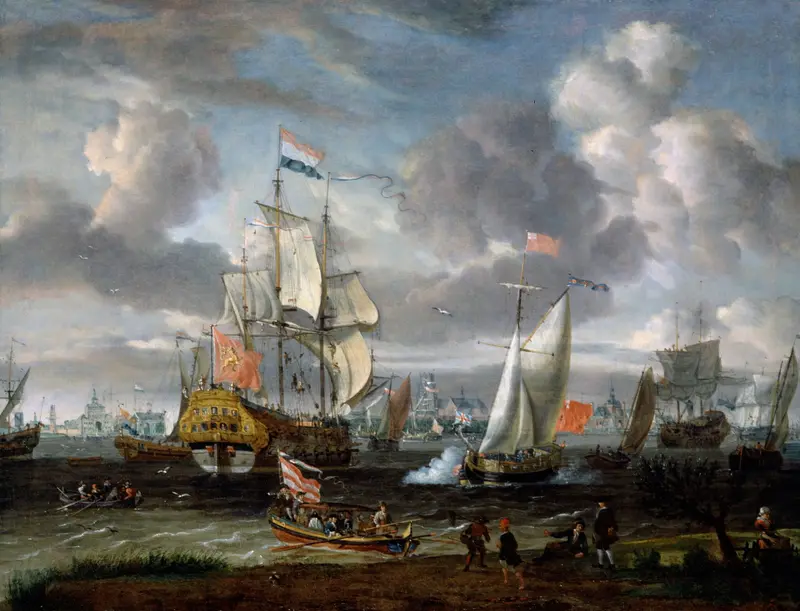
An English Yacht saluting a Dutch Man-of-War in the port of Rotterdam
Abraham Storck
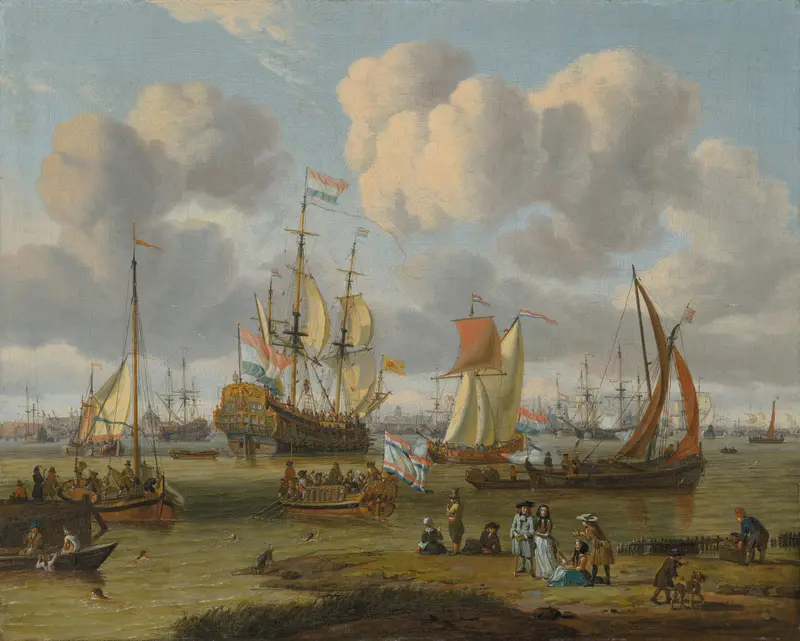
Shipping off Amsterdam with figures on a quay
Abraham Storck
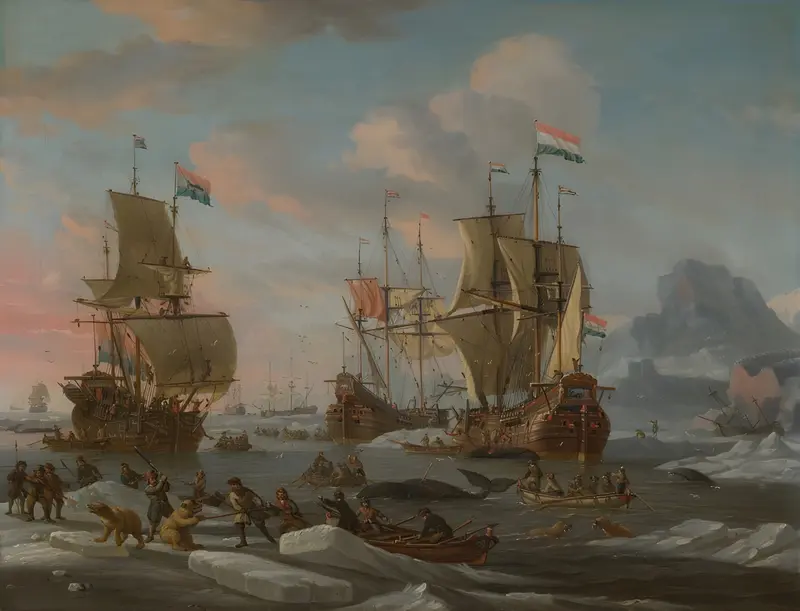
The Dutch Whaling Fleet
Abraham Storck
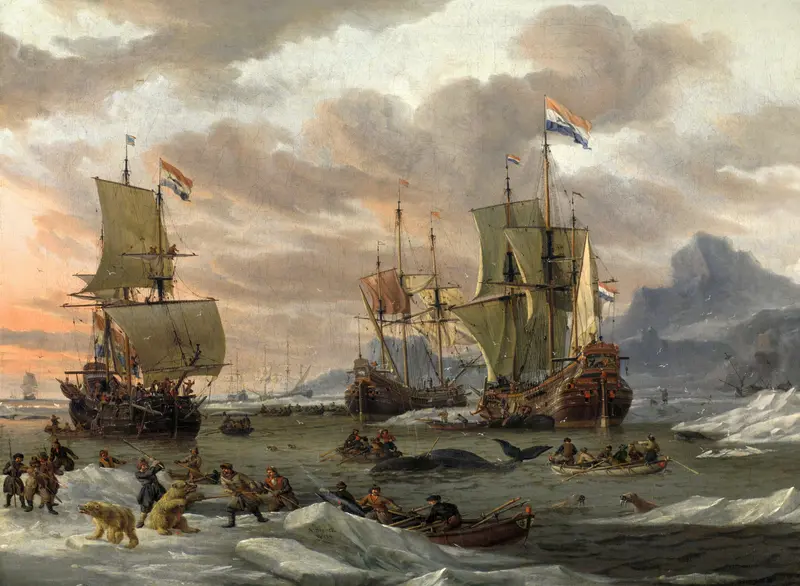
Whaling Grounds in the Arctic Ocean
Abraham Storck
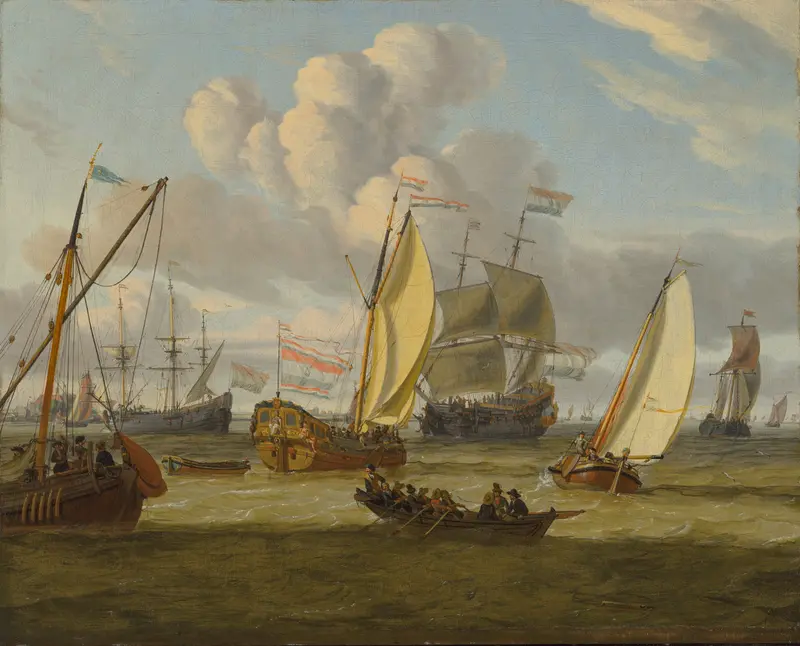
Shipping in an estuary
Abraham Storck
Grand navire de la couronne du Danemark près d’un littoral
Abraham Storck





