
Men in a Boat — History & Facts
A lone figure stands at the prow, spyglass raised, as if searching for a break in the churning waters ahead. Around him, the other men huddle low in the boat, their bodies bent to the oars or curled against the cold, the rough sea tossing the vessel in a rhythm that feels both urgent and uncertain. The light, diffused and heavy, presses down from a sky thick with cloud, catching the glint of water and the sharp line of the boat’s prow.
Every gesture here is purposeful: the lookout’s stance signals vigilance, the rowers’ hunched forms speak of endurance, and the careful stowage of cargo hints at a journey that is both practical and perilous. The low horizon gives the sky the leading role, dwarfing the men and their fragile craft, while the palette—muted, almost monochrome—suggests a world where struggle is constant and clarity hard-won. Works like Men in a Boat by Albertus Van Beest belong to a long tradition of maritime painting that flourished in the nineteenth century, when seafaring was both a daily reality and a symbol of adventure and risk. Such paintings were often commissioned by shipowners, merchants, or collectors fascinated by the romance and danger of life at sea.
While little is recorded about this specific work—its date and medium remain unknown—it now resides in the collection of the Museum of Fine Arts, Boston, a testament to the enduring appeal of maritime subjects. In an era when the world’s oceans were being charted and crossed with new ambition, paintings like this offered viewers a window onto the drama and uncertainty of the open water. Look again at the lookout’s searching gaze, and consider what it meant to face the unknown with nothing but a small boat and each other.
More Artworks by Albertus Van Beest

Calm Sea with Fishing Boats
Albertus Van Beest
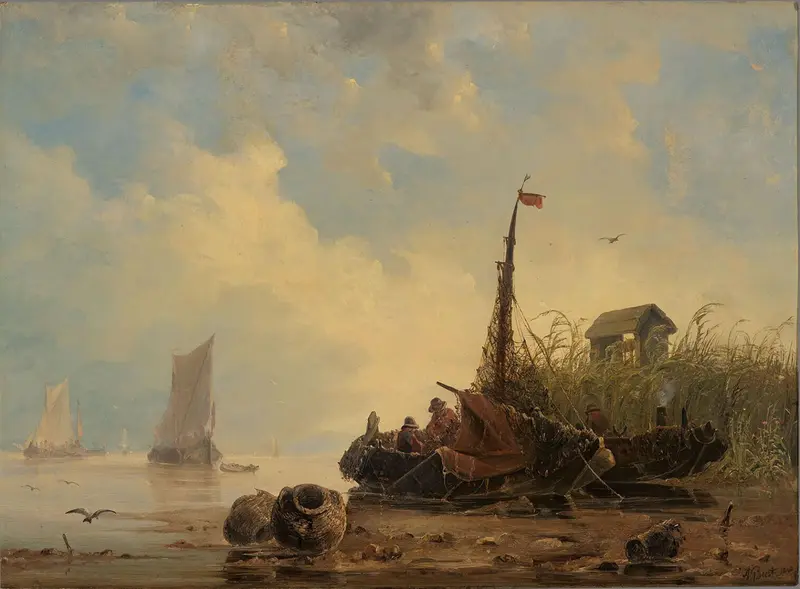
Hoogaars on Mud in Zealand
Albertus Van Beest
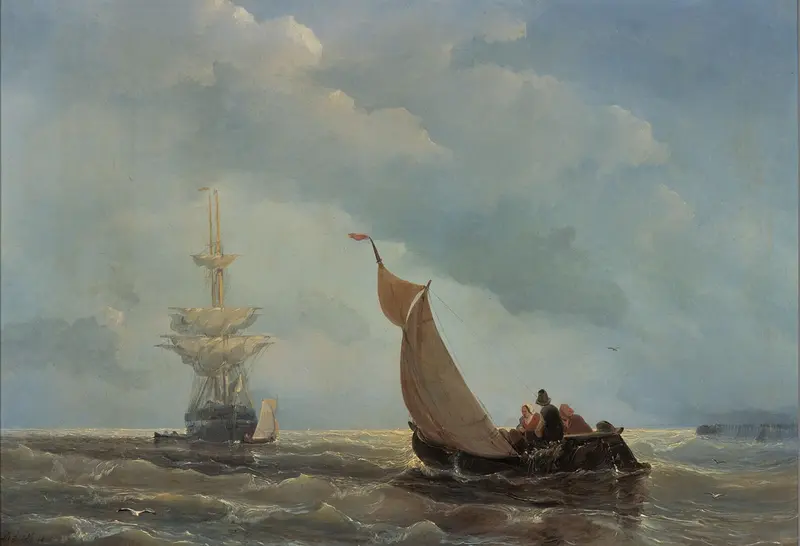
Stormy Sea with Sailing Ship and Fishing Boats
Albertus Van Beest
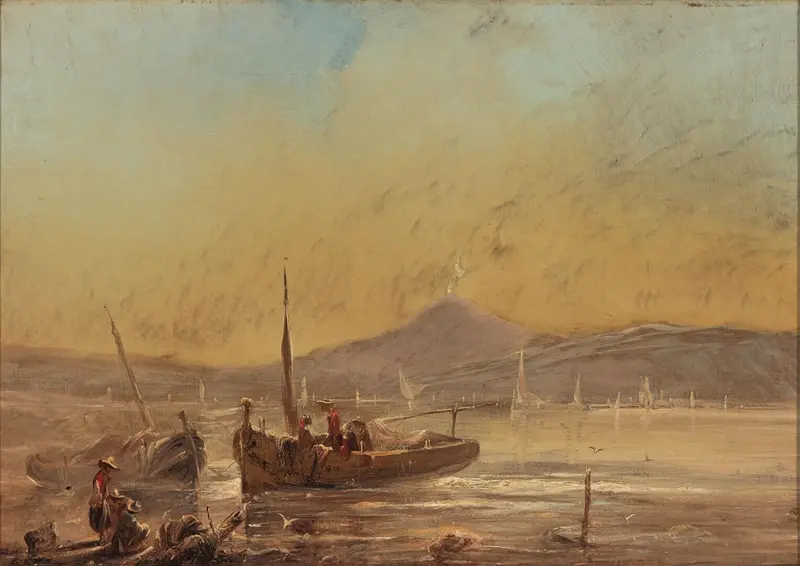
View of the Gulf of Naples
Albertus Van Beest
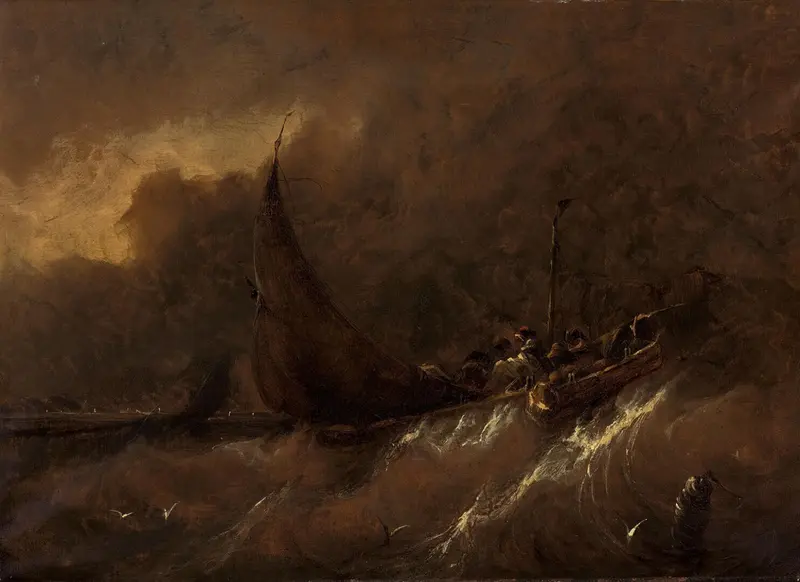
Storm at Sea
Albertus Van Beest
River Landscape with Fisherman and Three Boats
Albertus Van Beest
Hauling the Net
Albertus Van Beest





