
View of the Gulf of Naples — History & Facts
A haze of ochre light fills the sky, drawing the viewer’s gaze immediately to the distant plume of smoke rising from the unmistakable cone of Vesuvius. In View of the Gulf of Naples, Albertus Van Beest sets the drama not in eruption, but in the quiet tension of daily life under the shadow of the volcano. The boats in the foreground, their hulls rough and patched, are clustered close to the shore, where figures in red accents pause in their work.
The water’s surface, streaked with reflections and scattered with birds, leads the eye outwards to a horizon bristling with sails—evidence of a bustling port city that lives with both beauty and risk. The low horizon lets the sky dominate, its swirling brushwork echoing the restless energy of the volcano itself. Painted in 1850, this work belongs to a period when the lure of the Mediterranean drew northern European artists southward, chasing light and color unknown in their home countries. Views of Naples and its bay, with Vesuvius always present, were prized souvenirs for travelers and a favorite motif for painters eager to capture the intersection of nature, commerce, and ancient history.
Little is recorded about this specific canvas, now in the collection of Museum Boijmans Van Beuningen, but its mood and palette place it firmly in the tradition of 19th-century landscape painting—where observation, atmosphere, and a touch of the picturesque were the highest aims. The painting invites you to linger, to weigh the calm of the harbor against the silent threat in the distance, and to imagine the world that unfolded each day beneath that smoky sky.
More Artworks by Albertus Van Beest
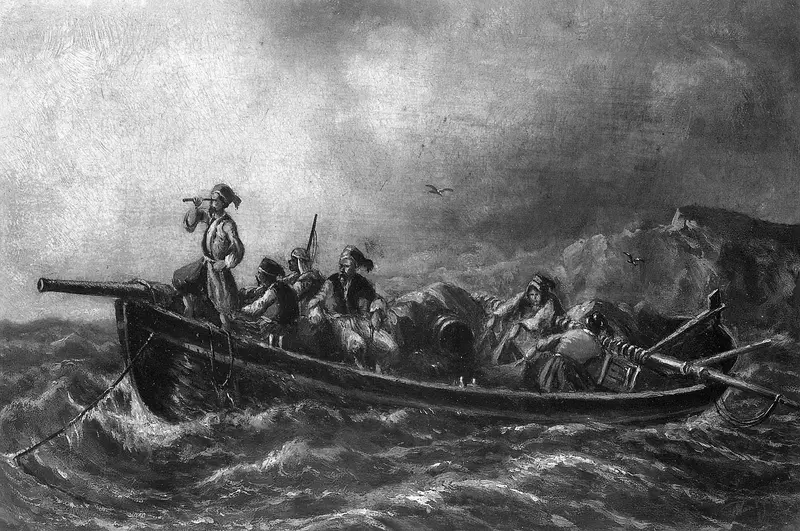
Men in a Boat
Albertus Van Beest

Calm Sea with Fishing Boats
Albertus Van Beest
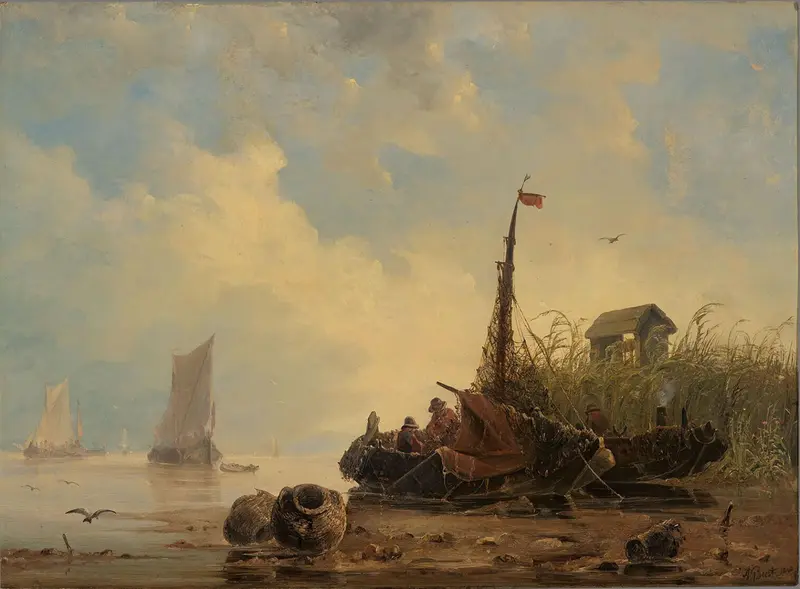
Hoogaars on Mud in Zealand
Albertus Van Beest
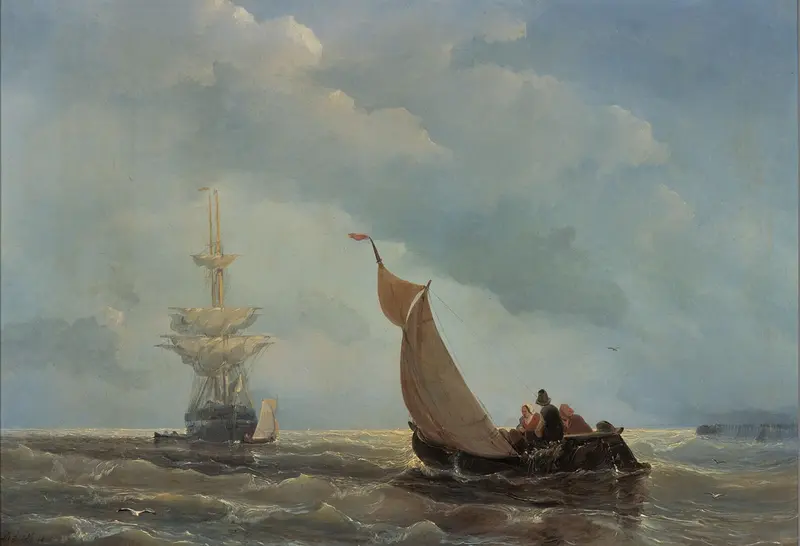
Stormy Sea with Sailing Ship and Fishing Boats
Albertus Van Beest
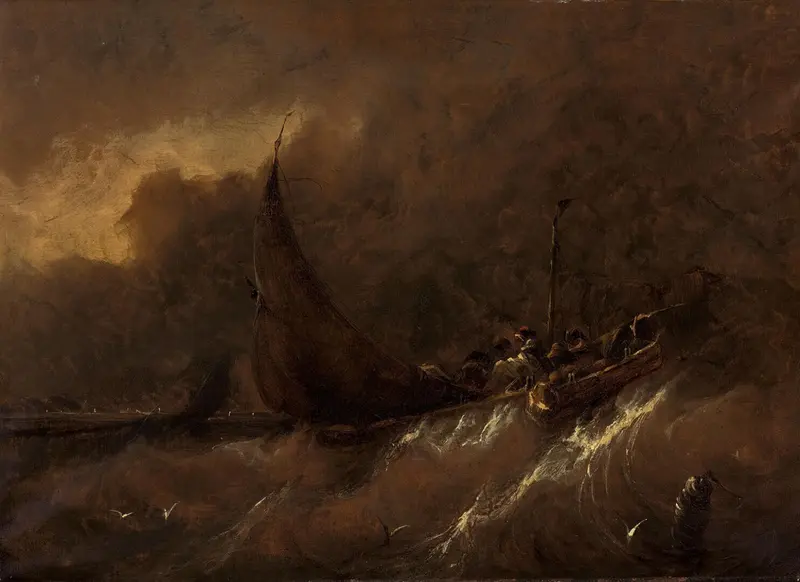
Storm at Sea
Albertus Van Beest
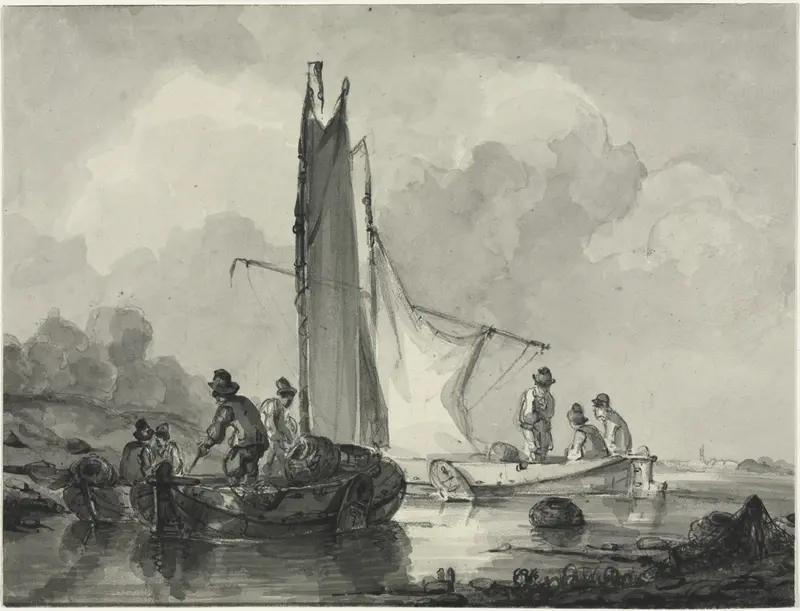
River Landscape with Fisherman and Three Boats
Albertus Van Beest
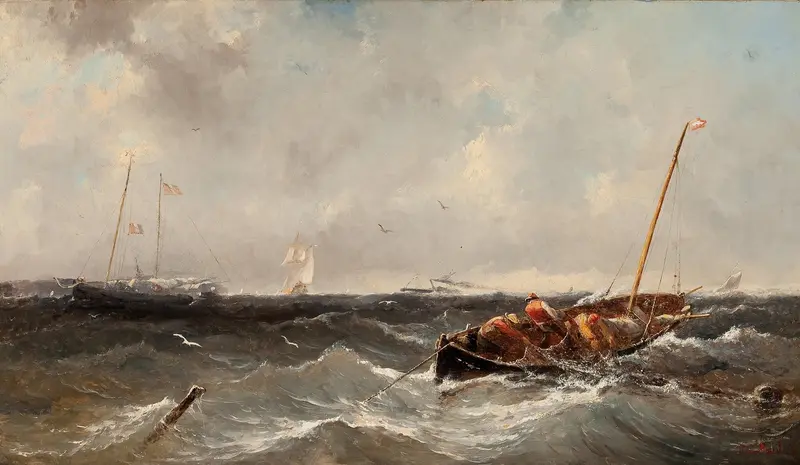
Hauling the Net
Albertus Van Beest
More Landscape Art

The Starry Night
Vincent van Gogh

View of Delft
Johannes Vermeer

Water Lilies
Claude Monet

The Grand Canal, Venice, looking north-west from the Ca' Corner to the Ca' Contarini degli Scrigni, with the campanile of Santa Maria della Carità
Canaletto

Windsor Castle
Canaletto

The Grand Canal looking North-East from the Palazzo Dolfin-Manin to the Rialto Bridge
Canaletto