
Hoogaars on Mud in Zealand — History & Facts
What draws the eye first in Hoogaars on Mud in Zealand is the hush of a day paused between tides, where the world seems to hold its breath. The hoogaars—a sturdy Dutch fishing vessel—rests, grounded on the mudflats, its nets draped and its mast crowned with a faded flag. Two figures, half-shadowed, bend to their work or conversation, while the foreground is scattered with baskets and the detritus of the trade.
Light pours from the left, gilding the sails of distant boats and turning the sky into a vast, shifting theatre of clouds. The low horizon gives the sky—and the sense of open air—command of the scene, while the reeds and small hut on the right anchor the boat in its marshy world. Painted in 1843, this work belongs to a tradition of Dutch marine painting that stretches back centuries, but here the grandeur of seafaring is exchanged for the quiet routines of local life. In the early nineteenth century, such scenes were collected by a rising Dutch middle class, who saw in them both nostalgia and pride for the rhythms of their own coastlines.
The artist, Albertus Van Beest, was part of this lineage, though history has kept few traces of his career compared to the giants of the Golden Age. Now in the collection of Museum Boijmans Van Beuningen, this painting invites viewers to linger in the stillness and to imagine the lives shaped by mud, water, and sky.
More Artworks by Albertus Van Beest
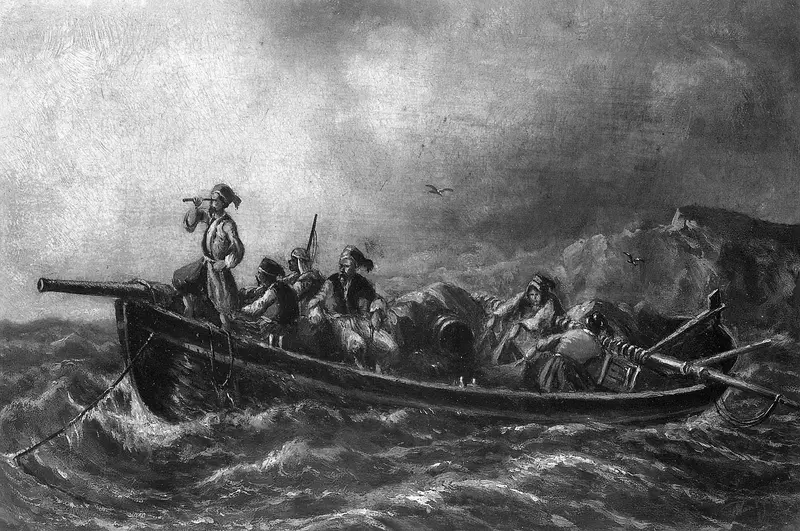
Men in a Boat
Albertus Van Beest

Calm Sea with Fishing Boats
Albertus Van Beest
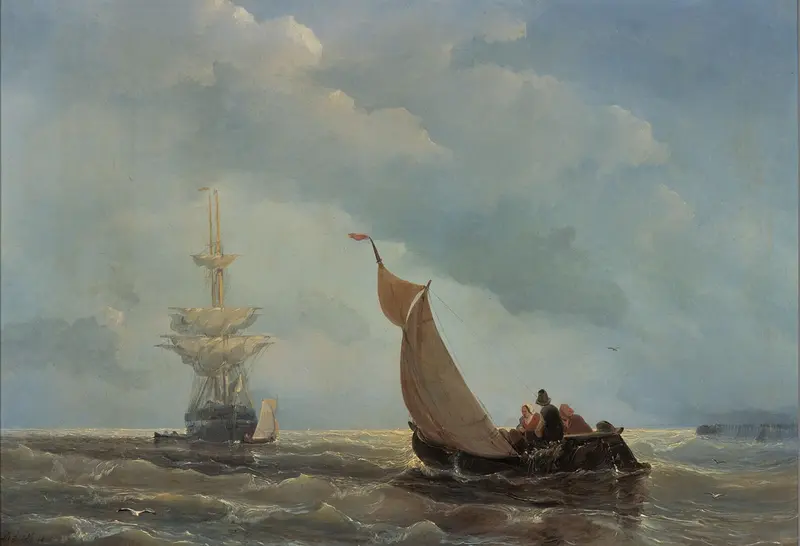
Stormy Sea with Sailing Ship and Fishing Boats
Albertus Van Beest
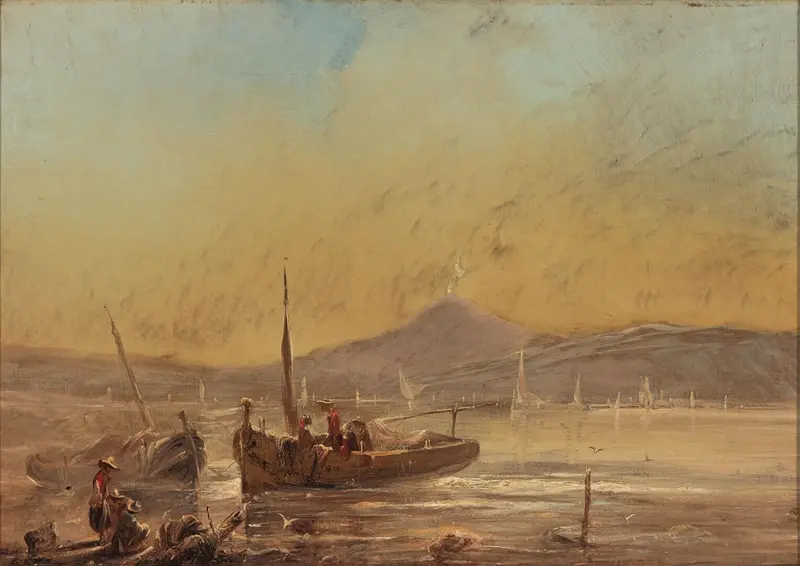
View of the Gulf of Naples
Albertus Van Beest
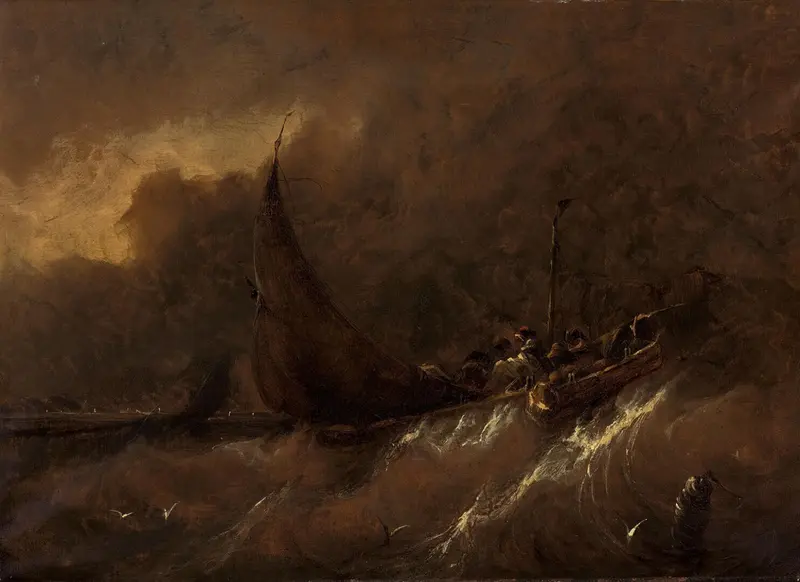
Storm at Sea
Albertus Van Beest
River Landscape with Fisherman and Three Boats
Albertus Van Beest
Hauling the Net
Albertus Van Beest





