
Calm Sea with Fishing Boats — History & Facts
What draws the eye first in Calm Sea with Fishing Boats is the hush: a sense of suspended movement, as if the world has paused for breath. The water’s surface is so still it mirrors the hulls and sails with barely a ripple, and the pale morning light washes everything in a gentle haze. The two boats, their sails slack and flags fluttering, are caught in a moment of waiting—perhaps for a breeze, perhaps for the day’s catch.
Fishermen lean over their nets, their gestures unhurried, absorbed in routine. The distant silhouette of a larger ship and the faint outline of land anchor the scene, but the real drama is in the quiet: the way the low horizon gives the sky and its subtle gradations of blue and gold the leading role, and the way the boats’ dark forms seem to float between water and air. Painted in 1848, this work by Albertus Van Beest belongs to a long tradition of Dutch marine painting, a genre that flourished in the Netherlands as seafaring and trade shaped the nation’s fortunes. By the mid-19th century, artists like Van Beest were both inheriting and transforming this legacy, favoring tranquil scenes and atmospheric effects over the heroic storms and naval battles of earlier decades.
Such paintings were often sought by collectors who prized them as reminders of national identity and the rhythms of daily labor. Now in the collection of Museum Boijmans Van Beuningen, Calm Sea with Fishing Boats stands as a quiet testament to a world where the sea was both a livelihood and a mystery—inviting us to linger over the subtle play of light and the silent conversation between boats and sky.
More Artworks by Albertus Van Beest
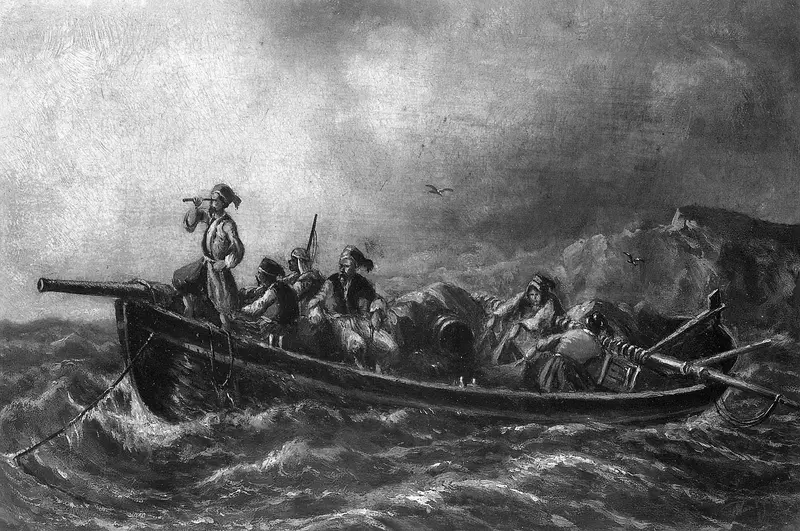
Men in a Boat
Albertus Van Beest
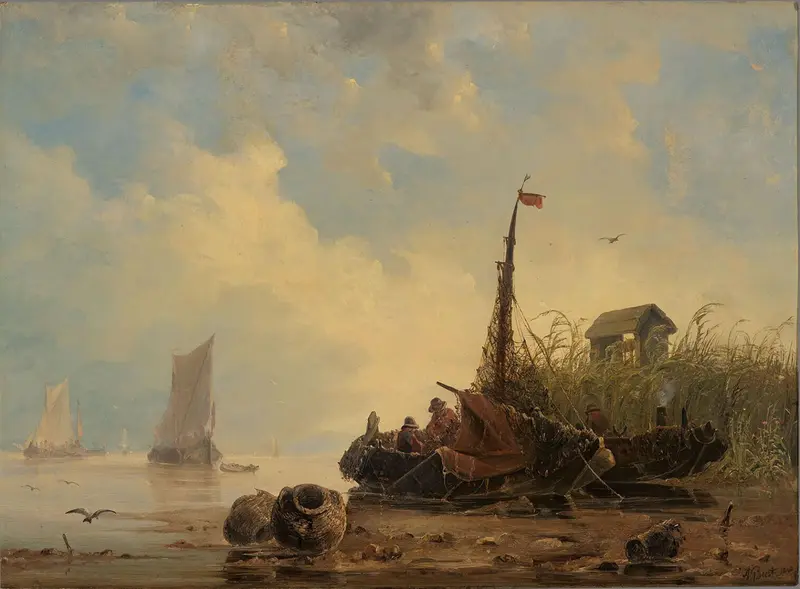
Hoogaars on Mud in Zealand
Albertus Van Beest
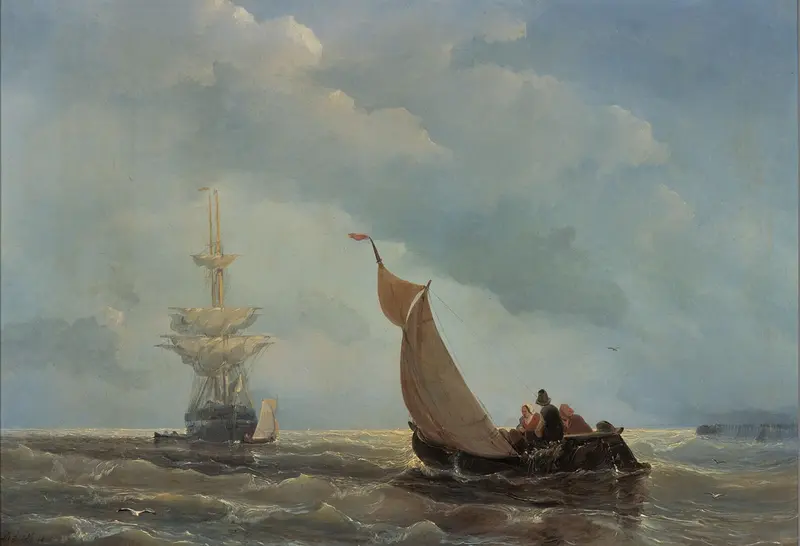
Stormy Sea with Sailing Ship and Fishing Boats
Albertus Van Beest
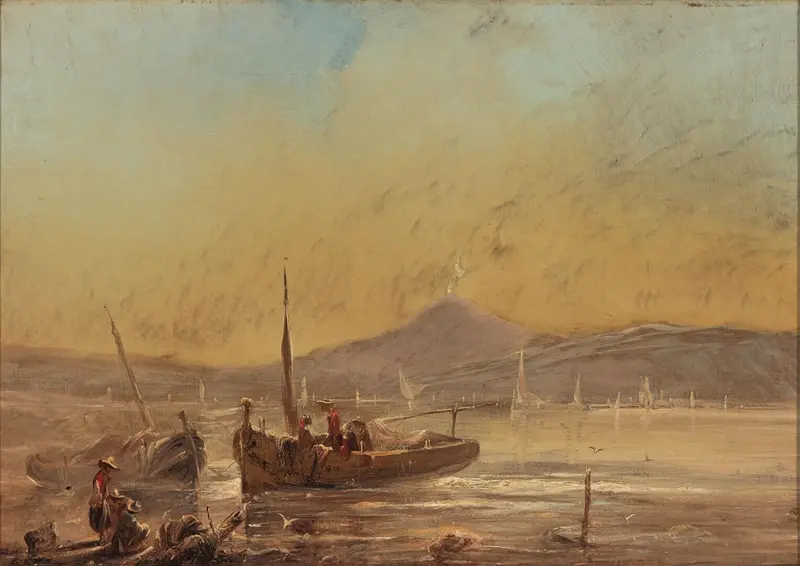
View of the Gulf of Naples
Albertus Van Beest
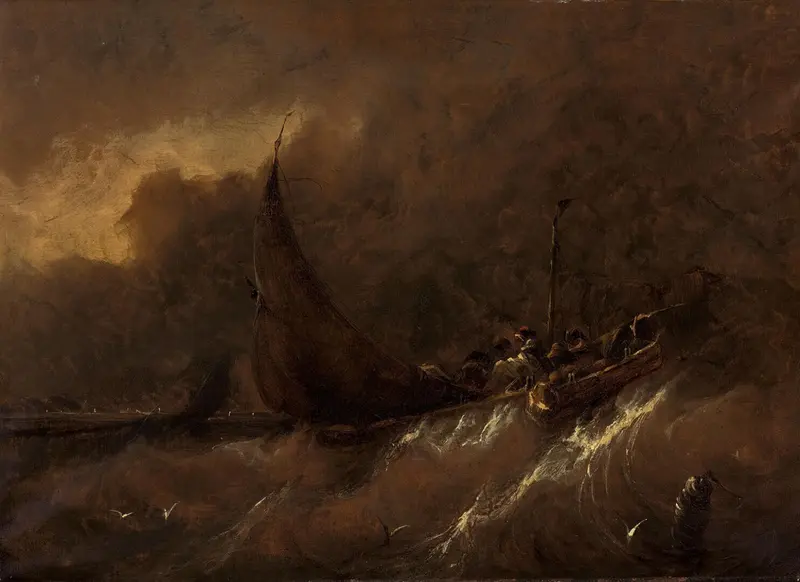
Storm at Sea
Albertus Van Beest
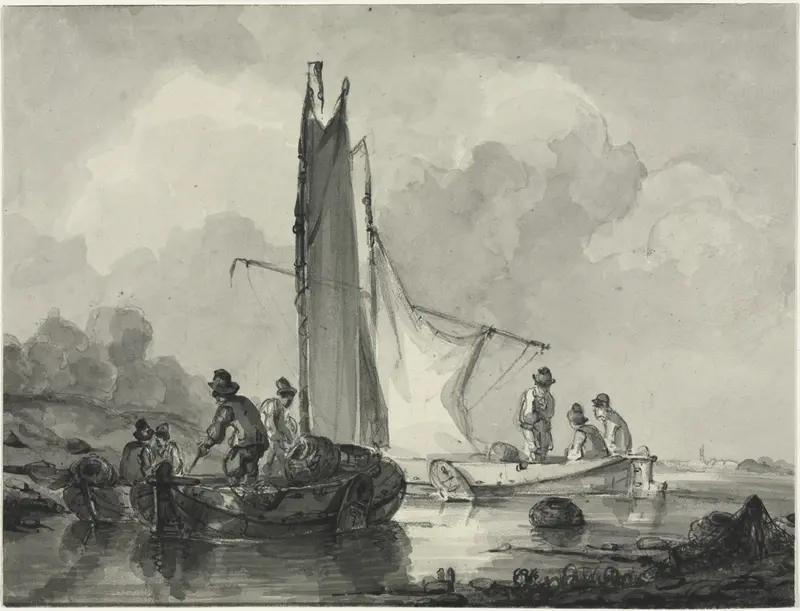
River Landscape with Fisherman and Three Boats
Albertus Van Beest
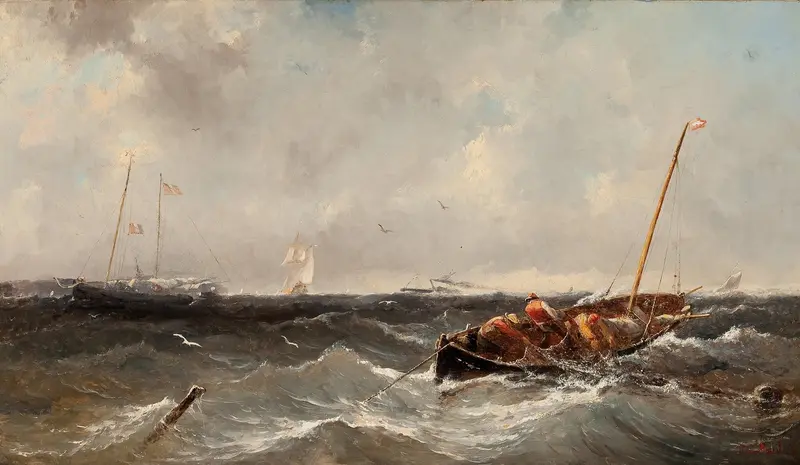
Hauling the Net
Albertus Van Beest





