
Storm at Sea — History & Facts
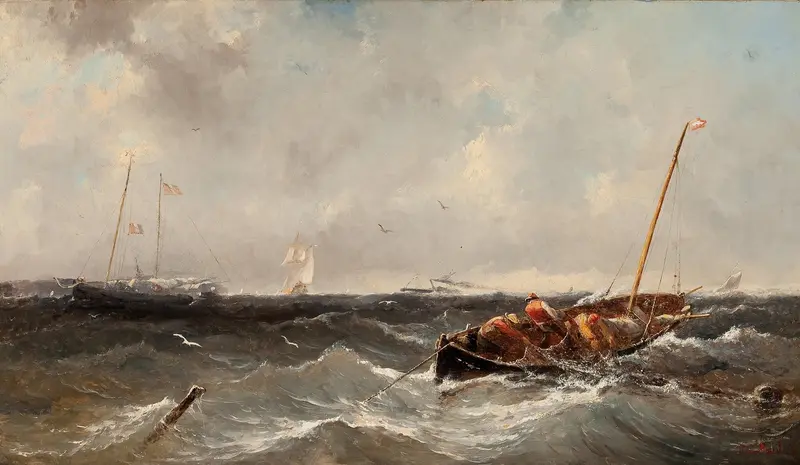
What first catches the eye in Storm at Sea is not the boat itself, but the way the entire canvas seems to pitch and roll with it. The viewer is drawn into the drama by the sharp angle of the mast, the urgent gestures of the sailors, and the wild, foaming water that surges up against the hull. Light breaks through the clouds in a single, turbulent patch, casting the figures into silhouette and turning the waves into streaks of white and ochre.
Every brushstroke is restless, as if the scene itself is in motion—each detail, from the straining sail to the scattered birds, pulls the viewer deeper into the moment of crisis. The low horizon gives the sky its dominance, making the human struggle feel small and immediate. Painted in 1850, this work by Albertus Van Beest belongs to a long tradition of maritime painting, a genre that flourished in the Netherlands and beyond as seafaring nations sought to capture both the beauty and the peril of the ocean. Such paintings were often commissioned by shipowners, merchants, or collectors fascinated by the sea’s power and unpredictability.
By the mid-19th century, artists like Van Beest were responding to a world transformed by industrialization and expanding global trade, yet still haunted by the dangers that awaited every vessel. Today, Storm at Sea resides in the Museum Boijmans Van Beuningen, a reminder of an era when the fate of a ship—and those aboard—could hinge on the next wave. The painting invites you to linger, to feel the salt spray and the uncertainty, and to wonder what lies just beyond the storm.
More Artworks by Albertus Van Beest
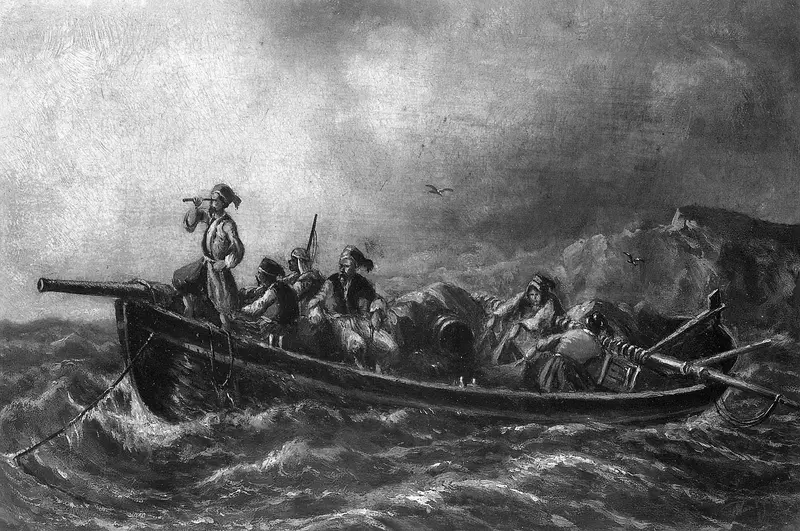
Men in a Boat
Albertus Van Beest

Calm Sea with Fishing Boats
Albertus Van Beest
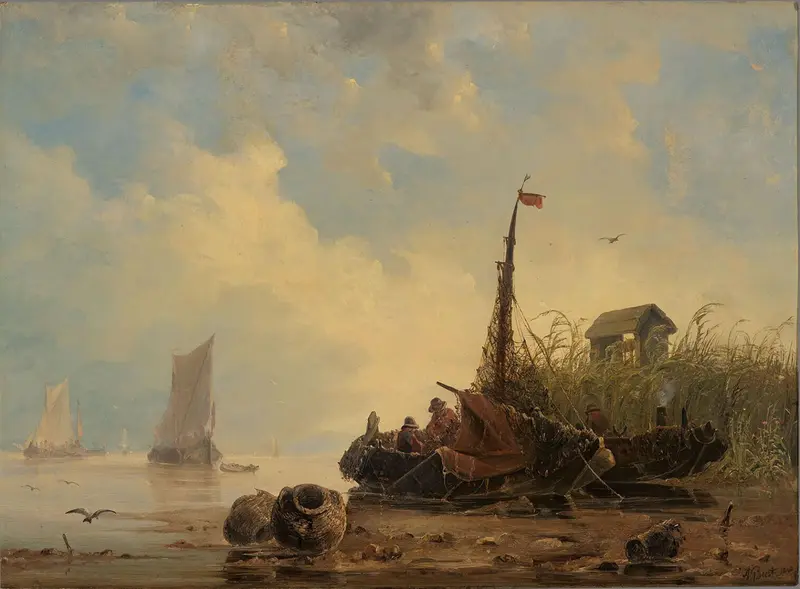
Hoogaars on Mud in Zealand
Albertus Van Beest
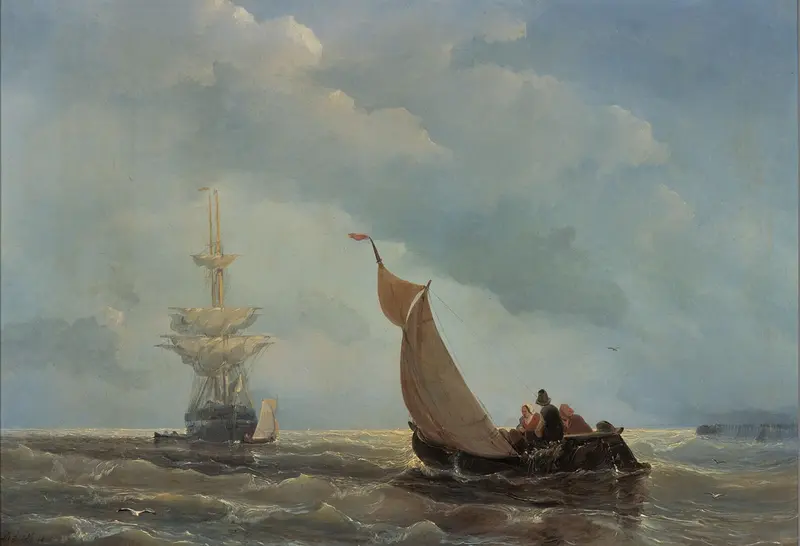
Stormy Sea with Sailing Ship and Fishing Boats
Albertus Van Beest
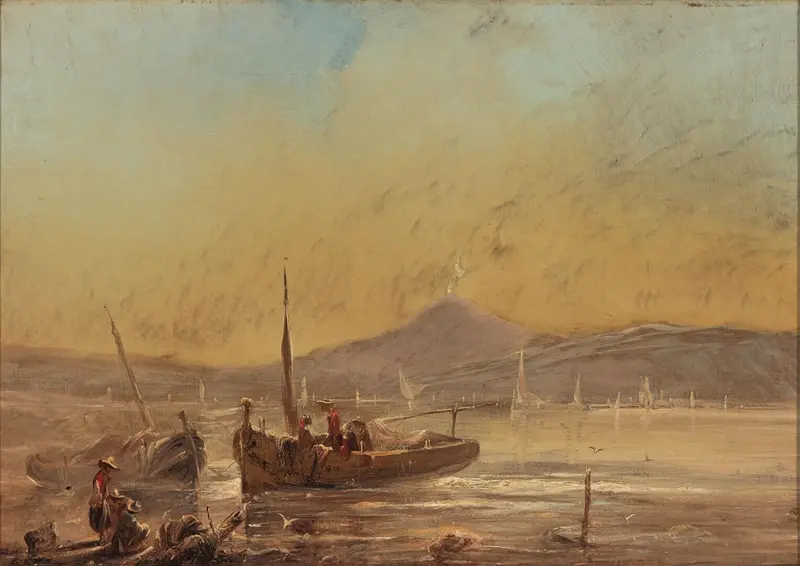
View of the Gulf of Naples
Albertus Van Beest
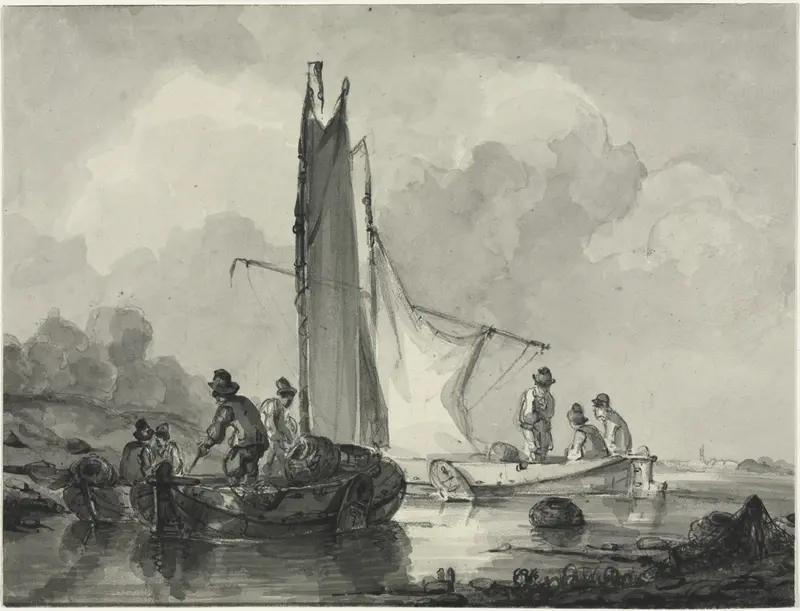
River Landscape with Fisherman and Three Boats
Albertus Van Beest
Hauling the Net
Albertus Van Beest





