
Midsummer Moonrise — History & Facts
Can beauty exist without sorrow? In Midsummer Moonrise, a serene yet haunting landscape invites viewers to ponder the bittersweet nature of existence. The scene is bathed in a delicate palette, where soft hues blend effortlessly to evoke both tranquility and yearning. Look to the center of the composition where the luminous moon hangs low in the twilight sky, casting a silvery glow across the tranquil waters below. The gentle ripples reflect this celestial light, creating a dance of shimmering colors that draw the eye.
Notice the soft clouds that cradle the moon, painted with a masterful touch, while the darkening trees frame the scene, their silhouettes a stark contrast against the ethereal light. The interplay of light and shadow reveals depth, inviting contemplation of the fleeting beauty encapsulated in the moment. A sense of ecstasy permeates the work, yet underneath lies an undercurrent of melancholy. The tranquil waters mirror both the serenity of the night and the transience of life, suggesting a fleeting moment of bliss always tinged with impermanence.
The trees, while seemingly protective, also remind us of the loneliness that often accompanies beauty, as they stand solemnly against the bright moon, silent witnesses to the passage of time. Dwight William Tryon painted Midsummer Moonrise in 1892 during a period marked by a growing interest in American Impressionism. Living in New England, Tryon was inspired by the natural beauty of his surroundings, seeking to capture ephemeral moments of light and atmosphere. His work reflects the artistic exploration of mood and emotion, aligning with the broader movement of artists seeking to convey deeper sentiments through landscape painting.
More Artworks by Dwight William Tryon
Browse all →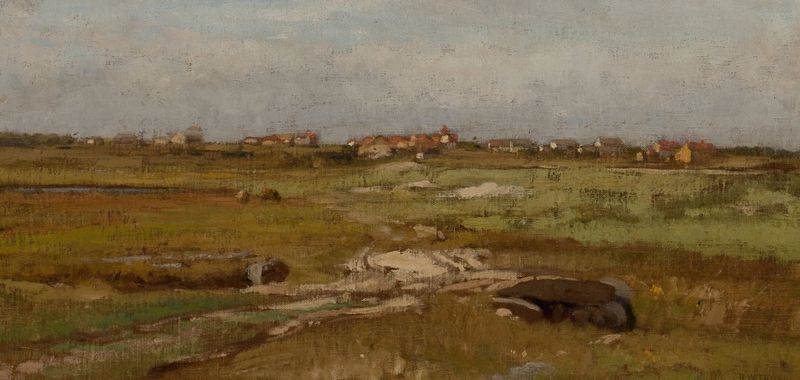
Marsh Landscape
Dwight William Tryon
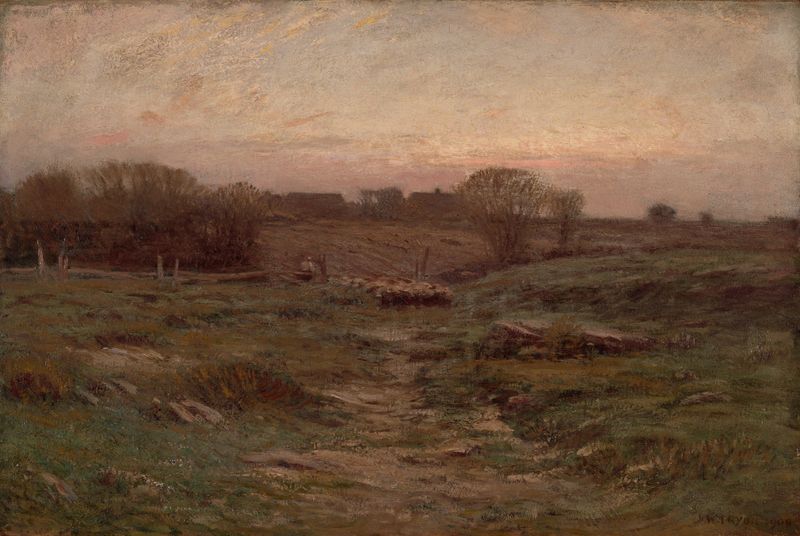
Landscape (Sheep in the Valley)
Dwight William Tryon
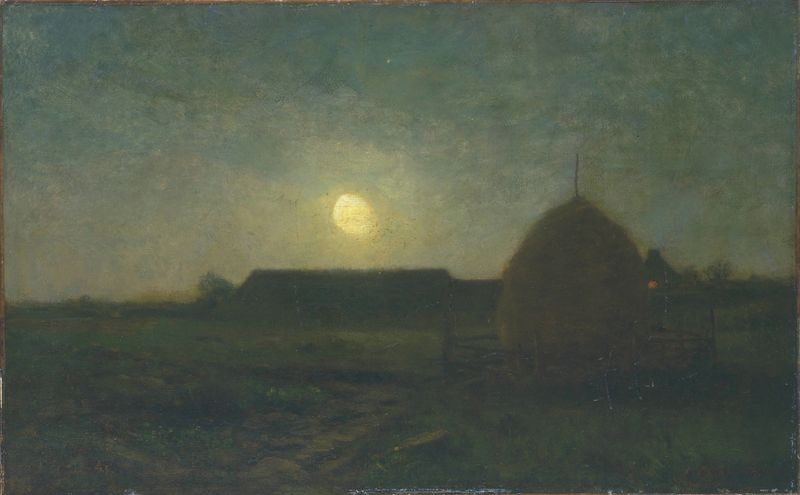
Moonlight
Dwight William Tryon

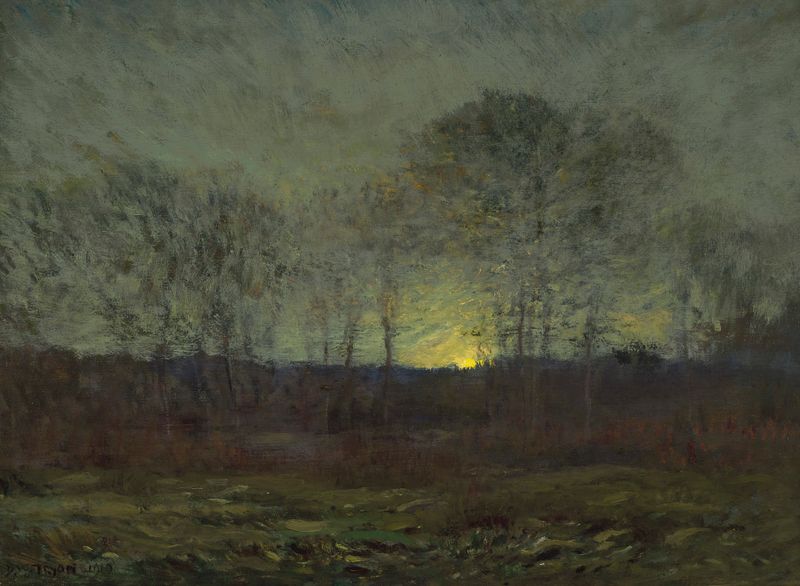
Evening Landscape
Dwight William Tryon
Moonrise
Dwight William Tryon
November
Dwight William Tryon
November Morning
Dwight William Tryon

Coastal Scene
Dwight William Tryon

Twilight
Dwight William Tryon
Morning in September
Dwight William Tryon





