
Twilight — History & Facts
Where does light end, and longing begin? In the delicate interplay between twilight and dusk, we find a poignant exploration of mortality and the fleeting nature of existence. Look closely at the horizon, where a soft gradient of colors unfurls, transitioning from the warm embrace of daylight to the cool shadows of impending night. The gentle stroke of the brush captures the ethereal quality of the fading light, creating a serene yet haunting atmosphere. Notice how the muted purple and golden hues blend seamlessly, evoking a sense of tranquility tinged with melancholy, inviting the viewer to linger in this suspended moment. Beneath the surface, the painting reveals deeper tensions—an invitation to reflect on the inevitability of change and the transitory beauty of life.
The calm waters below the horizon mirror these shifting colors, suggesting a layered complexity between the seen and the unseen, between the known and the unknown. Subtle ripples disturb the stillness, symbolizing the passage of time, while the encroaching darkness whispers of life’s impermanence. Created in the years following World War I, Twilight emerged during a period of personal and artistic introspection for Tryon. At this time, he was experimenting with the effects of light and atmosphere, influenced by the American Impressionist movement.
The world was grappling with loss and upheaval, and this work reflects both a yearning for serenity and the inevitable end that follows. It stands as a testament not just to the beauty of nature, but to the deeper emotions that arise in its presence.
More Artworks by Dwight William Tryon
Browse all →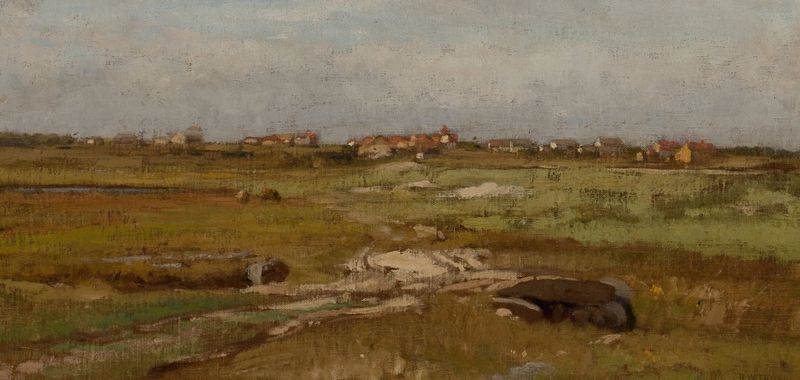
Marsh Landscape
Dwight William Tryon
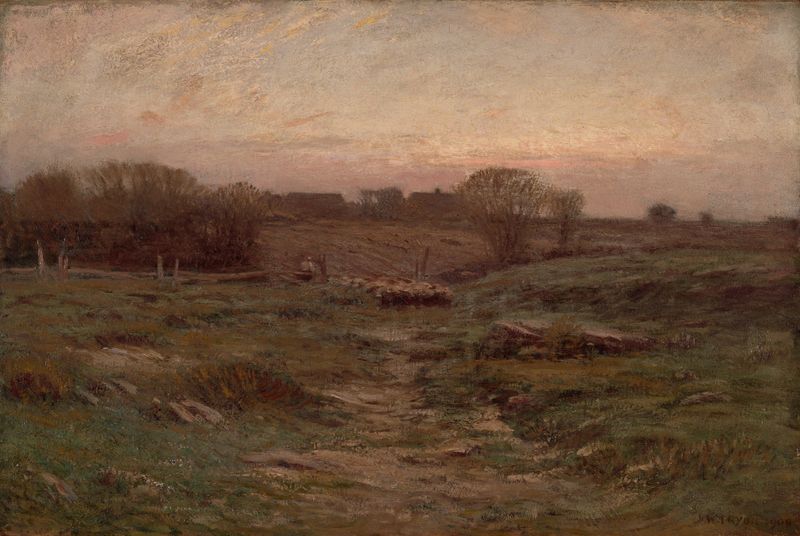
Landscape (Sheep in the Valley)
Dwight William Tryon
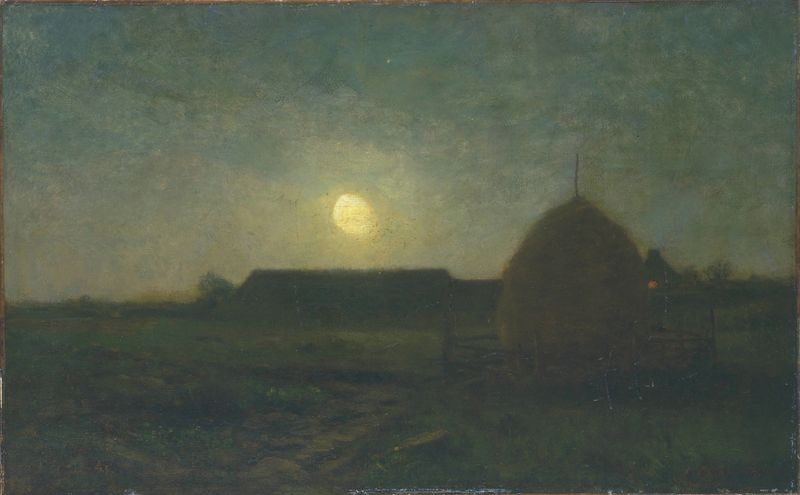
Moonlight
Dwight William Tryon

Evening Landscape
Dwight William Tryon
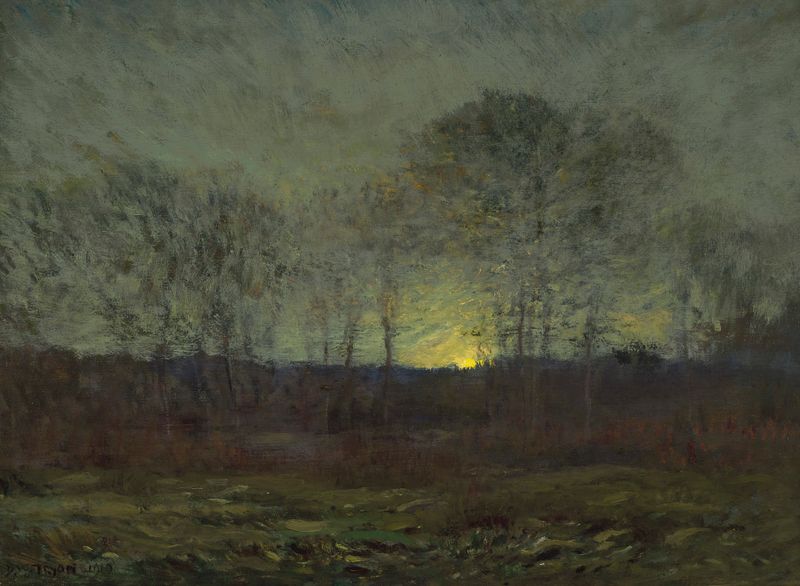
Moonrise
Dwight William Tryon
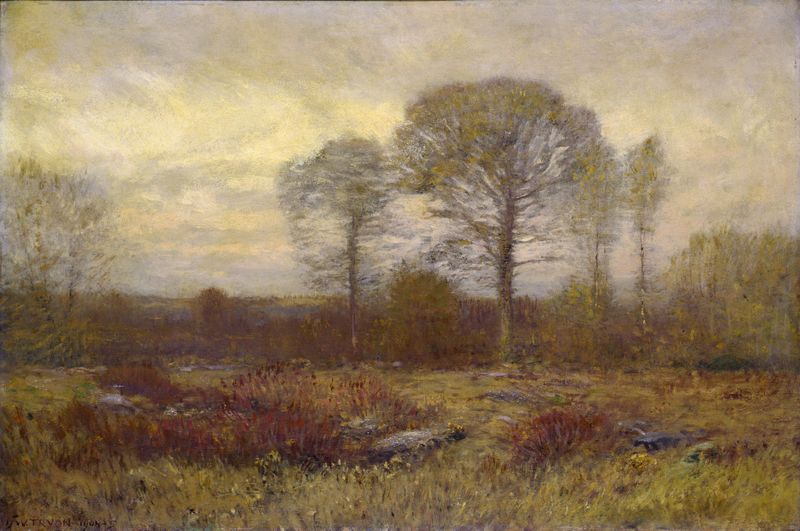
November
Dwight William Tryon
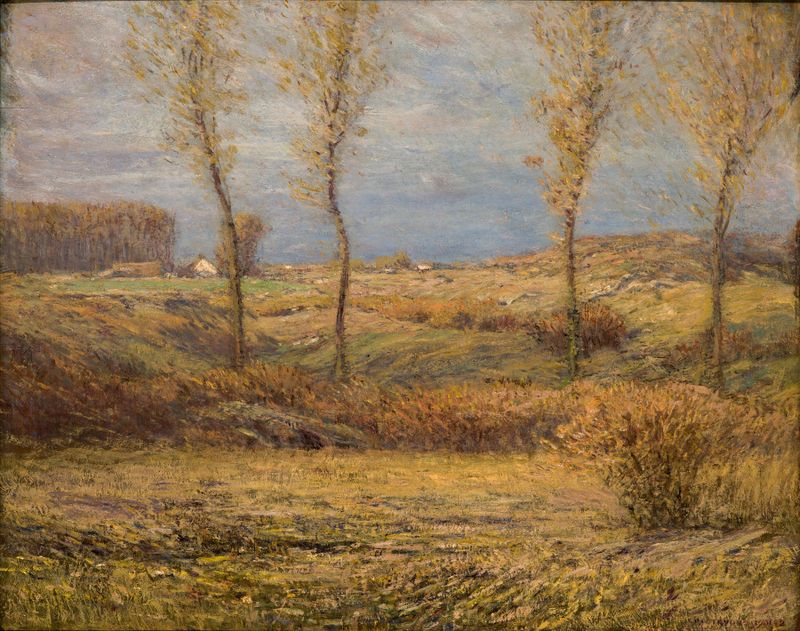
November Morning
Dwight William Tryon

Coastal Scene
Dwight William Tryon
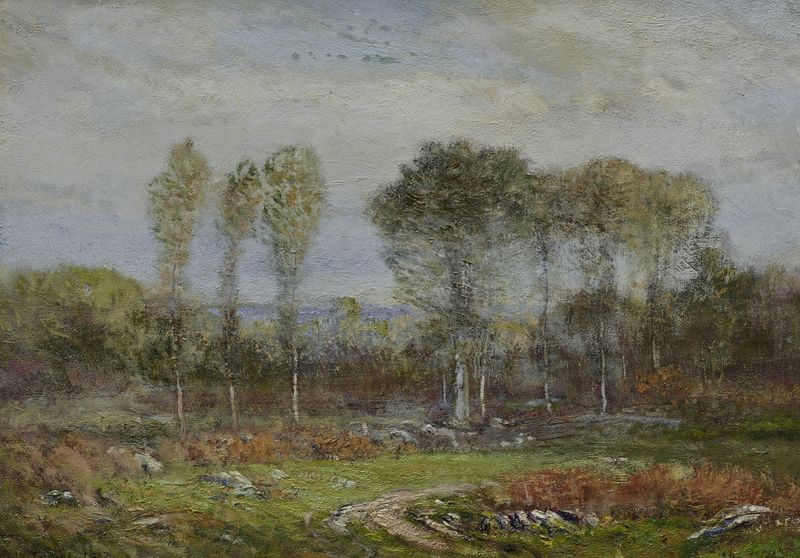
Morning in September
Dwight William Tryon

A Glimpse of the Sea
Dwight William Tryon





