
November Morning — History & Facts
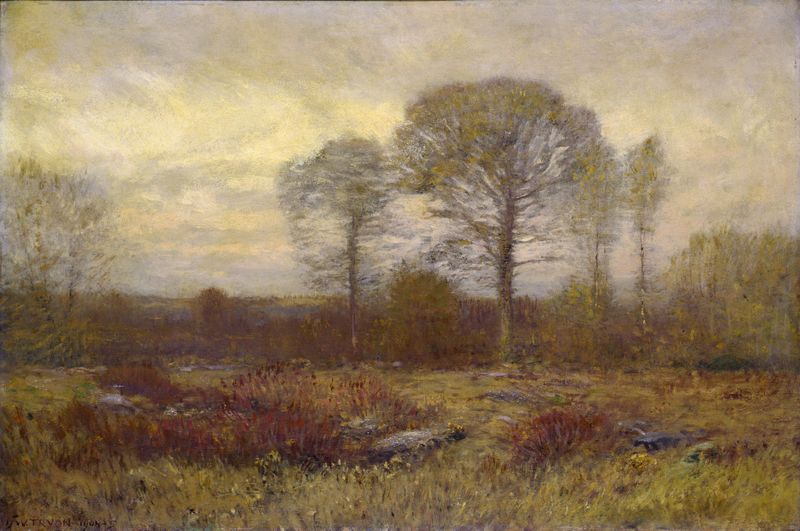
Could beauty survive in a century of chaos? Shadow plays a pivotal role in November Morning, inviting us to reflect on the fragile interplay between light and darkness. Look to the left at the delicate interplay of soft hues where the pale morning light begins to break through the dense canopy of trees. Notice how Tryon masterfully captures the chill of early November with muted greens and browns, a palette that whispers of solitude and introspection. The gentle strokes combined with the cool, misty atmosphere create a sense of calm, as if the world is holding its breath, poised between night and the promise of day. The scene speaks of quiet resilience; the light, though faint, filters through the branches, suggesting hope amid the encroaching shadows.
The juxtaposition of the dark, looming trees against the luminous sky creates a tension that echoes the struggles of the early 20th century—the transition between eras and the uncertainty it brought. Each stroke reveals not just a landscape but a deeper narrative of endurance, as nature stands unyielding against time. Dwight William Tryon painted this work between 1901 and 1902 in his studio in the New England region, a period marked by his exploration of light and atmosphere. During this time, the art world was shifting towards modernism, and the influence of impressionism was palpable.
Tryon's focus on capturing fleeting moments of beauty reflects both a personal meditation on nature and a response to a world increasingly aware of its own fragility.
More Artworks by Dwight William Tryon
Browse all →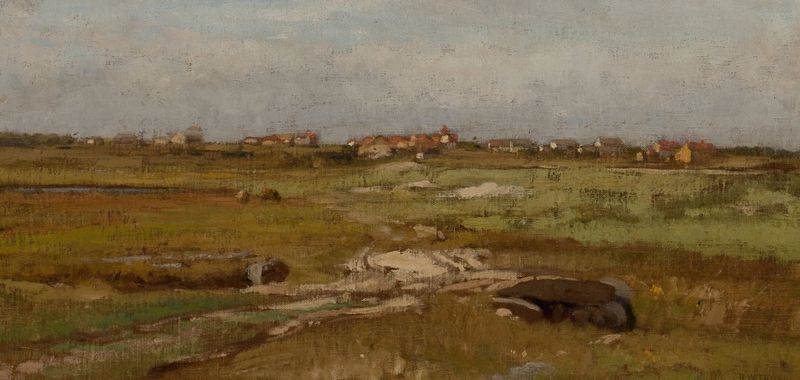
Marsh Landscape
Dwight William Tryon
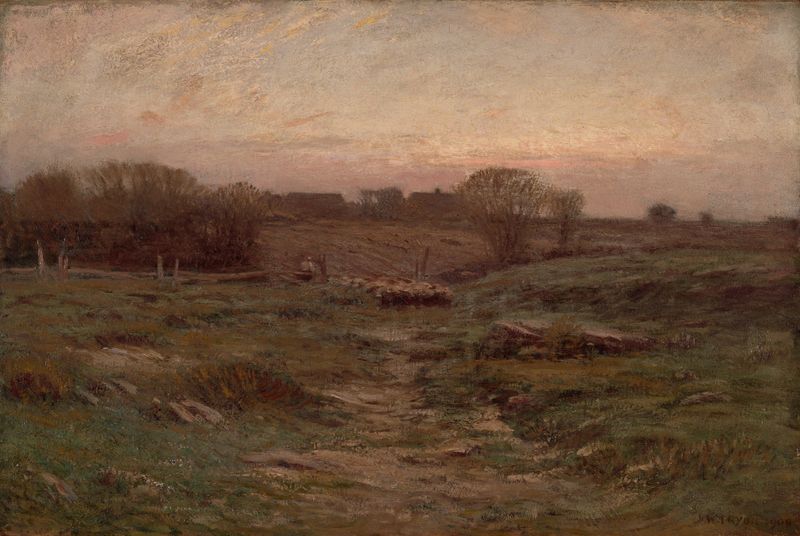
Landscape (Sheep in the Valley)
Dwight William Tryon
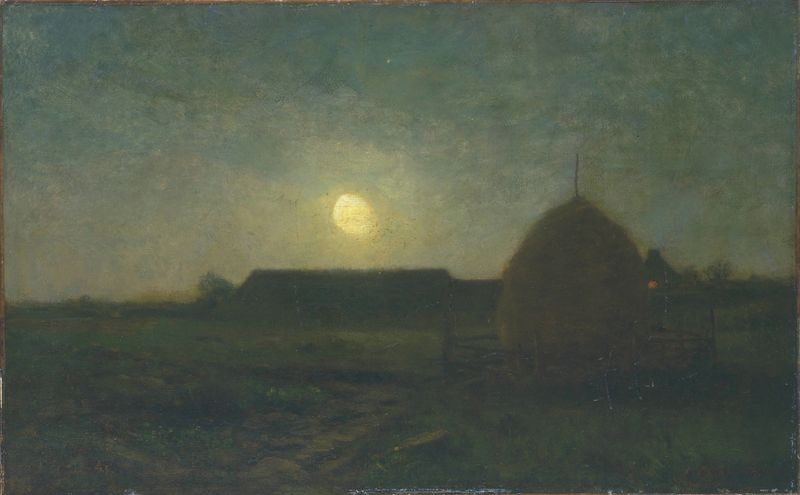
Moonlight
Dwight William Tryon

Evening Landscape
Dwight William Tryon
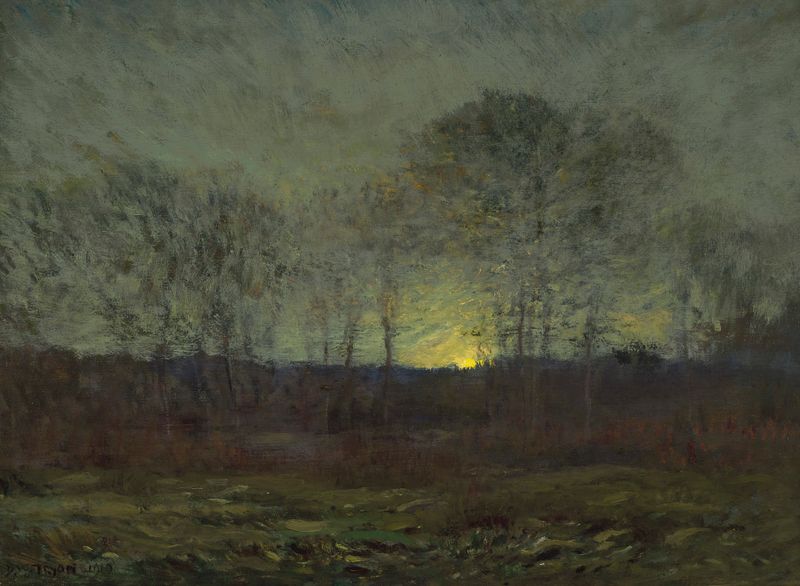
Moonrise
Dwight William Tryon
November
Dwight William Tryon

Coastal Scene
Dwight William Tryon

Twilight
Dwight William Tryon
Morning in September
Dwight William Tryon

A Glimpse of the Sea
Dwight William Tryon





