
Moonlight — History & Facts
What if beauty was never meant to be finished? In Moonlight, a world suspended in twilight beckons us to explore the tension between light and shadow. Look to the foreground where a shimmering lake reflects the ethereal glow of the moon, casting a silvery light that dances upon the water's surface. Notice how the trees stand sentinel along the banks, their dark silhouettes providing a stark contrast to the luminous sky. The subtle gradations of blue and gray create a harmonious balance, inviting the viewer to linger in this tranquil yet mysterious landscape.
Each brushstroke captures the transient beauty of dusk, a fleeting moment frozen in time. Yet, beneath the serenity lies an undercurrent of melancholy. The soft light struggles to pierce the encroaching shadows, suggesting a battle between enlightenment and the unknown. The placement of the moon, high and central, instills a sense of longing, as if it yearns to illuminate the deeper depths of the forest that remain cloaked in darkness.
This interplay of light and shadow reveals not only the beauty of nature but also the ambiguity of existence itself—what can be seen and what lies hidden. In 1887, Tryon created Moonlight during a period marked by the rise of American Impressionism, a movement that sought to capture the ephemeral qualities of light. Living in Massachusetts at the time, he was influenced by the natural beauty surrounding him and the artistic community focused on exploring color and atmosphere. This work embodies his commitment to portraying the sublime, inviting viewers to contemplate both the visible and the unseen in our shared experience.
More Artworks by Dwight William Tryon
Browse all →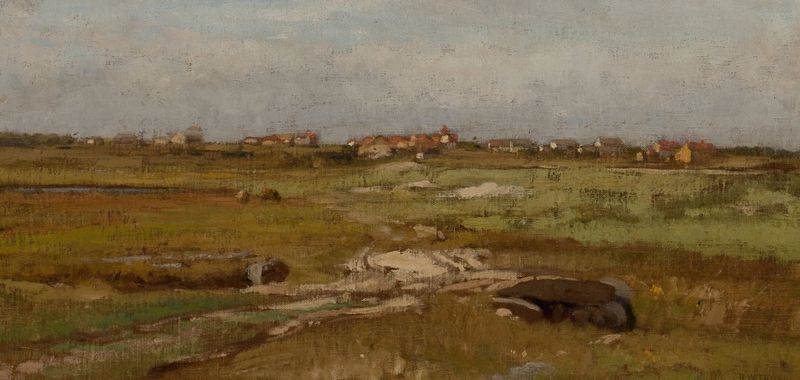
Marsh Landscape
Dwight William Tryon
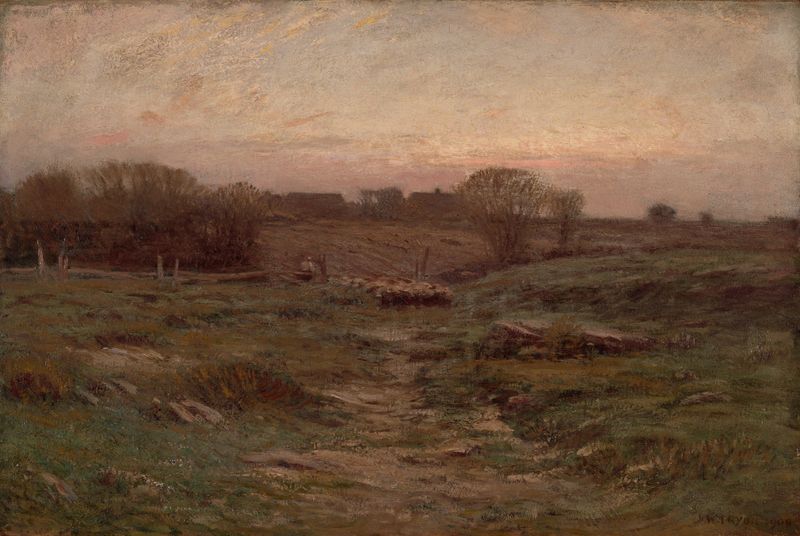
Landscape (Sheep in the Valley)
Dwight William Tryon

Evening Landscape
Dwight William Tryon
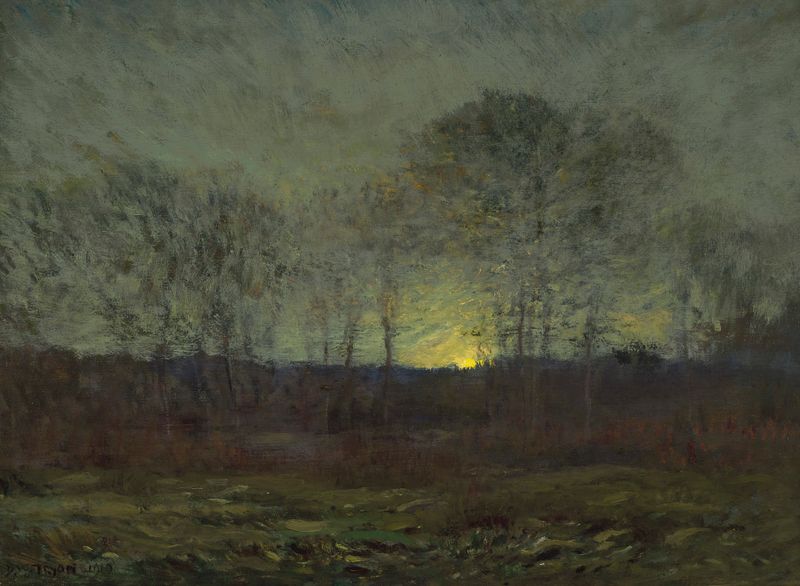
Moonrise
Dwight William Tryon
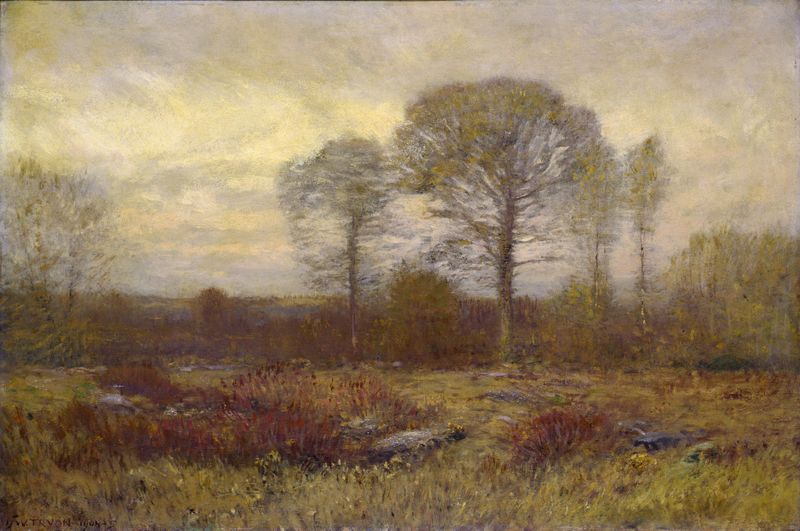
November
Dwight William Tryon
November Morning
Dwight William Tryon

Coastal Scene
Dwight William Tryon

Twilight
Dwight William Tryon
Morning in September
Dwight William Tryon

A Glimpse of the Sea
Dwight William Tryon





