
Miles to Salem — History & Facts
In the stillness of its portrayal, fear seeps through the layers of paint, filling the air with an unsettling anticipation. Look to the center, where a solitary figure trudges along a snow-covered path, the snowflakes gently obscuring the horizon. Notice how the cool, muted palette of whites and blues contrasts sharply with the rich browns of the figure’s coat, drawing your eye directly to their determined stance. The way light plays on the snow creates a delicate shimmer, yet it casts long shadows that seem to swallow the landscape.
The depth of the trees lining the path serves as a claustrophobic boundary, emphasizing the isolation of the traveler in their journey. In this composition, an inherent tension arises from the juxtaposition of the peaceful winter scenery and the figure’s burdened gait. Each footstep appears weighed down by an unseen dread, hinting at a struggle beyond the physical journey. The surrounding stillness of nature is laden with whispers of uncertainty, provoking the viewer to contemplate the fears that linger just out of sight.
It’s a moment that resonates with the universal fear of the unknown, a powerful emotion captured in stillness. In 1862, George Henry Durrie created this work while based in Connecticut, amidst the turmoil of the American Civil War. The artist was known for his serene landscapes, but during this period, he grappled with the realities of a nation divided and the personal impacts of loss and separation. The year marked a time of profound change in America, and Durrie’s work reflects both the external conflict and the internal fears resonating within the hearts of those watching their world transform.
More Artworks by George Henry Durrie
Browse all →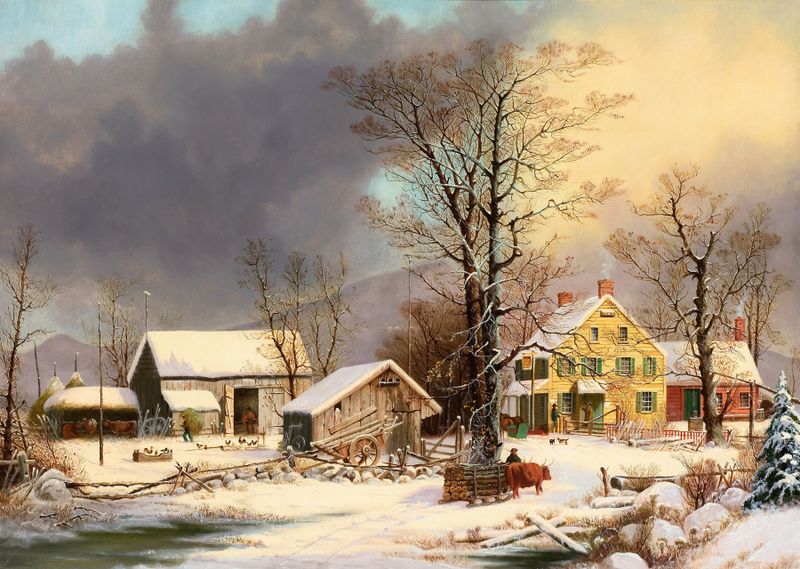
Winter in the Country, A Cold Morning
George Henry Durrie

Winter Scene in New Haven, Connecticut
George Henry Durrie
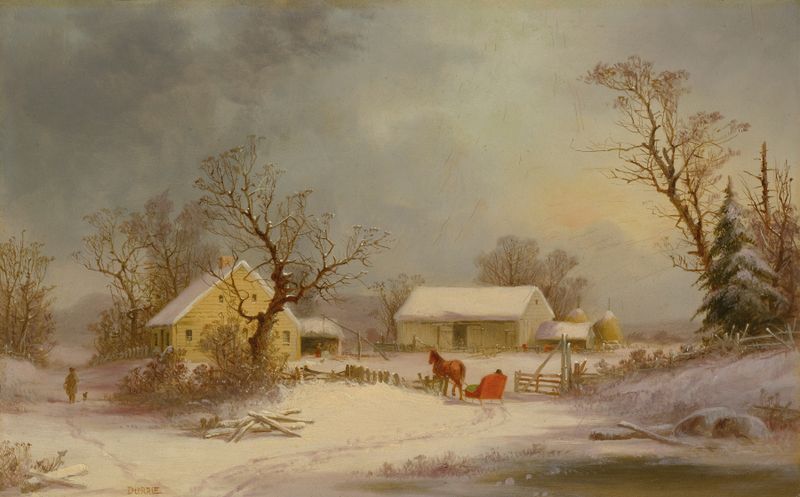
Winter-Time On The Farm
George Henry Durrie
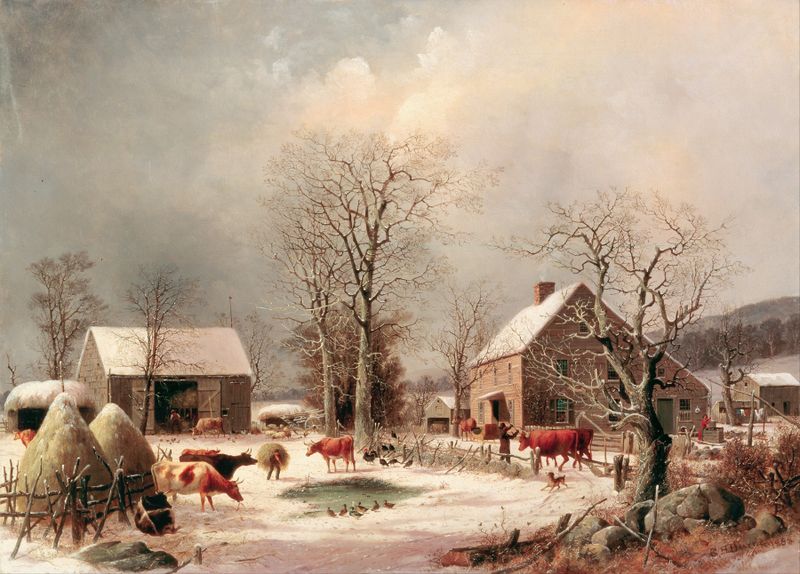
Farmyard in Winter
George Henry Durrie
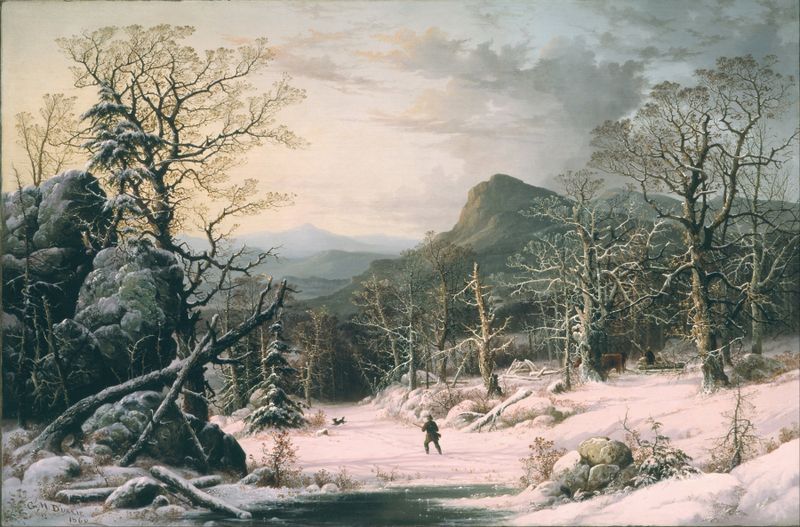
Hunter in Winter Wood
George Henry Durrie
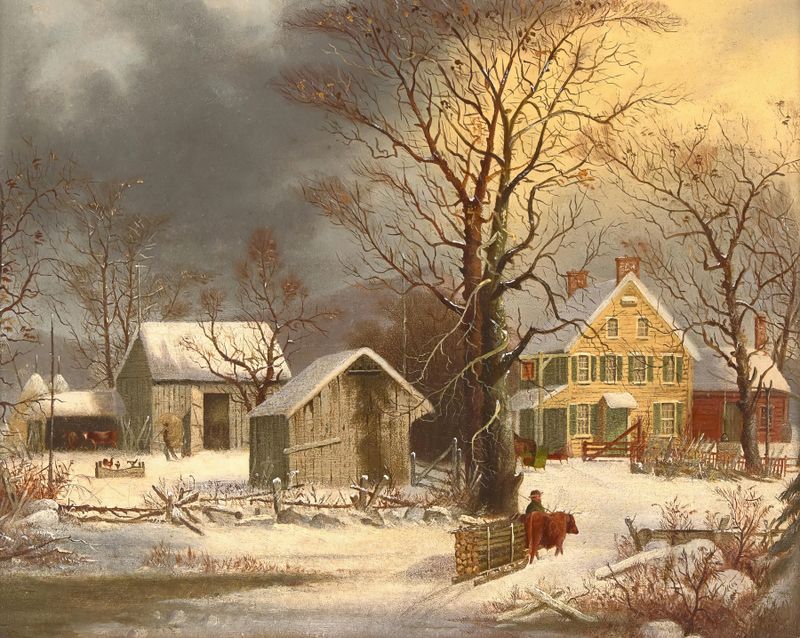
Winter in the Country, A Cold Morning
George Henry Durrie
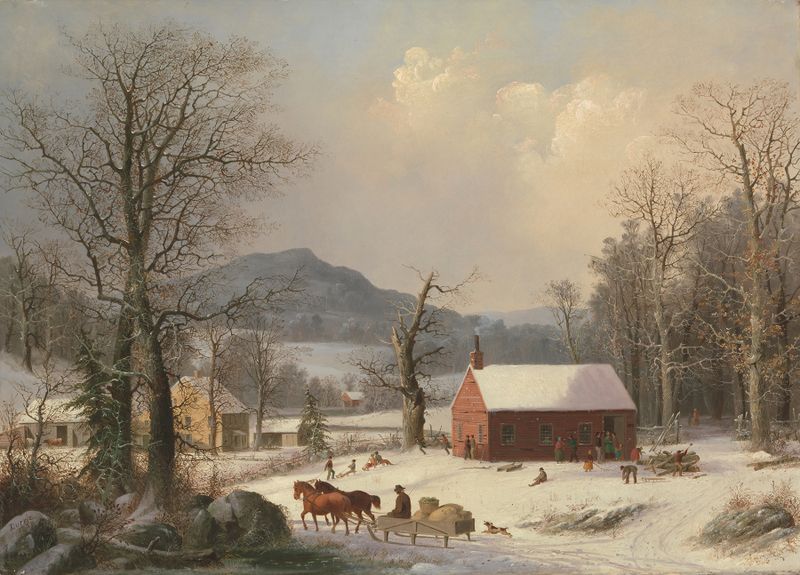
Red School House (Country Scene)
George Henry Durrie

Winter in the Country
George Henry Durrie
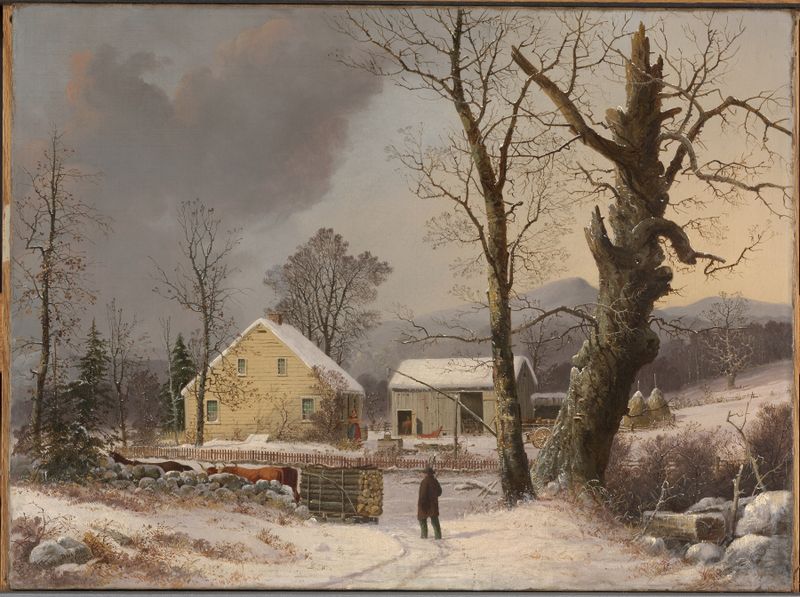
Winter Landscape
George Henry Durrie





