
Winter Landscape — History & Facts
What if silence could speak through light? In George Henry Durrie's Winter Landscape, the hush of an icy world whispers tales of decay and the passage of time, inviting contemplation of nature’s quiet endurance. Look to the foreground where snow blankets the ground like a soft, white shroud, creating a serene canvas that draws the eye. Notice how the muted palette of pale blues and soft grays gives way to the brighter hues of a low-hanging sun, its golden rays piercing through the skeletal branches of barren trees. The delicate stroke of the artist’s brush renders the frost-kissed landscape with a remarkable sense of stillness, where each shadow tells a story of the chill that numbs the earth beneath. Delve deeper into the painting, and you’ll uncover layers of contrast between warmth and cold, life and decay.
The branches, stripped bare, hint at the cycle of seasons, while the lingering sunlight teases the promise of renewal. Here, beauty arises from desolation; every glint of light on the snow becomes an emblem of resilience. The scene speaks to the heart of winter—a dormant beauty, waiting patiently for spring's embrace. In 1859, during a period of tumultuous change in America, Durrie crafted this work while living in New Haven, Connecticut.
As the world around him grappled with societal shifts, he turned to the serene landscapes of his home, capturing the essence of winter with a focus on tranquility and solitude. His ability to elevate the ordinary to the extraordinary reflects a deepening appreciation for nature’s cycles amidst the complexities of contemporary life.
More Artworks by George Henry Durrie
Browse all →
Miles to Salem
George Henry Durrie
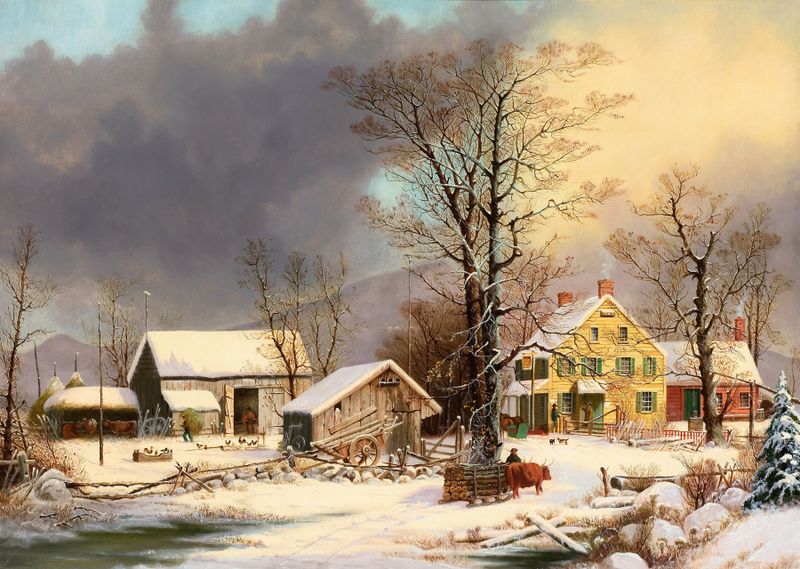
Winter in the Country, A Cold Morning
George Henry Durrie

Winter Scene in New Haven, Connecticut
George Henry Durrie
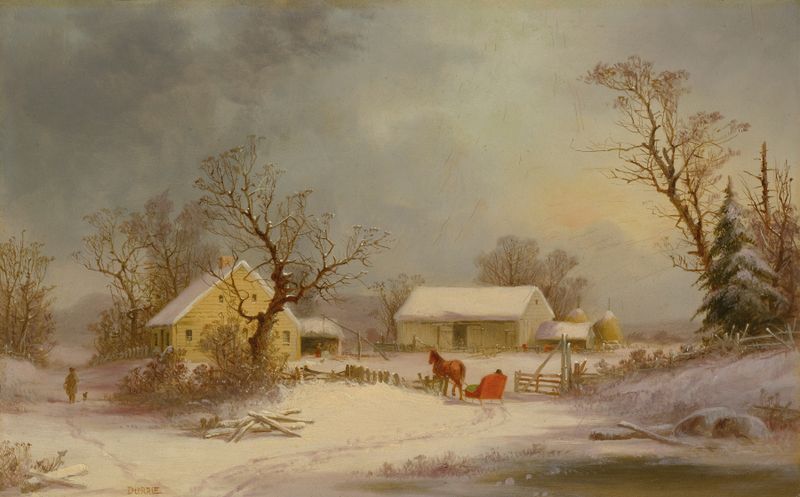
Winter-Time On The Farm
George Henry Durrie
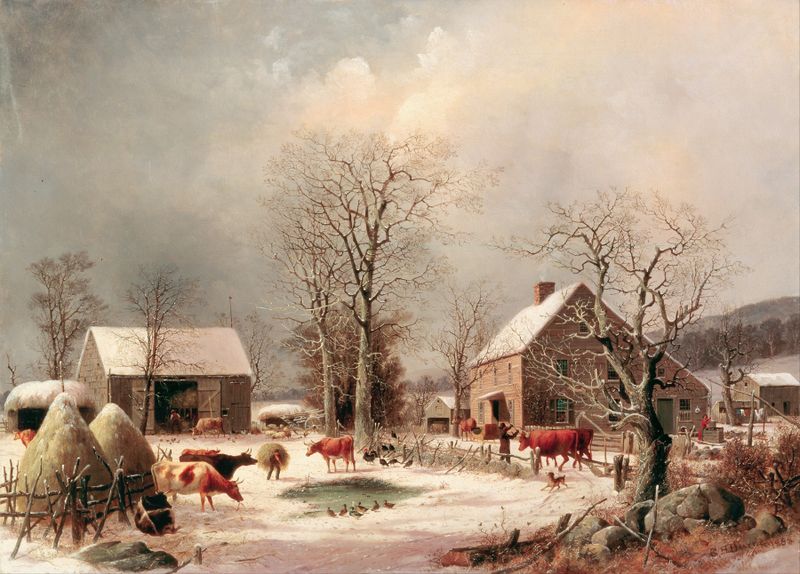
Farmyard in Winter
George Henry Durrie
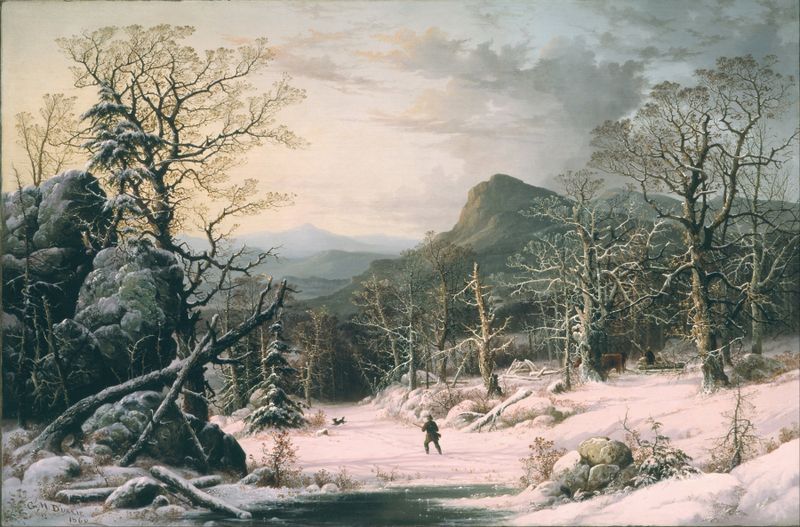
Hunter in Winter Wood
George Henry Durrie
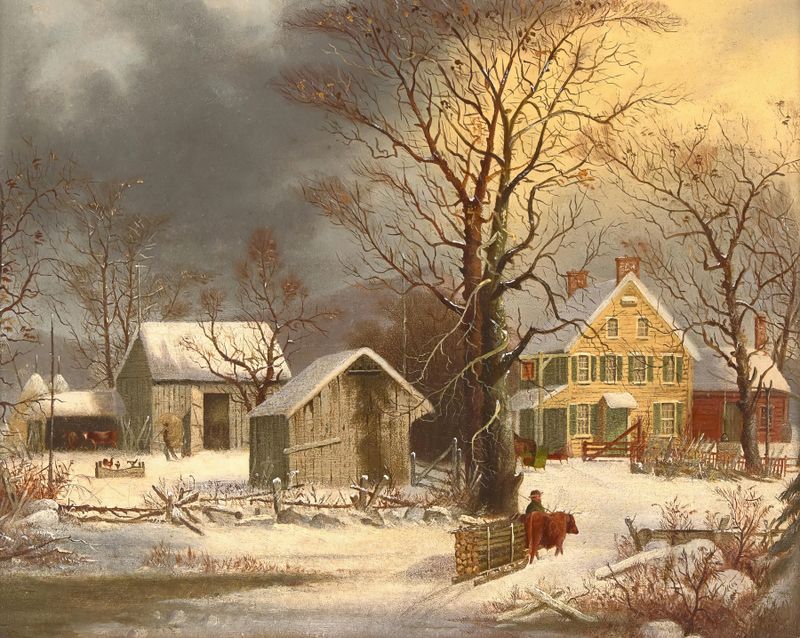
Winter in the Country, A Cold Morning
George Henry Durrie
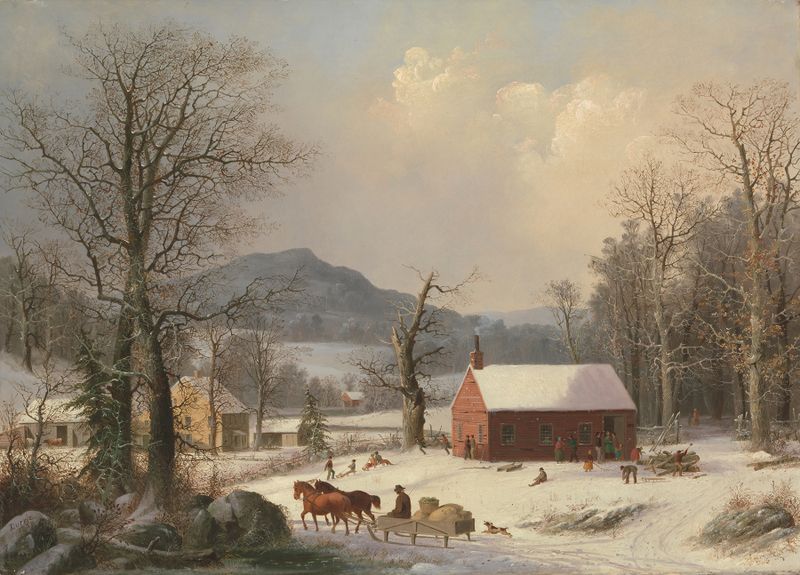
Red School House (Country Scene)
George Henry Durrie

Winter in the Country
George Henry Durrie





