
Winter Scene in New Haven, Connecticut — History & Facts
Is this a mirror — or a memory? The chill of winter envelops the town, a frozen tableau capturing the quiet melancholy of a season steeped in decay and stillness. Focus on the sweeping expanse of the snow-blanketed landscape, where the soft white drifts cradle the somber brown of bare trees. The horizon draws your eye towards the distant silhouettes of homes, rendered in muted tones that suggest warmth yet remain uninviting. Notice how the light reflects off the shimmering surface of the snow, producing an ethereal glow that contrasts with the stark outlines of the cold, bare branches overhead. The painting portrays not just a winter scene but a poignant reminder of time's passage.
The starkness of the snowy ground hints at both the beauty and barrenness of the season—life seemingly paused, yet rich with the stories of days gone by. The juxtaposition of the vibrant sky against the frozen earth evokes an emotional tension, suggesting that beneath this serene facade lies the inevitable decay of life and the cycle of renewal. In 1858, George Henry Durrie created this piece while living in New Haven, Connecticut. At this time, American art was shifting towards a celebration of landscapes, and Durrie was pivotal in this evolution, focusing on the New England experience.
His work often reflected the changing seasons, providing a glimpse into the realities of rural life and the powerful connection between humanity and nature.
More Artworks by George Henry Durrie
Browse all →
Miles to Salem
George Henry Durrie
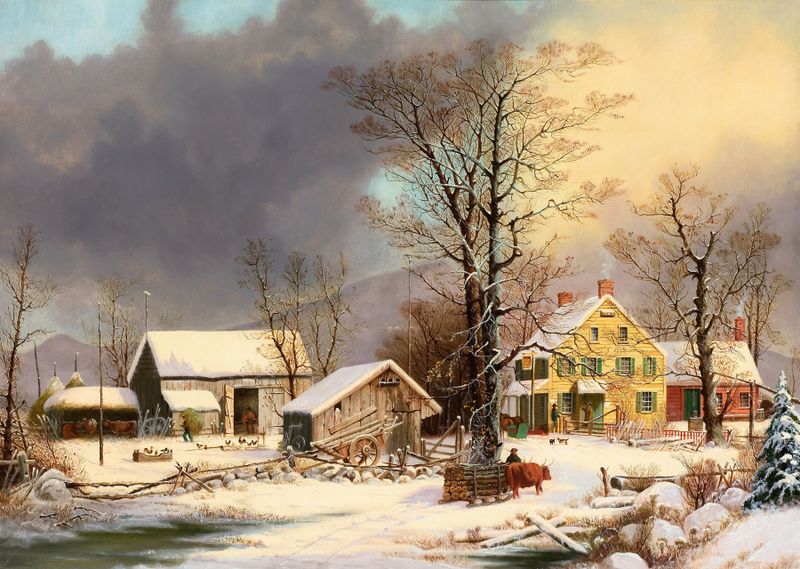
Winter in the Country, A Cold Morning
George Henry Durrie
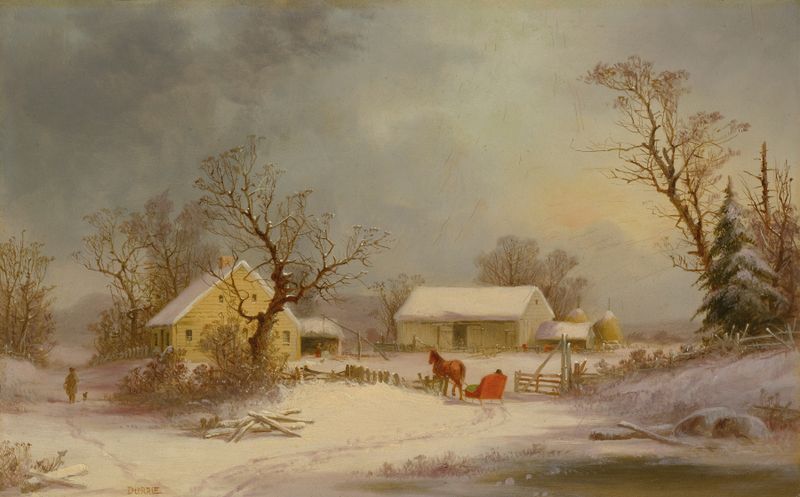
Winter-Time On The Farm
George Henry Durrie
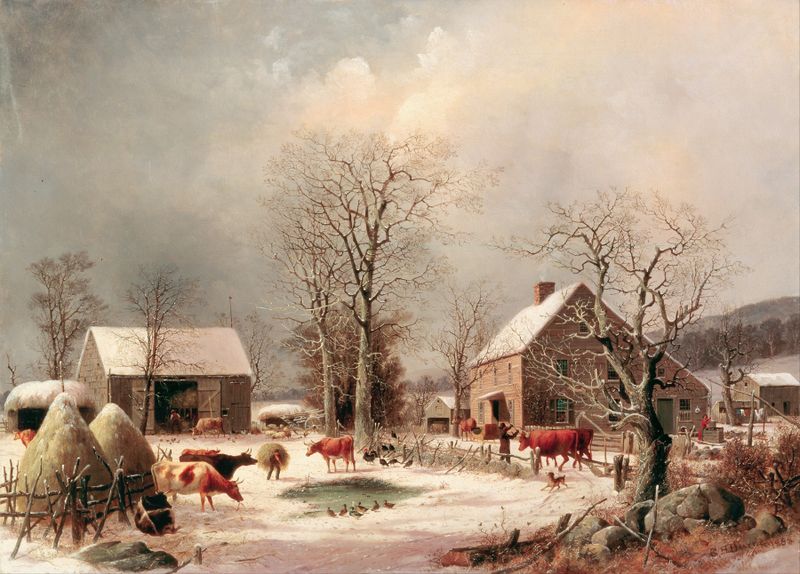
Farmyard in Winter
George Henry Durrie
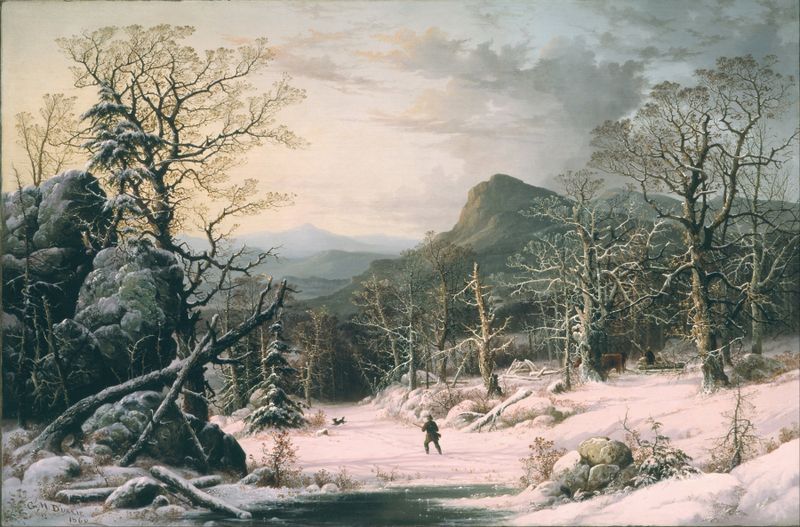
Hunter in Winter Wood
George Henry Durrie
Winter in the Country, A Cold Morning
George Henry Durrie
Red School House (Country Scene)
George Henry Durrie

Winter in the Country
George Henry Durrie
Winter Landscape
George Henry Durrie





