
Hunter in Winter Wood — History & Facts
Who listens when art speaks of silence? In Hunter in Winter Wood, George Henry Durrie invites us to explore a quiet yet profound moment, capturing the stillness that blankets a world on the brink of change. Look to the left, where a solitary figure clad in warm earth tones contrasts sharply against the crisp white expanse of snow. The hunter stands alert, rifle in hand, surveying the tranquil landscape depicted with intricate brushwork and subtle tonal variations. Note how the gentle greys and browns of the tree trunks intermingle with the silvery light of the winter sun, creating a sense of harmony in this serene yet tense environment.
Each stroke reflects the chill of the air, inviting the viewer to step into this frozen moment. Beneath the surface, the painting reveals a complex interplay of isolation and anticipation. The hunter’s stillness suggests a pause, as though he is contemplating not just the land before him but the tumult of society beyond the woods. This scene speaks to a moment of revolution, a time when the wilderness served as a refuge from a rapidly industrializing world.
The quiet beauty of nature stands in stark contrast to the unrest of the era, highlighting the delicate balance between man's instinct to hunt and his yearning for peace. In 1860, Durrie painted this work while living in the northeastern United States, a time when the nation was divided over issues such as slavery and territorial expansion. He was part of the Hudson River School movement, which sought to emphasize the beauty of American landscapes, reflecting the contemporary desire for national identity. Durrie’s work emerged during an age of profound transformation, where art began to articulate not just beautiful vistas but the very essence of a changing society.
More Artworks by George Henry Durrie
Browse all →
Miles to Salem
George Henry Durrie
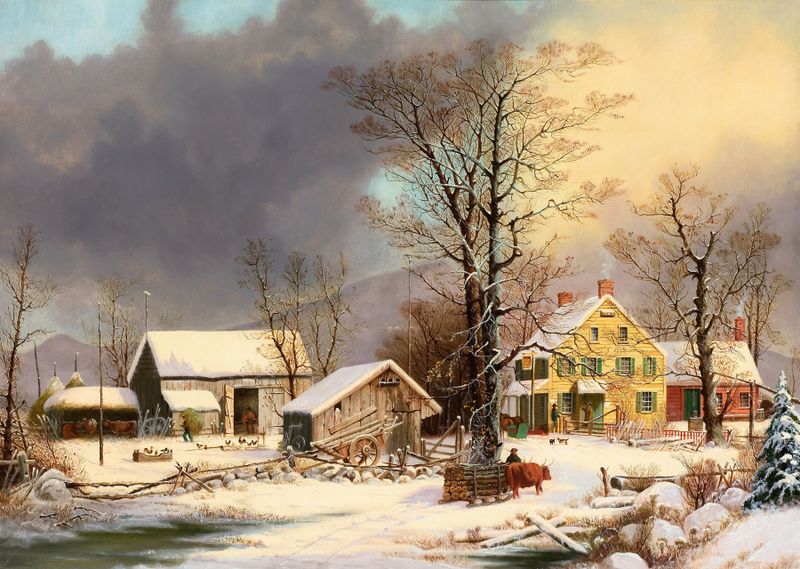
Winter in the Country, A Cold Morning
George Henry Durrie

Winter Scene in New Haven, Connecticut
George Henry Durrie
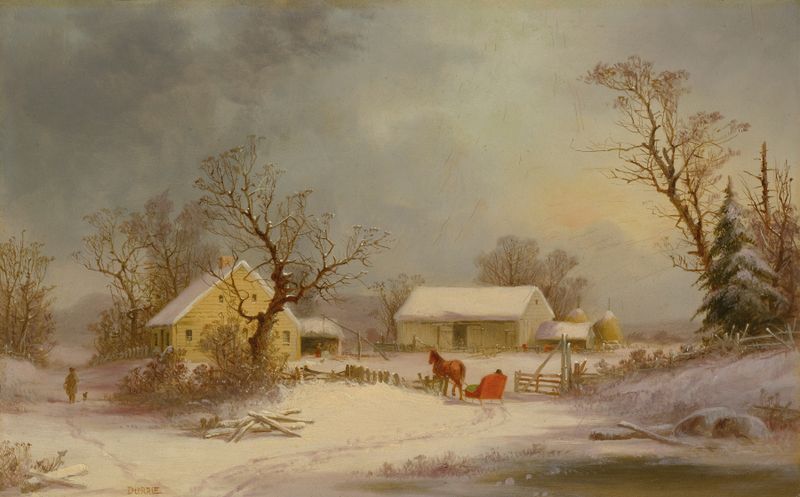
Winter-Time On The Farm
George Henry Durrie
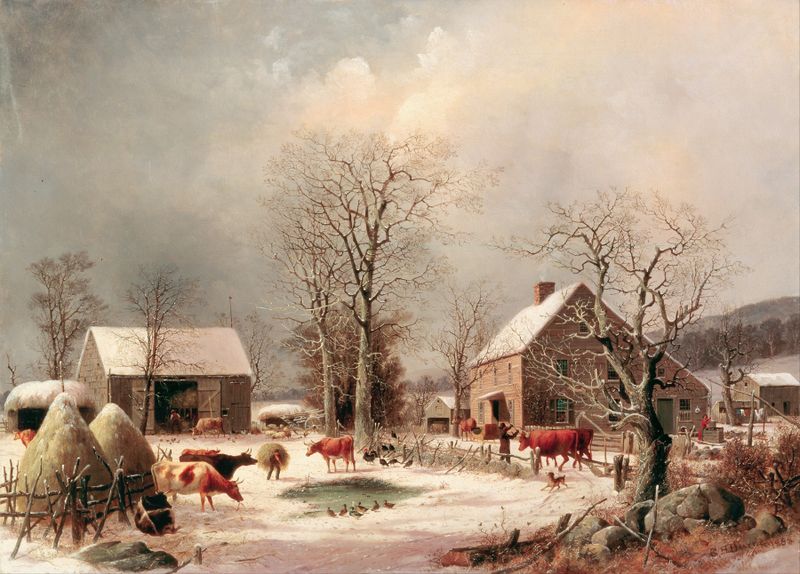
Farmyard in Winter
George Henry Durrie
Winter in the Country, A Cold Morning
George Henry Durrie
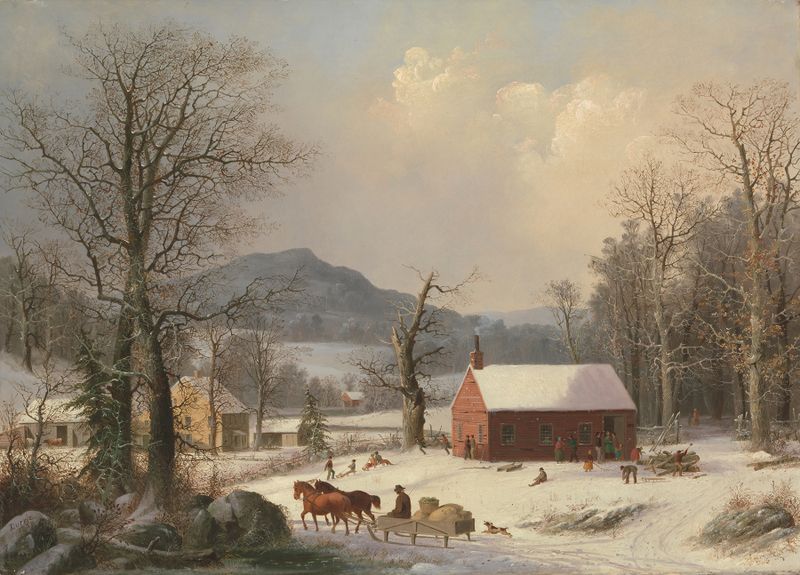
Red School House (Country Scene)
George Henry Durrie

Winter in the Country
George Henry Durrie
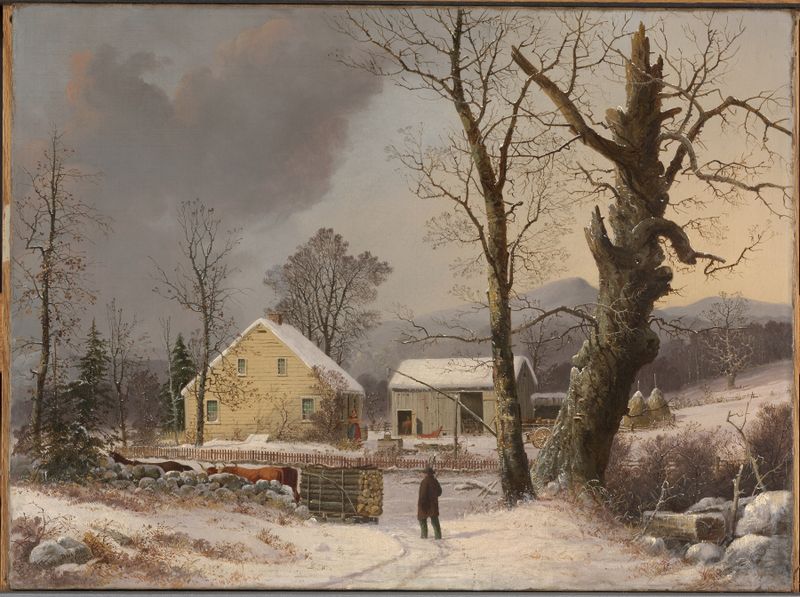
Winter Landscape
George Henry Durrie





