
Winter-Time On The Farm — History & Facts
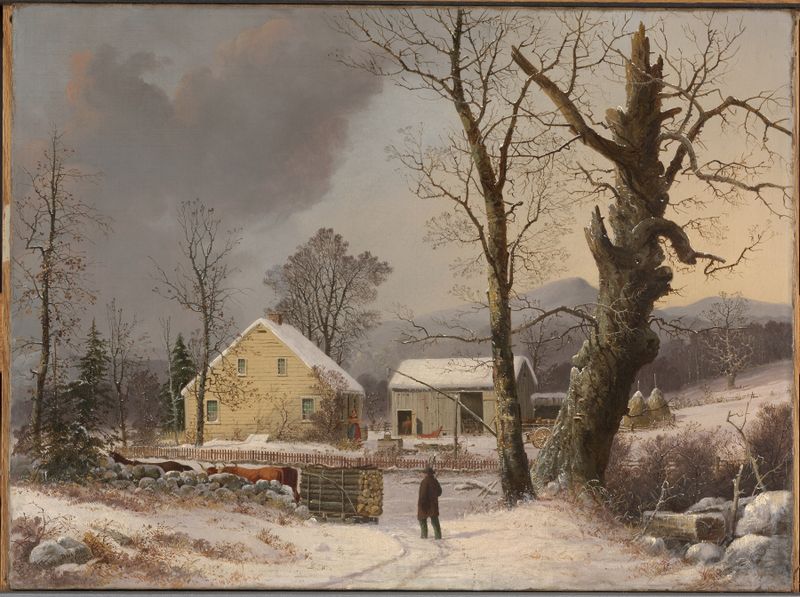
Where does light end, and longing begin? This question resonates deeply in the tranquil landscape captured in Winter-Time On The Farm. Focus first on the luminous glow illuminating the snow-covered fields, where the chill of winter is both a gentle embrace and a distant memory. Notice how the soft hues of blue, white, and muted browns create a serene atmosphere, inviting you to step into the scene. The farmhouse, snug against the backdrop of soft, rolling hills, becomes a refuge against the starkness of winter, its warm light a beacon of comfort amidst the cold. Peering closer, the painting reveals hidden layers of emotion; the farm animals huddled together signify both vulnerability and resilience.
The delicate brushstrokes depict the wind-ruffled snow, suggesting a fleeting moment, as if time itself is captured in the glistening frost. This tension between the tranquility of winter and the underlying longing for warmth and companionship resonates throughout the piece, illustrating the interplay of nature and human existence. In the early 1860s, George Henry Durrie painted Winter-Time On The Farm while living in New Haven, Connecticut. This period was marked by both personal challenges and the broader tumult of the Civil War, which influenced artists of the time.
Durrie's focus on rural serenity and the poignant beauty of everyday life served as a counterbalance to the chaos beyond his canvas, reflecting a desire for solace and connection through his art.
More Artworks by George Henry Durrie
Browse all →
Miles to Salem
George Henry Durrie
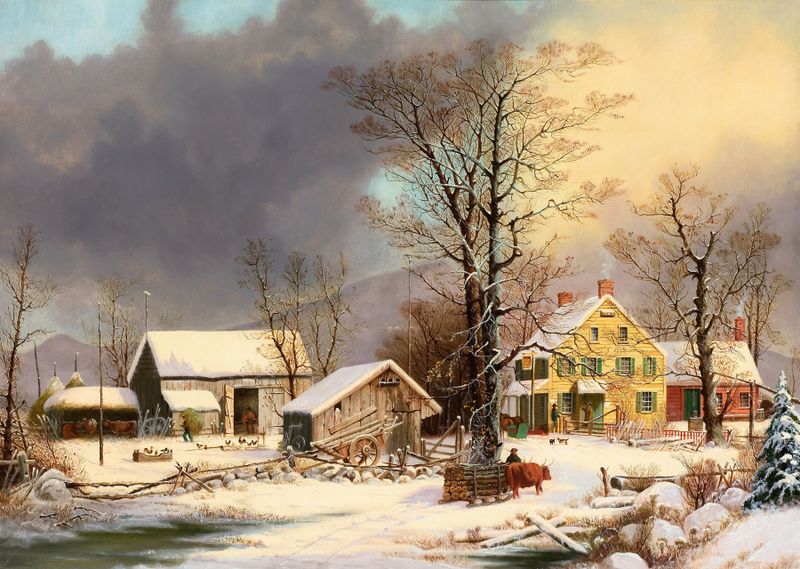
Winter in the Country, A Cold Morning
George Henry Durrie

Winter Scene in New Haven, Connecticut
George Henry Durrie
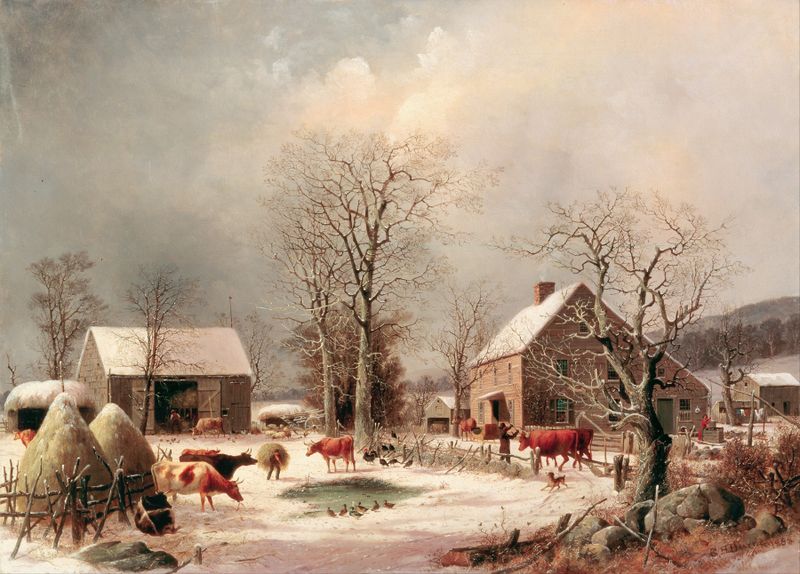
Farmyard in Winter
George Henry Durrie
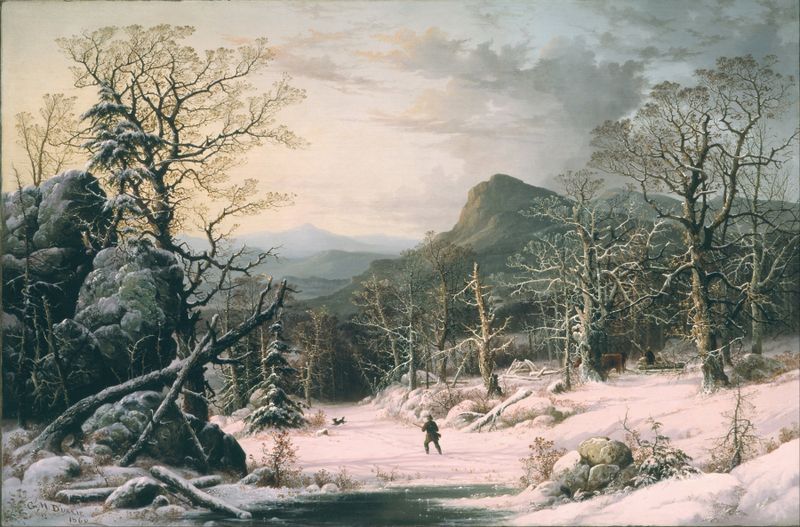
Hunter in Winter Wood
George Henry Durrie
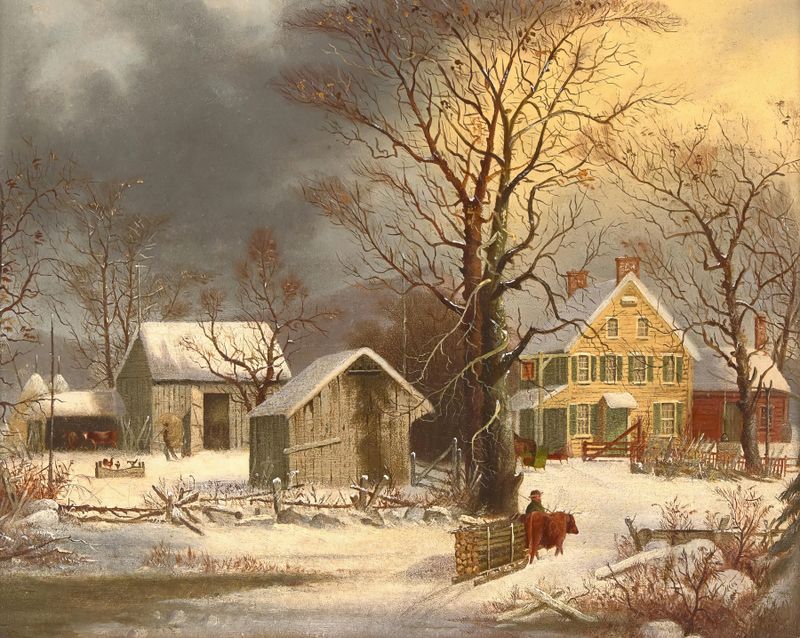
Winter in the Country, A Cold Morning
George Henry Durrie
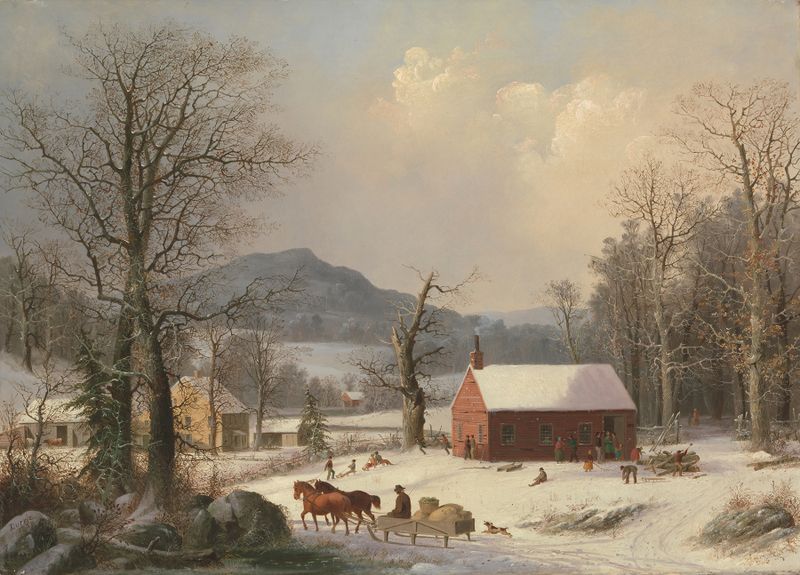
Red School House (Country Scene)
George Henry Durrie

Winter in the Country
George Henry Durrie
Winter Landscape
George Henry Durrie





