
Winter in the Country — History & Facts
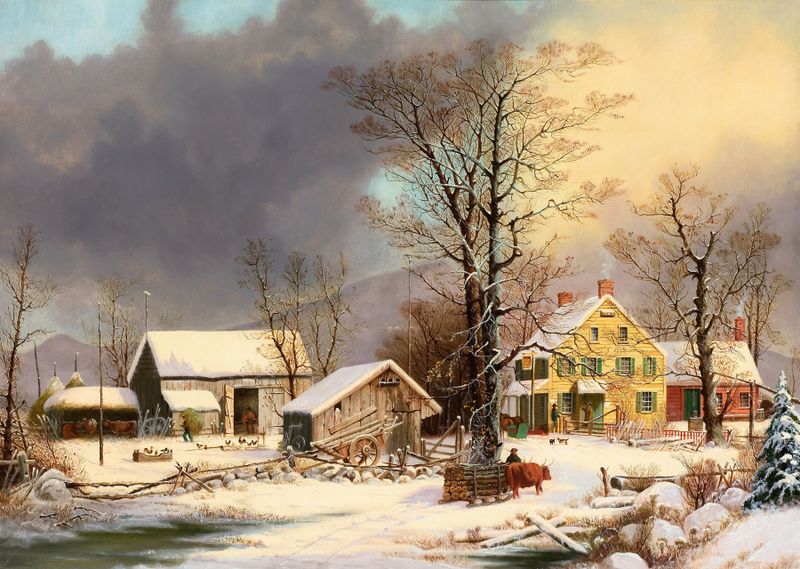
In the quiet of winter, a tranquil landscape reveals layers of truth hidden beneath the snow’s cold embrace. Look to the center where a modest farmhouse stands, its warm tones contrasting against the pallid blanket of snow. The gentle slopes of the field create a rhythmic flow, leading your gaze to the distant horizon. Notice how the muted blues and whites of the sky blend effortlessly with the earth below, while the warm light spilling from the windows invites a sense of comfort in the icy solitude.
Each stroke brings forth an intimate connection to the scene, as if inviting you to step into a moment suspended in time. Yet beneath the serene facade, emotional tensions pulse quietly. The smoke curling from the chimney hints at life within, while the barren trees evoke a sense of longing, conveying a narrative of resilience amidst the chilling grasp of winter. The untouched snow invites contemplation, revealing both solitude and the hope of renewal.
In this stark landscape, Durrie captures the duality of nature, reminding us that bleakness can coexist with warmth and shelter. Created around 1858, this piece emerged during a period of significant change in America. Durrie, living in New Haven, Connecticut, found inspiration in the rural landscape as the nation grappled with industrialization and urbanization. The charm of rural life, profoundly capturing the essence of a simpler time, resonates deeply amidst the shifting realities of the age.
More Artworks by George Henry Durrie
Browse all →
Miles to Salem
George Henry Durrie
Winter in the Country, A Cold Morning
George Henry Durrie

Winter Scene in New Haven, Connecticut
George Henry Durrie
Winter-Time On The Farm
George Henry Durrie
Farmyard in Winter
George Henry Durrie
Hunter in Winter Wood
George Henry Durrie
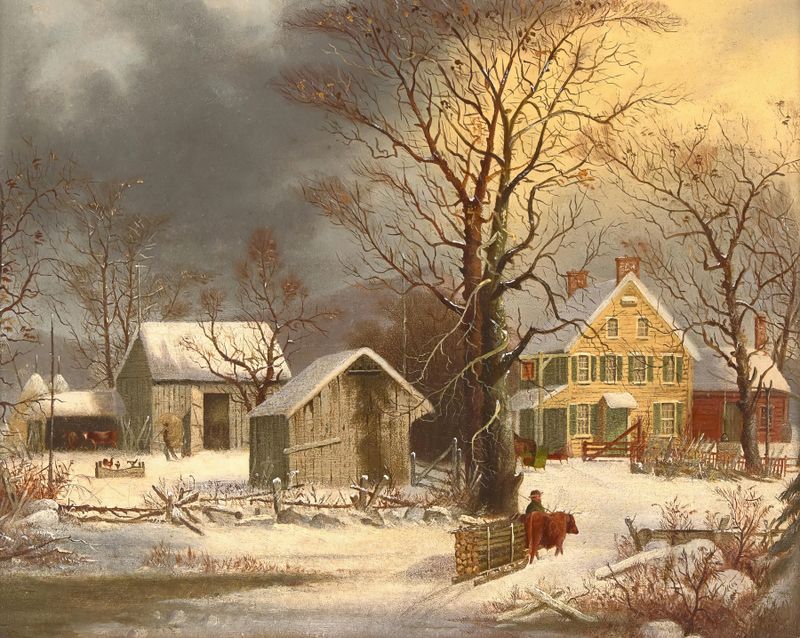
Winter in the Country, A Cold Morning
George Henry Durrie
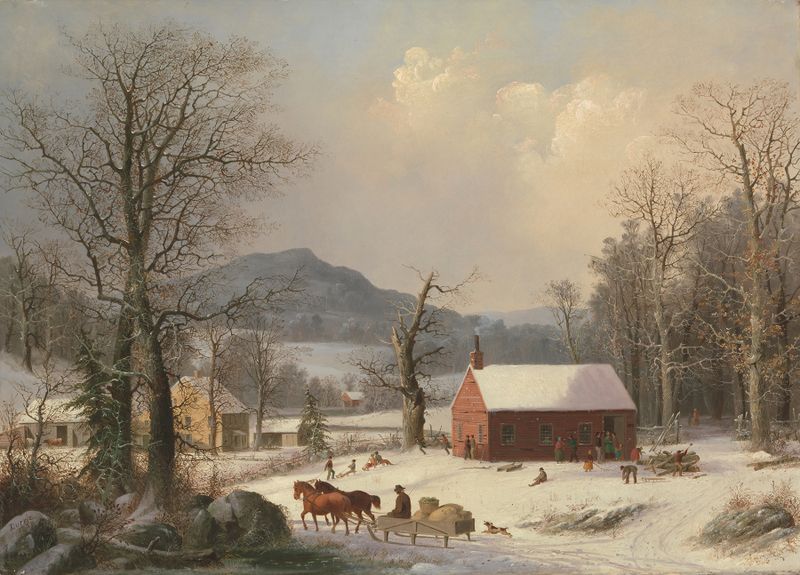
Red School House (Country Scene)
George Henry Durrie
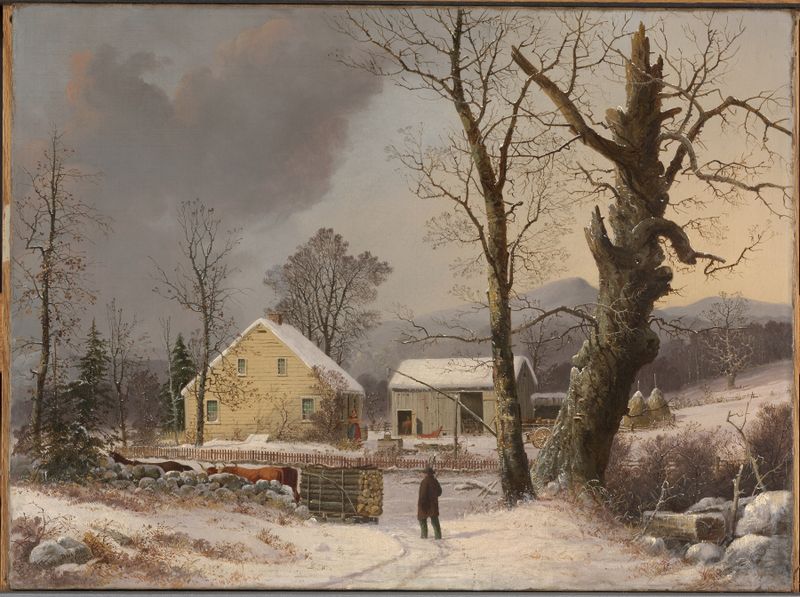
Winter Landscape
George Henry Durrie





