
Winter in the Country, A Cold Morning — History & Facts
“Where do memories find refuge when the world outside is a frozen tableau?” Look closely at the canvas, and your gaze will immediately be drawn to the tranquil scene of a New England farmstead peeking through a veil of snow. The deliberate strokes of white and blue create a cold ambiance, contrasting sharply with the warm, earthy tones of the wooden structures. Notice how the light subtly reflects off the snow, bringing a gentle glow to the landscape, inviting you to explore the serenity of a cold winter morning. Yet, beneath the calm surface lies a tension between solitude and the warmth of home.
The lone figure trudging through the snow evokes a sense of resilience and quiet determination. The contrast between his dark clothing and the vibrant white surroundings speaks to the struggle inherent in survival. Each shadow casts by the trees enhances the feeling of isolation, while the faint signs of life, like the smoke rising from the chimneys, hint at the warmth of hearth and memory, drawing viewers deeper into the emotional narrative. In 1863, during the midst of the American Civil War, George Henry Durrie painted this evocative landscape.
Settled in New Haven, he created works that celebrated the pastoral beauty of rural life, often capturing the essence of seasonal changes. This period in his life saw him navigating the complexities of a nation at war, using his art as a means to evoke a sense of peace and nostalgia amidst the uncertainty of his time.
More Artworks by George Henry Durrie
Browse all →
Miles to Salem
George Henry Durrie
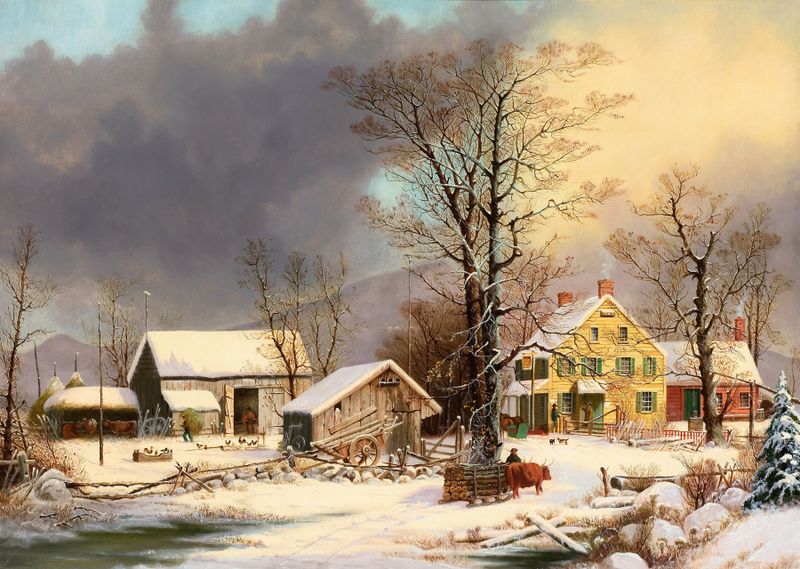
Winter in the Country, A Cold Morning
George Henry Durrie

Winter Scene in New Haven, Connecticut
George Henry Durrie
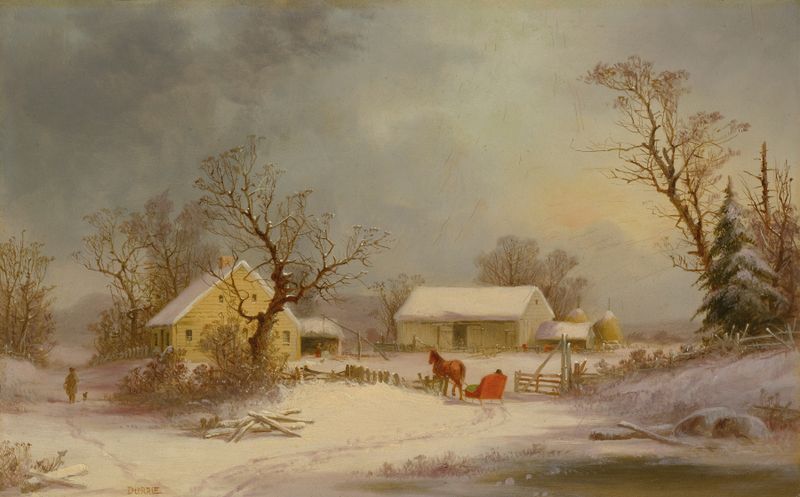
Winter-Time On The Farm
George Henry Durrie
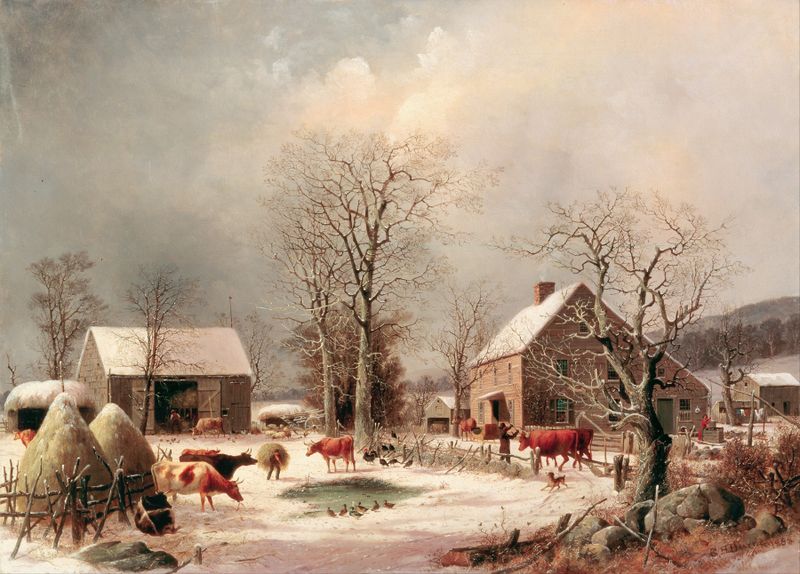
Farmyard in Winter
George Henry Durrie
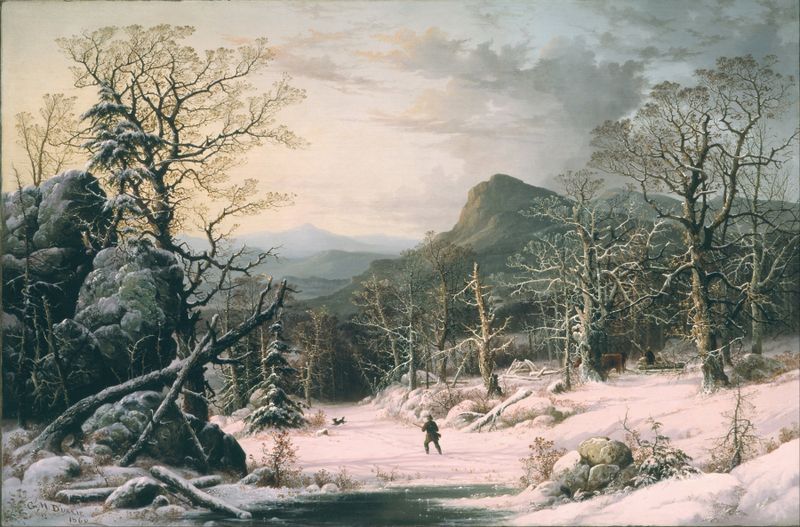
Hunter in Winter Wood
George Henry Durrie
Red School House (Country Scene)
George Henry Durrie

Winter in the Country
George Henry Durrie
Winter Landscape
George Henry Durrie





