
Winter in the Country, A Cold Morning — History & Facts
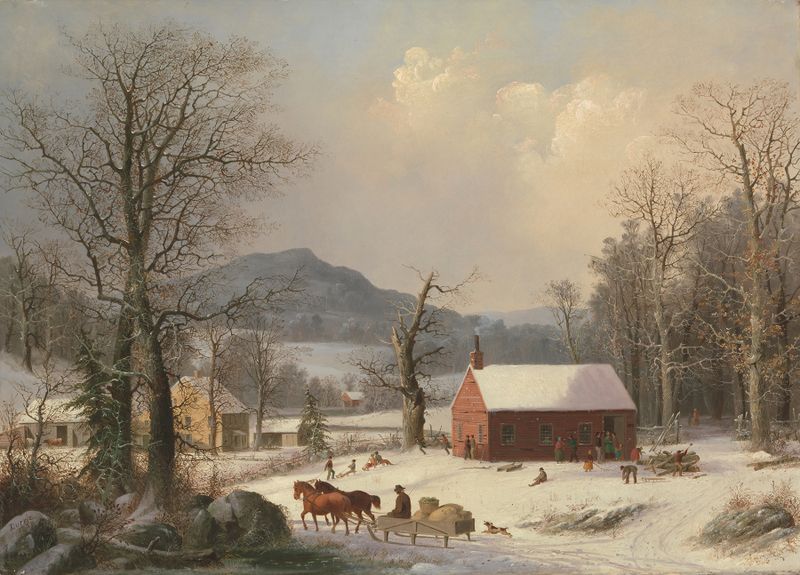
In the stillness of a winter morning, a landscape breathes with a deep longing, evoking memories of warmth amidst the chill. Look to the center of the canvas, where a rustic cabin stands, shrouded in soft blankets of snow. The muted palette of whites and grays intertwines with gentle hints of browns and greens, capturing the stark beauty of the season. The viewer’s gaze is naturally drawn to the smoke curling from the chimney, a delicate reminder of life and warmth within the frozen exterior.
Notice how the light delicately caresses the snow-covered branches, creating a sense of tranquility that contrasts starkly with the biting cold of the landscape. As you explore deeper, observe the figures trudging through the snow, purposeful yet solitary. Their journey reflects more than the physical act of moving through the wintery expanse; it’s an emblem of resilience against nature’s hardships. The soft glow of the sun, barely breaking through the gray sky, symbolizes hope amidst the starkness, suggesting an emotional journey toward warmth and connection. In 1863, during a tumultuous period in American history marked by the Civil War, the artist captured this scene while based in New Haven, Connecticut.
Creating works that embraced the beauty of rural life, Durrie sought to evoke a sense of comfort and nostalgia during challenging times. His depictions of serene landscapes serve as reminders of peace amid chaos, reflecting a longing for simpler, more harmonious days.
More Artworks by George Henry Durrie
Browse all →
Miles to Salem
George Henry Durrie

Winter Scene in New Haven, Connecticut
George Henry Durrie
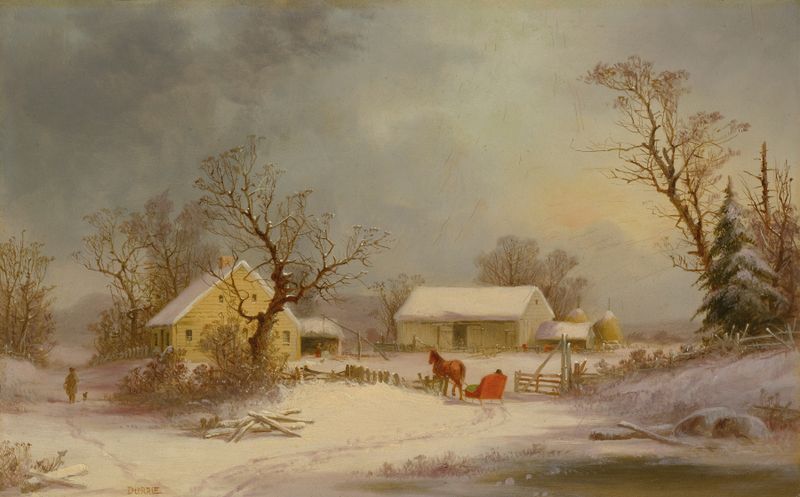
Winter-Time On The Farm
George Henry Durrie
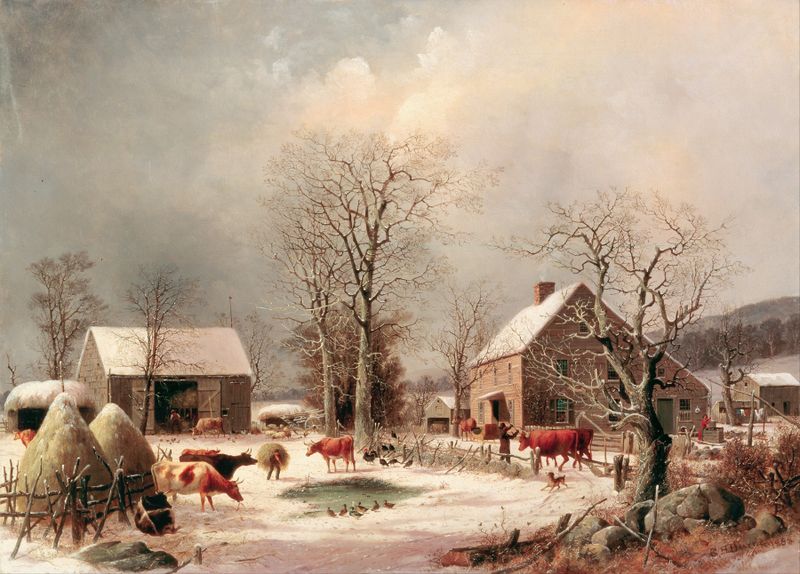
Farmyard in Winter
George Henry Durrie
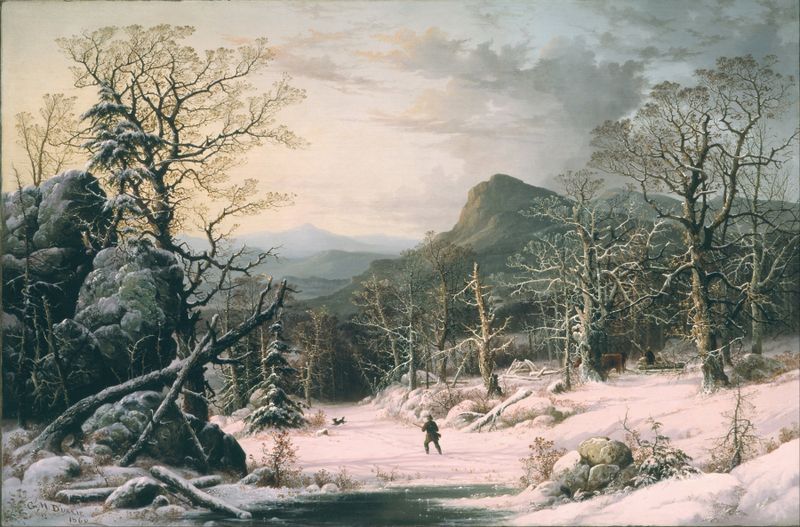
Hunter in Winter Wood
George Henry Durrie
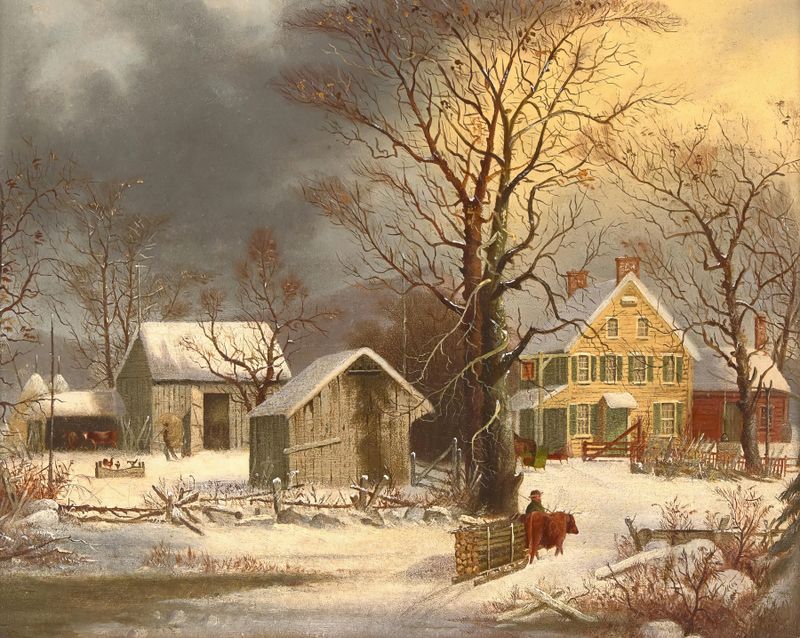
Winter in the Country, A Cold Morning
George Henry Durrie
Red School House (Country Scene)
George Henry Durrie

Winter in the Country
George Henry Durrie
Winter Landscape
George Henry Durrie





