
Mont Blanc — History & Facts
The first thing that grips the viewer in Mont Blanc is the sheer scale of the mountain, its icy flanks rising above a valley that seems to stretch on forever. The eye is pulled upward from the gentle green of the foreground, following a winding river that threads through the landscape like a silver ribbon, until it reaches the brooding shadow of the foothills and, finally, the luminous, snow-laden peaks. The mountain is not just a backdrop but a looming presence, its surface catching the yellow light of a low sun, while clouds drift and gather around its base, blurring the boundary between earth and sky.
The solitary tree in the foreground stands as a kind of witness, its bright leaves a human-scale note in a world dominated by stone and ice. Painted in 1895, this work belongs to a moment when artists like Albert Bierstadt—better known for his grand American vistas—turned their gaze to the Alps, seeking both spectacle and solace in Europe’s most storied peaks. Landscape paintings of this era were often commissioned by collectors eager to possess a fragment of the world’s wonders, whether for private contemplation or public display. This particular painting surfaced at Heritage Auctions in January 2009, a reminder that history has kept few traces of its early life.
Yet, the painting’s cool palette and careful structure speak to a time when artists and viewers alike were learning to see mountains not just as obstacles, but as destinations—places to be admired, studied, and, above all, painted. Stand before it and let your eye wander; the journey is half the pleasure.
More Artworks by Albert Bierstadt

A Storm in the Rocky Mountains, Mt. Rosalie
Albert Bierstadt
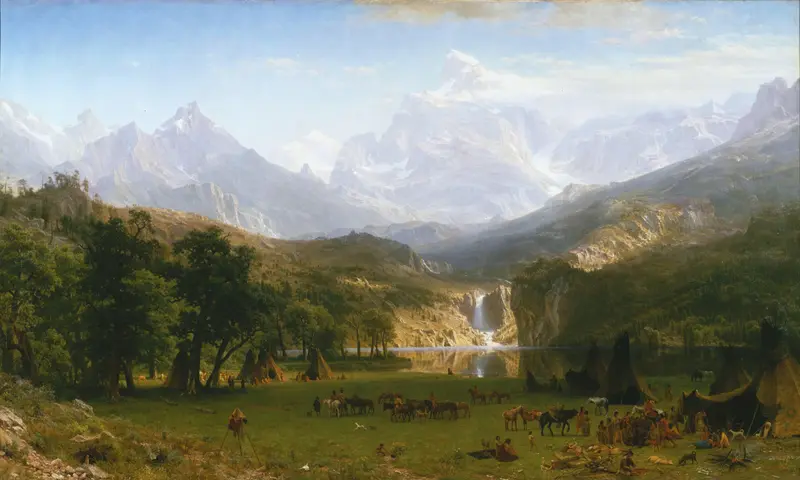
The Rocky Mountains, Lander's Peak
Albert Bierstadt
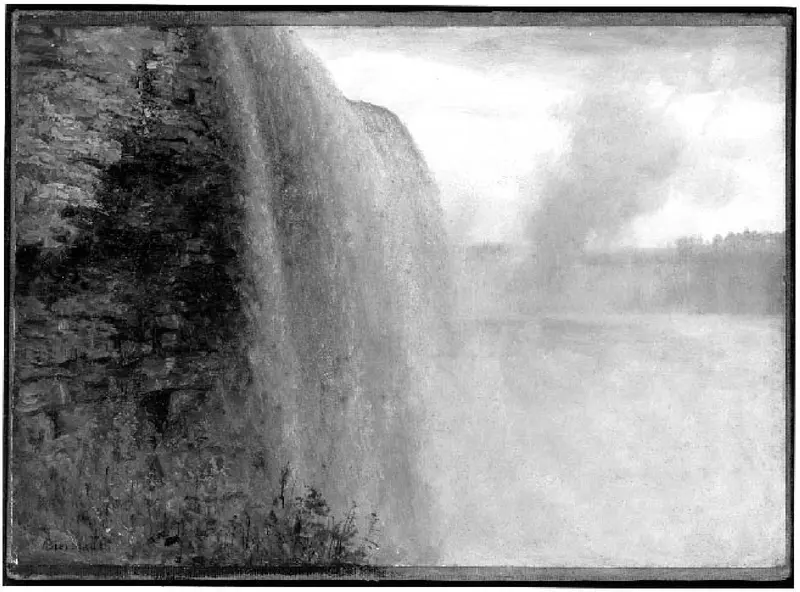
Niagara from the American Side
Albert Bierstadt
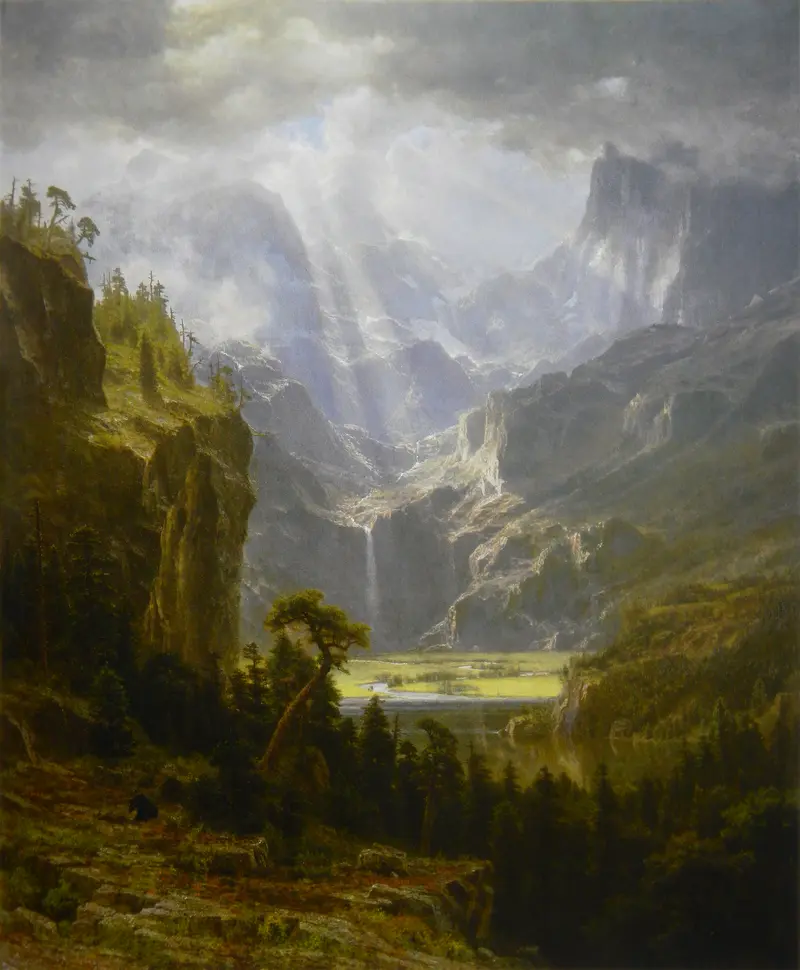
Rocky Mountains, Lander’s Peak
Albert Bierstadt

Valley of the Yosemite
Albert Bierstadt
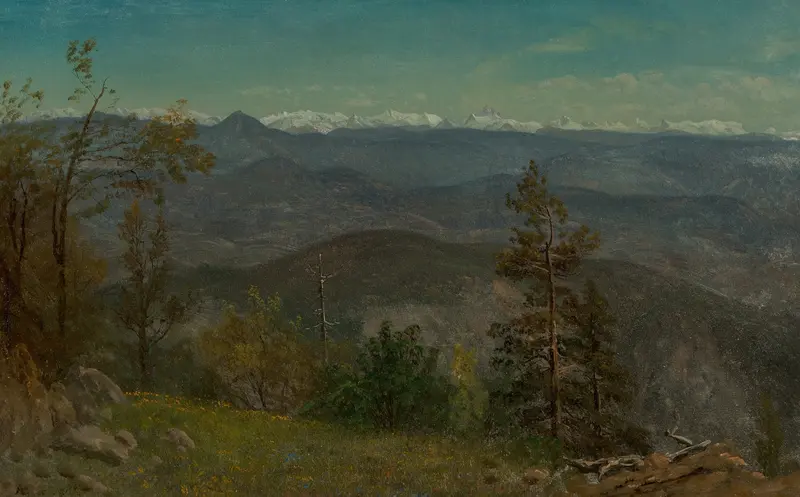
Yosemite Valley, California
Albert Bierstadt
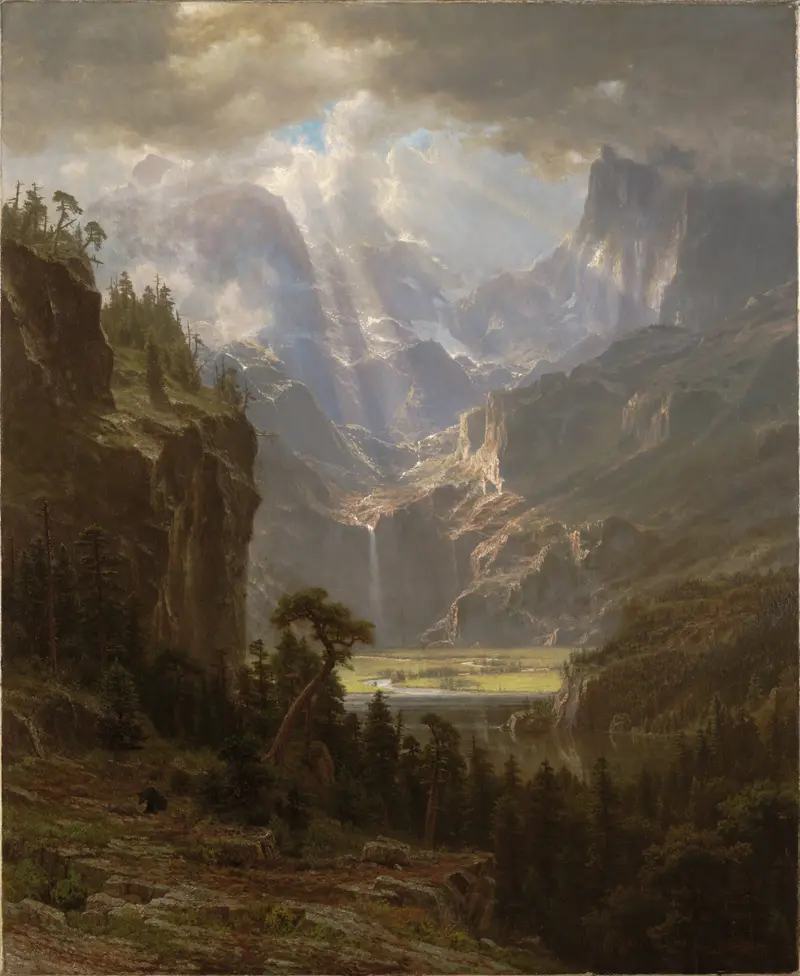
Rocky Mountains, "Lander's Peak"
Albert Bierstadt

Laramie Peak
Albert Bierstadt
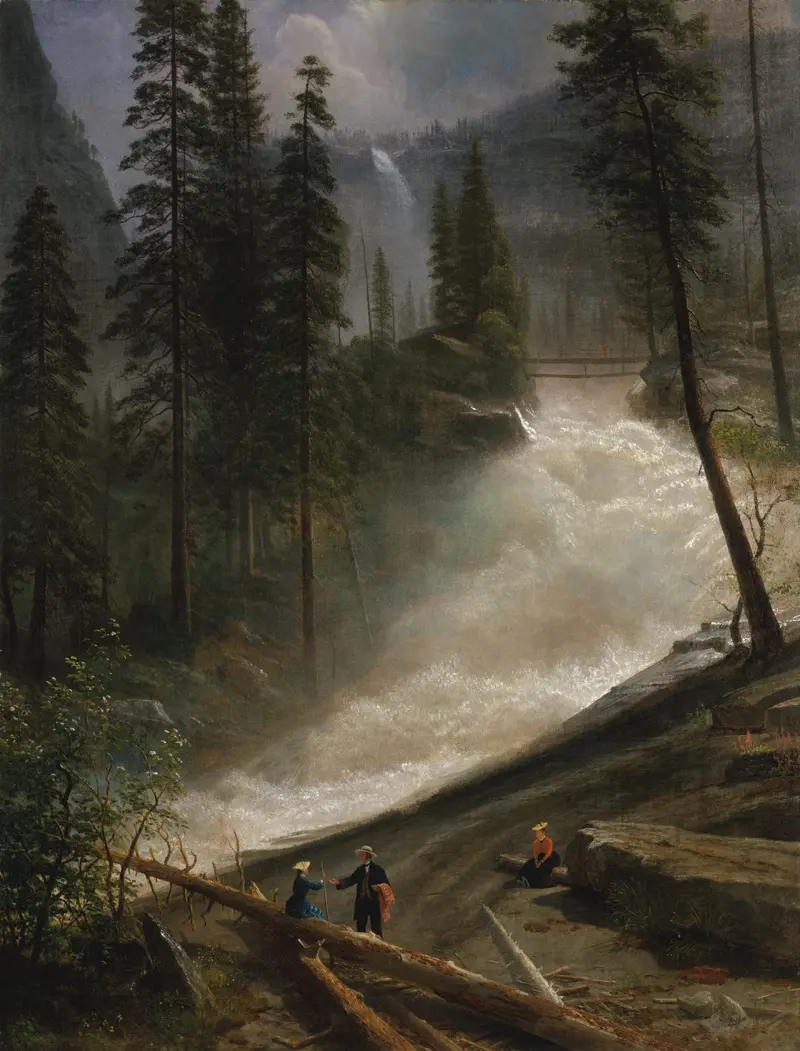
Nevada Falls, Yosemite
Albert Bierstadt
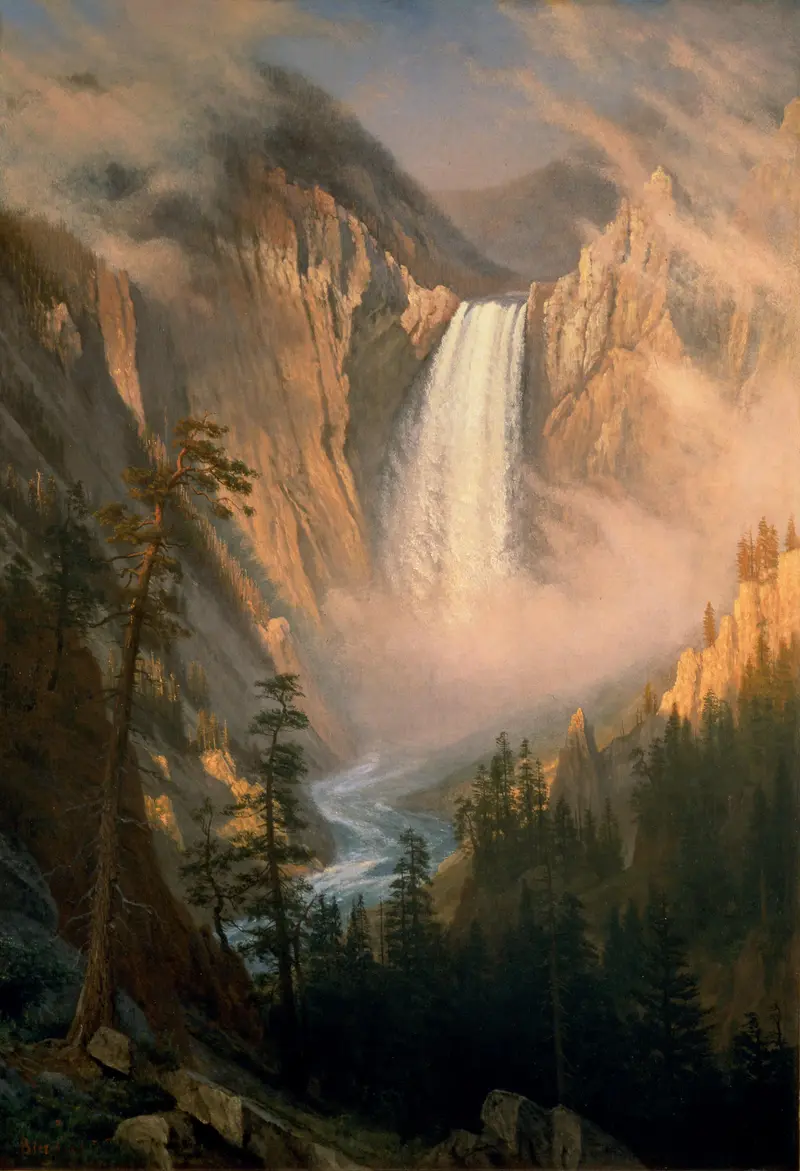
Yellowstone Falls
Albert Bierstadt
More Landscape Art

The Starry Night
Vincent van Gogh

View of Delft
Johannes Vermeer

Water Lilies
Claude Monet

The Grand Canal, Venice, looking north-west from the Ca' Corner to the Ca' Contarini degli Scrigni, with the campanile of Santa Maria della Carità
Canaletto

Windsor Castle
Canaletto

The Grand Canal looking North-East from the Palazzo Dolfin-Manin to the Rialto Bridge
Canaletto