
Montagnes, Environs de Nice — History & Facts
Can beauty exist without sorrow? In Montagnes, Environs de Nice, serenity unfolds like a gentle whisper, inviting contemplation amidst the rugged embrace of nature. Look to the left at the soft undulations of the mountains, their peaks kissed by a delicate haze. The palette is composed of earthy greens and muted blues, harmoniously blending to evoke a sense of peace. Notice how the brushstrokes reveal the artist's hand—each stroke dances lightly upon the canvas, capturing the transient quality of light on foliage and rock.
The composition guides the viewer's gaze through the undulating landscape, drawing attention to the horizon where the earth meets the sky, a liminal space where dreams and reality converge. Boudin masterfully balances serenity with hints of tension. The tranquil mountains stand stoically against the vast sky, yet the subtly shifting tones suggest an impermanence, as if nature itself is in constant flux. The interplay of light and shadow evokes a quiet introspection; the viewer is left to ponder the relationship between beauty and the fleeting moments that define our existence.
Small details, like the wisps of clouds and the scattered brush, hint at life's uncertainties, reminding us that within peace, echoes of sorrow often linger. In 1892, while living in Deauville, Boudin was at the height of his career, celebrated for his contributions to plein air painting. The artist, influenced by the emerging Impressionist movement, sought to capture the ephemeral qualities of light and atmosphere in his works. During this time, the art world was shifting, welcoming new ideas that focused on nature and personal expression.
This piece reflects not only his mastery in capturing the essence of a landscape but also the contemplative spirit that defined his later years.
More Artworks by Eugène Boudin
Browse all →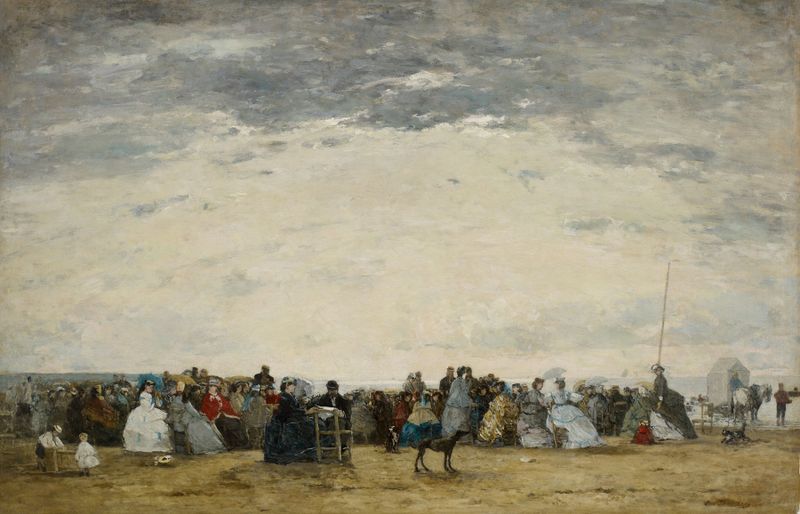
Vacationers on the Beach at Trouville
Eugène Boudin

Washerwoman near Trouville
Eugène Boudin
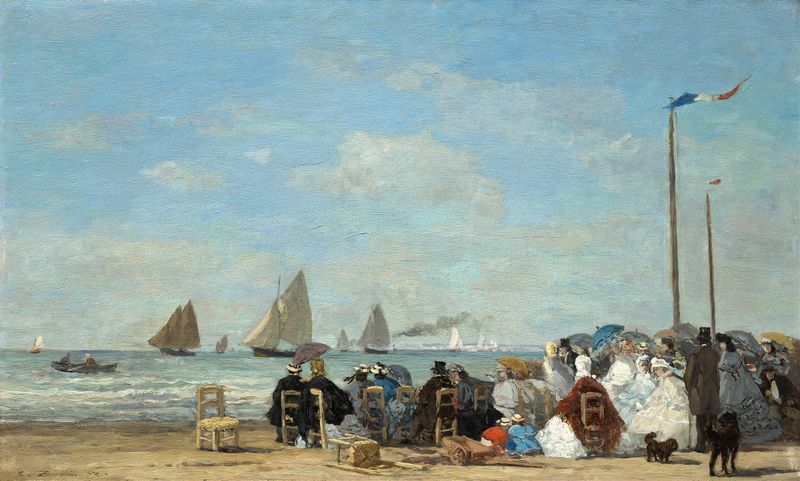
Beach Scene at Trouville
Eugène Boudin

Port aux environs d’Honfleur
Eugène Boudin

Le Faou, un coin du village
Eugène Boudin
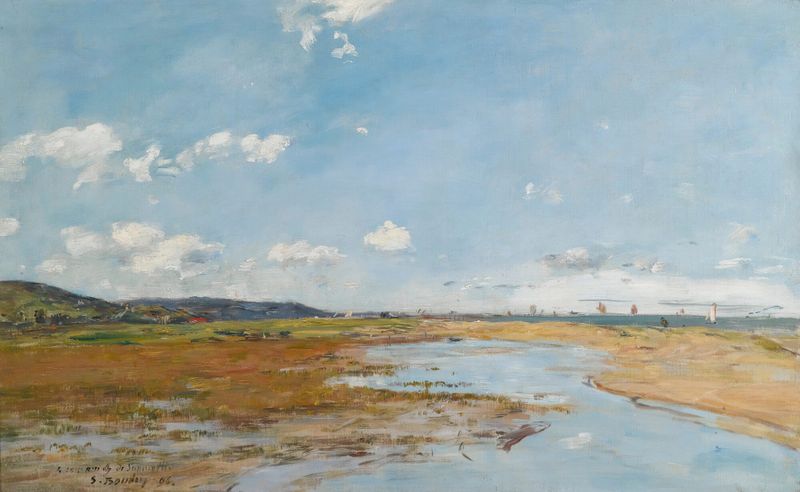
Deauville. Le Rivage
Eugène Boudin
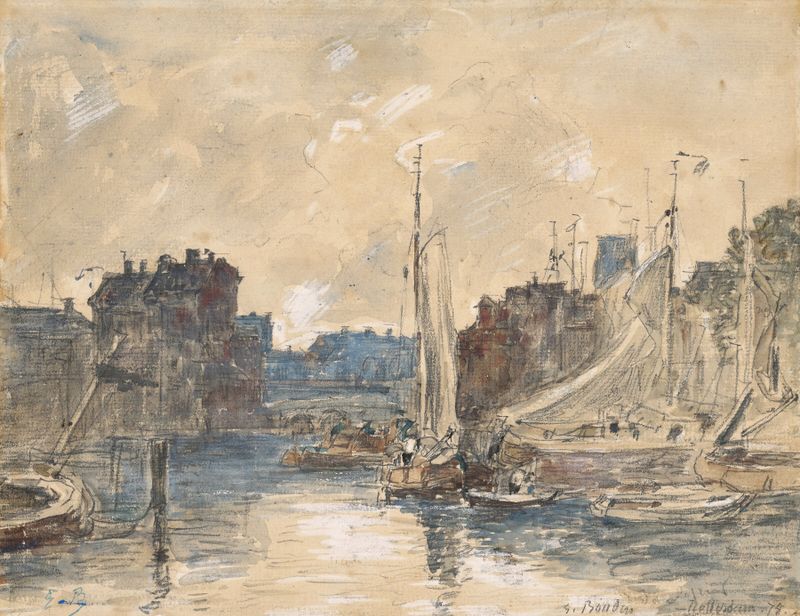
Port de Rotterdam
Eugène Boudin

View of Bordeaux, from the Quai des Chartrons
Eugène Boudin

Trouville, Scène De Plage
Eugène Boudin

Trouville, Le Port
Eugène Boudin





