
A Glimpse of the Sea — History & Facts
Could beauty survive in a century of chaos? In A Glimpse of the Sea, the answer lies in the gentle interplay of light and nature, whispering promises of tranquility amid the tumult of 19th-century life. Look to the left at the horizon, where a soft glow emerges, illuminating the sea with a shimmering palette of blues and greens. The light dances upon the water's surface, inviting the viewer’s gaze as it reflects the delicate clouds above. Notice how the brushwork captures the fleeting moment of day transitioning into dusk, imbuing the entire scene with a sense of calmness and hope.
Each stroke conveys the artist's mastery over color and light, crafting a serene vista that beckons one to linger. Delve deeper, and you'll find contrasts that speak to the emotional state of both nature and humanity. The tranquil sea juxtaposes the swirling clouds above, suggesting an ongoing tension between serenity and turmoil. Small details, such as the gentle waves and distant ships, hint at life's incessant movement, while the enveloping light brings a soothing touch, reminding us that beauty can coexist with chaos.
This duality offers a profound meditation on resilience and the pursuit of solace. In 1872, Tryon painted this work during a pivotal moment in American art, characterized by a growing appreciation for landscapes and the natural world. He found himself navigating between the philosophical ideals of the Hudson River School and the emerging Impressionist style. As industrialization surged around him, the artist sought to capture the sublime beauty of nature, creating a sanctuary for viewers in an age marked by rapid change and uncertainty.
More Artworks by Dwight William Tryon
Browse all →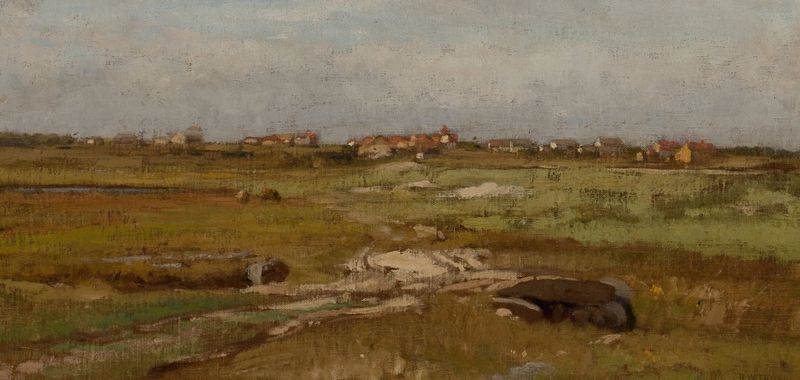
Marsh Landscape
Dwight William Tryon
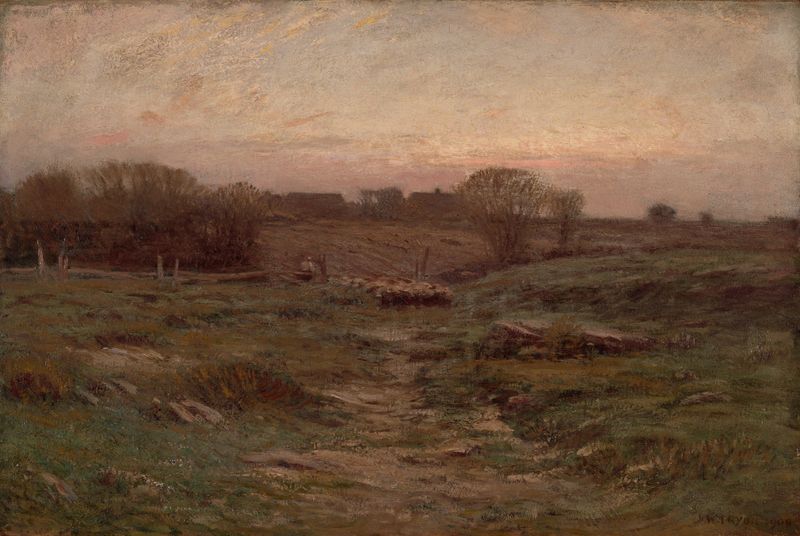
Landscape (Sheep in the Valley)
Dwight William Tryon
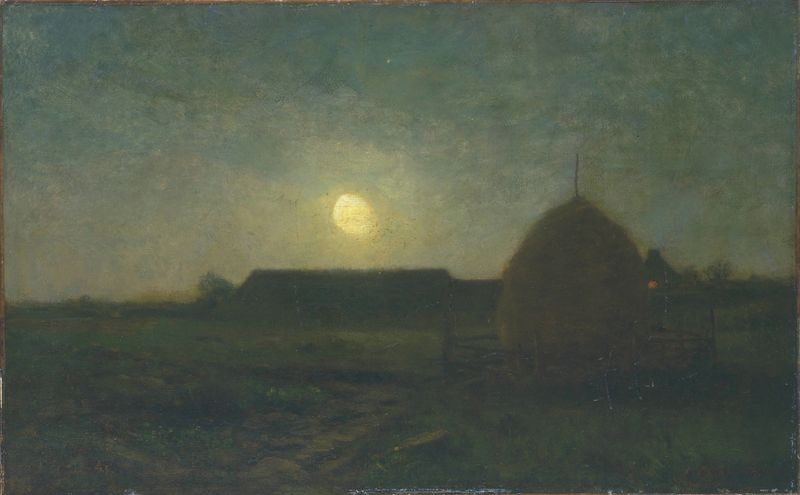
Moonlight
Dwight William Tryon

Evening Landscape
Dwight William Tryon
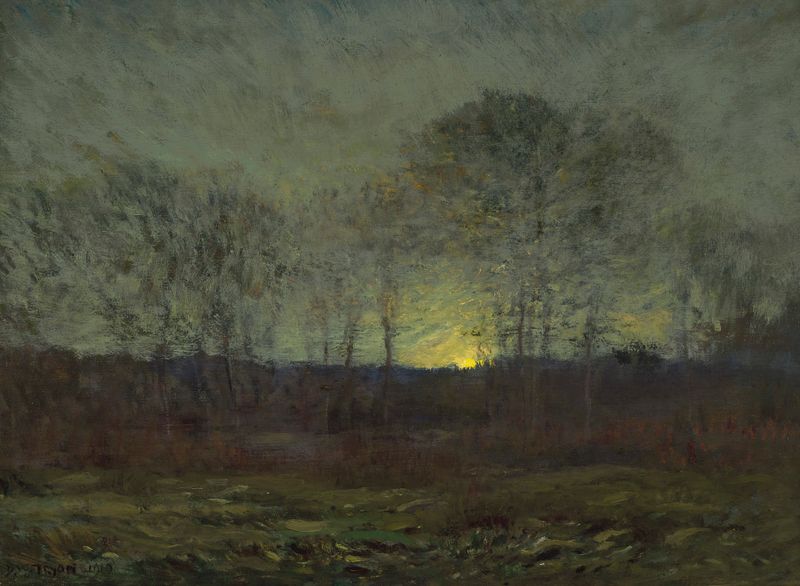
Moonrise
Dwight William Tryon

November
Dwight William Tryon
November Morning
Dwight William Tryon

Coastal Scene
Dwight William Tryon

Twilight
Dwight William Tryon
Morning in September
Dwight William Tryon





