Morning Reflection on the Thames in London — History & Facts
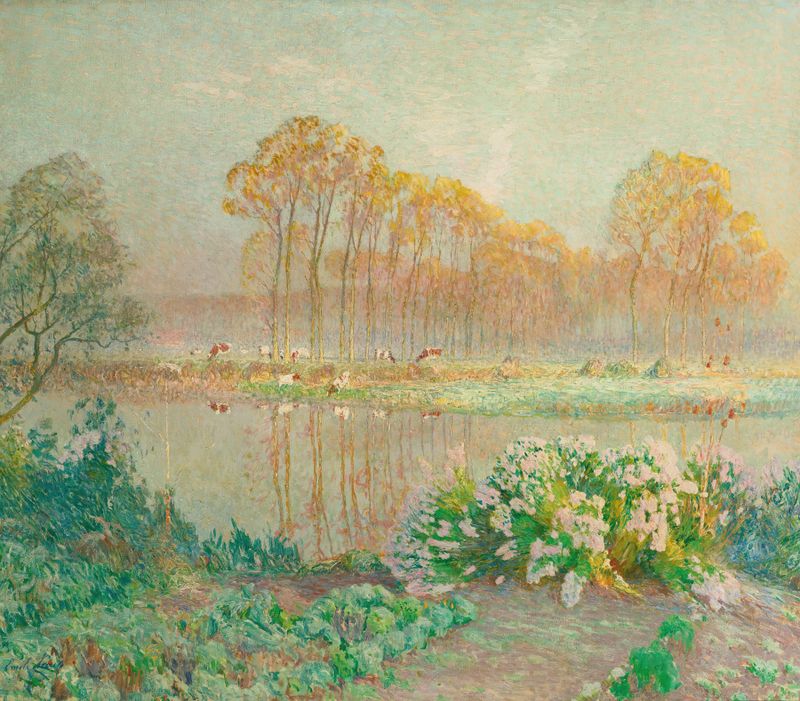
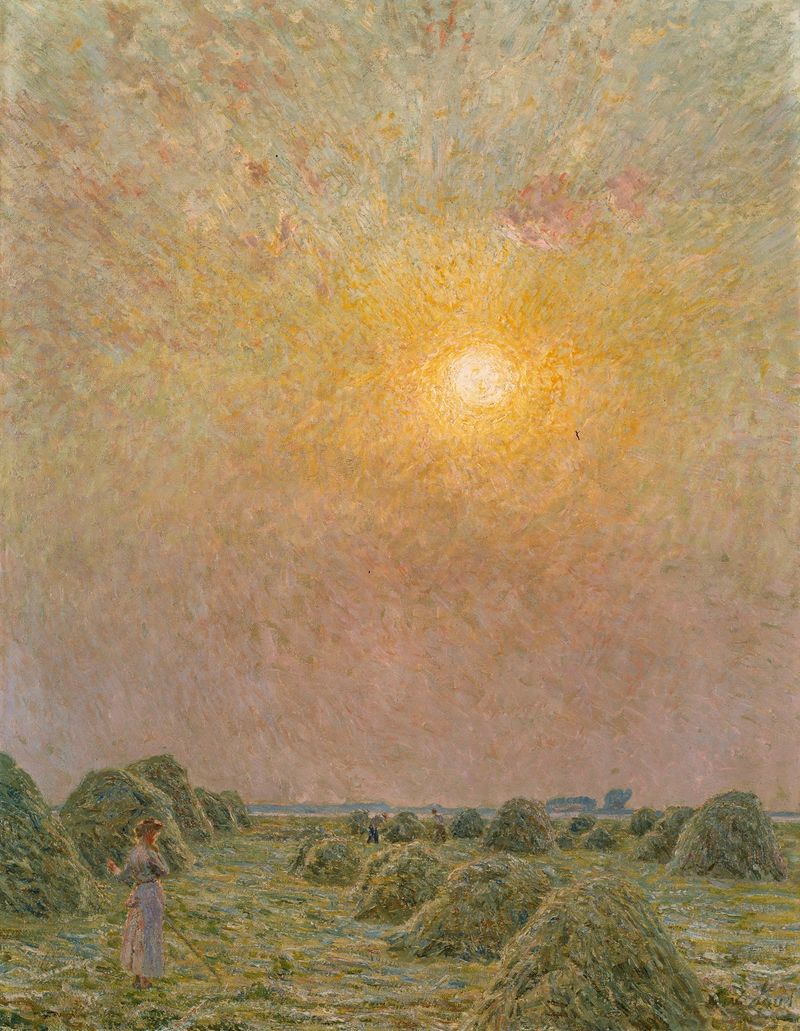
Where does light end, and longing begin? In the gentle embrace of dawn, the Thames awakens, its surface shimmering with the soft hues of a new day, inviting contemplation and beauty. Look to the center of the composition, where the river unfolds like a silken ribbon, reflecting the delicate pastel palette of the morning sky. Notice how the water dances beneath the brushstrokes, capturing the fragile interplay of light and shadow. The boats, small and serene, drift along the reflective surface, their muted colors harmonizing with the tranquil ambiance.
The wispy clouds hover above, lending a sense of depth that draws the viewer into this serene moment. Beneath the seemingly peaceful scene lies a tension between the stillness of the water and the bustling life surrounding it. The boats suggest movement, yet their calm presence evokes a yearning for serenity amidst the chaos of life. The colors—soft blues, gentle pinks, and hints of gold—mirror the emotional landscape, where beauty lingers just out of reach, tantalizing the viewer's imagination.
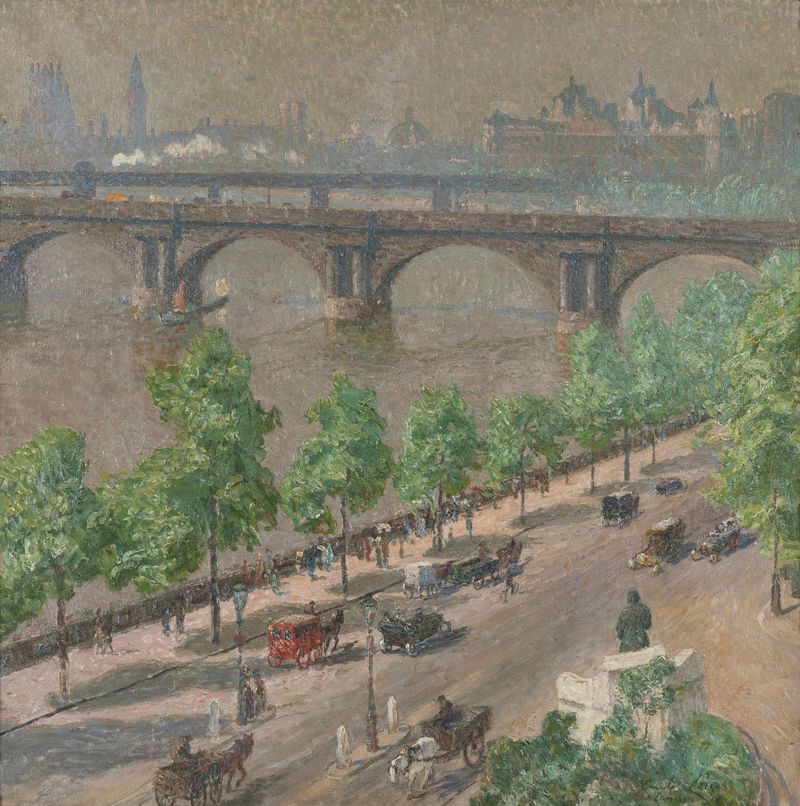
This interplay between light and longing invites deep reflection, urging us to ponder what lies beneath the surface of our own experiences. Emile Claus painted this piece in 1918, a time when Europe was recovering from the trauma of World War I. Living in Belgium but influenced by the Impressionist movement, Claus sought to capture fleeting moments of beauty in everyday life. This work reflects his desire to find solace amid turmoil, using the motif of the Thames to convey a universal longing for peace and hope in uncertain times.