
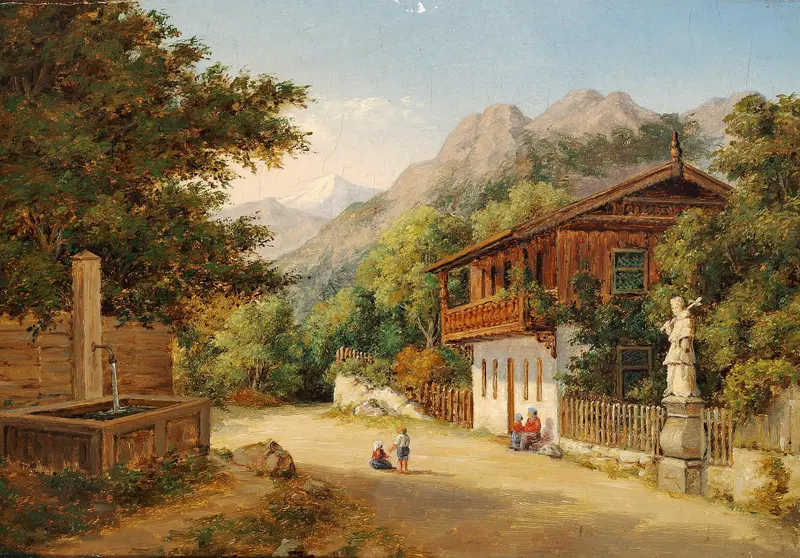
Mountain scene from Southern Germany with a woman at a cottage. — History & Facts
A patch of sunlight falls gently across the slope, drawing the eye to a solitary woman tending the earth before her cottage. The house sits snug against a backdrop of dense green, its wooden beams and stone base rooted firmly in the landscape, while the fountain in the foreground suggests the quiet routines of rural life. The scene is anchored by the distant, snow-capped peak, which rises above a veil of misty blue mountains, lending a sense of grandeur that contrasts with the intimacy of the foreground.
The painter’s brush guides us from the shimmering water at the cliff’s edge to the cottage, then up to the mountains, creating a rhythm that feels both calm and inevitable. The palette is earthy and warm, with the greens and browns of the vegetation setting a tranquil, settled mood, while the light sky hints at the clarity of early morning or late afternoon. Painted in 1845, this landscape belongs to a tradition that flourished in the German-speaking world during the nineteenth century, when artists and their patrons sought to capture the beauty and dignity of everyday rural life. Such scenes were often collected by the rising middle class, eager to celebrate both the picturesque and the honest labor of the countryside.
The title recorded on the reverse—Parti ved Insbruck—places the view near Innsbruck, a region renowned for its dramatic Alpine scenery. Though little is recorded about August Wilhelm Boesen or the specific journey of this painting, its survival in a modern auction speaks to the enduring appeal of these quiet, carefully observed moments. Let your gaze linger on the woman’s bent figure and the sturdy cottage—reminders of a world shaped by both nature’s scale and the steady work of human hands.
More Artworks by August Wilhelm Boesen

Kystparti med stenet strand
August Wilhelm Boesen
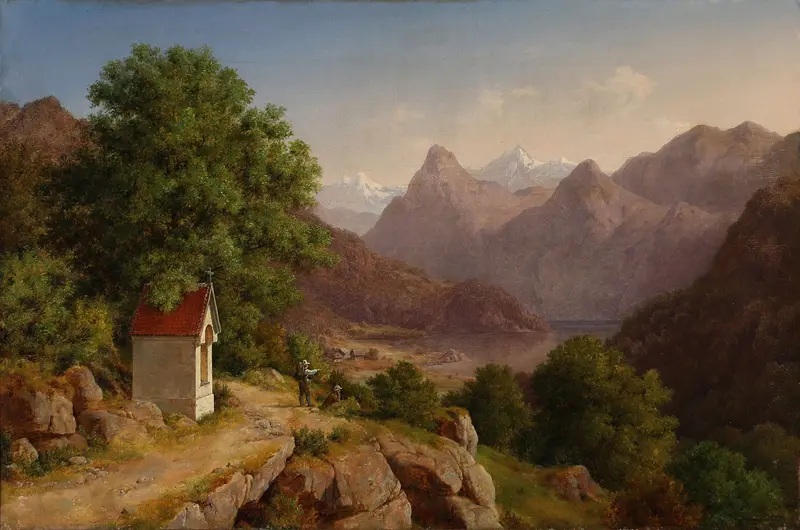
A. W. Boesen, Bjerglandskab i nærheden af byen Altorf i Frankrig
August Wilhelm Boesen
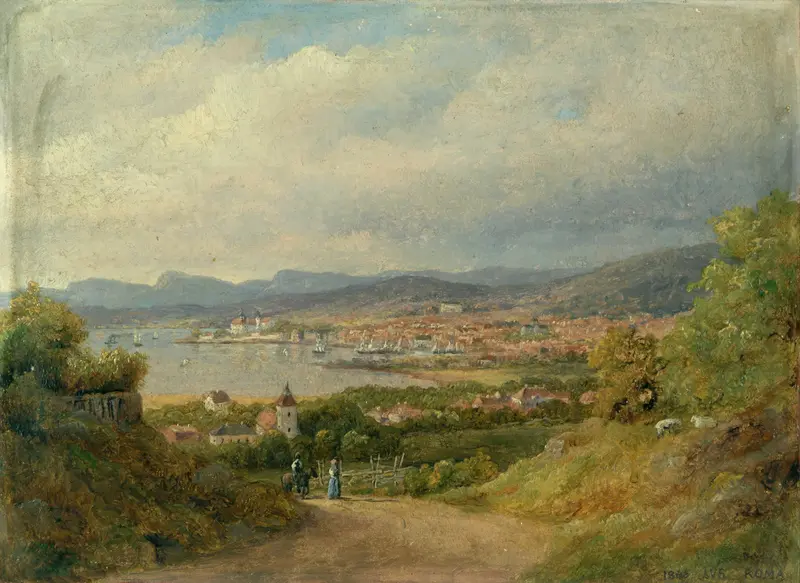
Christiania from Ekeberg
August Wilhelm Boesen
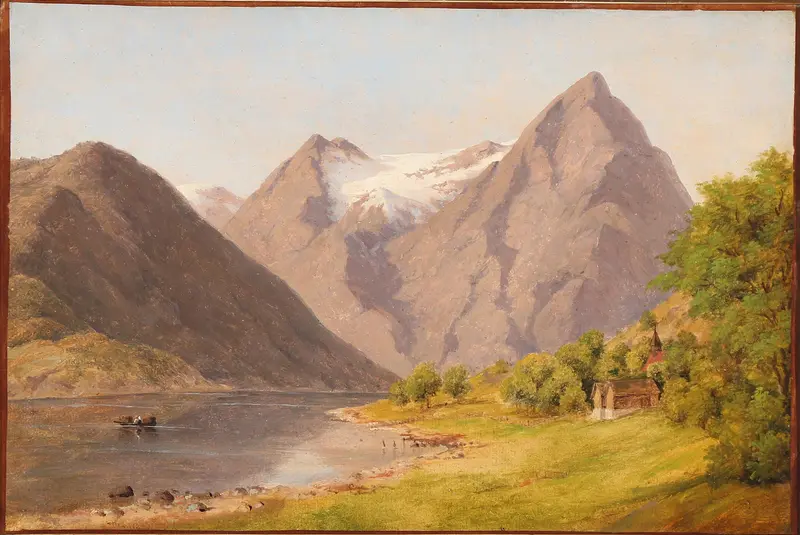
Cottages by a lake in the Alps
August Wilhelm Boesen
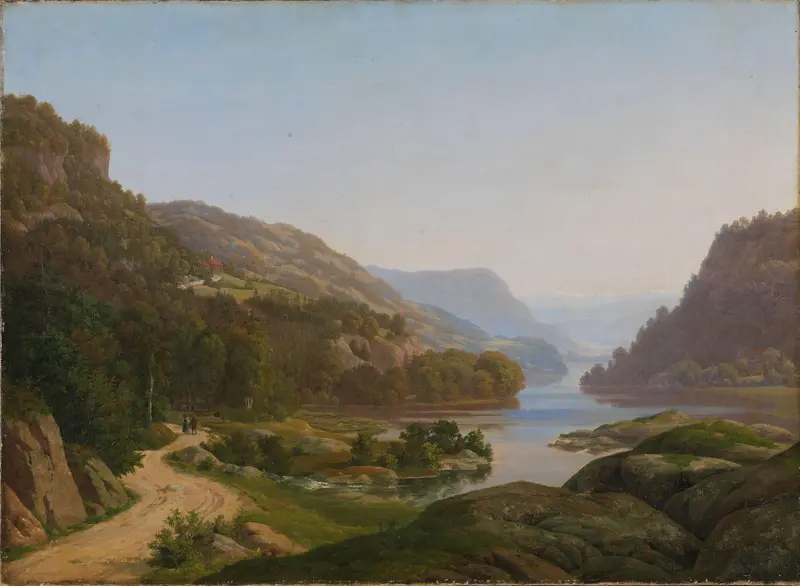
Drammenselven
August Wilhelm Boesen
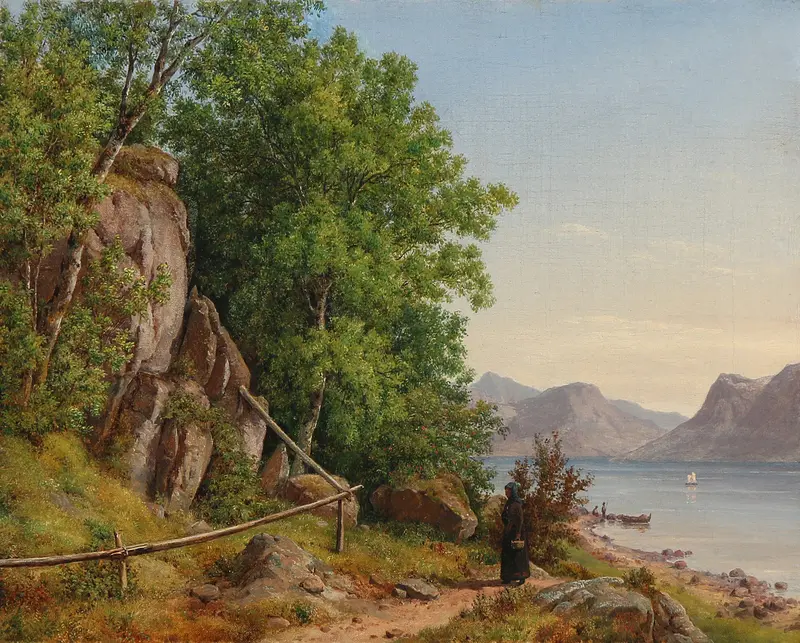
From Veøya in Norway
August Wilhelm Boesen
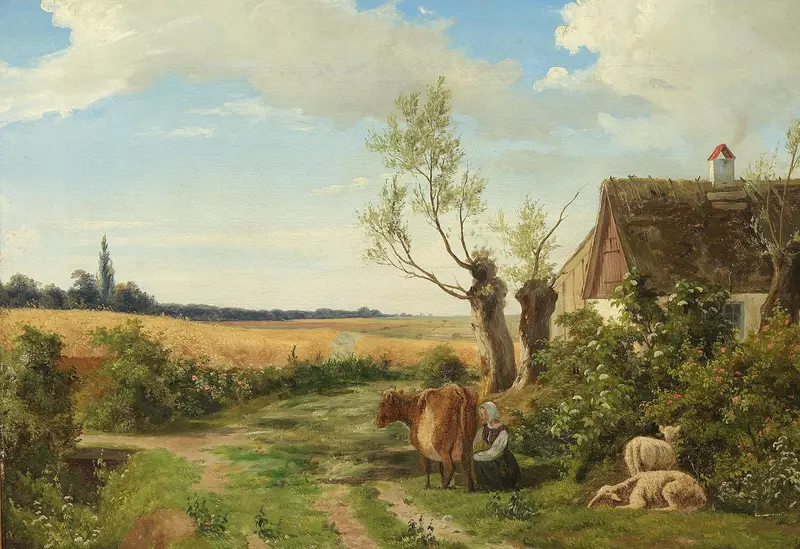
Landscape at a farmhouse.
August Wilhelm Boesen
Mountain village in Southern Germany.
August Wilhelm Boesen
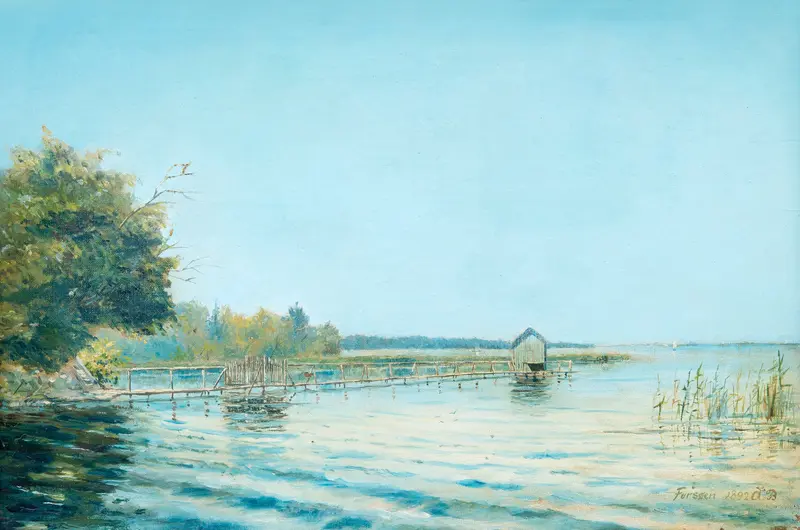
Summer day
August Wilhelm Boesen
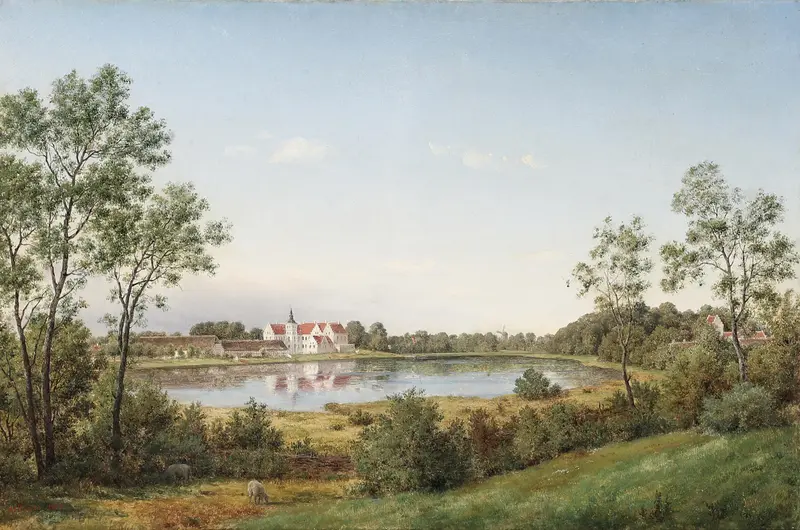
A view of the renaissance manor, Søbysøgaard, on Funen.
August Wilhelm Boesen
More Landscape Art

The Starry Night
Vincent van Gogh

View of Delft
Johannes Vermeer

Water Lilies
Claude Monet

The Grand Canal, Venice, looking north-west from the Ca' Corner to the Ca' Contarini degli Scrigni, with the campanile of Santa Maria della Carità
Canaletto

Windsor Castle
Canaletto

The Grand Canal looking North-East from the Palazzo Dolfin-Manin to the Rialto Bridge
Canaletto