
My Neighbors — History & Facts
What draws the eye first is the hush of winter, broken by a sudden burst of life—a pair of birds flitting through snow-laden branches, watched with delight by a child and her mother leaning out of a window. The world outside is muffled and still, but inside the frame, there is a quiet exchange: the child’s eager gesture, the mother’s gentle encouragement. The artist, Helen Hyde, guides us from the thick, white snow resting on every branch to the warmth of patterned kimono sleeves, the intimate bend of two heads together, and the fleeting movement of wings.
The palette is soft, dominated by muted greens and browns, with the white of snow and the orange of plumage and kimono flowers offering gentle contrast—a harmony that invites the viewer to linger. Created in 1913, My Neighbors belongs to a moment when Western artists were both enchanted by and deeply engaged with Japanese printmaking traditions. Hyde, an American who spent years in Japan, became known for her sensitive woodcuts that captured domestic scenes and the rhythms of daily life. Works like this were often collected by Western admirers fascinated by Japonisme, a movement that reshaped tastes in Europe and America at the turn of the twentieth century.
Today, the print is held by the Smithsonian American Art Museum, a quiet testament to cross-cultural curiosity and artistic exchange. Look again at the print: the snow may be cold, but the moment it frames is full of warmth.
More Artworks by Helen Hyde

Moonlight on the Viga Canal) - HH (monogram) LCCN0065
Helen Hyde
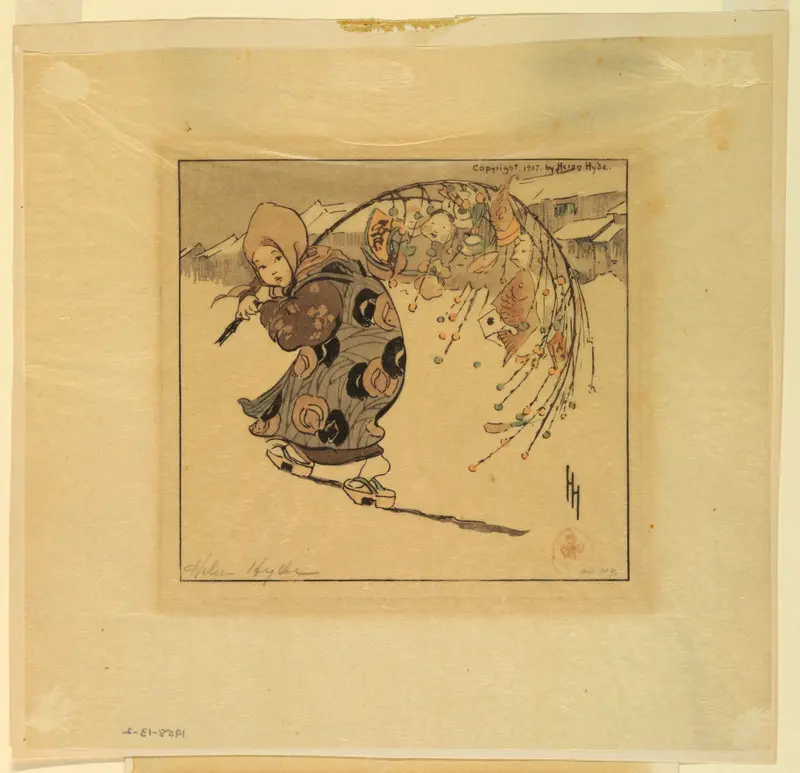
Print, The Good Luck Branch
Helen Hyde
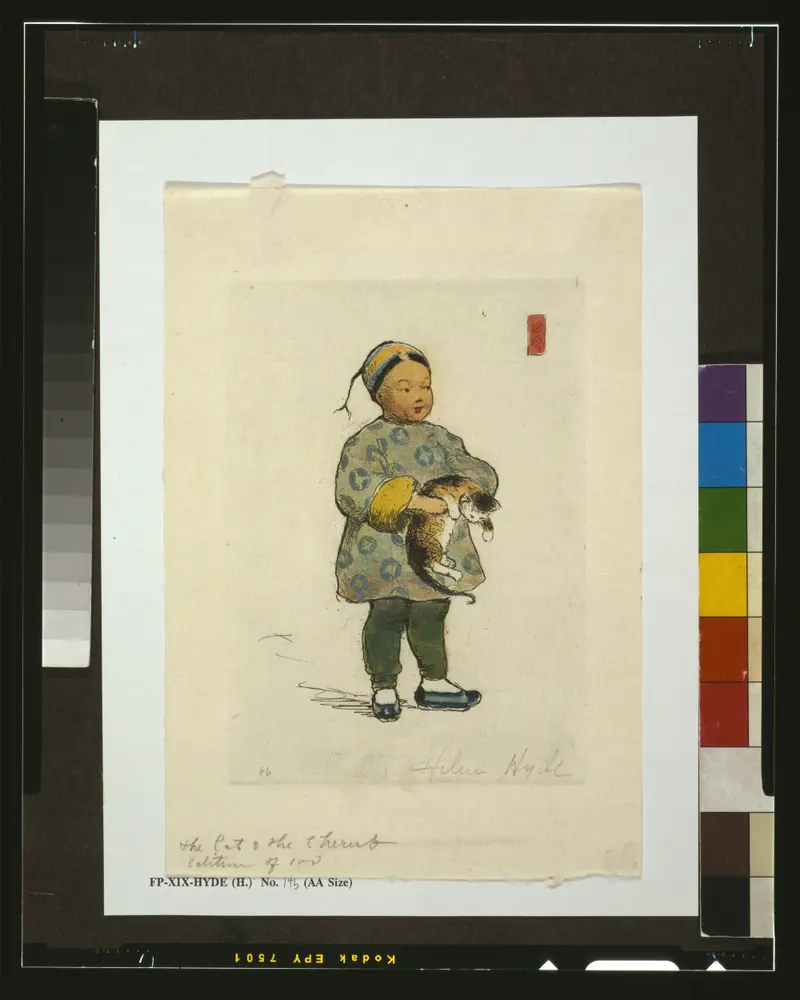
The cat and the cherub LCCN200367
Helen Hyde

Hon(orable Mr) cat - HH (monogram). LCCN200367
Helen Hyde
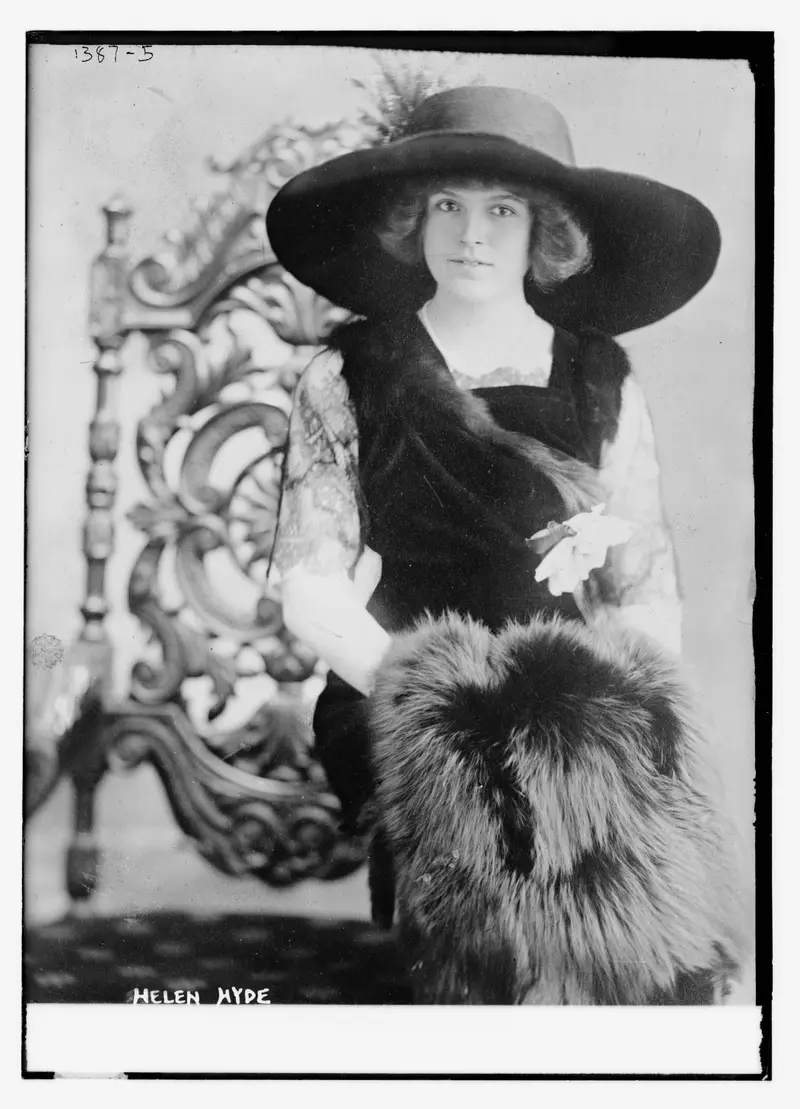
Helen Hyde LCCN201468
Helen Hyde
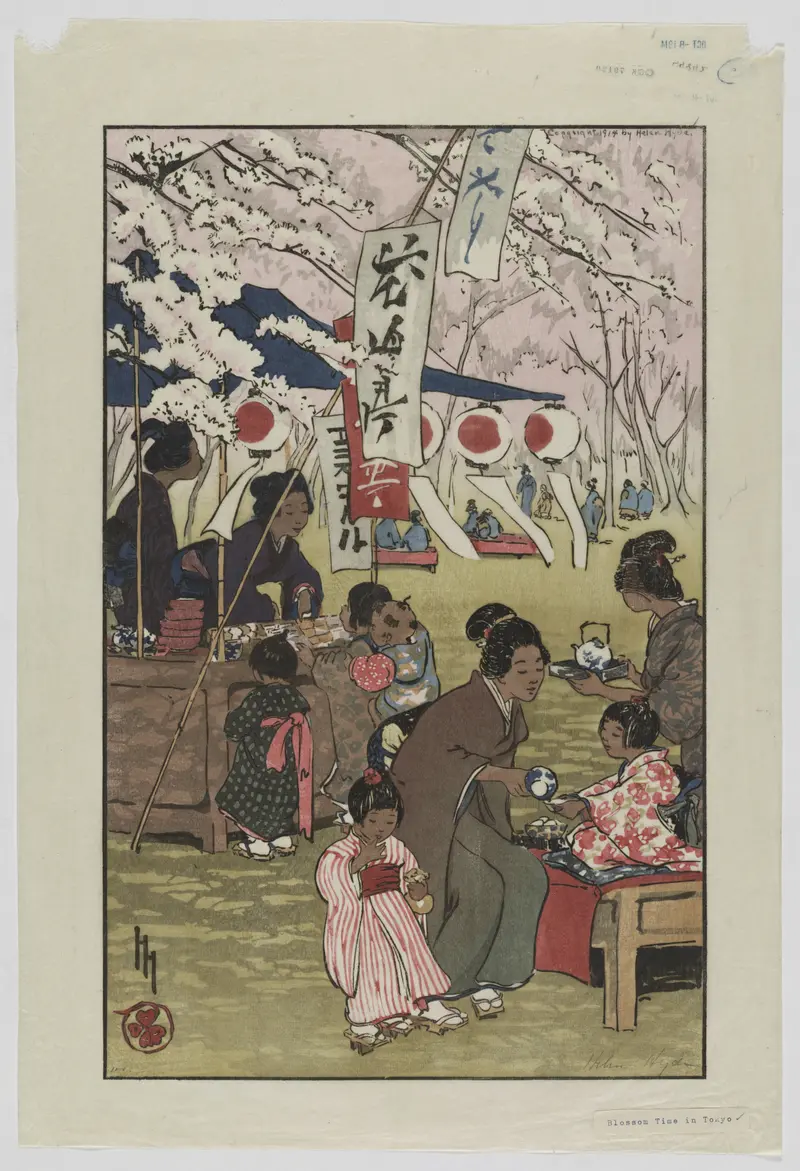
Blossom time in Tokyo) - HH (monogram) LCCN0065
Helen Hyde
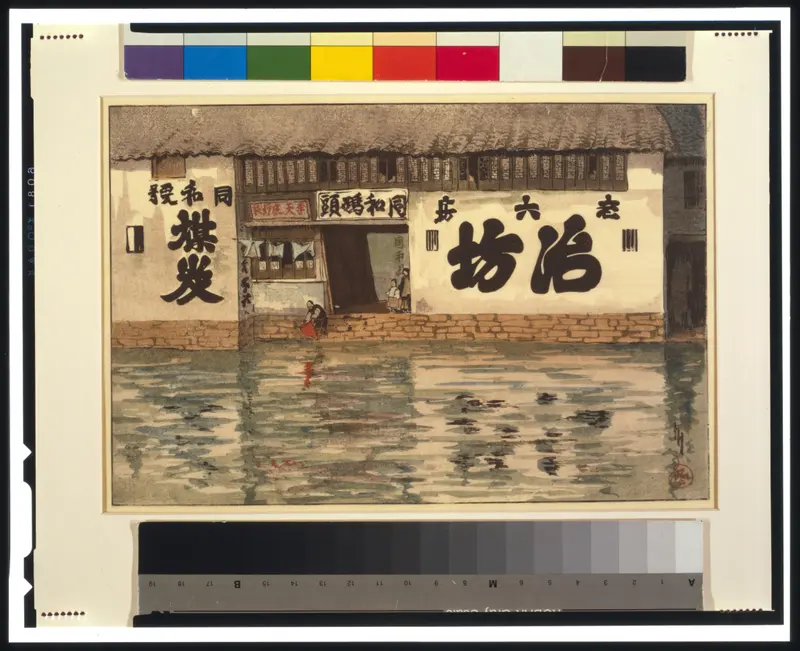
The sauce-pan shop) - HH (monogram) LCCN0065
Helen Hyde

New Year's Day in Tokyo
Helen Hyde
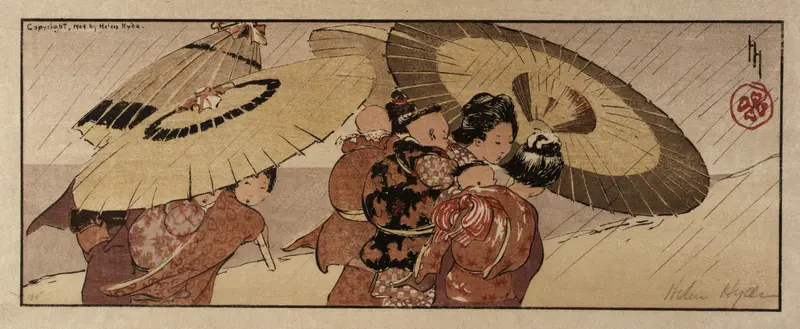
A Summer Shower
Helen Hyde
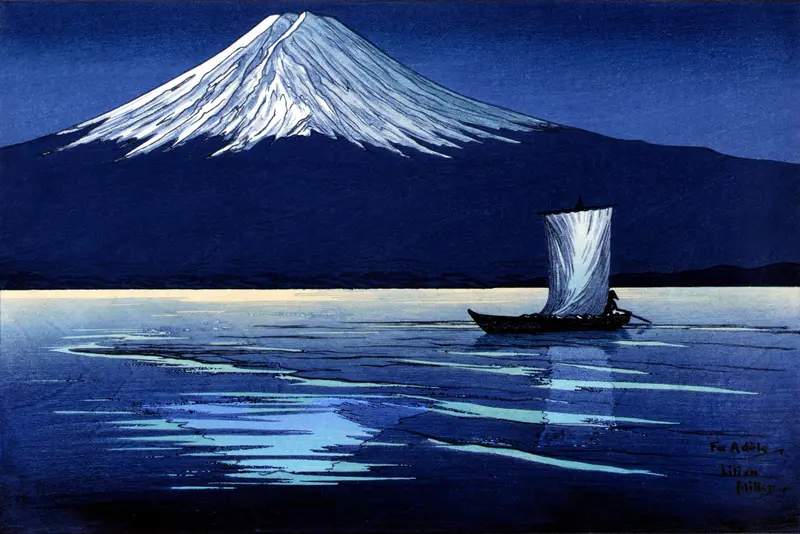
Moonlight on Mt. Fuji
Helen Hyde
More Genre Scene Art

Banquet of the Officers of the St George Civic Guard
Frans Hals

Rembrandt and Saskia in the Scene of the Prodigal Son
Rembrandt van Rijn

Bal du moulin de la Galette
Pierre-Auguste Renoir

Quadrille at the Moulin Rouge
Henri de Toulouse-Lautrec

A Burial at Ornans
Gustave Courbet

When Will You Marry?
Paul Gauguin