
Mystischer Kopf, Frauenkopf auf blauem Grund — History & Facts
What first arrests the viewer in Mystischer Kopf, Frauenkopf auf blauem Grund is the face’s impossible palette—violet, turquoise, ochre, and rose—each color staking out its own territory, none quite blending, yet together forming a gaze that feels both ancient and utterly modern. The eyes, wide and unblinking, dominate the composition, their brown irises ringed with bands of red and white, drawing the viewer in with a quiet insistence. The face is framed by a luminous yellow that suggests hair, but the contours are schematic, pared down to a few essential curves.
The background, a dense blue, sets off the head like a halo, heightening the sense of mystery and interiority. Every brushstroke is deliberate, the colors chosen not to imitate nature but to suggest an inner state—a spiritual presence rather than a portrait. Painted circa 1917, this work belongs to a world in upheaval, when artists like Alexej von Jawlensky sought new ways to express the soul through paint. The Mystischer Kopf series, to which this belongs, emerged as Jawlensky turned away from the external world and toward the symbolic, using color and form to evoke what he called “the inner sound.” Such heads were not commissions but personal meditations, created in a Europe shattered by war and searching for meaning.
The painting’s presence in the Christie’s collection today is a reminder that history has kept few traces of its early life, but its impact lies in the way it still confronts us—silent, searching, and alive with color. Stand before it and let your eye wander: the longer you look, the more the face seems to look back.
More Artworks by Alexej von Jawlensky

Murnau
Alexej von Jawlensky
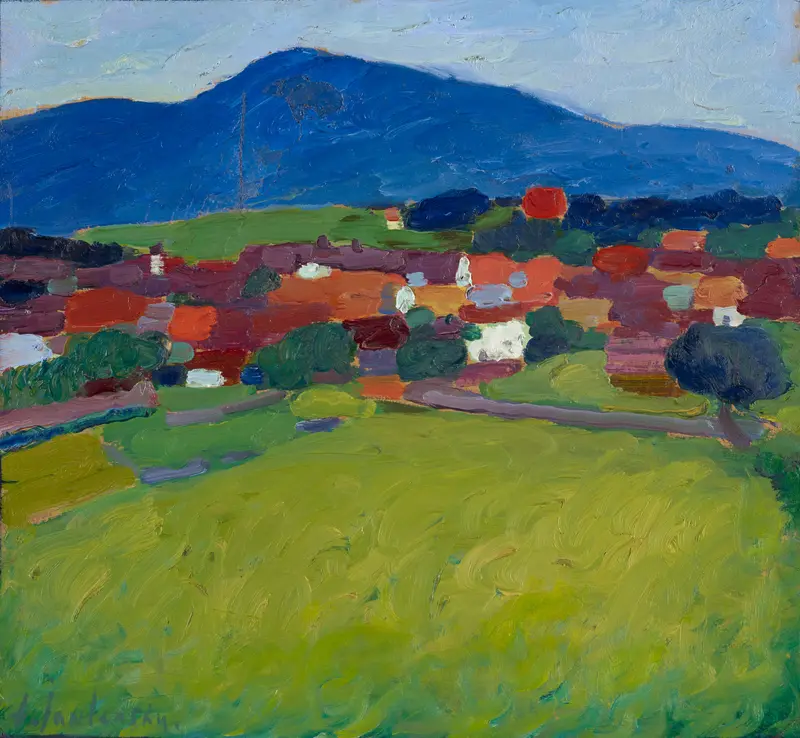
The Village Of Murnau
Alexej von Jawlensky
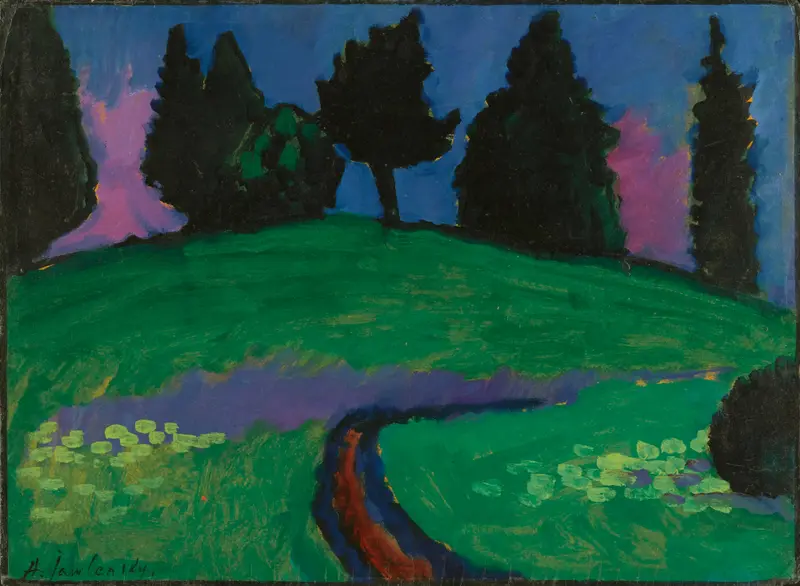
Dunkle Bäume über Grünem Hang (Dark Trees Over Green Slope)
Alexej von Jawlensky
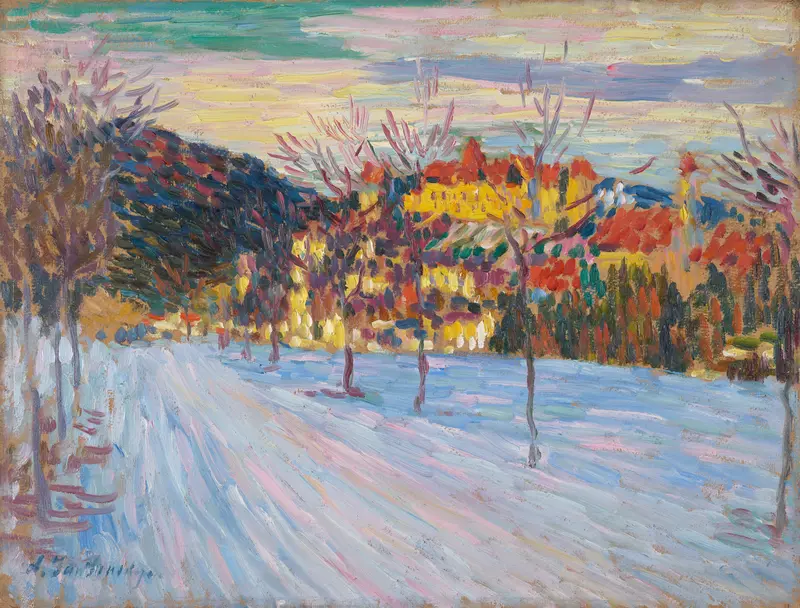
Füssen
Alexej von Jawlensky
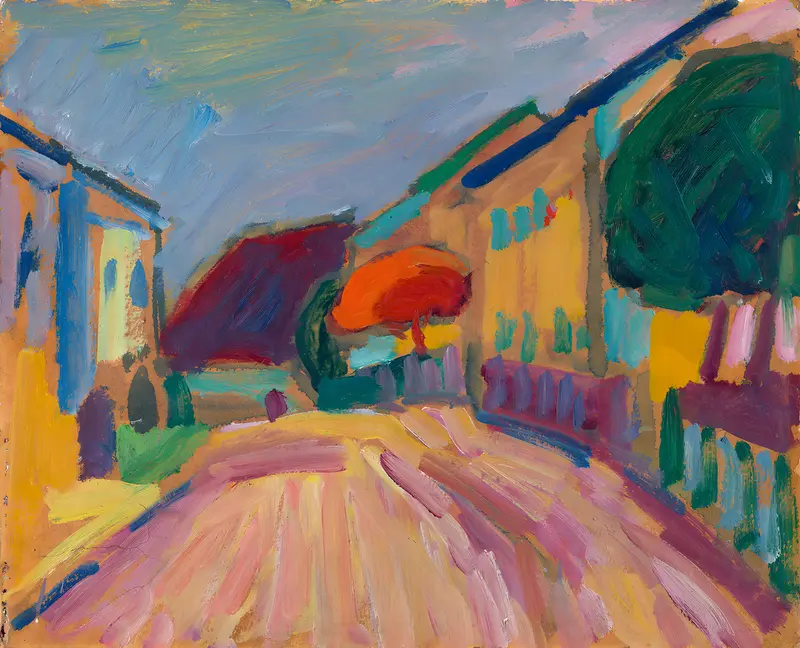
Sketch from Murnau
Alexej von Jawlensky
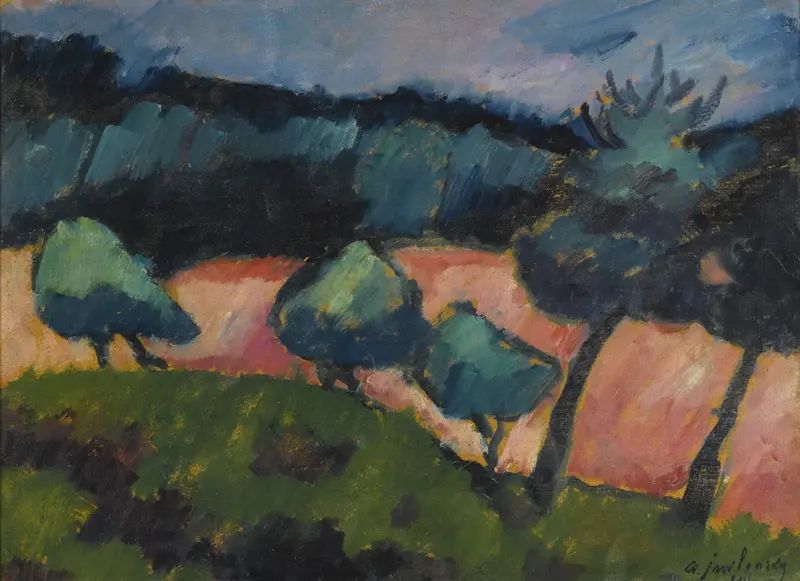
Bäume und Dünen in Prerow (Trees and dunes in Prerow)
Alexej von Jawlensky
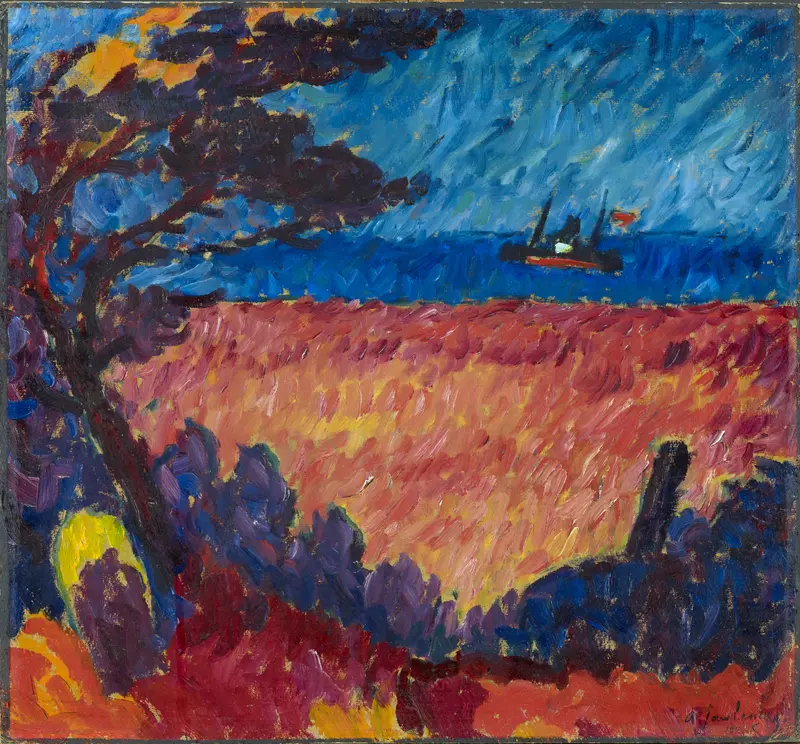
At The Baltic Sea
Alexej von Jawlensky
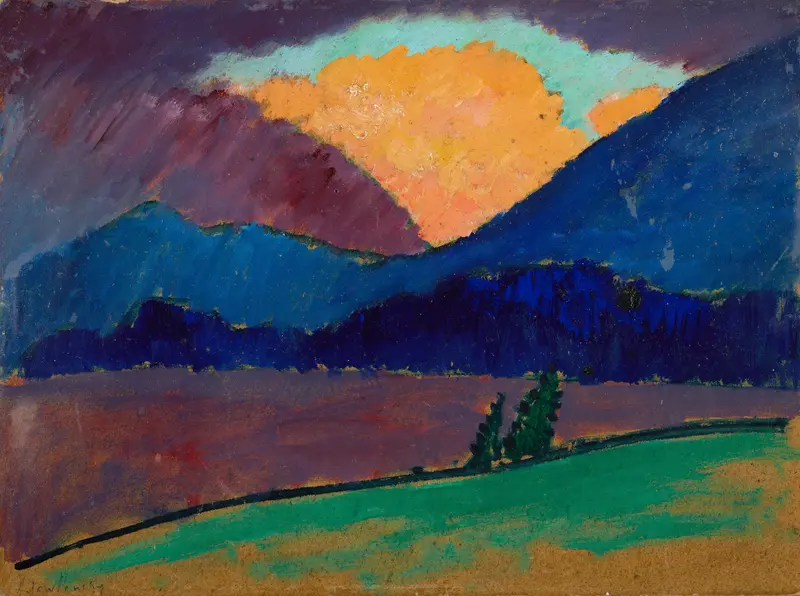
Summer evening in Murnau
Alexej von Jawlensky
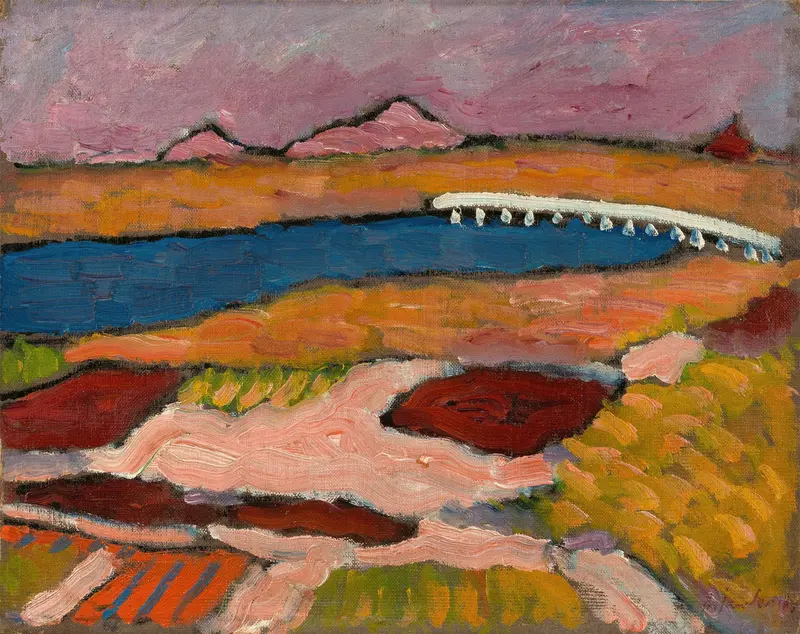
Prerow (Darß), Pommern
Alexej von Jawlensky
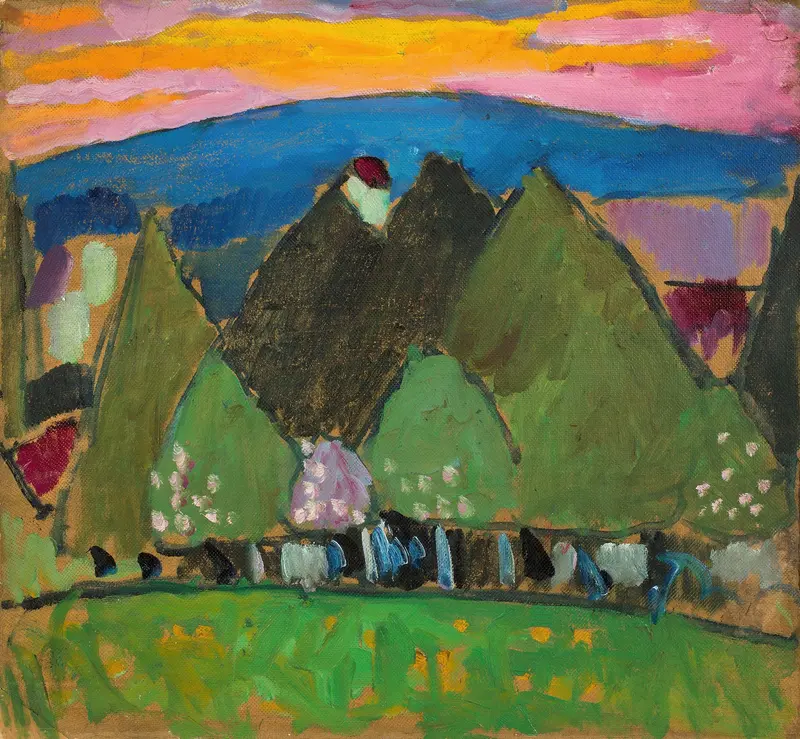
Landschaft mit Bäumen
Alexej von Jawlensky





