
Naomi entreating Ruth and Orpah to return to the land of Moab — History & Facts
Few biblical scenes have inspired as many interpretations as the parting of Naomi, Ruth, and Orpah, but William Blake’s 1795 vision stands apart for its rare fusion of spiritual drama and radical technique. This work belongs to Blake’s celebrated series of "large color prints," a group of twelve experimental monotypes produced in the mid-1790s, whose method—painting directly onto a copper plate and pressing it to paper—remains the subject of technical debate. Unlike many contemporaries who favored grand historical subjects, Blake gravitated to moments of quiet, personal decision, and in this print, he chooses a story of loyalty and loss from the Book of Ruth, a text cherished in late 18th-century England for its themes of faith and belonging. The scene unfolds at the crossroads outside Moab: Naomi, widowed and bereft, urges her daughters-in-law to return to their own people rather than follow her into uncertainty.
Blake captures the instant of heartbreak and resolve—Naomi’s outstretched arms are both a benediction and a dismissal, while Orpah turns away, her face hidden, and Ruth clings to Naomi’s side, eyes uplifted in steadfast devotion. The figures are monumental, their draperies swirling in a storm of color, the background dissolving into a golden haze that suggests both the heat of the desert and the intensity of emotion. The composition’s simplicity and psychological focus recall Rembrandt’s biblical etchings, yet Blake’s palette and visionary forms are unmistakably his own, transforming the ancient tale into a parable of spiritual choice. The precise history of this print’s early ownership is unclear, as many of Blake’s monotypes circulated privately among friends and patrons, often only recognized for their significance decades later.
Today, Naomi entreating Ruth and Orpah to return to the land of Moab is counted among the treasures of Blake’s late-18th-century output, reflecting his unique blend of poetry, painting, and printmaking. Its survival is a testament to the growing appreciation of Blake’s work in the 19th and 20th centuries, when collectors and museums began to seek out his visionary images. The print now resides in a major public collection, where it continues to invite viewers into the emotional heart of a story as old as faith itself.
More Artworks by William Blake
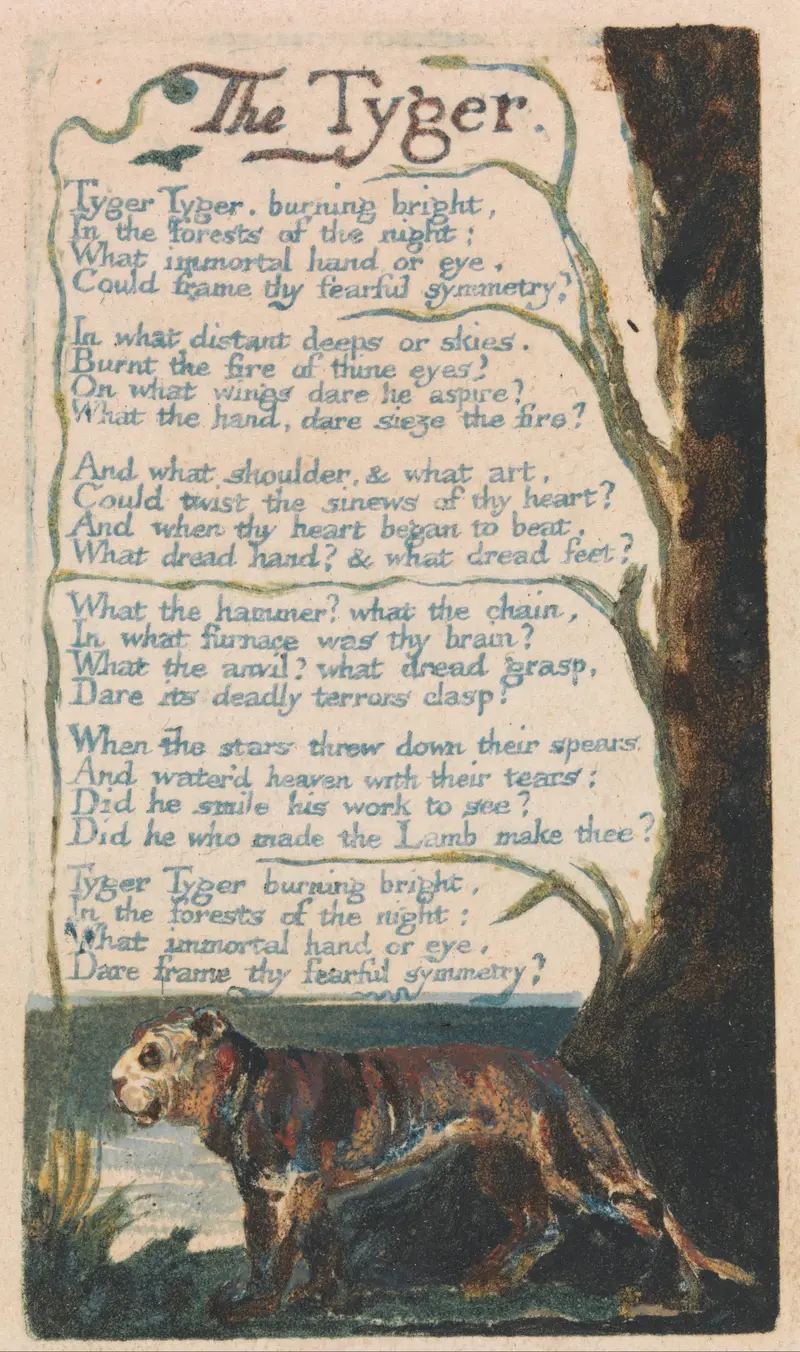
The Tyger
William Blake

Christ Blessing
William Blake
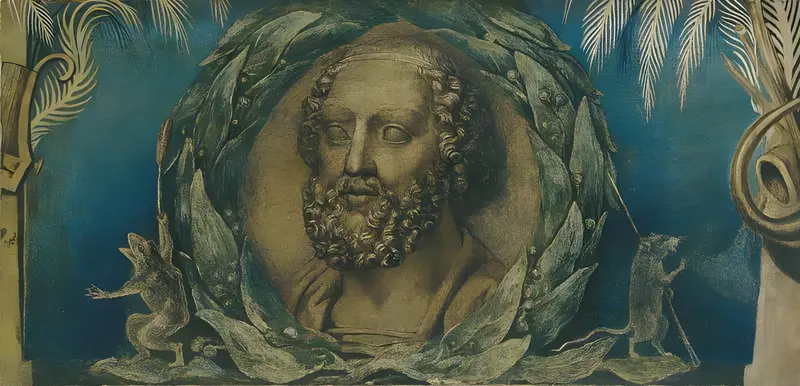
Homer
William Blake
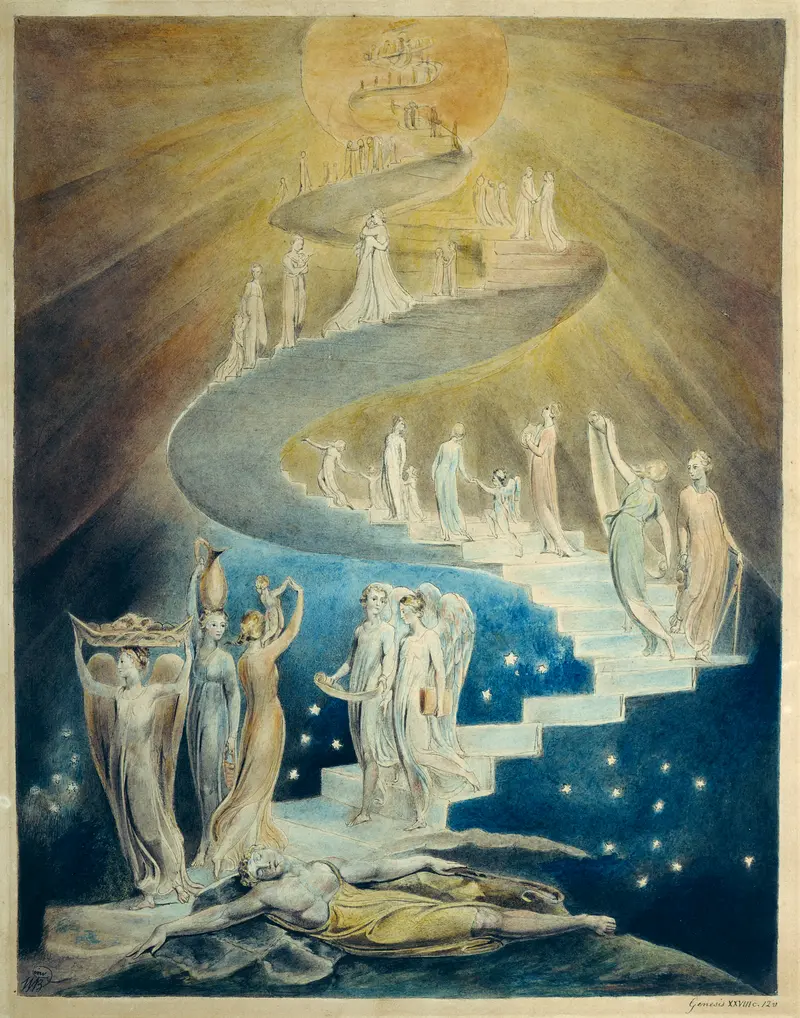
Jacob's Ladder
William Blake
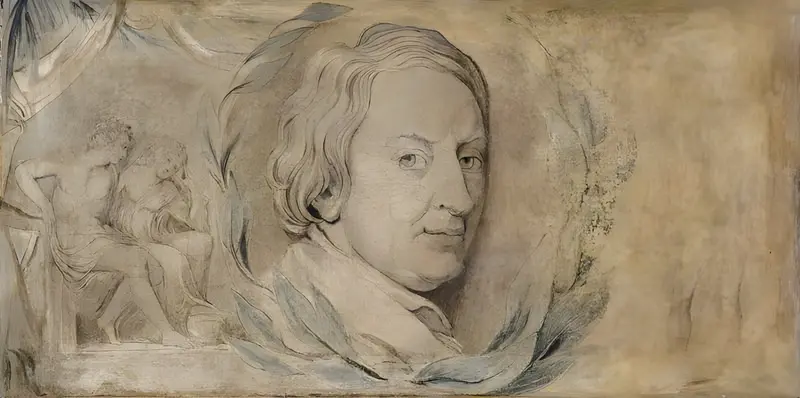
John Dryden (1631–1700)
William Blake
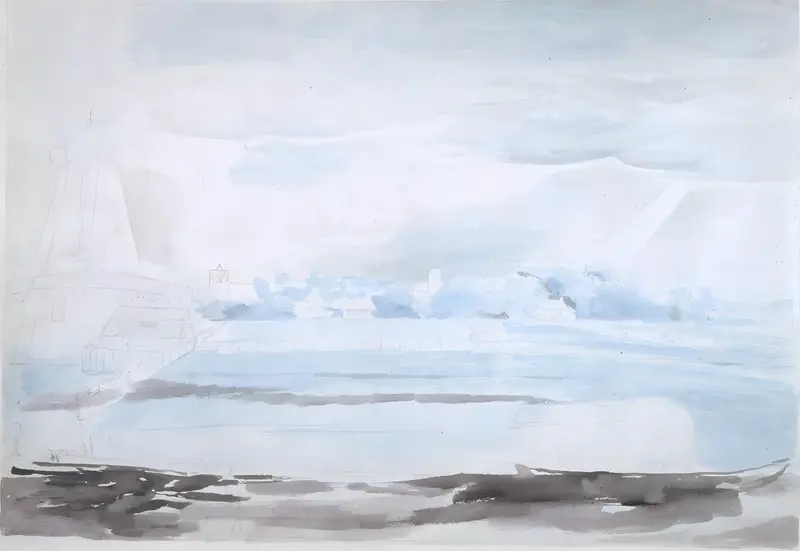
Landscape near Felpham
William Blake
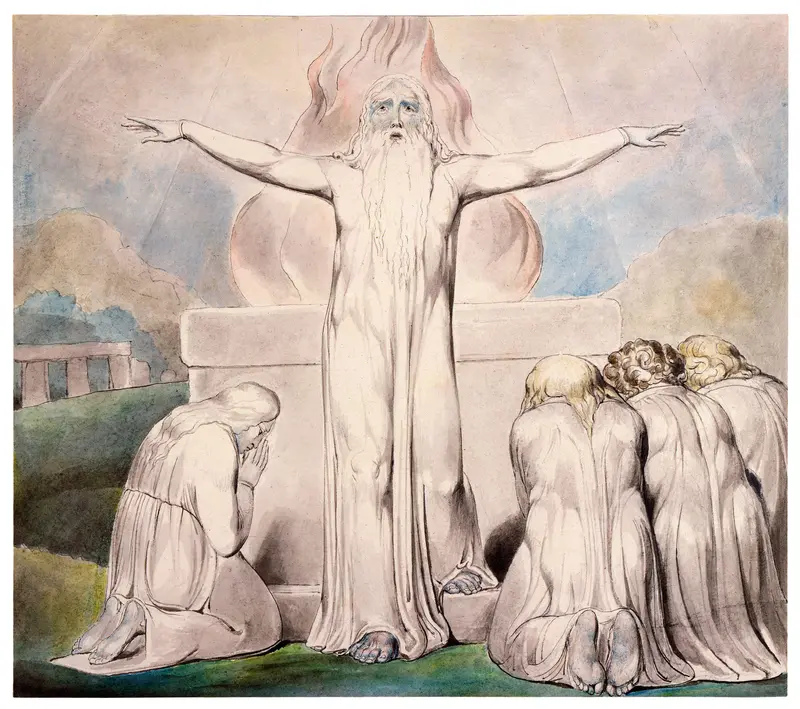
Sacrifice of Job
William Blake
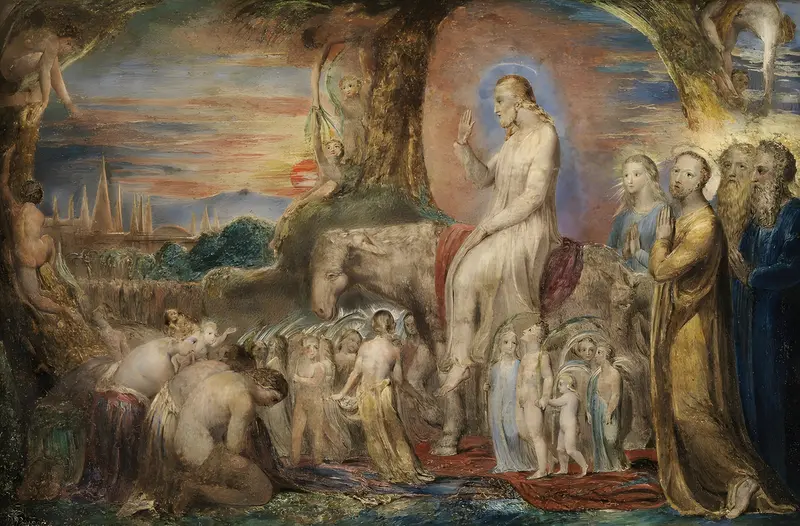
Christ's Entry into Jerusalem
William Blake
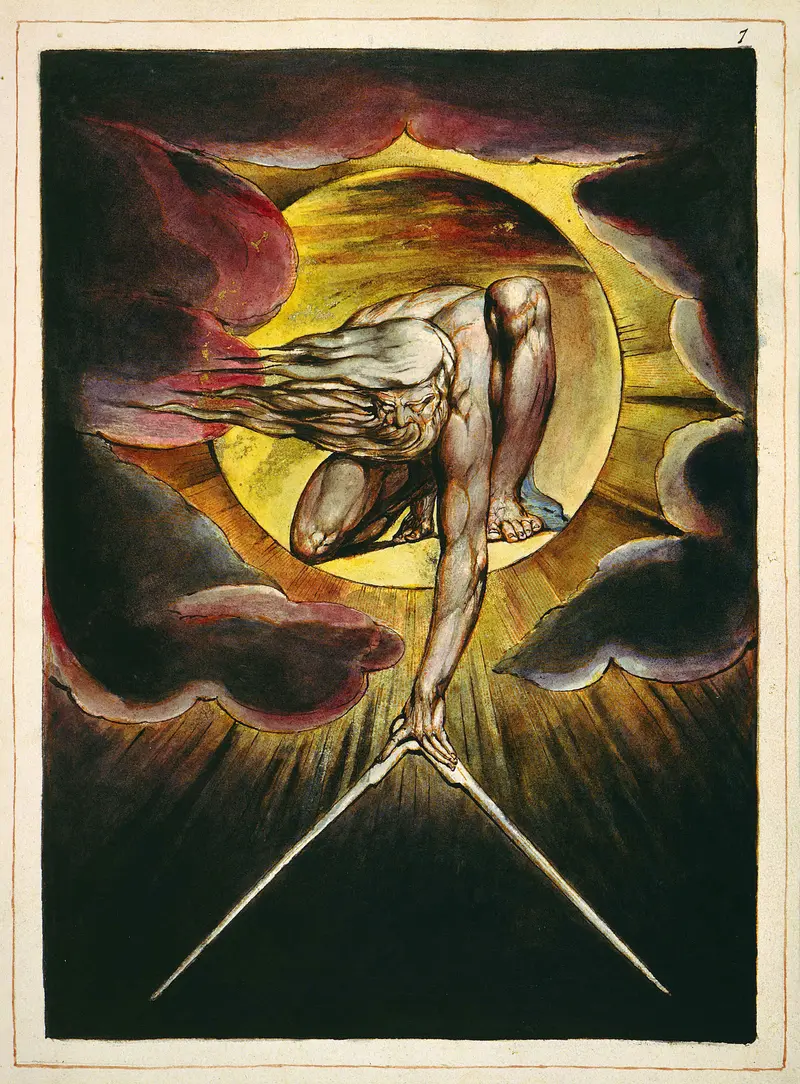
The Ancient of Days
William Blake
Adam Naming the Beasts
William Blake





