
Newport Rocks — History & Facts
In the world of art, the boundary between reality and illusion often blurs, inviting viewers to explore deeper truths hidden within the surface. Look to the left at the sweeping, craggy shoreline, where the jagged rocks rise defiantly against the gentle lap of the ocean waves. The artist’s meticulous brushstrokes create a shimmering effect on the water, reflecting the soft hues of the sky as morning light spills across the canvas. Notice how this interplay of texture and color lends a dreamlike quality to the scene, evoking both the crudeness of nature and its ethereal beauty.
The composition is masterfully balanced, drawing the eye from the foreground’s rugged detail to the tranquil horizon. As you delve deeper, consider the emotional resonance of the piece. The interplay of light and shadow suggests a transient moment, capturing the ephemeral quality of nature and time. The harmonious blues and greens evoke serenity, while the bold geological formations hint at resilience amidst change, a contrast that speaks to the enduring power of nature against the fleeting human experience.
Each element, from the glistening water to the rough terrain, plays a role in this dialogue between illusion and reality. In 1872, Kensett painted this work while residing in Newport, Rhode Island, a period marked by his exploration of the American landscape. At this time, the art world was witnessing a shift towards realism, as artists sought to capture the extraordinary in everyday scenes. Kensett, a key figure in the Hudson River School, embraced this movement, blending meticulous detail with a romanticized vision of nature, setting the stage for future generations of landscape painters.
More Artworks by John Frederick Kensett
Browse all →
White Mountains from Shelburne, NH
John Frederick Kensett

An October Day in the White Mountains
John Frederick Kensett
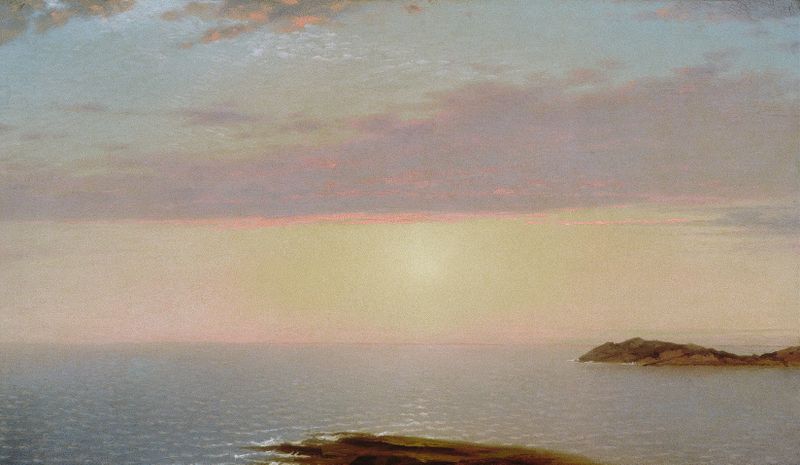
Sunset
John Frederick Kensett
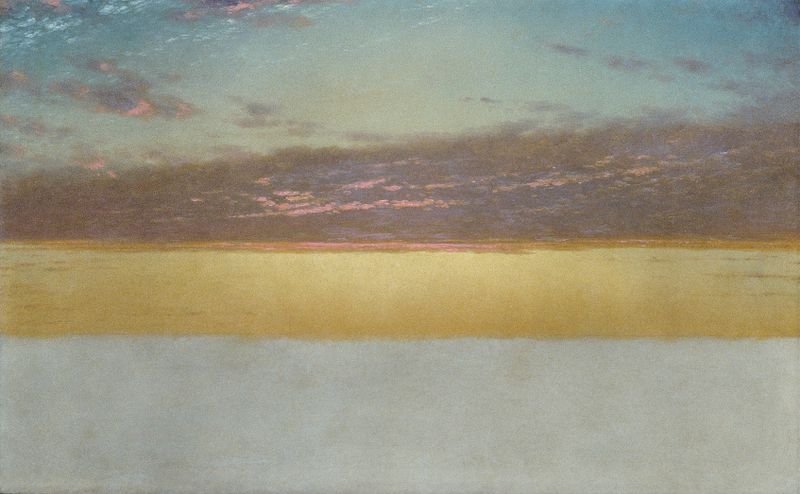
Sunset Sky
John Frederick Kensett
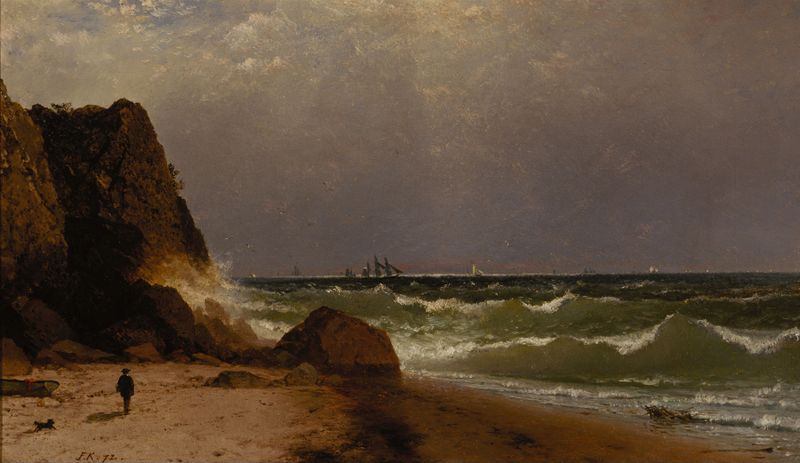
Near Newport, Rhode Island
John Frederick Kensett
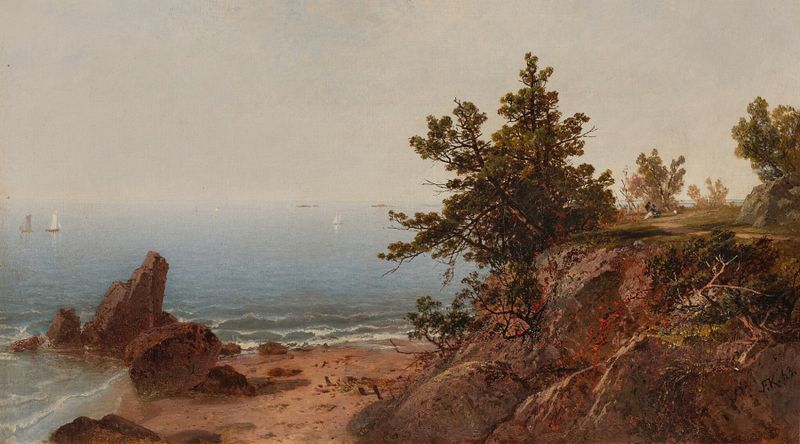
View from the Cliff (Noon on the Seashore)
John Frederick Kensett
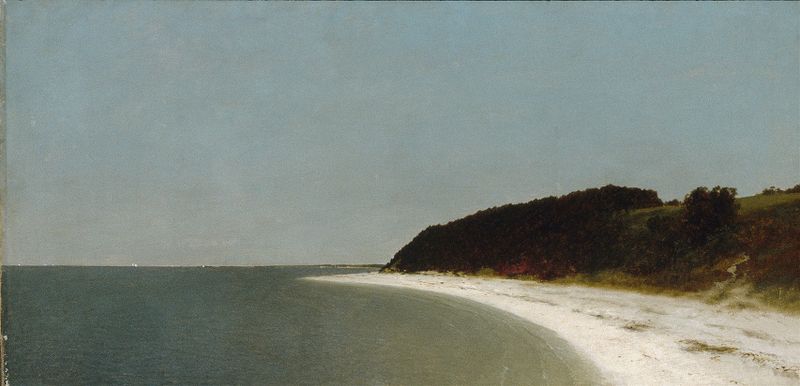
Eaton’s Neck, Long Island
John Frederick Kensett
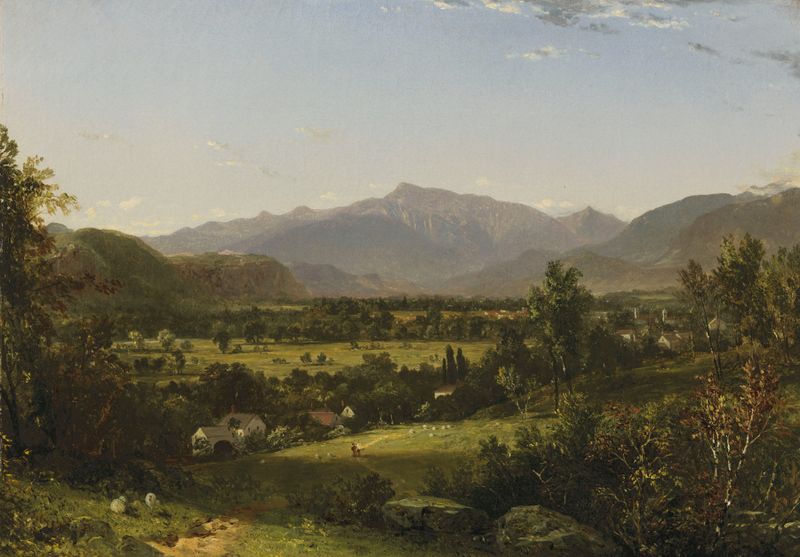
Mount Washington from North Conway
John Frederick Kensett
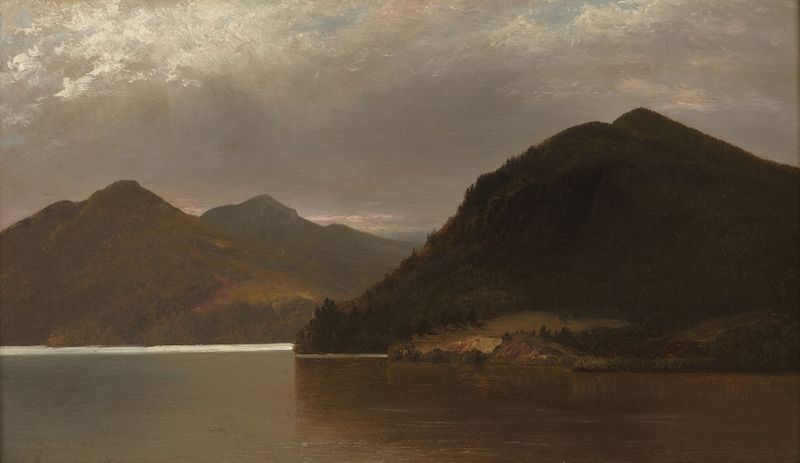
Lake George
John Frederick Kensett
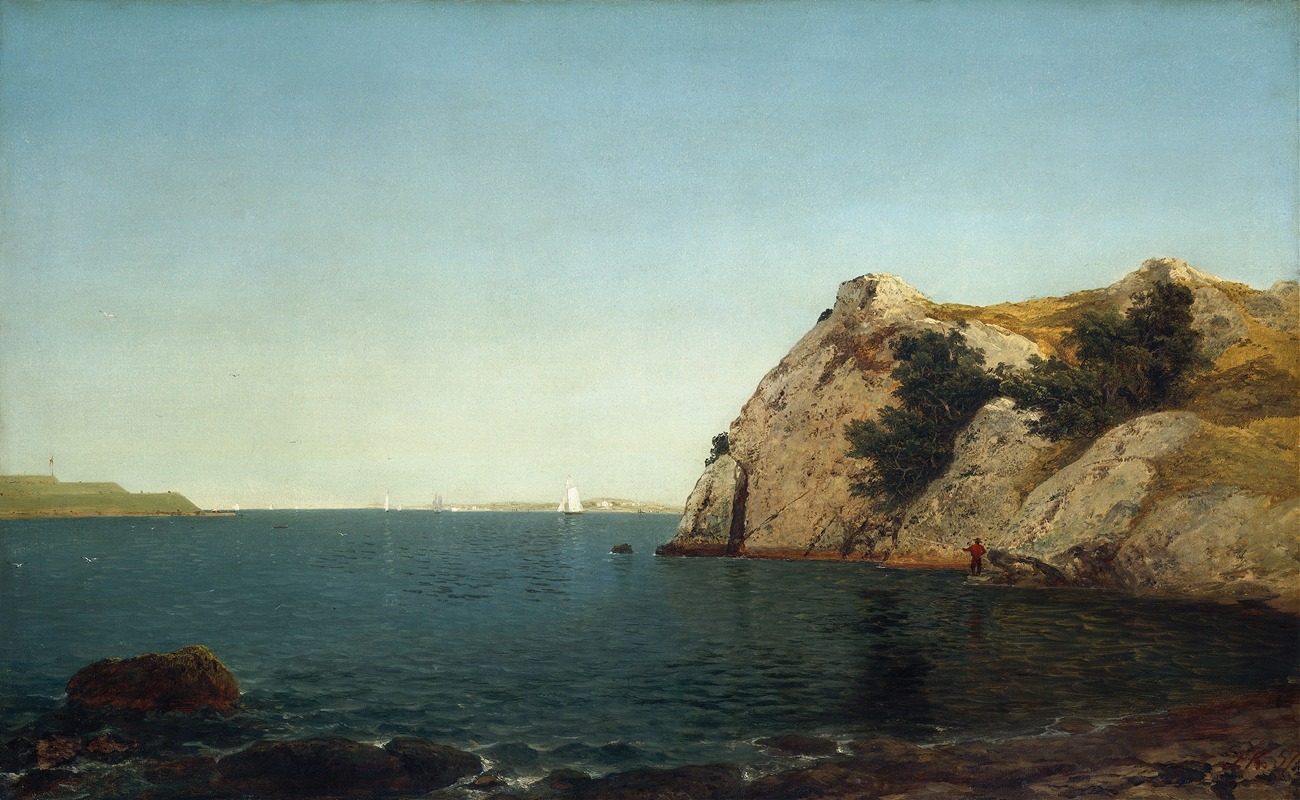
Near Newport
John Frederick Kensett





