
Illustrated Tale of Nezame — History & Facts
A section from a handscroll of Illustrated Tale of Nezame by an unknown artist, dating to the late 12th century, features a narrative scene rendered in ink, color, gold, and silver on paper. The composition is divided between an architectural interior on the left and an outdoor garden landscape on the right, with the use of diagonal lines and overlapping planes characteristic of Japanese narrative painting of this period. The work measures 25.8 cm in height. The image depicts a view into a building, where a figure can be seen partially obscured behind patterned screens, while outside, several figures are seated beneath blossoming trees.
The garden is rendered with delicate brushwork and the use of gold and silver to highlight foliage and blossoms, creating a shimmering effect. The palette is dominated by soft greens, blues, and earth tones, with intricate patterns on the architectural elements and garments. The scene is visually unified by the use of gold dust and subtle gradations of color, typical of Heian and early Kamakura period handscrolls. This work is part of the collection of the Yamato Bunkakan museum in Nara, Japan.
Handscrolls illustrating monogatari (tales) were a prominent genre in late Heian and early Kamakura Japan, often produced for aristocratic patrons and used to convey both literary and visual storytelling.
More Artworks by Unknown Artist

The Tale of Genji Scroll: Yadorigi
Unknown Artist
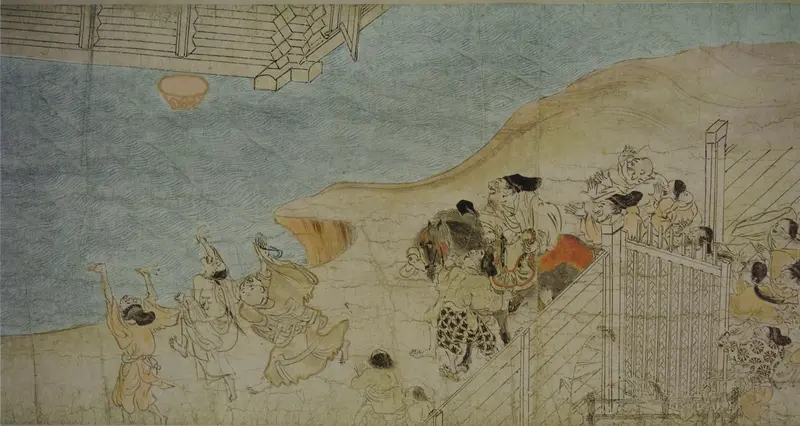
Legends of Mount Shigi: The Flying Granary
Unknown Artist
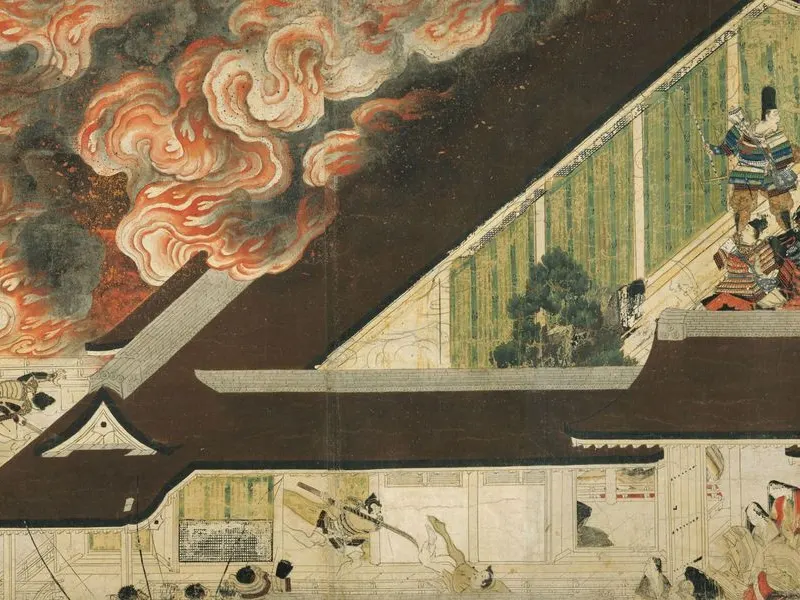
Night Attack on the Sanjō Palace
Unknown Artist
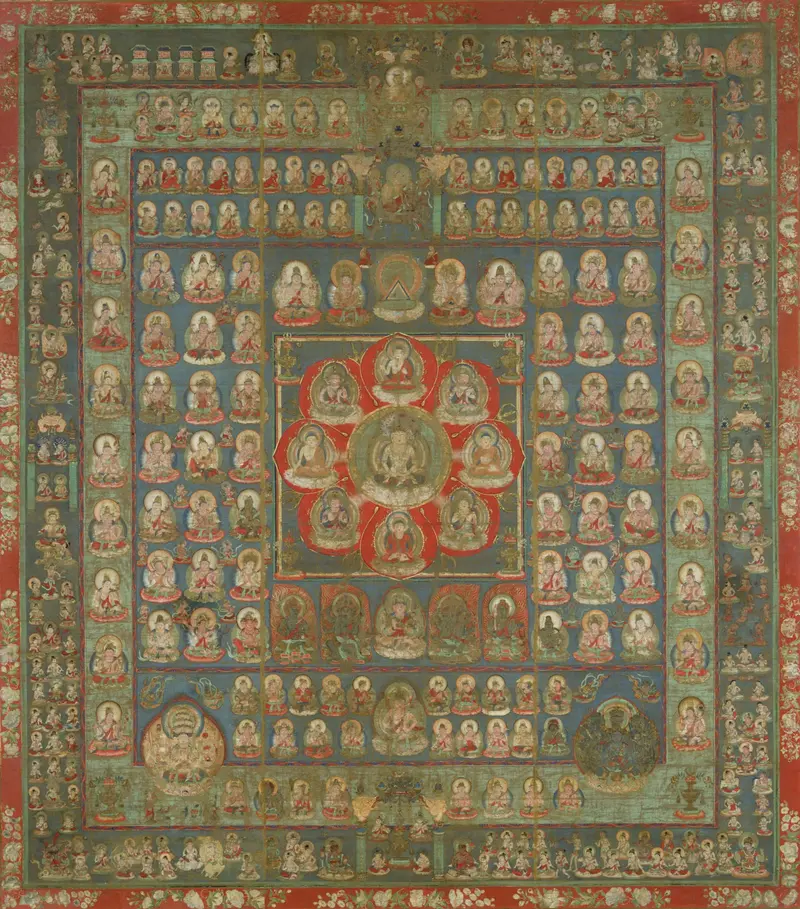
Womb World Mandala (Mandala of the Two Realms)
Unknown Artist
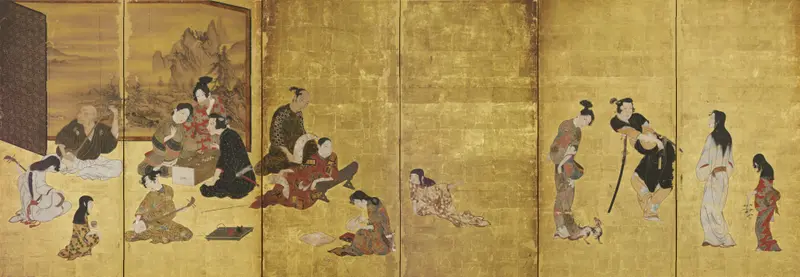
Hikone Screen
Unknown Artist
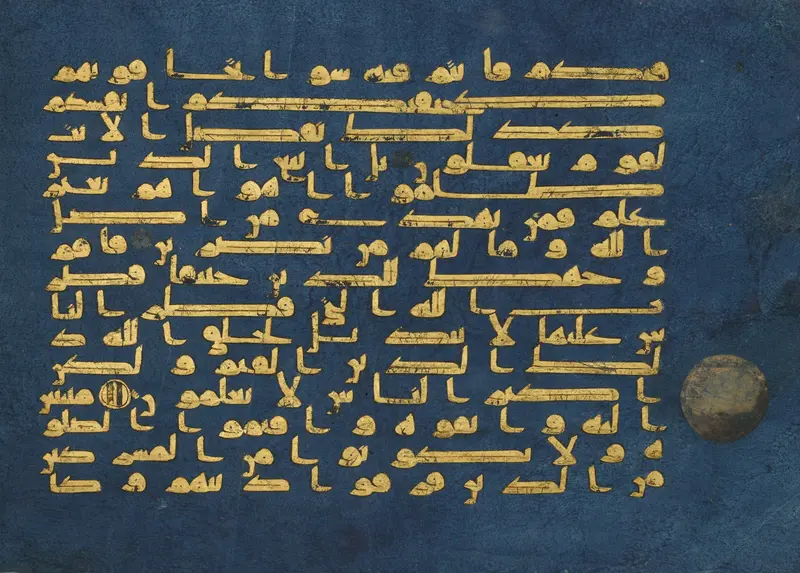
Folio from the Blue Qur'an
Unknown Artist
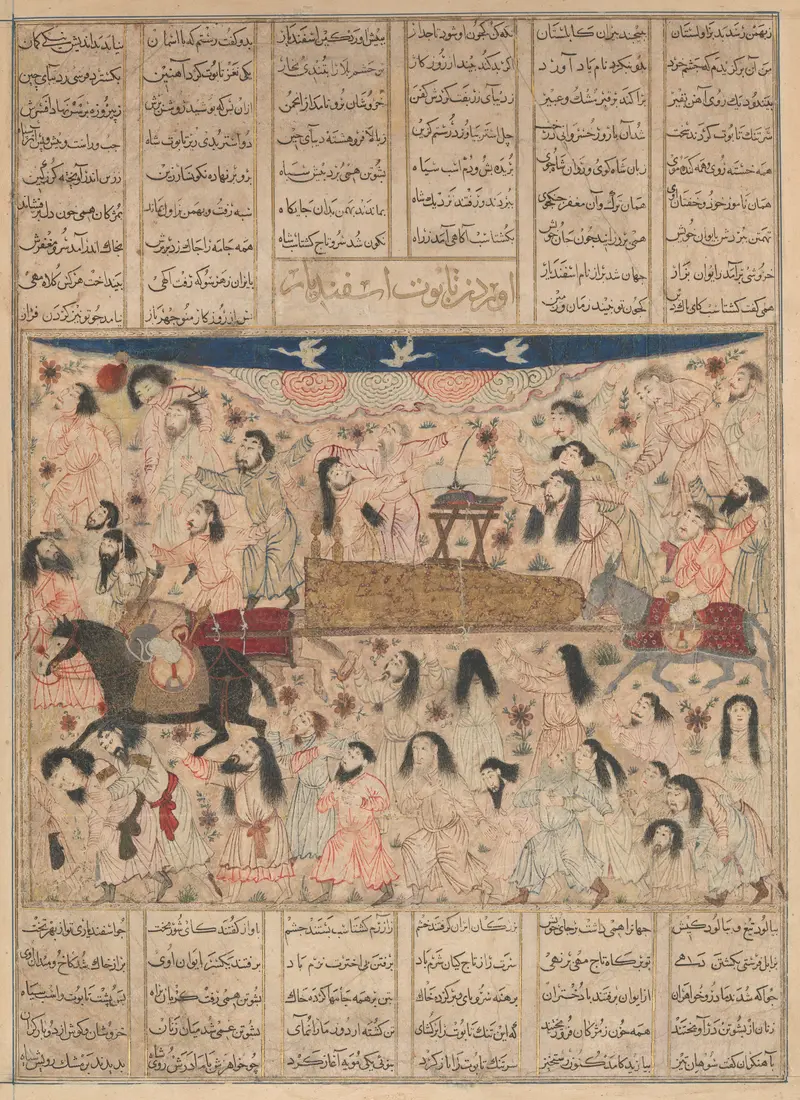
The Funeral of Isfandiyar (Great Mongol Shahnama)
Unknown Artist

The Ideal City
Unknown Artist
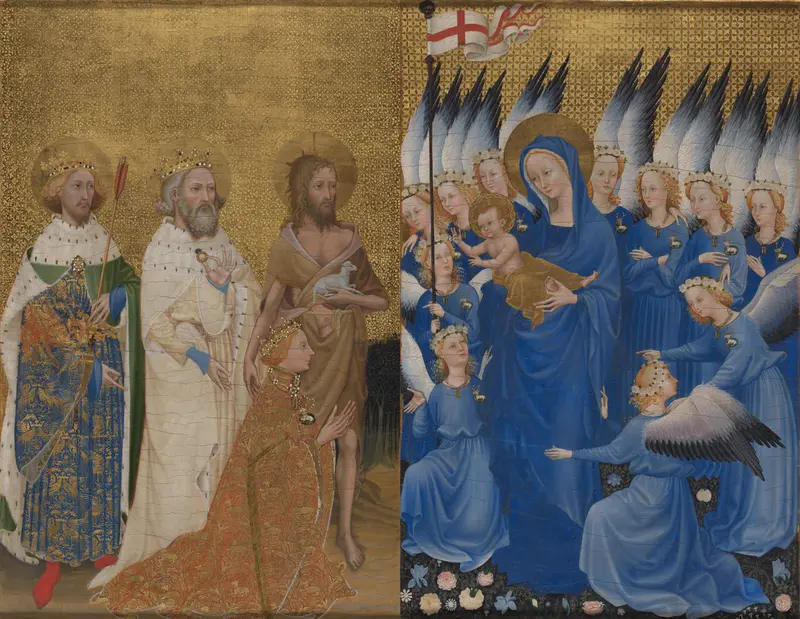
The Wilton Diptych
Unknown Artist

Ridder, Dood en Duivel
Unknown Artist




