Nymph Tormented by Cupid — History & Facts
In a world filled with chaos, art stands as a poignant testament to our fleeting emotions and desires. Look closely at the swirling forms that dominate the canvas. The nymph, caught in a delicate struggle, becomes the focal point, her body twisting in a dance of both elegance and distress. The vibrant greens and deep earth tones envelop her, creating a lush backdrop that seems to pulse with life.
The soft light that filters through the foliage casts an ethereal glow on her skin, accentuating her vulnerability while simultaneously highlighting the force that pulls her — Cupid, the embodiment of love’s tumult. As you explore the piece, consider the emotional tension present in the nymph's expression. There is a palpable conflict between desire and anguish, captured in her wide eyes that reflect both longing and torment. The juxtaposition of the nymph’s delicate beauty against the chaotic energy of Cupid’s arrows underscores the often-painful nature of love.
Each brushstroke seems to echo the tumult of the heart, suggesting that passion is often intertwined with chaos. In 1853, Diaz de la Peña painted this work while immersed in the Romantic movement, which sought to explore the depths of human emotion and nature’s tumultuous beauty. Living and working in France, he sought to capture the essence of the world around him, inspired by the burgeoning fascination with the expressive capabilities of color and form. This period marked a tension between tradition and innovation, as artists began to break free from stringent academic standards, reflecting the chaos of a rapidly changing society.
More Artworks by Narcisse Virgile Diaz de la Peña
Browse all →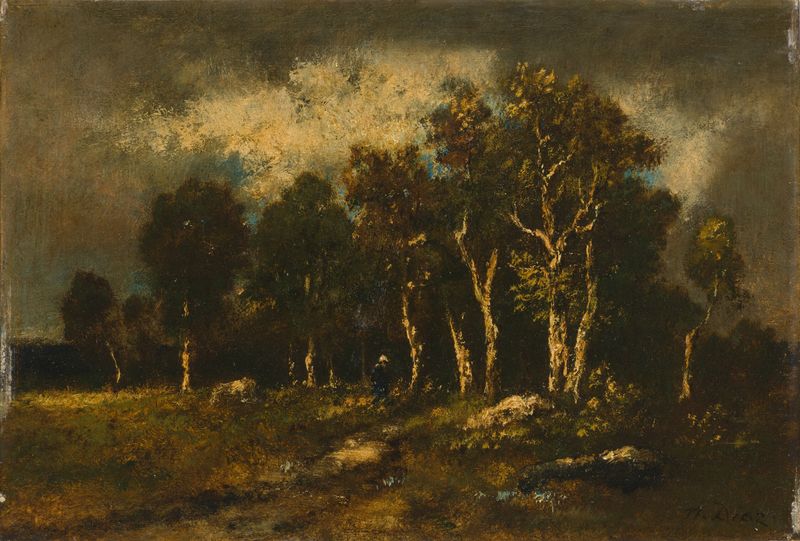
Landscape
Narcisse Virgile Diaz de la Peña

Pond in the Woods
Narcisse Virgile Diaz de la Peña

Le Malefice
Narcisse Virgile Diaz de la Peña

Landscape with Figures
Narcisse Virgile Diaz de la Peña

Venus Disarming Cupid
Narcisse Virgile Diaz de la Peña

Education of Cupid
Narcisse Virgile Diaz de la Peña
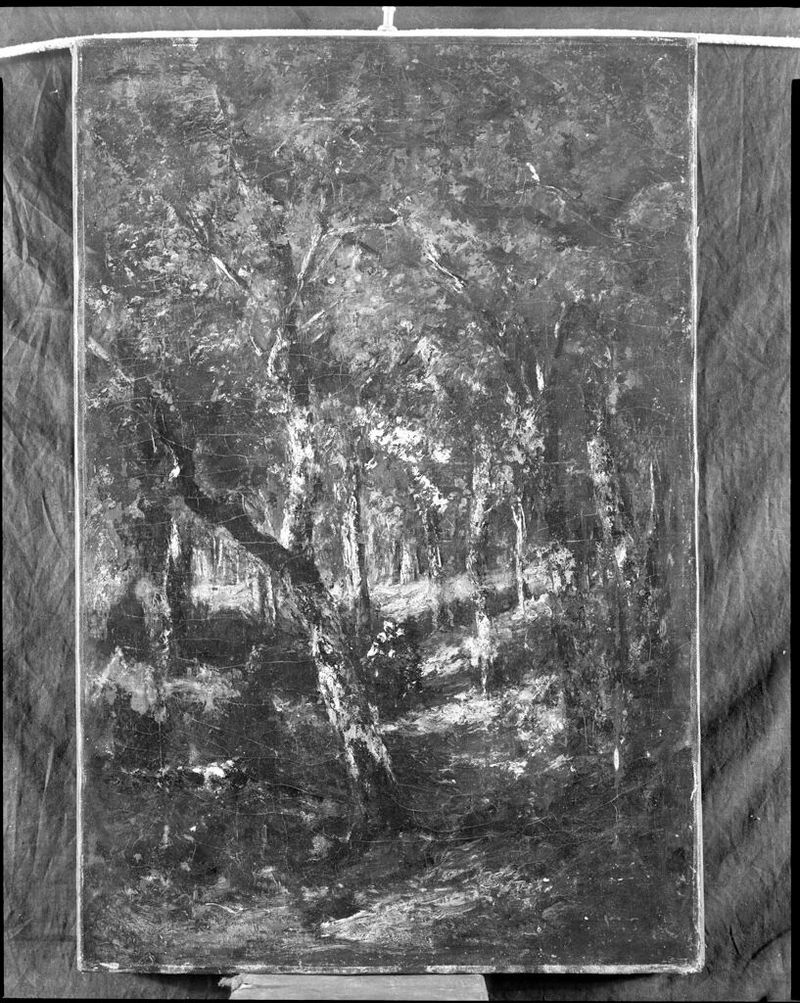
Forest Landscape
Narcisse Virgile Diaz de la Peña
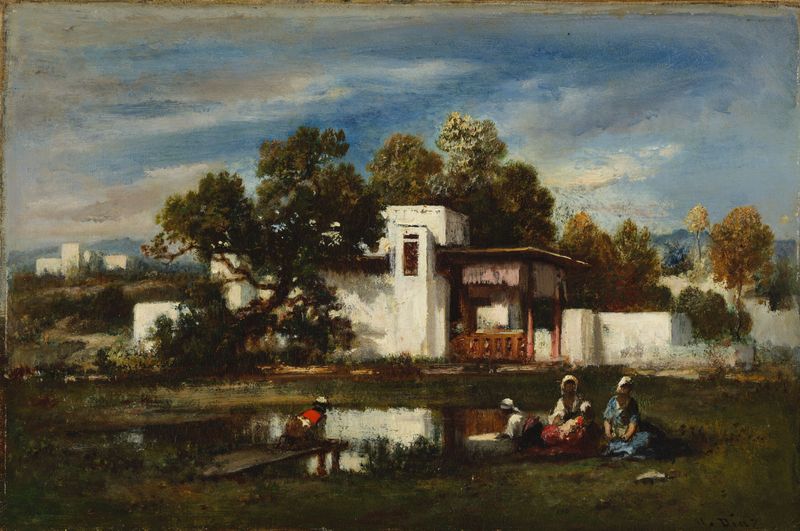
Landscape with Figures
Narcisse Virgile Diaz de la Peña

Three Girls in a Wood
Narcisse Virgile Diaz de la Peña

Three Little Girls
Narcisse Virgile Diaz de la Peña