Oberrheinlandschaft — History & Facts
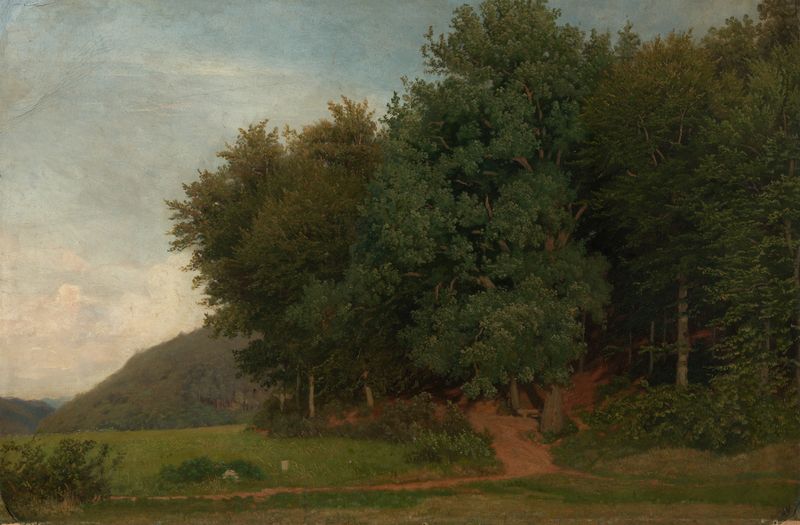
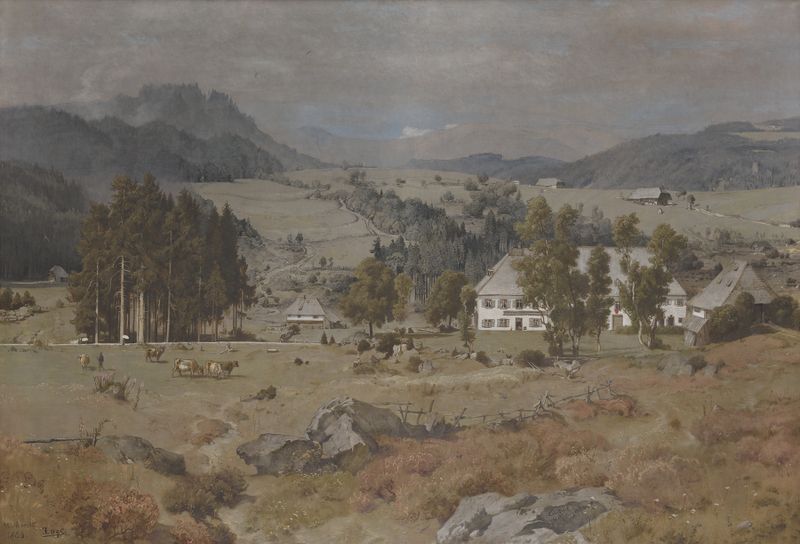
When did color learn to lie? In Oberrheinlandschaft, vibrant hues and gentle brushstrokes cloak a deeper truth that beckons one to question the very essence of nature and our perception of it. Focus on the boundless sky that envelops the landscape, a ceiling of blues and whites that seems to vibrate with life. Notice how the verdant hills roll into the distance, each stroke capturing the undulating surface of the earth, while sun-drenched fields of gold create a comforting contrast. The palette, warm and inviting, draws you into this pastoral paradise, yet the unsettling harmony between light and shadow hints at an underlying tension. The interplay of light reveals the duality of the scene; it speaks of warmth and comfort while simultaneously evoking a sense of desolation.
The contrast between the idyllic landscape and the somber shadows lurking at the edges suggests a betrayal of nature’s promise, hinting at the fragility of this beauty. The viewer is left to ponder the transient nature of such splendor—can we trust our eyes when they are seduced by color? In 1869, Emil Lugo painted Oberrheinlandschaft during a time when Romanticism still echoed in the art world, yet the stirrings of Impressionism began to challenge established norms. He was living in Germany, immersed in a period of nationalistic fervor and artistic exploration, as artists grappled with capturing the essence of nature in a rapidly changing world.
This artwork reflects both the serenity and complexity of a landscape that embodies more than mere scenery, posing questions that resonate through time.