
October After Glow — History & Facts
What if beauty was never meant to be finished? In October After Glow, we are invited to linger in a moment that teeters between serenity and the lurking shadows of uncertainty, a reflective pause in the eternal dance of nature and time. Look to the left, where a gentle cascade of autumn leaves glows in the warm embrace of the setting sun. The rich, golden hues are juxtaposed with the deep blues and purples of the encroaching evening, creating a visual symphony that encapsulates the transition from day to night. Notice how the artist's meticulous attention to light casts a spell upon the scene, illuminating the pathway and inviting the viewer to step into the unfolding narrative, while the distant trees stand watch, shrouded in mystery. This painting holds deeper tensions within its tranquil surface.
The juxtaposition of warmth and chill—the sun setting against the chill of an autumn evening—evokes a poignant reflection on the cycles of change, the beauty of fleeting moments, and the fear of loss. The figures meandering along the path appear to be both part of the landscape and separate from it, hinting at humanity's tenuous relationship with nature and time. Here, beauty is not just observed; it is felt, intertwined with an unspoken anxiety about what lies ahead. Created in 1885, during a period marked by industrial change and a growing fascination with natural beauty, the artist found himself in a world that was rapidly transforming.
Living in Leeds, Grimshaw captured the interplay between light and shadow with a keen eye, solidifying his reputation as a master of nocturnal landscapes. His art reflects not just the external world, but also the internal struggles of a society grappling with the dichotomy of progress and nostalgia.
More Artworks by John Atkinson Grimshaw
Browse all →
Under the Silvery Moonbeams
John Atkinson Grimshaw
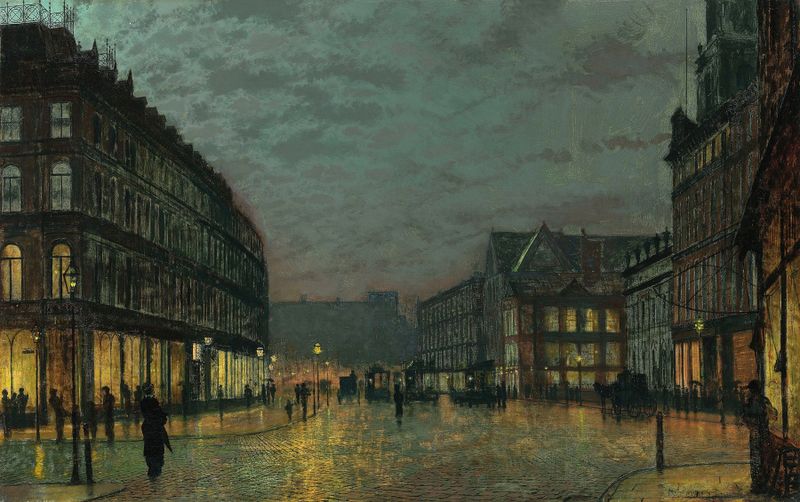
Boar Lane, Leeds by lamplight
John Atkinson Grimshaw
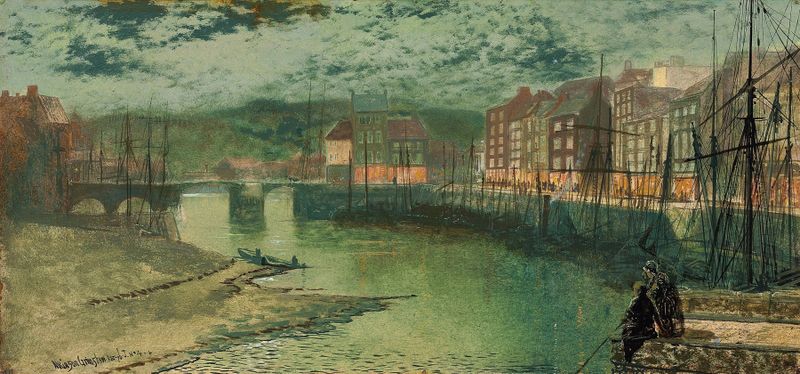
Whitby docks
John Atkinson Grimshaw

Old Chelsea
John Atkinson Grimshaw

Late October
John Atkinson Grimshaw
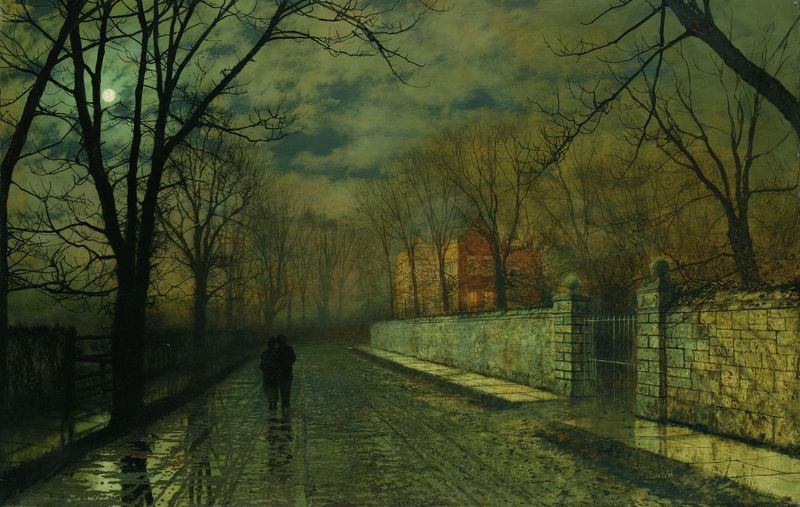
Figures In A Moonlit Lane After Rain
John Atkinson Grimshaw

Liverpool Lights
John Atkinson Grimshaw
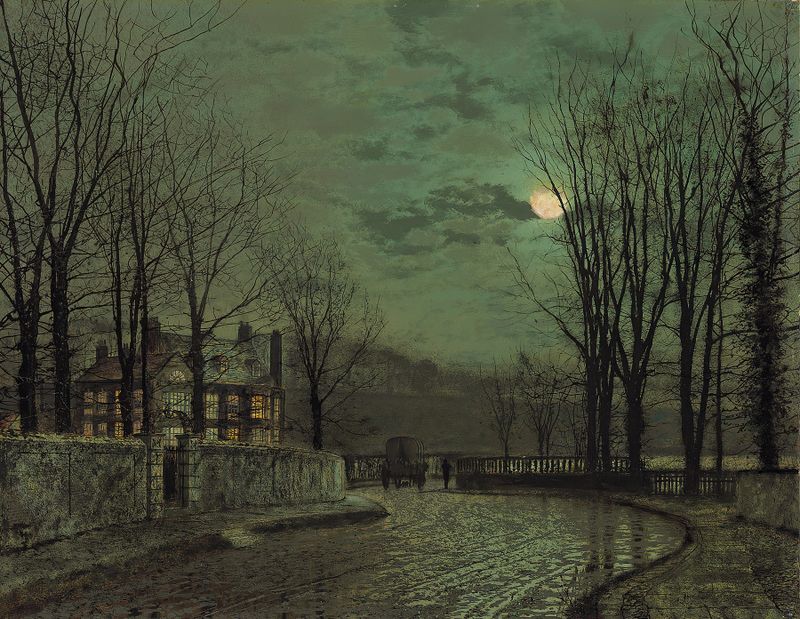
November Moonlight
John Atkinson Grimshaw
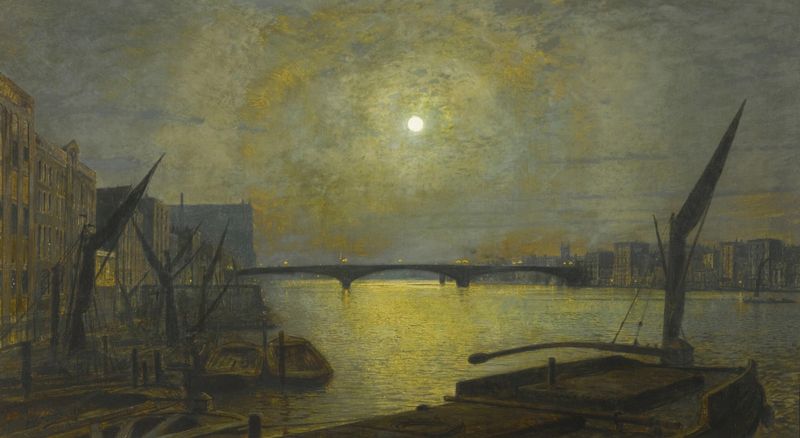
Southwark Bridge from Blackfriars by Moonlight
John Atkinson Grimshaw

Whitby From Scotch Head, Moonlight On The Esk
John Atkinson Grimshaw





