
Oisème, Route de village — History & Facts
Who listens when art speaks of silence? In a moment captured by the brush, the stillness of a quiet village road offers an awakening to the subtle beauty of nature's breath. Focus on the gentle curve of the road that invites you deeper into the scene. Notice how the dappled sunlight falls upon the lush green grass, mingling with the soft shadows cast by the trees lining the path. The palette, dominated by warm earth tones and vibrant greens, creates a sense of serenity, encouraging your eyes to wander along the undulating landscape.
The brushwork, loose yet deliberate, captures a fleeting moment, inviting contemplation of both the surroundings and the viewer's own inner landscape. Boudin’s choice of a quiet village setting emphasizes the contrast between nature's tranquility and the bustling life beyond its edges. The distant horizon, softened by a haze, suggests an emotional distance, a world untroubled by the chaos of urban life. Small details, like the solitary figure walking along the road, evoke themes of solitude and introspection, reminding us of the profound peace found in nature's embrace. Created in 1891, this work reflects a period when Boudin was immersed in his explorations of outdoor scenes, capturing the ephemeral qualities of light and weather.
Living in Honfleur, France, he was a precursor to the Impressionists, portraying fleeting moments of beauty in a rapidly changing world. During this time, Boudin was also advocating for the recognition of plein air painting, marking a pivotal moment in the evolution of modern art.
More Artworks by Eugène Boudin
Browse all →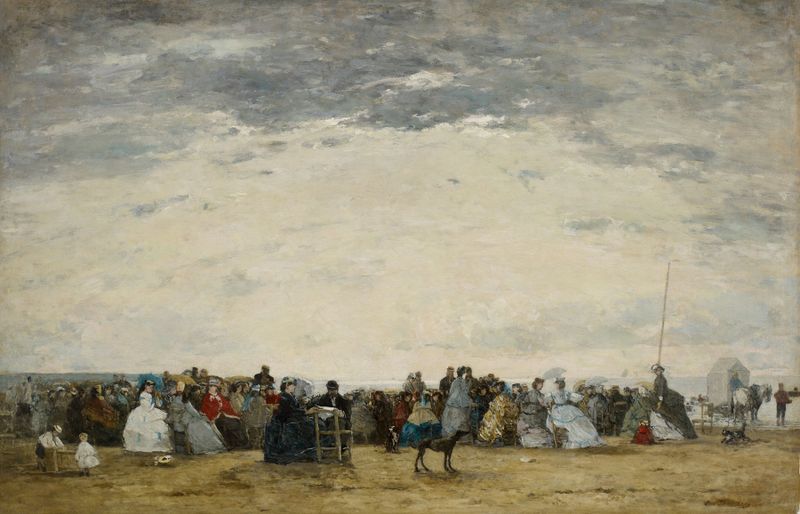
Vacationers on the Beach at Trouville
Eugène Boudin

Washerwoman near Trouville
Eugène Boudin
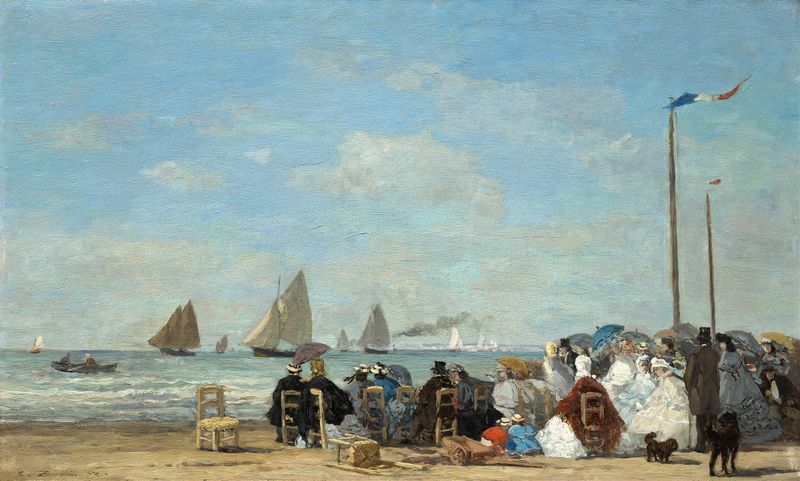
Beach Scene at Trouville
Eugène Boudin

Port aux environs d’Honfleur
Eugène Boudin

Le Faou, un coin du village
Eugène Boudin
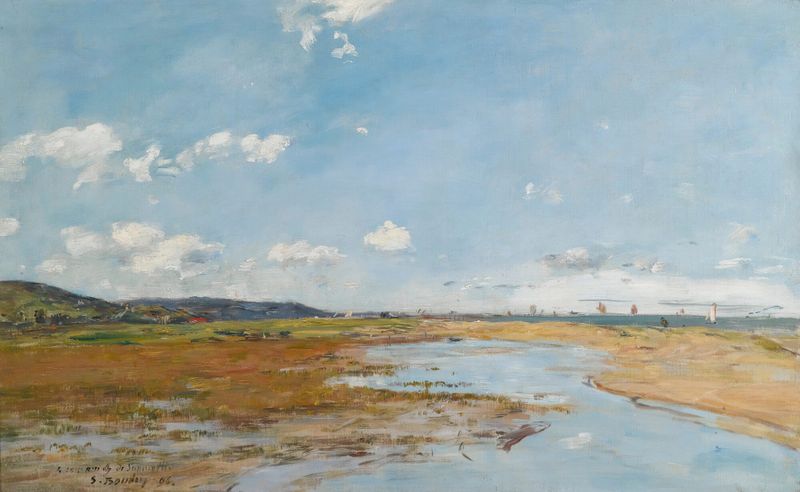
Deauville. Le Rivage
Eugène Boudin
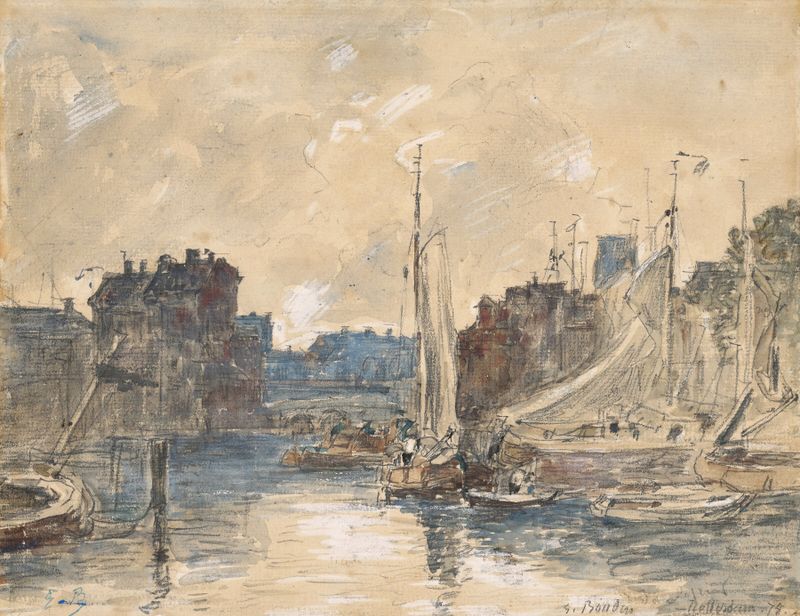
Port de Rotterdam
Eugène Boudin

View of Bordeaux, from the Quai des Chartrons
Eugène Boudin

Trouville, Scène De Plage
Eugène Boudin

Trouville, Le Port
Eugène Boudin





