
Old Foot-bridge, Banks of the Small Morin (Vieille passerelle, bords du petit morin) — History & Facts
The eye is drawn first to the quiet invitation of the footbridge, its old planks stretching across the water, half-shaded by the trees that crowd the banks. This is a landscape that hums with gentle activity: a figure sits at the edge, perhaps lost in thought or watching the ripples, while a rider and livestock move in the distance. The careful etching of foliage and water pulls the viewer into the scene, each line suggesting the soft rustle of leaves or the coolness of the stream.
Light glances off the surface, guiding us from the wild grasses in the foreground to the clustered rooftops beyond, hinting at a village just out of reach. The palette of warm browns and delicate grays sets a mood of calm observation, as if the world here moves at a slower, steadier pace. Created in 1915, Old Foot-bridge, Banks of the Small Morin belongs to a tradition of French landscape art that found new resonance in the late nineteenth and early twentieth centuries. Artists like Auguste Lepère captured the rural world not as a stage for grand events, but as a living environment, shaped by daily rhythms and quiet labor.
Such works were often collected by those who longed for a connection to the countryside as industrialization transformed city life. Now held by the National Gallery of Art and made accessible through their open access policy, this print stands as a testament to the enduring appeal of the ordinary—inviting us to linger, to notice, and to imagine ourselves on the banks of the Small Morin.
More Artworks by Auguste Lepère

Le Pont-Neuf (Paris)
Auguste Lepère
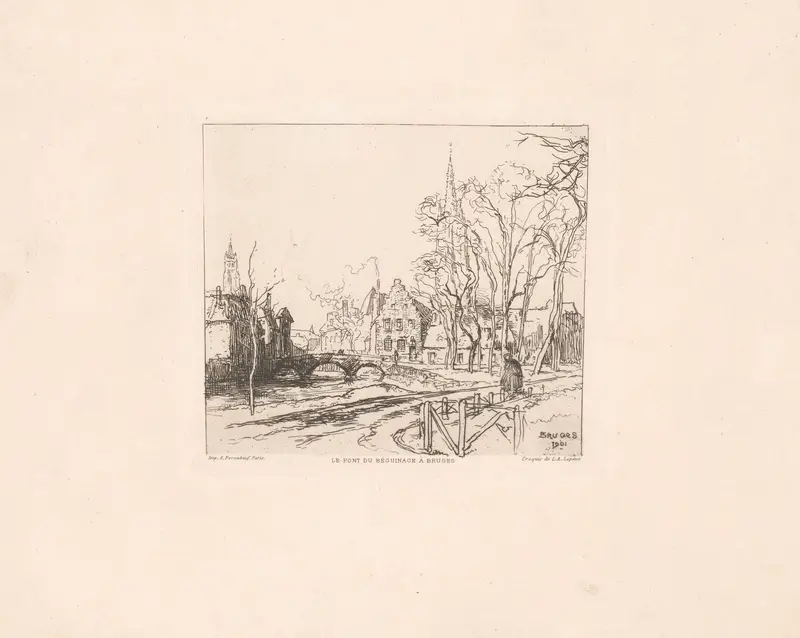
Le pont du Beguinage à Bruges
Auguste Lepère
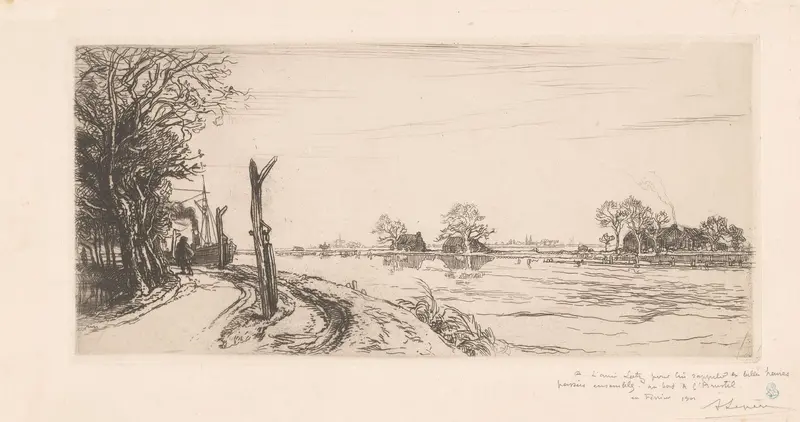
Au bord de l’Amstel
Auguste Lepère
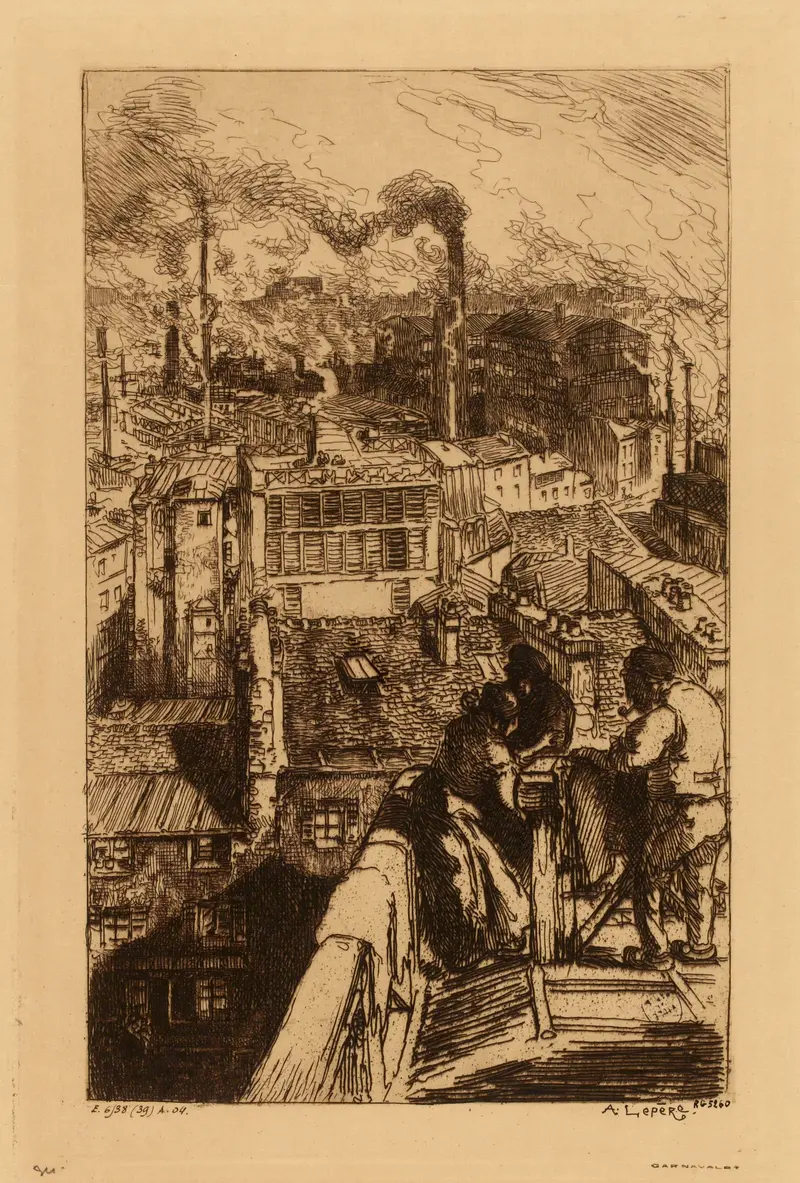
Le quartier des Gobelins
Auguste Lepère
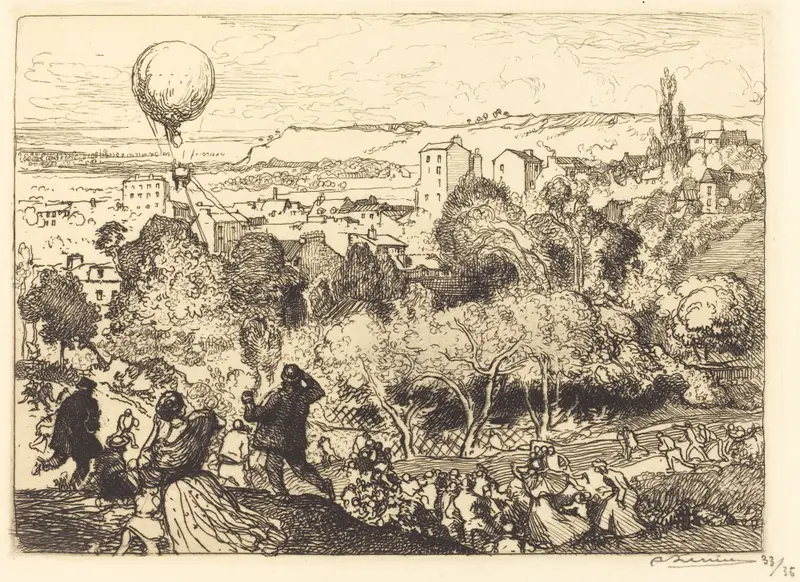
The Falling Balloon, in Pre-Saint-Gervais (Lebaloon qui tombe, au Pre-Saint-Gervais)
Auguste Lepère
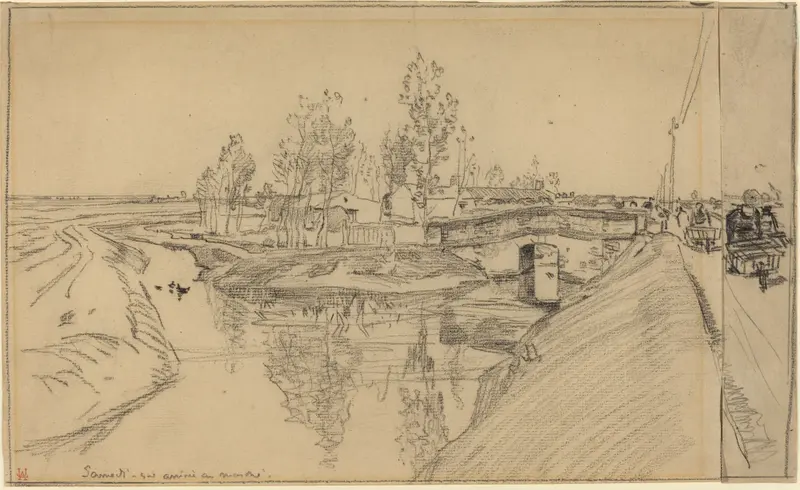
Arrivee au Marche
Auguste Lepère
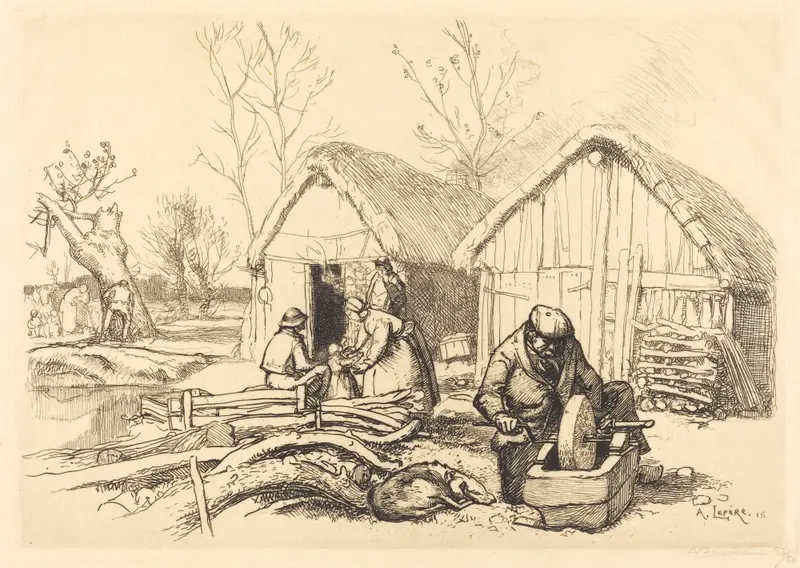
The House of the Woodcutter, Vendee (La maison du bucheron, Vendee)
Auguste Lepère
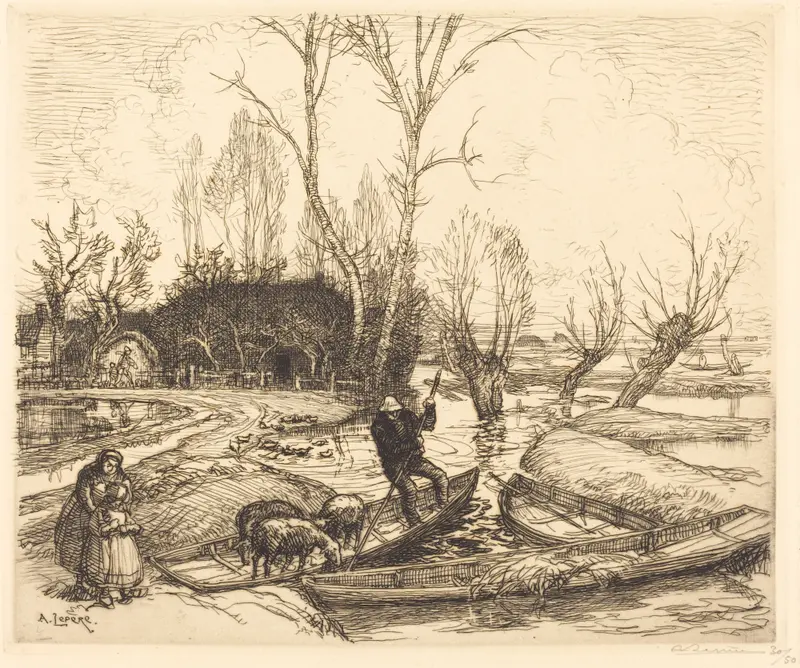
In the Deluged Marsh - The Shepherd (Au marais inonde - Le berger)
Auguste Lepère
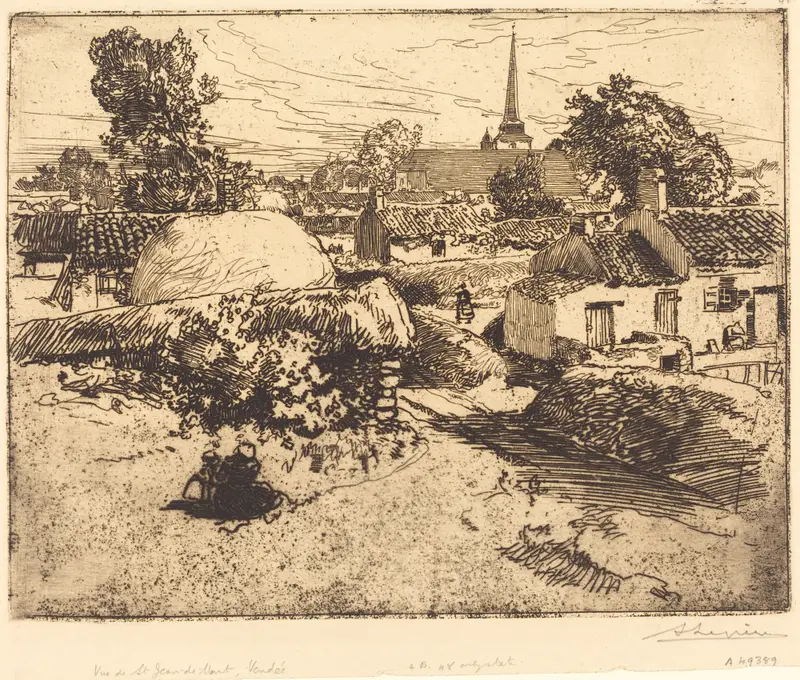
View of St.-Jean-de-Mont, Vendee (Vue de St.-Jean-de-Mont, Vendee)
Auguste Lepère
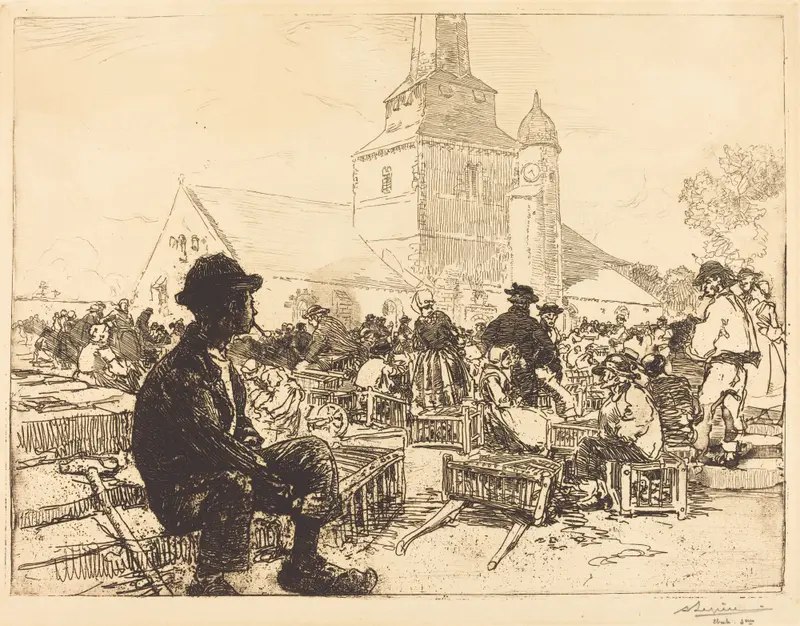
Poultry Market at St.-Jean-de-Mont (Marche a la volaille, a St.-Jean-de-Mont)
Auguste Lepère
More Landscape Art

The Starry Night
Vincent van Gogh

View of Delft
Johannes Vermeer

Water Lilies
Claude Monet

The Grand Canal, Venice, looking north-west from the Ca' Corner to the Ca' Contarini degli Scrigni, with the campanile of Santa Maria della Carità
Canaletto

Windsor Castle
Canaletto

The Grand Canal looking North-East from the Palazzo Dolfin-Manin to the Rialto Bridge
Canaletto