
On The Side Of Santa Maria Della Salute — History & Facts
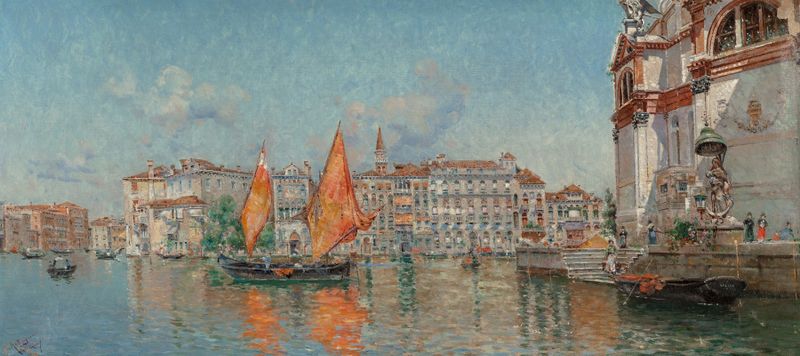
Did the painter know this moment would outlive them? The elegance of captured time becomes a silent witness to the artist's brush, a defiant expression against the tides of revolution and change. Focus on the delicate interplay of light and shadow in the architectural forms. Notice how the ethereal glow bathes the iconic dome of Santa Maria Della Salute, illuminating its grandeur amidst an urban landscape. The soft blues and golden hues invite your gaze to travel across the tranquil waters, where reflections dance and ripple, blurring the lines between reality and illusion.
Each stroke seems to echo the very heartbeat of Venice, its essence immortalized by the painter’s hand. Hidden beneath the surface lies a tension between stability and upheaval. The serene beauty of the church stands in stark contrast to the tumultuous times surrounding it, hinting at histories of loss and resilience. Subtle details like the boats gently bobbing on the water’s edge whisper stories of everyday life, while the grand structure above looms as a beacon of hope amid uncertainty—a reminder that art can encapsulate both peace and revolution. In a period marked by political unrest and shifting artistic values, the painter created this work in Venice, likely during the 19th century.
Manescau was influenced by the Romantic movement, characterized by its emphasis on emotion and nature, which shaped his interpretation of the city. During this era, Venice was grappling with its identity, and the artist's rendering reflects both an enduring heritage and the fragile state of a city caught between past glory and future upheaval.
More Artworks by Antonio María de Reyna Manescau
Browse all →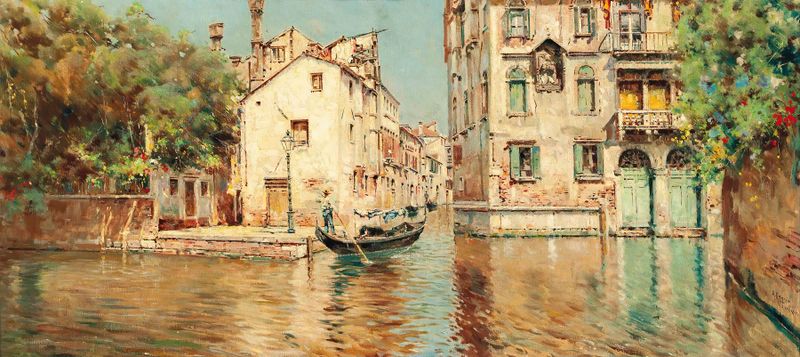
A gondolier on a Venetian backwater
Antonio María de Reyna Manescau
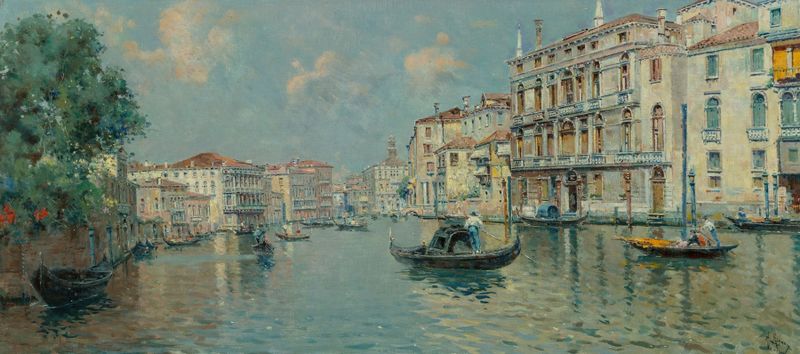
Grand Canal, Venice
Antonio María de Reyna Manescau
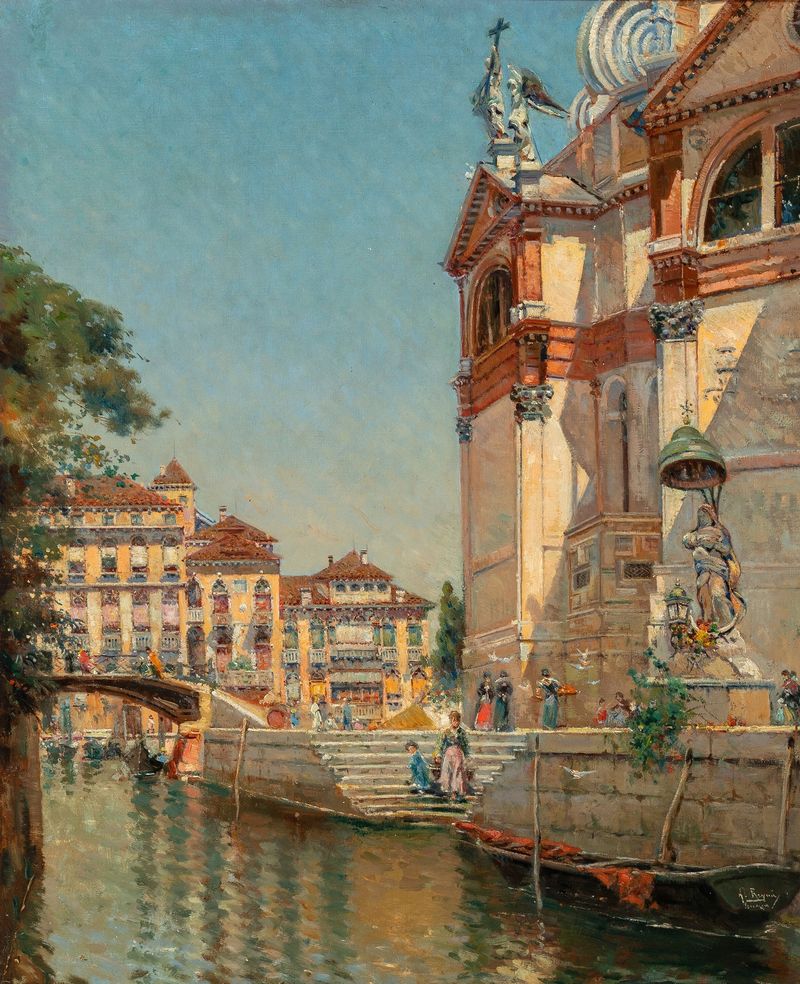
Santa Maria della Salute, Venice, seen from the side
Antonio María de Reyna Manescau
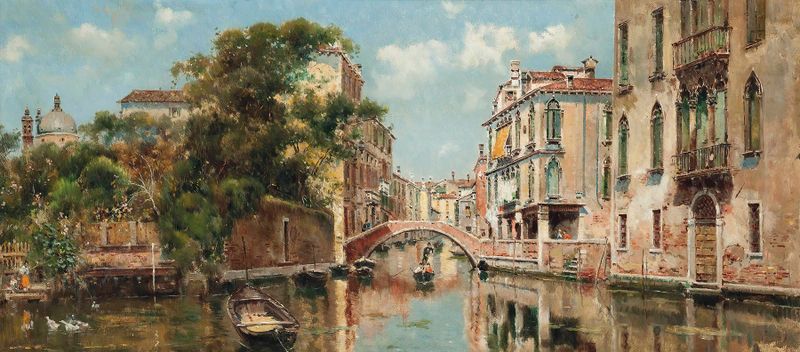
A gondolier before a Venetian bridge
Antonio María de Reyna Manescau
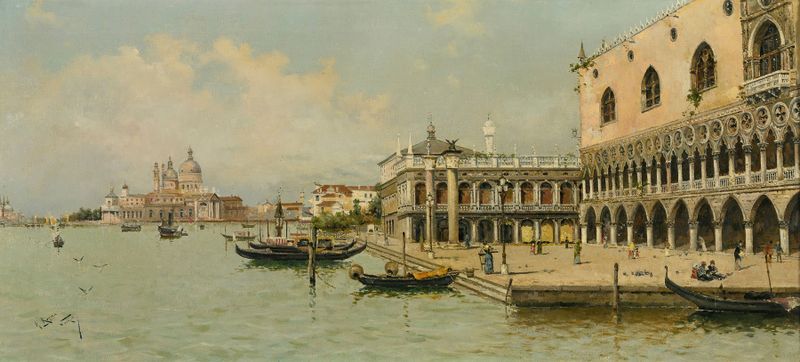
Gondolas By The Doge’s Palace
Antonio María de Reyna Manescau

Vedute von Venedig
Antonio María de Reyna Manescau
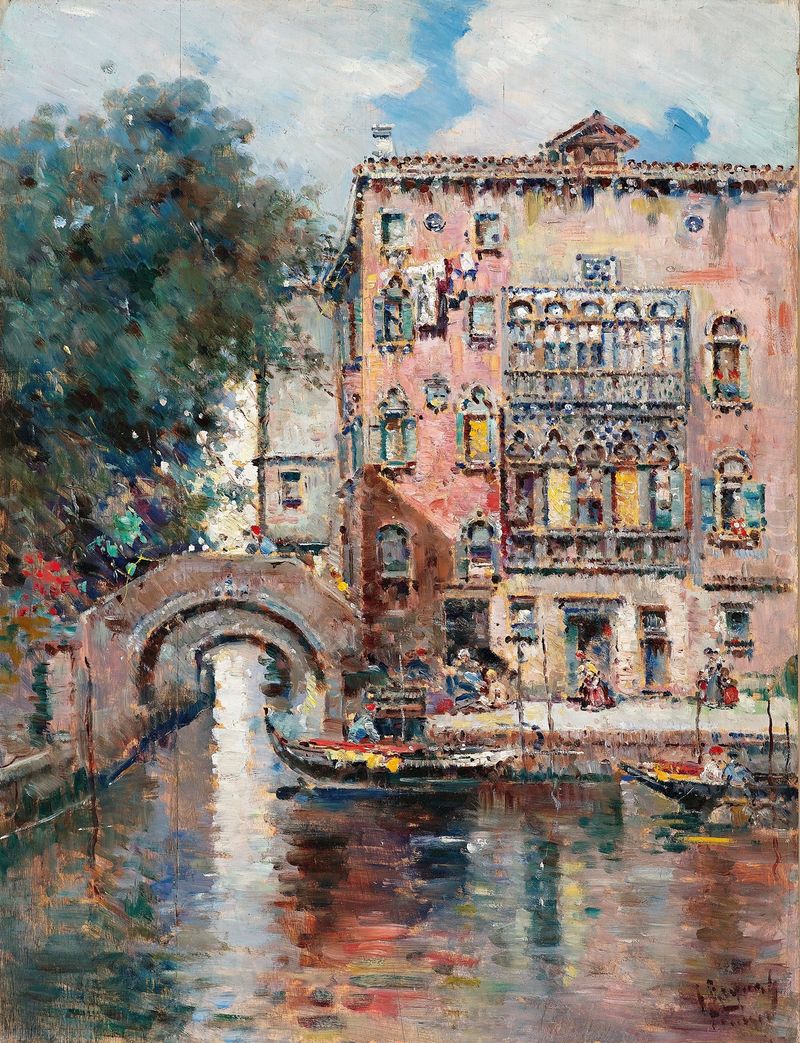
Gondeln in Venedig
Antonio María de Reyna Manescau
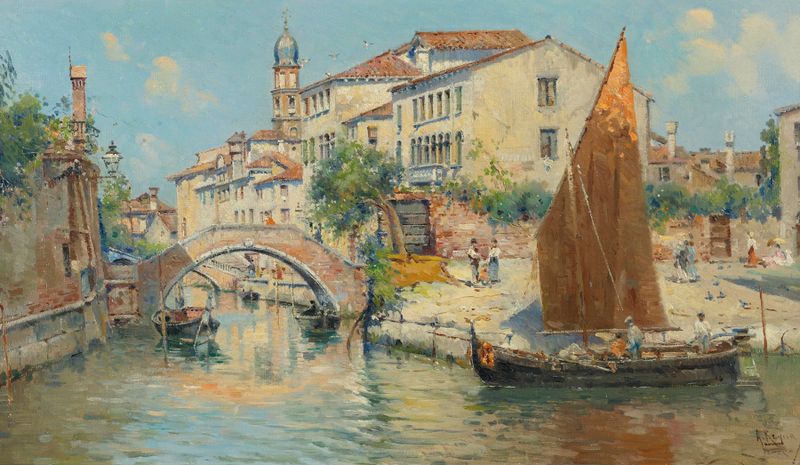
Venice
Antonio María de Reyna Manescau
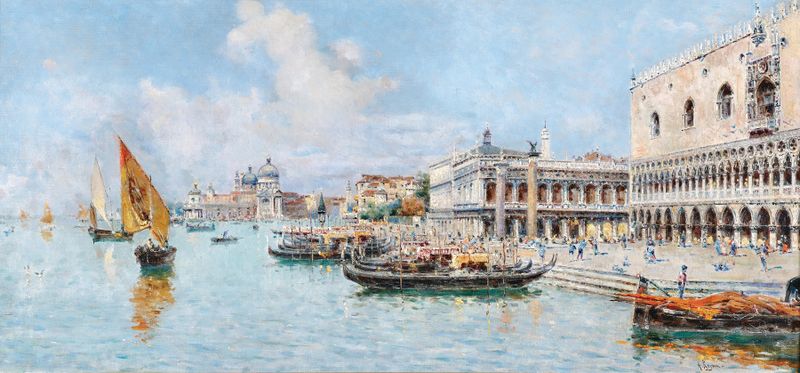
Venice, view of Bacino di San Marco
Antonio María de Reyna Manescau
The Grand Canal, from Santa Maria della Salute, Venice
Antonio María de Reyna Manescau
More Architecture Art
Browse all →
The statue of Liberty
Frédéric Auguste Bartholdi

View of Houses in Delft, Known as ‘The Little Street’
Johannes Vermeer

View of Houses in Delft, Known as ‘The Little Street’
Johannes Vermeer

The Cathedral in Rouen. The portal, Grey Weather
Claude Monet

The yellow house
Vincent van Gogh

The Church in Auvers-sur-Oise, View from the Chevet
Vincent van Gogh