
Venice, view of Bacino di San Marco — History & Facts
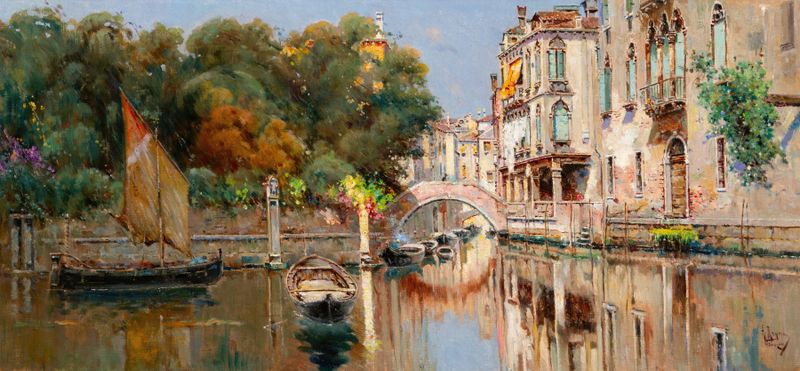
Did the painter know this moment would outlive them? The emptiness of a tranquil lagoon speaks louder than the vibrancy of life, echoing a longing that remains timeless. Look to the center of the canvas where the gentle ripples of the Bacino di San Marco shimmer beneath soft, diffused light. The pale blues and greens meld effortlessly, creating a serene backdrop against the delicate architecture of Venice that lines the horizon. Notice how the brushstrokes vary in intensity, from the detailed outlines of distant buildings to the almost ethereal quality of the water, evoking a sense of stillness and solitude. Amidst the visual beauty lies a profound tension—the juxtaposition of the bustling life that once thrived in this iconic setting and the current solitude of the scene.
In the foreground, the absence of boats or figures enhances a feeling of desolation, inviting the viewer to ponder the passage of time. This emptiness can be seen as a reflection of the artist’s own experiences, highlighting both the magnificence of Venice and the inevitable fading of its once-great allure. Created at an undetermined time, this work emerged during a period of artistic exploration in the 19th century, when many sought to capture the essence of their surroundings. Antonio María de Reyna Manescau, active in the late Romantic and early Impressionist movements, embraced the enchanting yet fleeting beauty of the Venetian landscape, channeling his fascination with light and water into this evocative portrayal of the lagoon.
More Artworks by Antonio María de Reyna Manescau
Browse all →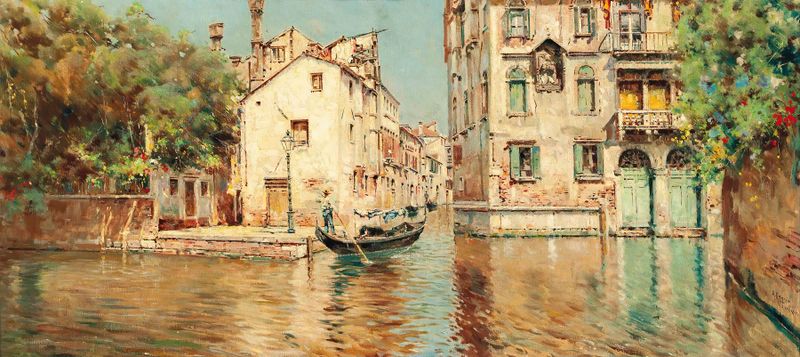
A gondolier on a Venetian backwater
Antonio María de Reyna Manescau
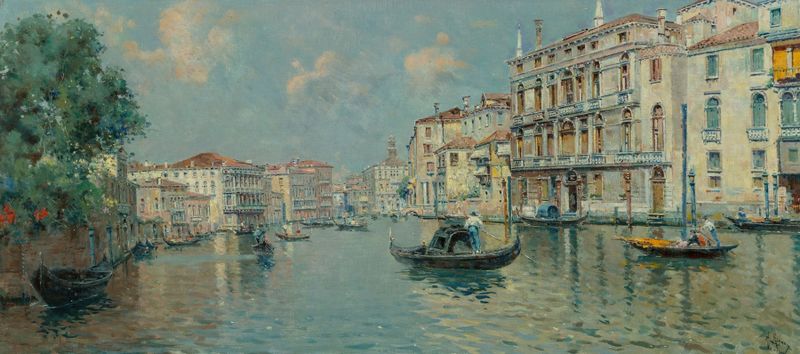
Grand Canal, Venice
Antonio María de Reyna Manescau
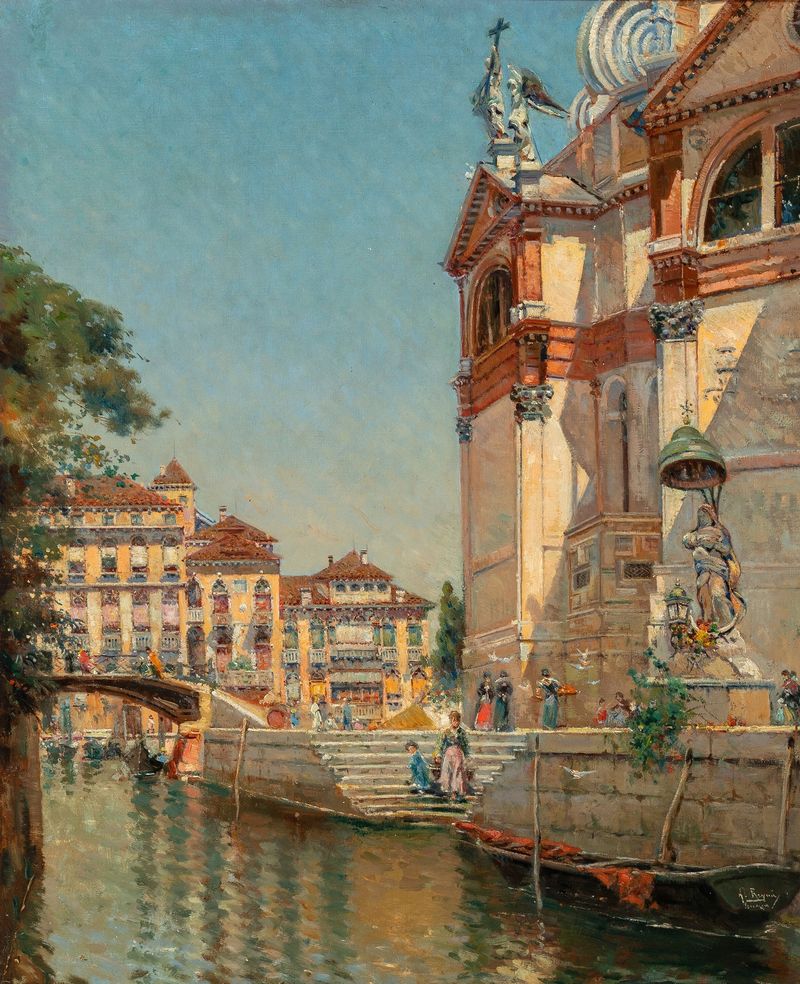
Santa Maria della Salute, Venice, seen from the side
Antonio María de Reyna Manescau
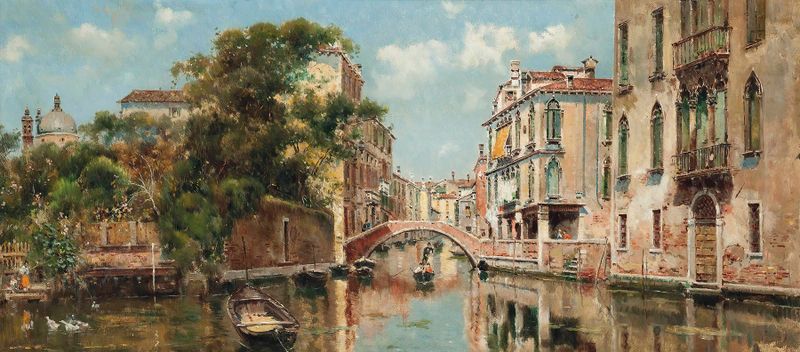
A gondolier before a Venetian bridge
Antonio María de Reyna Manescau
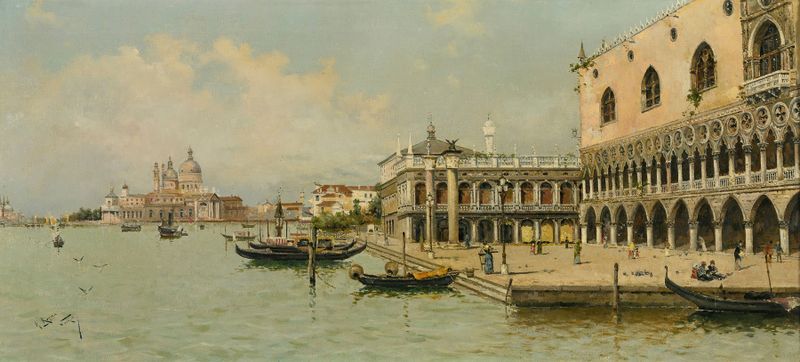
Gondolas By The Doge’s Palace
Antonio María de Reyna Manescau

Vedute von Venedig
Antonio María de Reyna Manescau
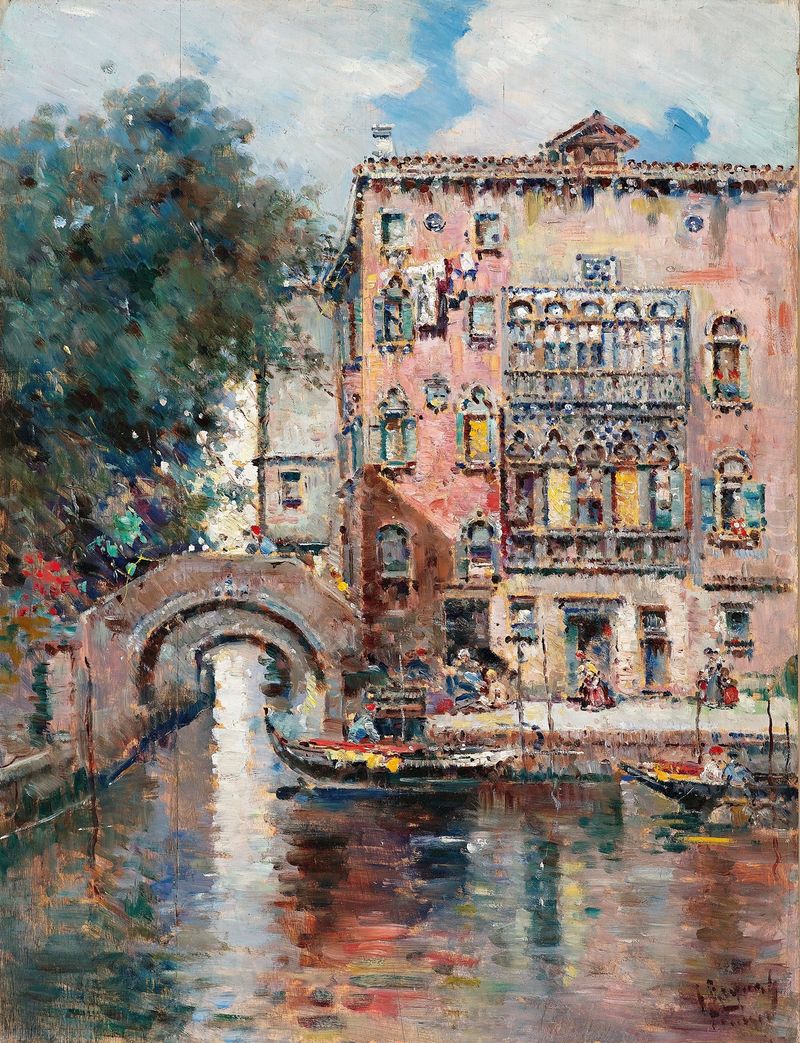
Gondeln in Venedig
Antonio María de Reyna Manescau
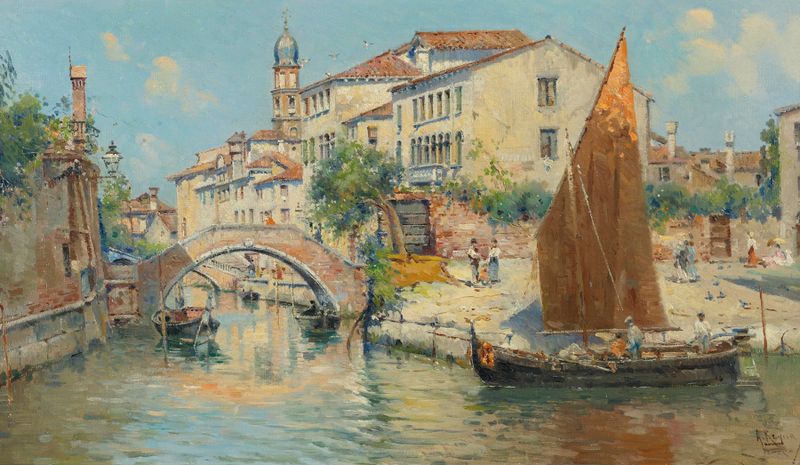
Venice
Antonio María de Reyna Manescau
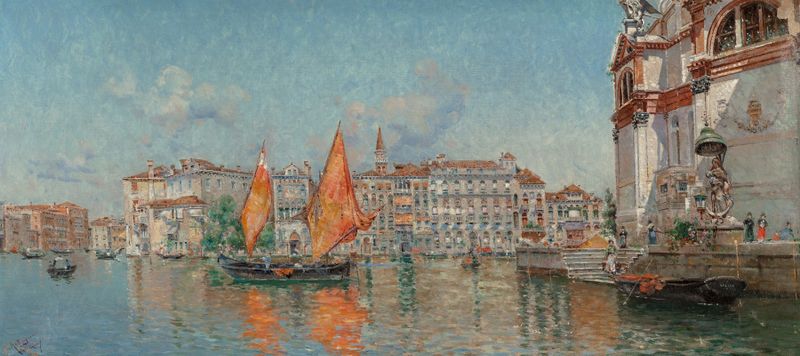
The Grand Canal, from Santa Maria della Salute, Venice
Antonio María de Reyna Manescau
Enchanting Venice
Antonio María de Reyna Manescau





