
On the Way to Emmaus — History & Facts
A path winds quietly through the foreground, where two figures in ancient dress walk together beneath a restless sky, their backs turned to us. The eye is drawn first to their movement—one in white, one in rose—before being pulled upward to the rocky outcrop crowned by a cluster of pale, angular buildings. The trees bend in the wind, their leaves animated against the heavy clouds, while the well in the lower right, draped in foliage, hints at a pause or a destination.
Every detail seems to ask the viewer to join the journey: the rough stones underfoot, the interplay of shadow and light, the sense of anticipation in the figures’ stride. The palette is sober, the mood contemplative, as if the land itself is waiting for something to be revealed. Painted in 1868, On the Way to Emmaus by Arnold Böcklin belongs to a moment when artists across Europe were searching for new ways to blend landscape and story. History has kept few traces of this particular work, now in the collection of the Kunstmuseum Basel, but its subject—drawn from the biblical account of the Emmaus appearance—was a favorite for painters seeking to evoke both the mystery of revelation and the grandeur of nature.
In the late nineteenth century, such scenes were often commissioned by collectors interested in religious narrative, but also in the psychological drama of encounter and recognition. Böcklin’s treatment, with its brooding sky and monumental architecture, invites the viewer to linger, searching for the moment when the ordinary path might give way to the extraordinary.
More Artworks by Arnold Böcklin

Die Toteninsel III
Arnold Böcklin
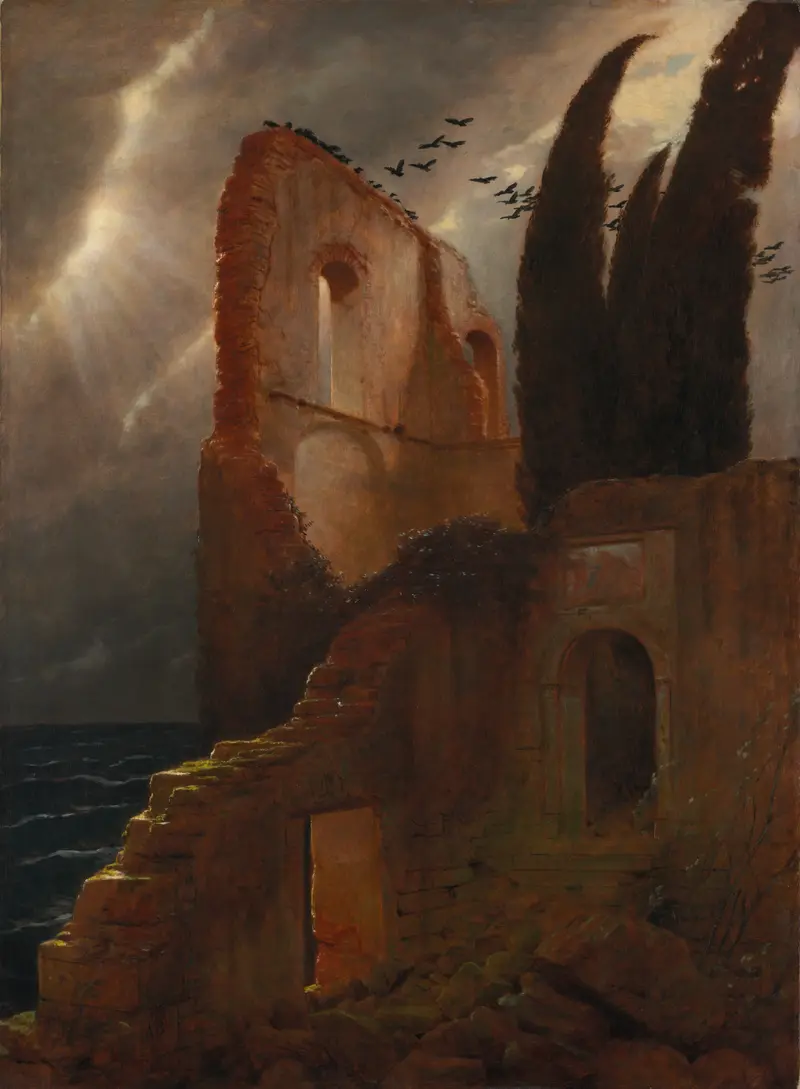
Ruin by the Sea
Arnold Böcklin
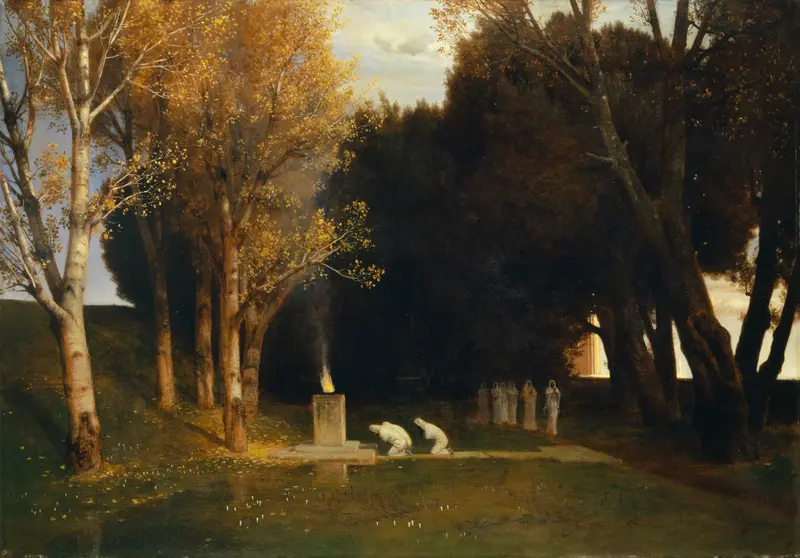
The Sacred Grove
Arnold Böcklin
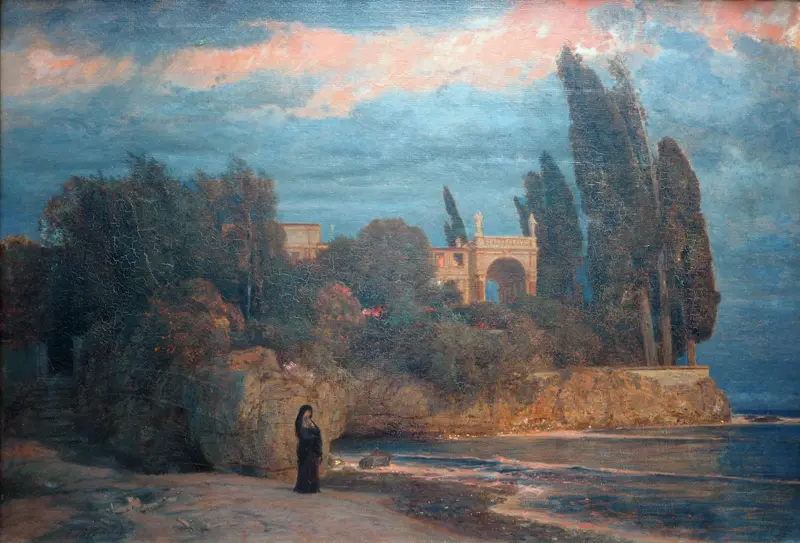
Villa by the Sea
Arnold Böcklin
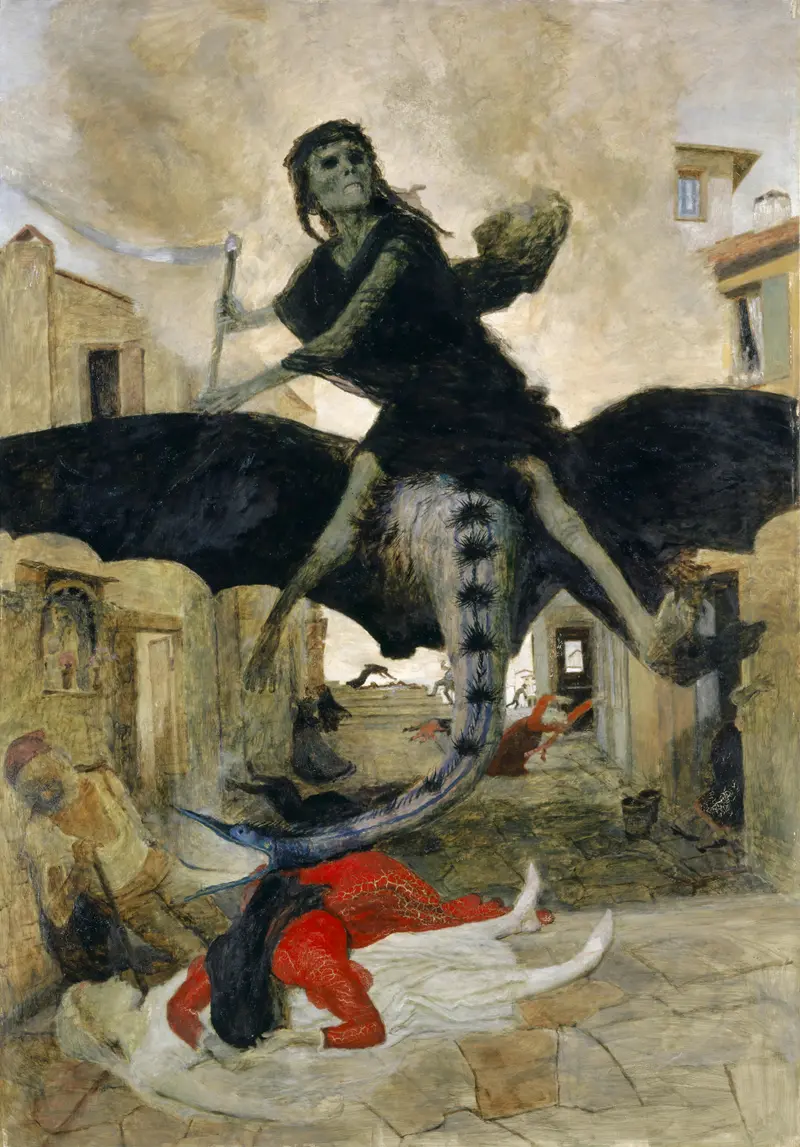
The Plague
Arnold Böcklin
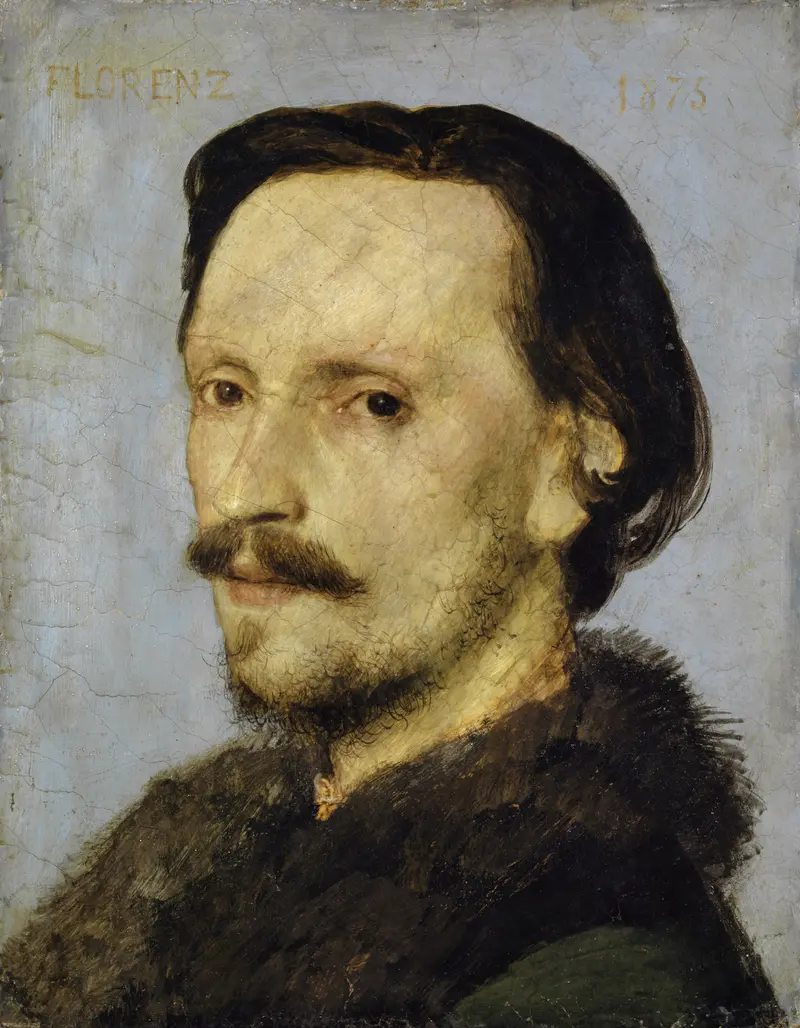
Böcklin Bildnis des Kunsthistorikers Adolph Bayersdorfer, 1875
Arnold Böcklin
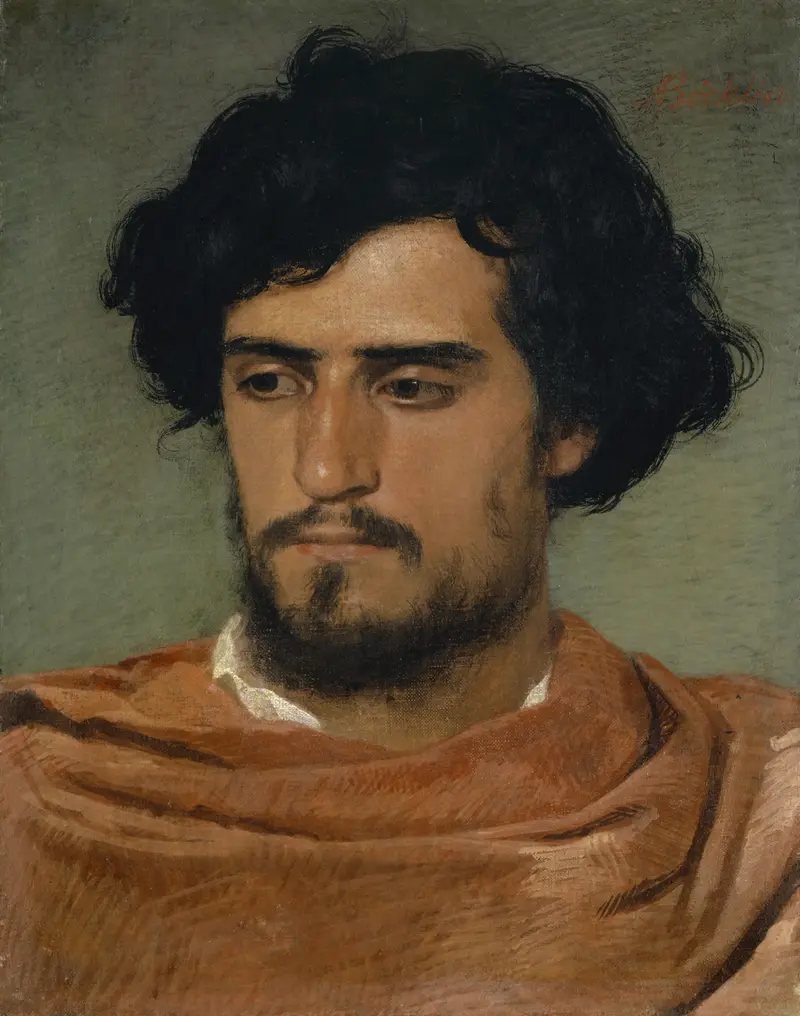
Head of a Roman
Arnold Böcklin
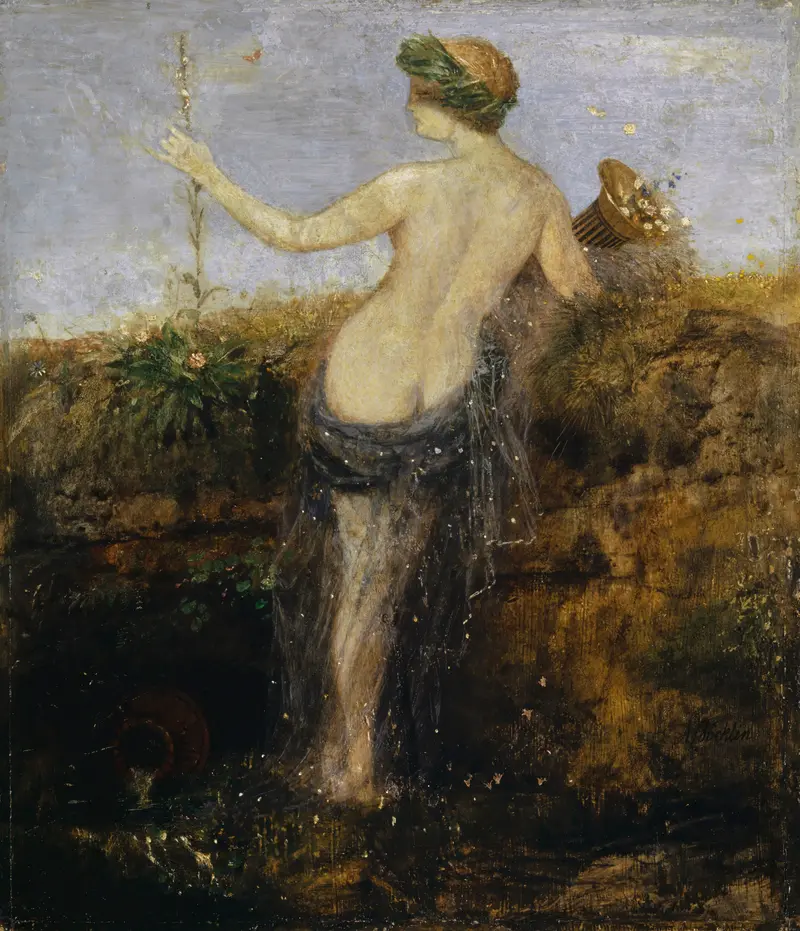
Nymphe with Horn of Plenty
Arnold Böcklin
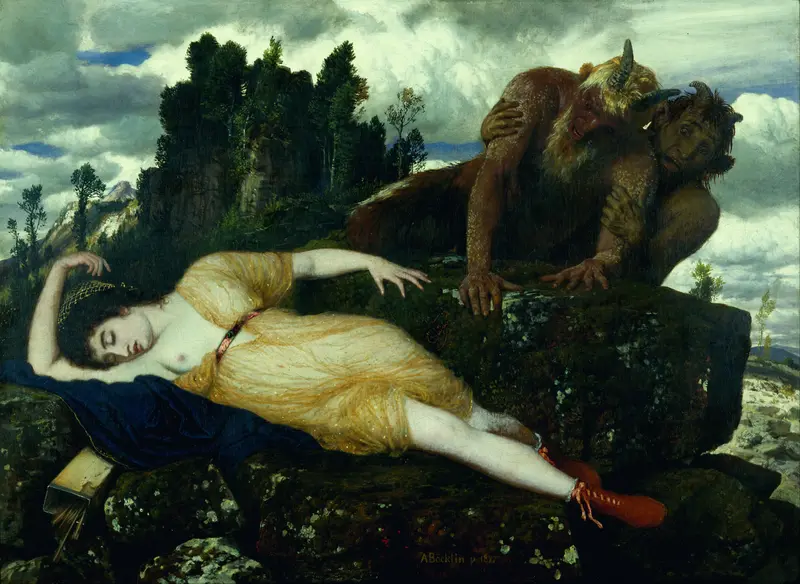
Sleeping Diana Watched by Two Fauns
Arnold Böcklin
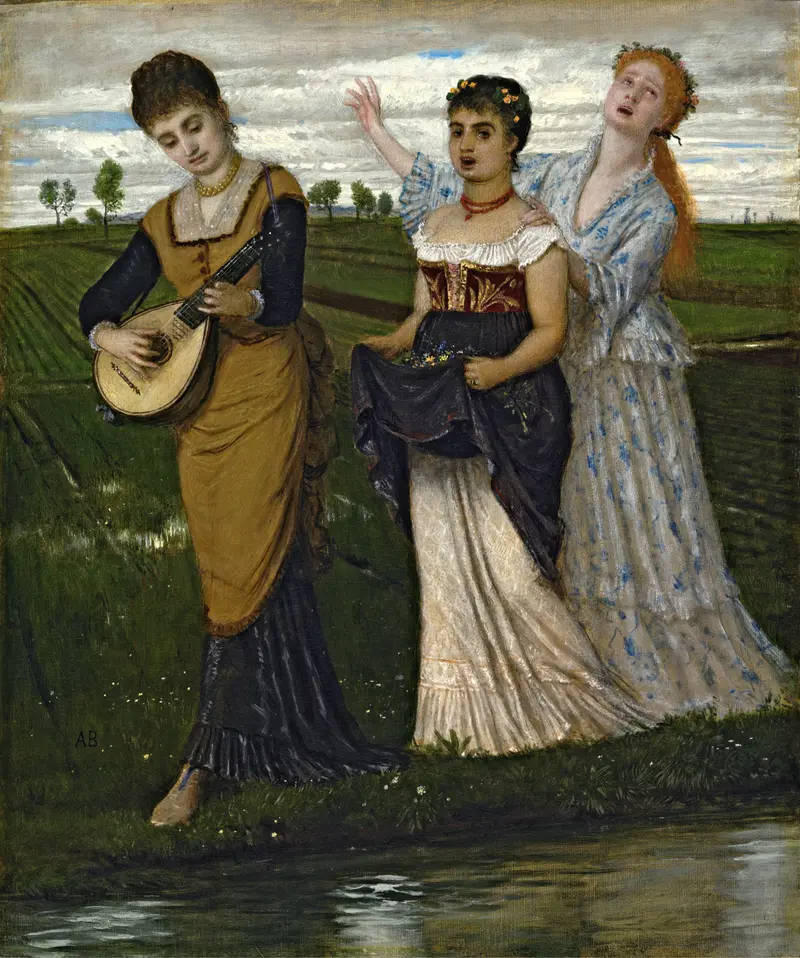
Spring (Songs of Spring)
Arnold Böcklin





