
Onrust Island near Batavia — History & Facts
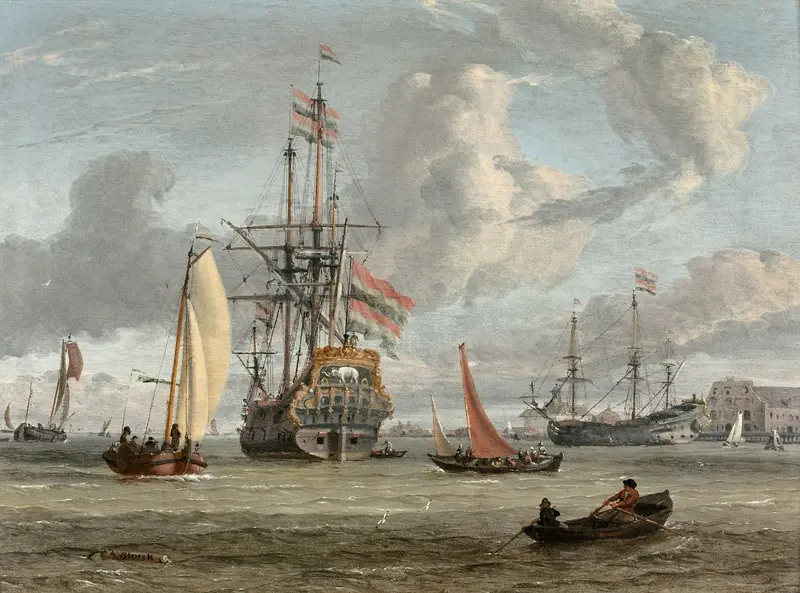
The first thing to catch the eye is not the ships themselves, but the restless energy of a world in motion: sails billow, cannons belch smoke, and the water churns with the traffic of small boats darting between giants. Every flag and insignia is a signal—on the stern of a warship, the red and white of Amsterdam, while another boat proudly flies the insignia of the VOC, the Dutch East India Company. Storck’s composition draws you in with a low horizon, giving the sky a stage to echo the drama below, while the shipyard’s buildings and distant windmills anchor the scene in a bustling, colonial outpost.
The painter’s eye lingers on the details of labor and trade: men at work on the hull, supplies being ferried, and the ceremonial flare of a cannon salute. This is the world of late seventeenth-century Dutch maritime power, when Batavia (now Jakarta) was the beating heart of a vast trading empire. Paintings like this were often commissioned by merchants or VOC officials eager to celebrate their reach and prosperity, and to bring a piece of the distant East Indies back to Amsterdam’s drawing rooms. The date, 1699, places the work at the tail end of the Dutch Golden Age, when such scenes were both a record and a boast.
Today, Onrust Island near Batavia lives in the Rijksmuseum collection, a surviving witness to the era when Dutch ships stitched continents together—and a reminder, as you look again, of the lives and ambitions that crowded every deck and dock.
Sources: Wikidata Q17322579 · Image source (Wikimedia Commons)
More Artworks by Abraham Storck

The Muscovite legation visiting Amsterdam, 29 August 1697
Abraham Storck
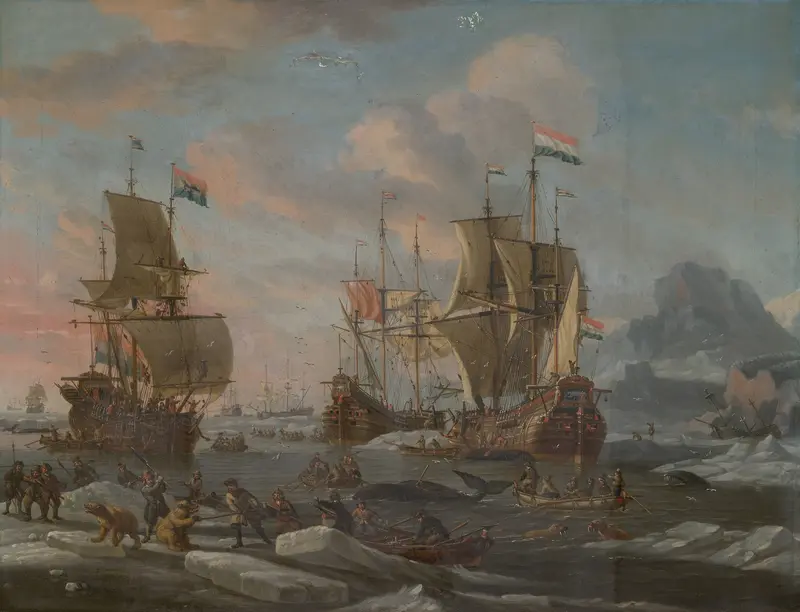
The Dutch Whaling Fleet
Abraham Storck
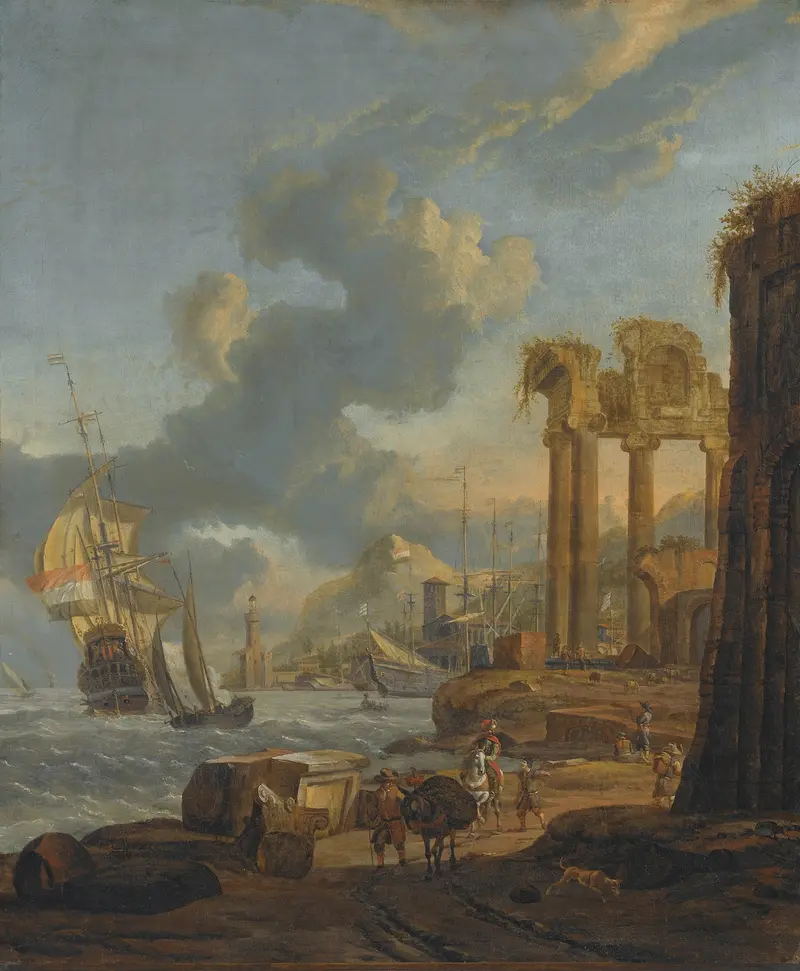
A Mediterranean Harbour Scene With Travellers On The Shore, A Dutch Man-Of-War On The Left
Abraham Storck
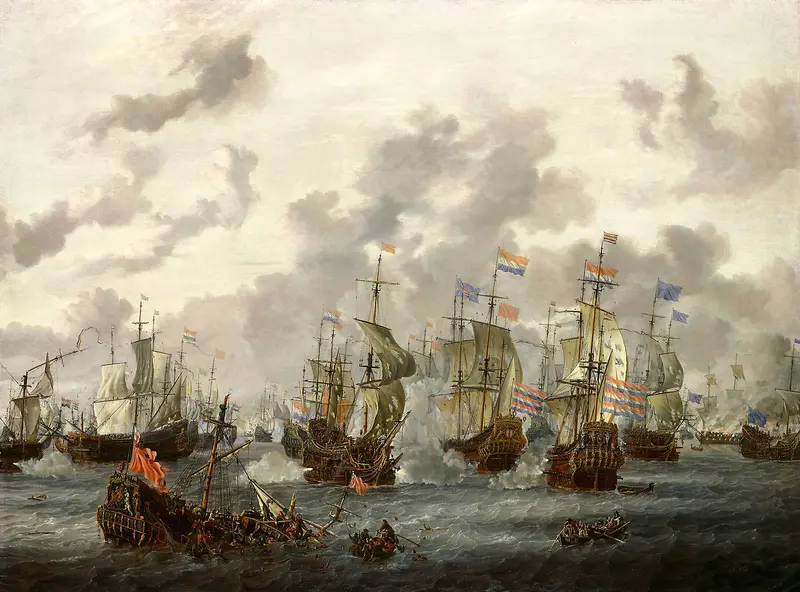
The Four Days’ Battle
Abraham Storck
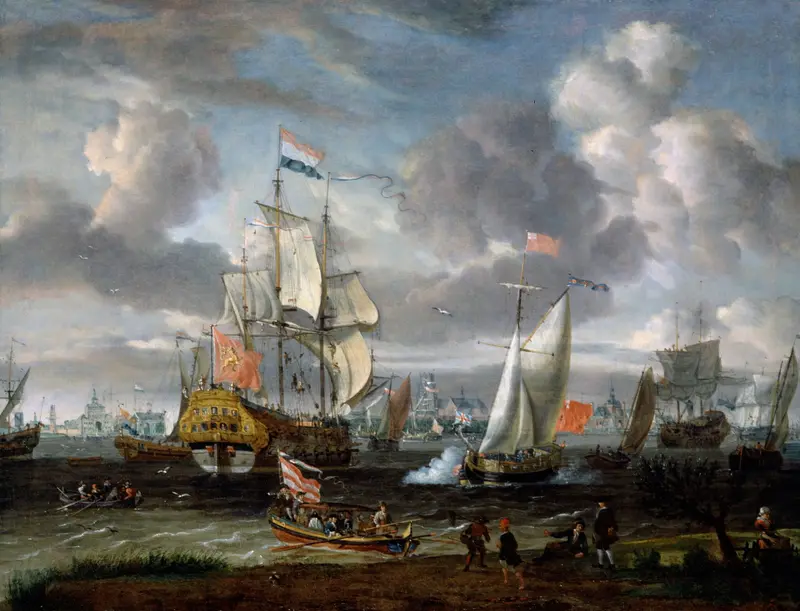
An English Yacht saluting a Dutch Man-of-War in the port of Rotterdam
Abraham Storck
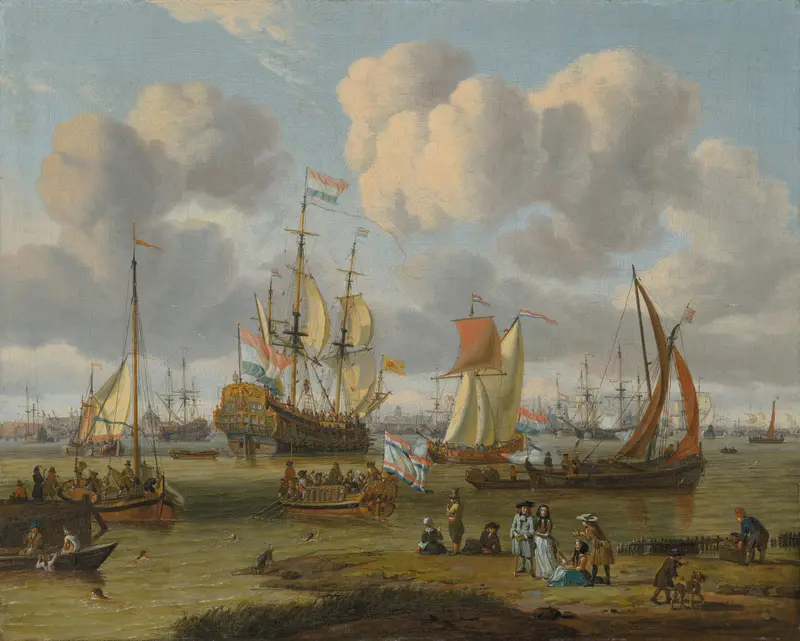
Shipping off Amsterdam with figures on a quay
Abraham Storck
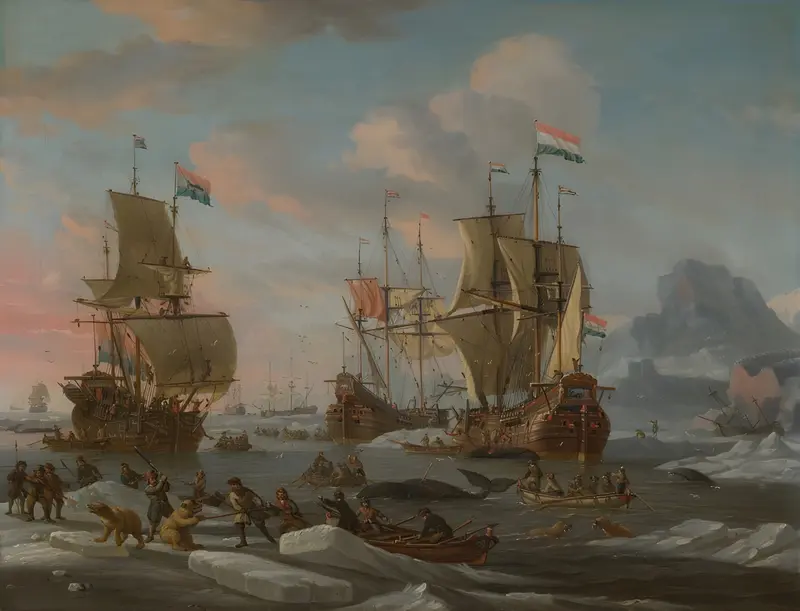
The Dutch Whaling Fleet
Abraham Storck
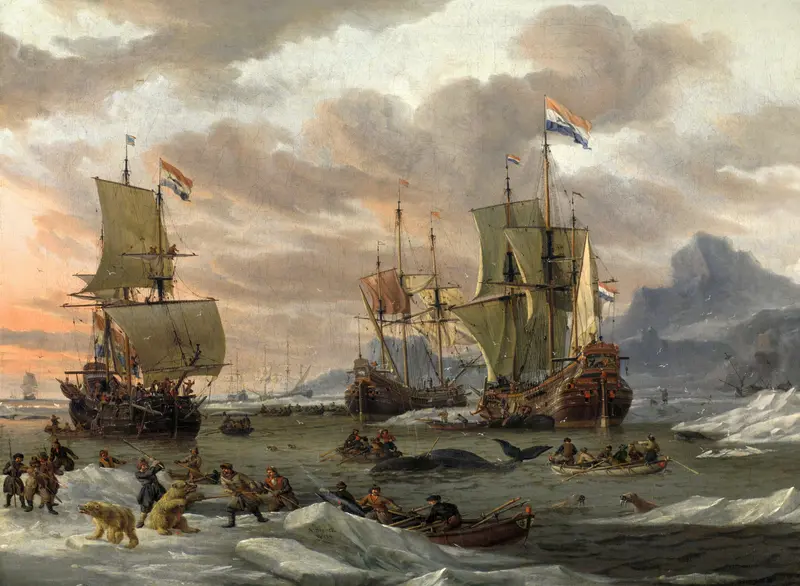
Whaling Grounds in the Arctic Ocean
Abraham Storck
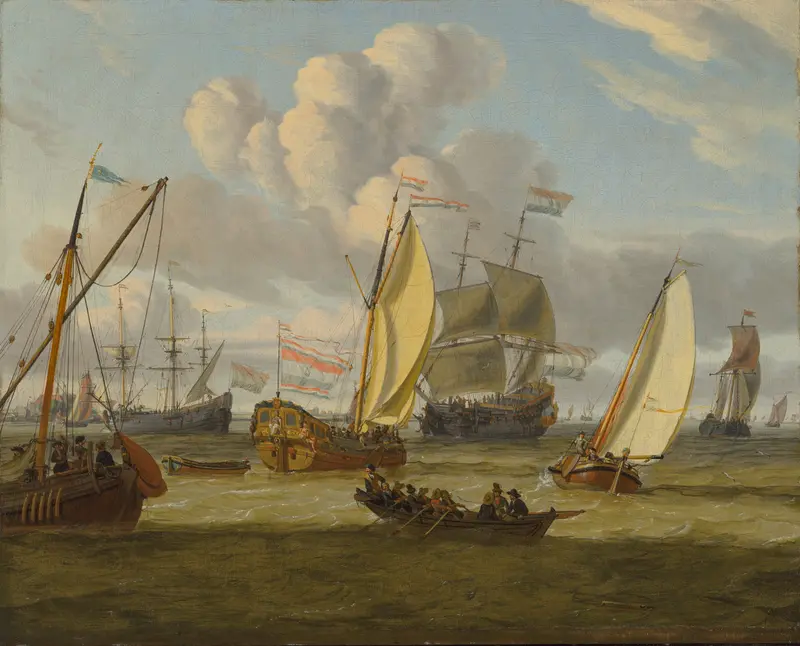
Shipping in an estuary
Abraham Storck
Grand navire de la couronne du Danemark près d’un littoral
Abraham Storck





