
Ophiodea (Brittle Stars) — History & Facts
What first seizes the eye in Ophiodea (Brittle Stars) is the riot of curling, fractal arms radiating from the center—each tendril a marvel of natural geometry, coiling and unfurling in hypnotic repetition. The image draws the viewer inwards, from the dense, lace-like maze of the central brittle star, to the more compact, armored forms that ring it. Every detail is rendered with a precision that feels both scientific and ornamental: the arms are not merely limbs, but living arabesques, their spirals echoing the rhythms of growth and movement beneath the sea.
The stark contrast of black background and pale, almost luminous forms gives the creatures a sense of floating, as if suspended in the depths or in a dream. This plate, drawn by Ernst Haeckel and published in 1904 as part of his Kunstformen der Natur, belongs to an era when the boundaries between art and science blurred in the pursuit of understanding nature’s hidden architectures. Haeckel’s work was not simply a catalog for specialists—it was a celebration of the diversity and ingenuity of life, intended to inspire both wonder and inquiry. Such illustrations were commissioned for both scientific and popular audiences, riding a wave of fascination with marine biology and evolutionary theory at the turn of the twentieth century.
History has kept few traces of these individual plates beyond their publication, but their legacy endures in the way they invite us to look again, and more closely, at the living patterns all around us.
More Artworks by Ernst Haeckel
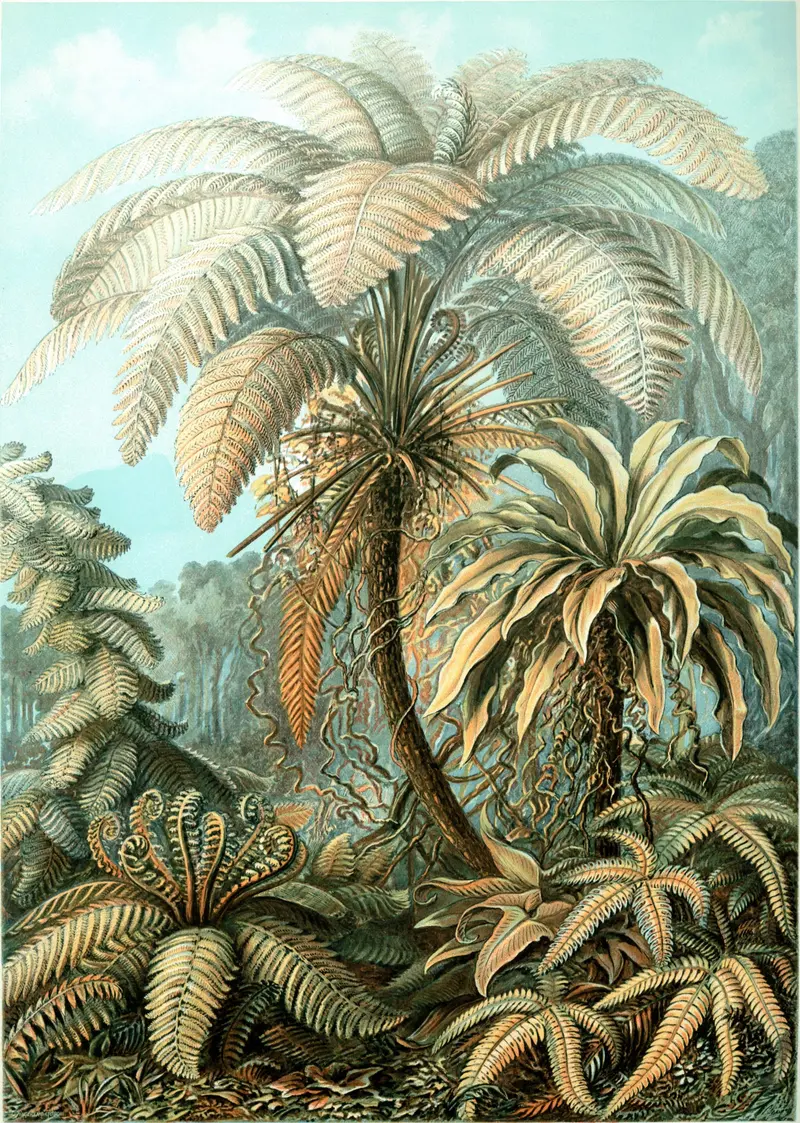
Filicinae (Ferns)
Ernst Haeckel
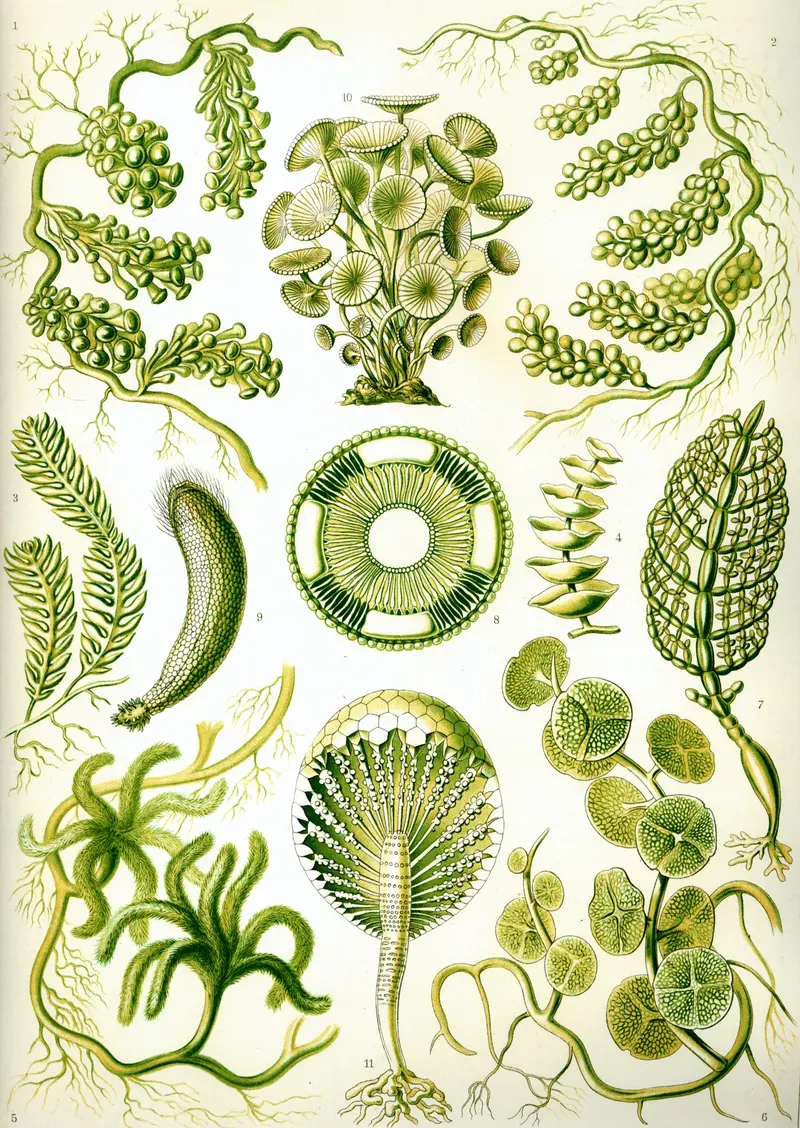
Siphoneae (Green Algae)
Ernst Haeckel

Cirripedia (Barnacles)
Ernst Haeckel

Actiniae (Sea Anemones)
Ernst Haeckel
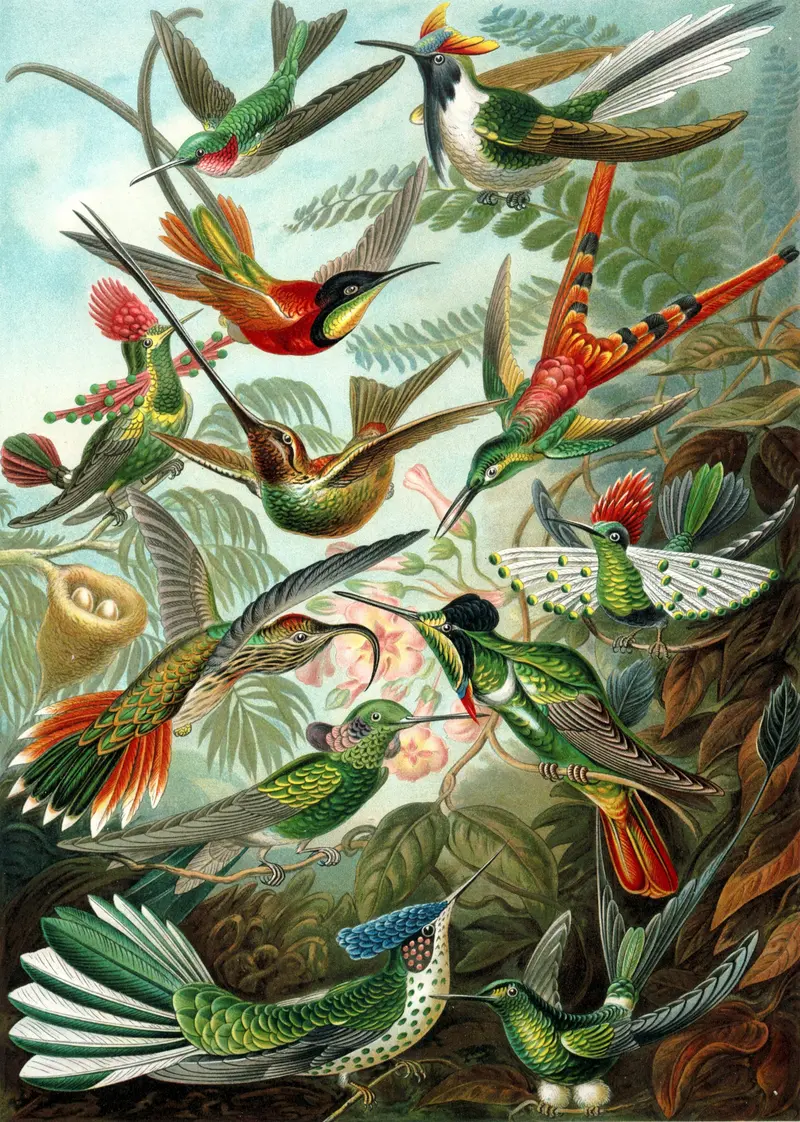
Trochilidae (Hummingbirds)
Ernst Haeckel
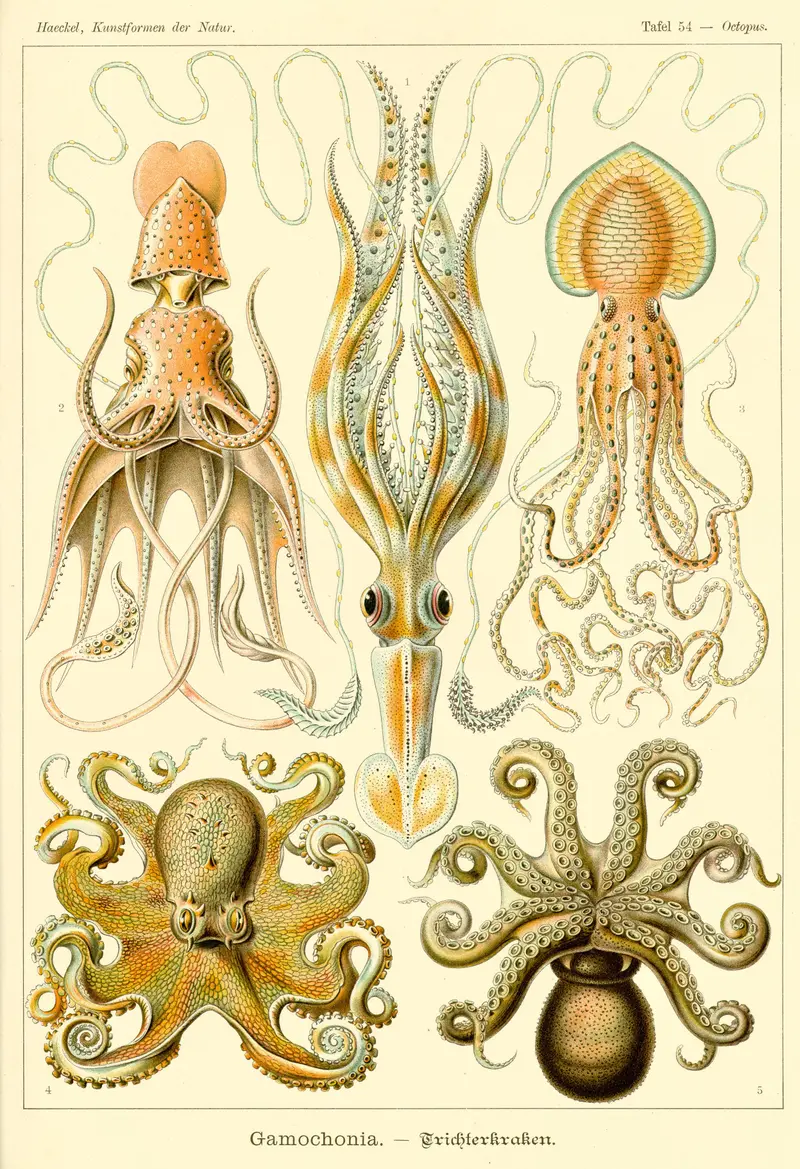
Gamochonia (Cephalopods)
Ernst Haeckel
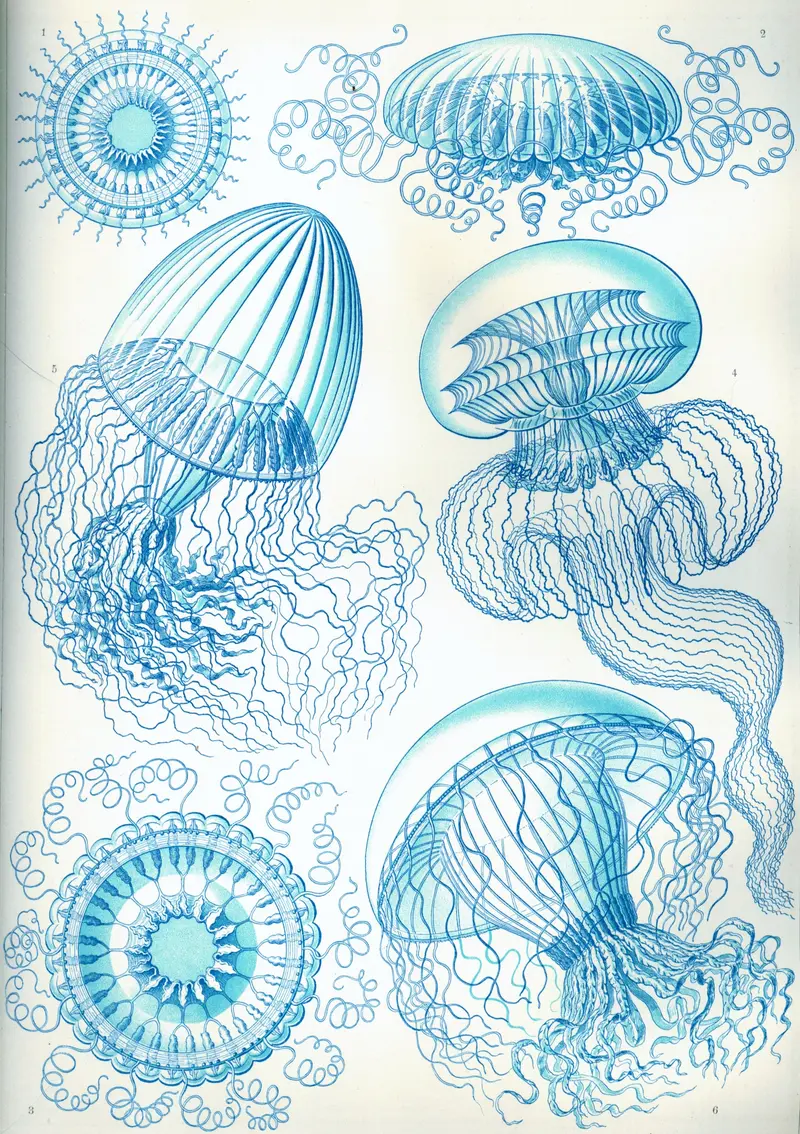
Leptomedusae (Jellyfish)
Ernst Haeckel
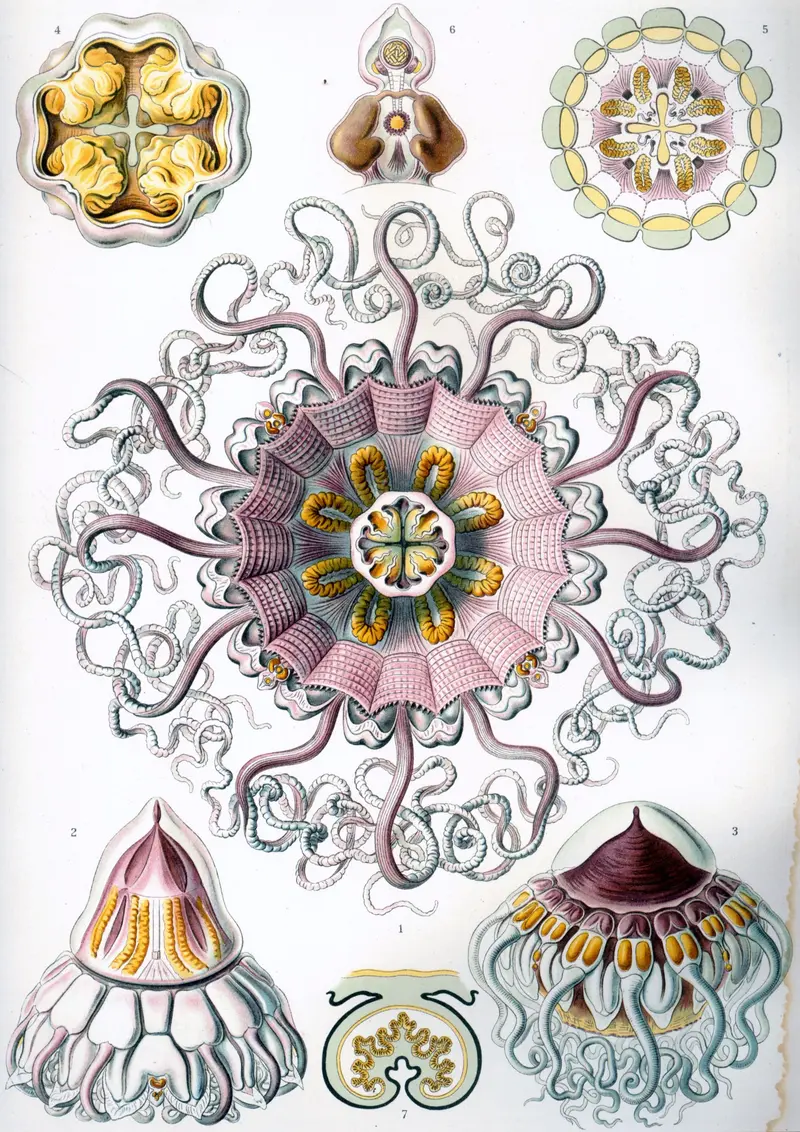
Peromedusae (Jellyfish)
Ernst Haeckel
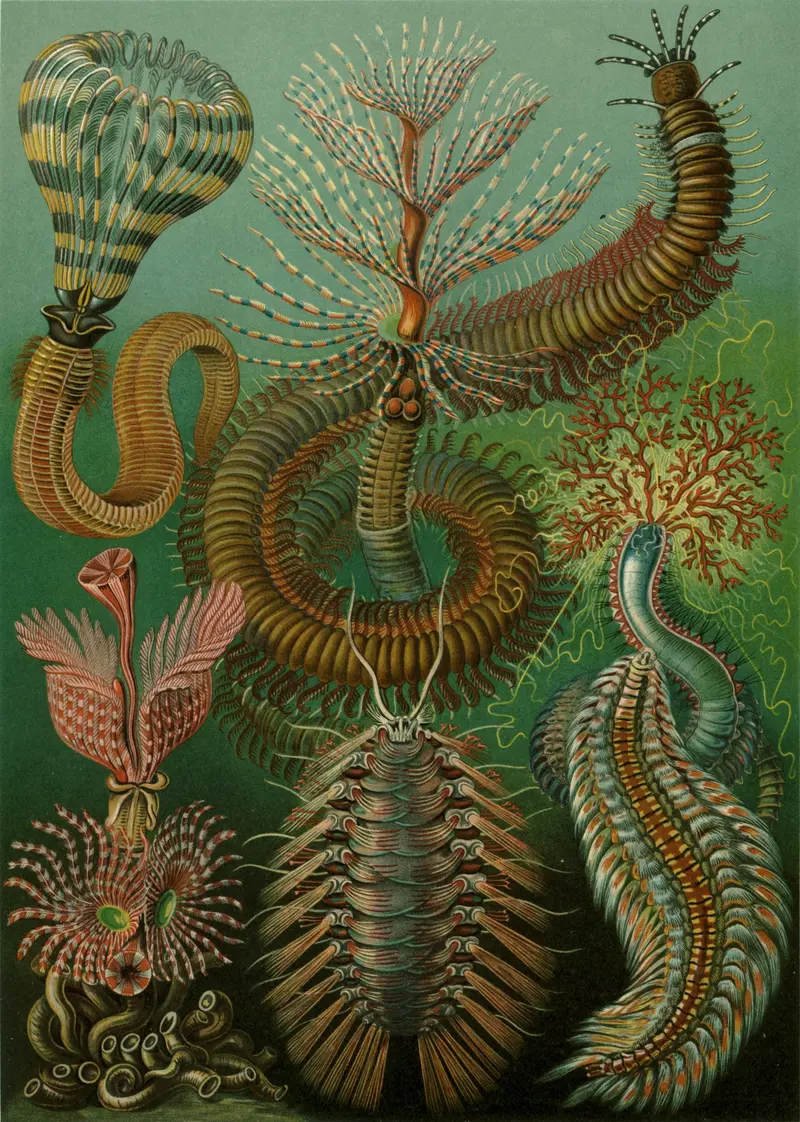
Chaetopoda (Bristle Worms)
Ernst Haeckel
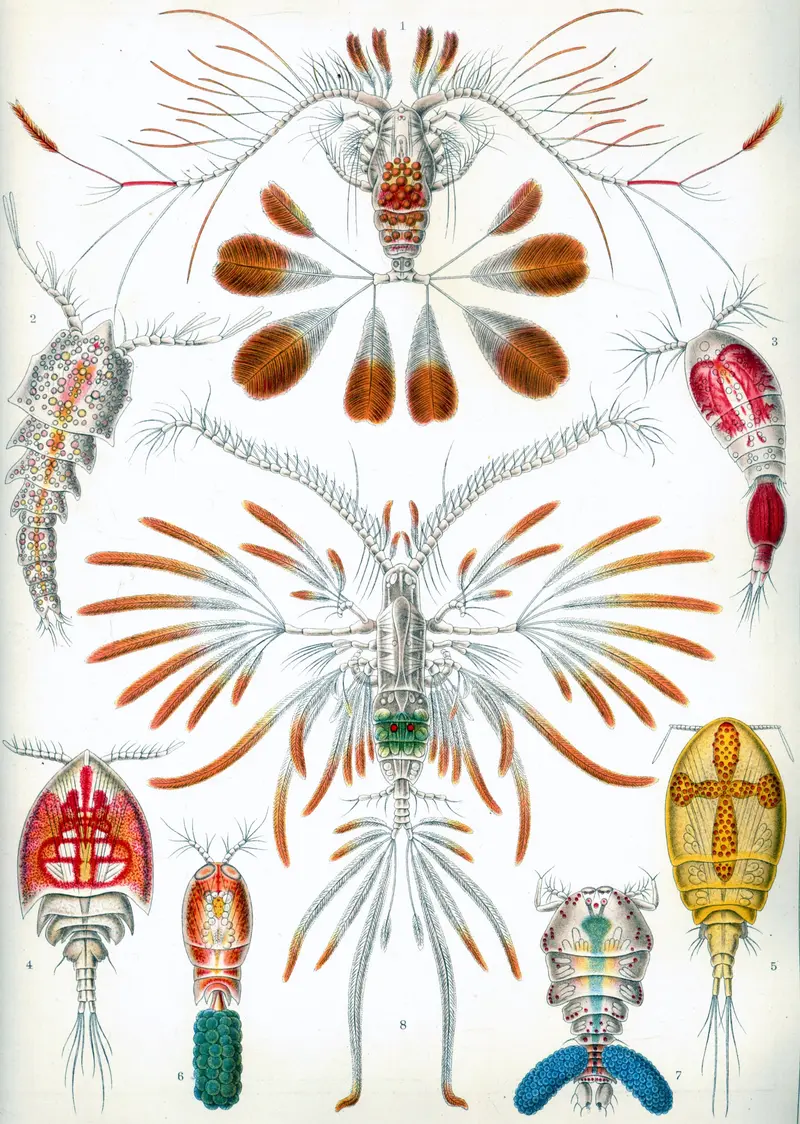
Copepoda (Copepods)
Ernst Haeckel





