
Opposite my House at Barnes — History & Facts
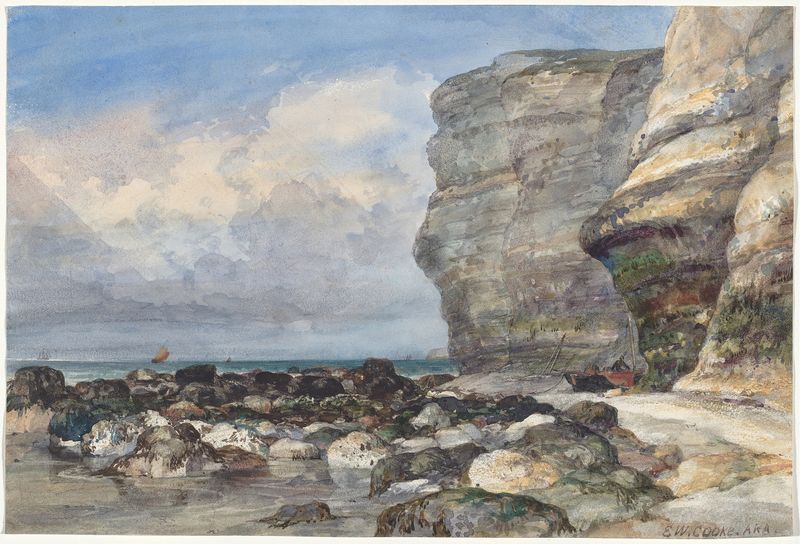
Can paint confess what words never could? In Opposite my House at Barnes, a serene beauty unfolds, capturing a fleeting moment that words struggle to encapsulate. Look to the left at the gentle ripples of the river, where soft strokes of blue blend with shimmering reflections. The trees line the horizon, their verdant hues painted with delicate touches of sunlight, while the quaint houses, nestled along the banks, whisper stories of lives lived in harmony with nature. Notice how the warm light cascades down, illuminating the scene with a golden embrace that invites you to linger, to breathe in the tranquility. Yet, beneath this idyllic surface lies a tension between the permanence of nature and the ephemeral essence of human life.
The water, ever flowing, hints at the passage of time, while the meticulously rendered homes evoke a sense of stability and comfort. The contrast between the vibrant colors of the landscape and the muted tones of the architecture reflects a deeper narrative about balance—between human ambition and the serenity of the natural world. In 1862, Edward William Cooke found himself in the midst of a rapidly changing art scene, influenced by the rising popularity of the Impressionist movement, although he remained anchored in his own distinct style. Living in England, Cooke was deeply connected to the aesthetics of the Thames and the surrounding landscapes, allowing this piece to embody both a personal moment and a reflection on the broader transition in artistic expression of his time.
More Artworks by Edward William Cooke
Browse all →
Demolition of the Great or Chapel Pier of Old London Bridge
Edward William Cooke

New London Bridge from Billingsgate
Edward William Cooke
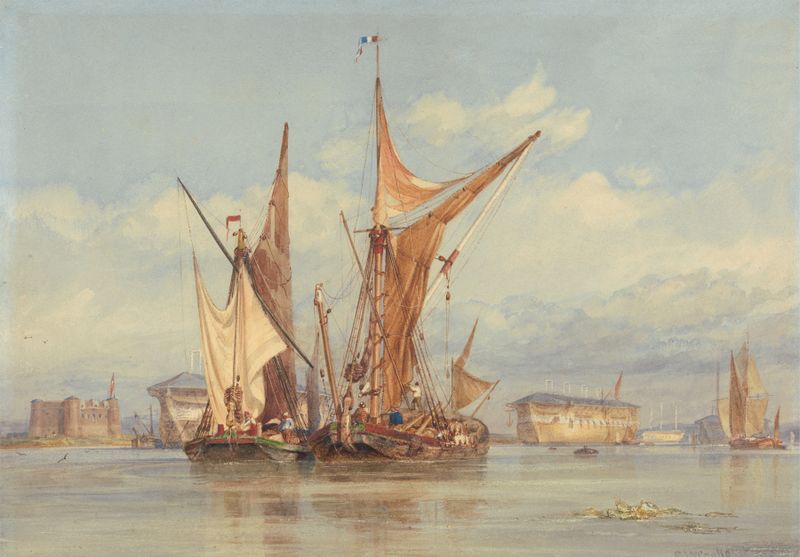
Bomb Proof Battery near Gillingham, on the Medway….
Edward William Cooke
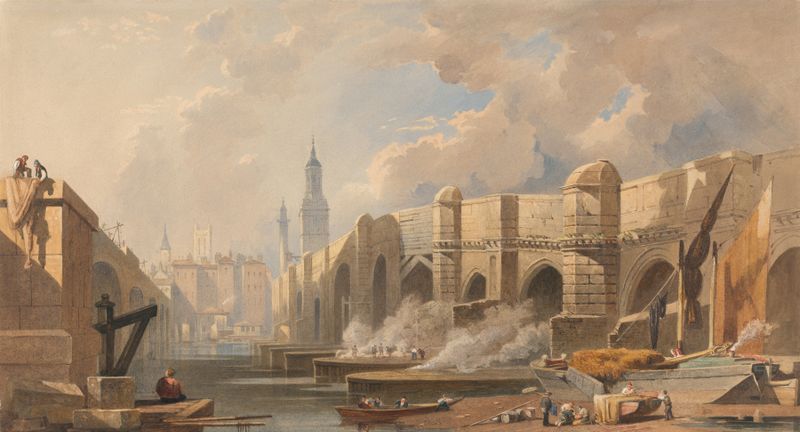
Old and New London Bridge
Edward William Cooke
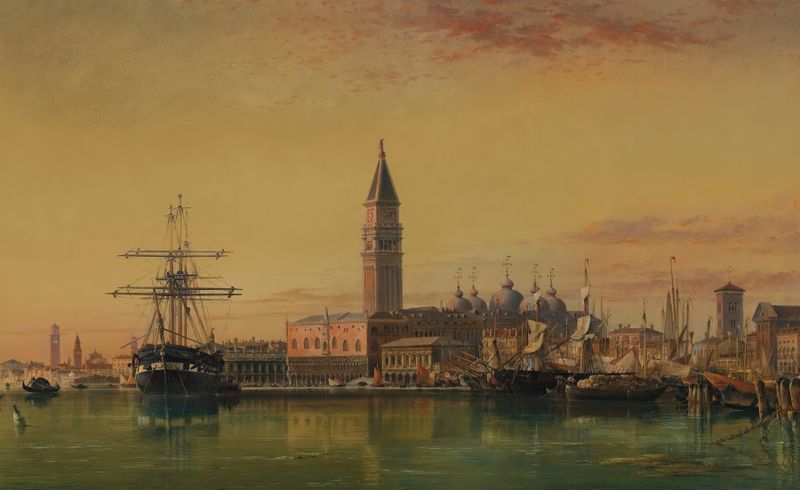
Venice
Edward William Cooke

Bridge of Sighs, Venice
Edward William Cooke

Off the Needles, Isle of Wight
Edward William Cooke
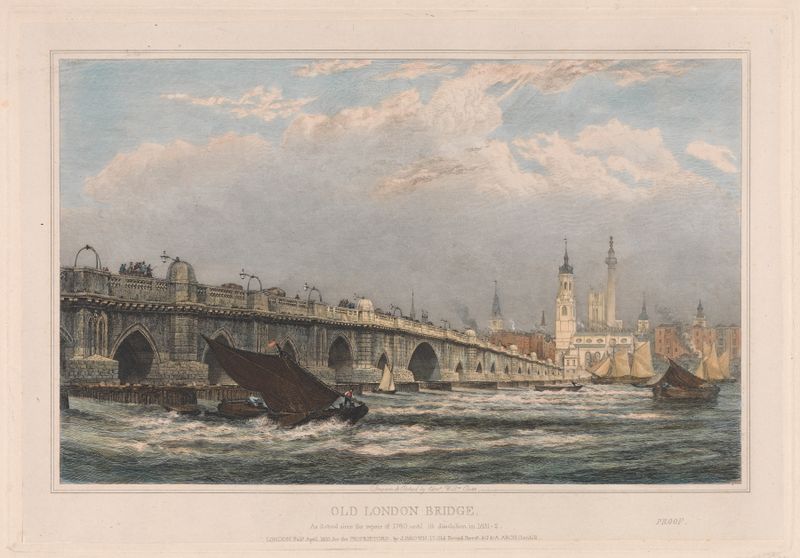
Old London Bridge after the Repair of 1700 until 1831
Edward William Cooke

The Old and New London Bridge
Edward William Cooke
The Rocky Beach and Cliffs at Fécamp
Edward William Cooke





