Out in the Cold (December) — History & Facts
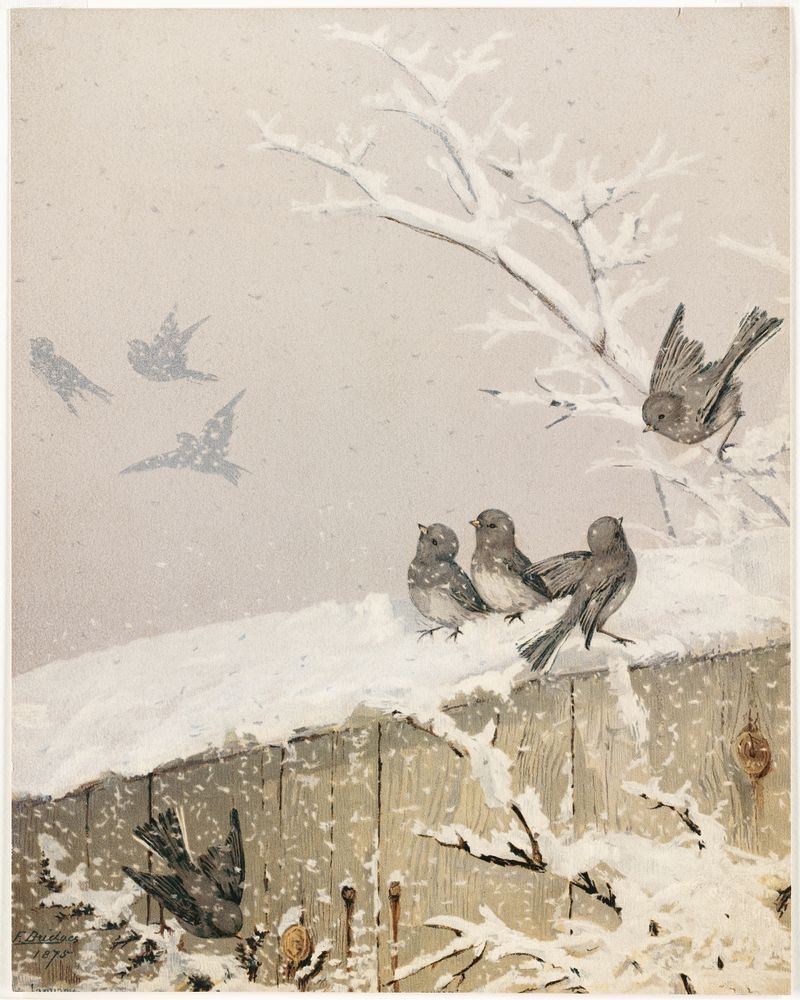
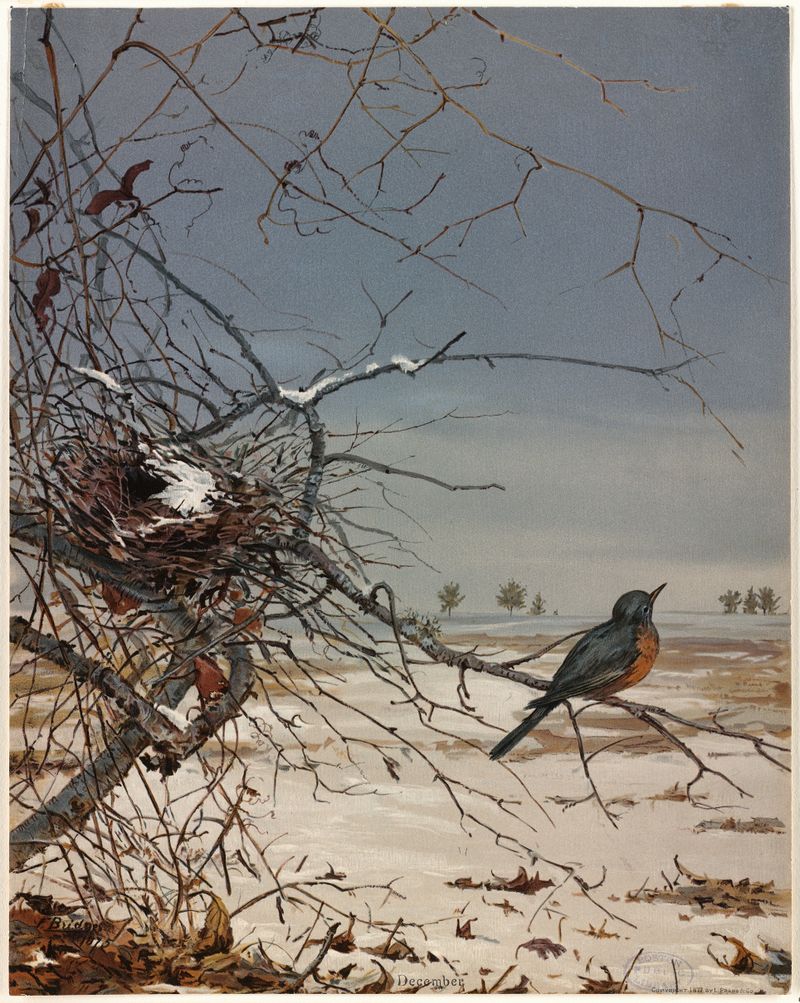
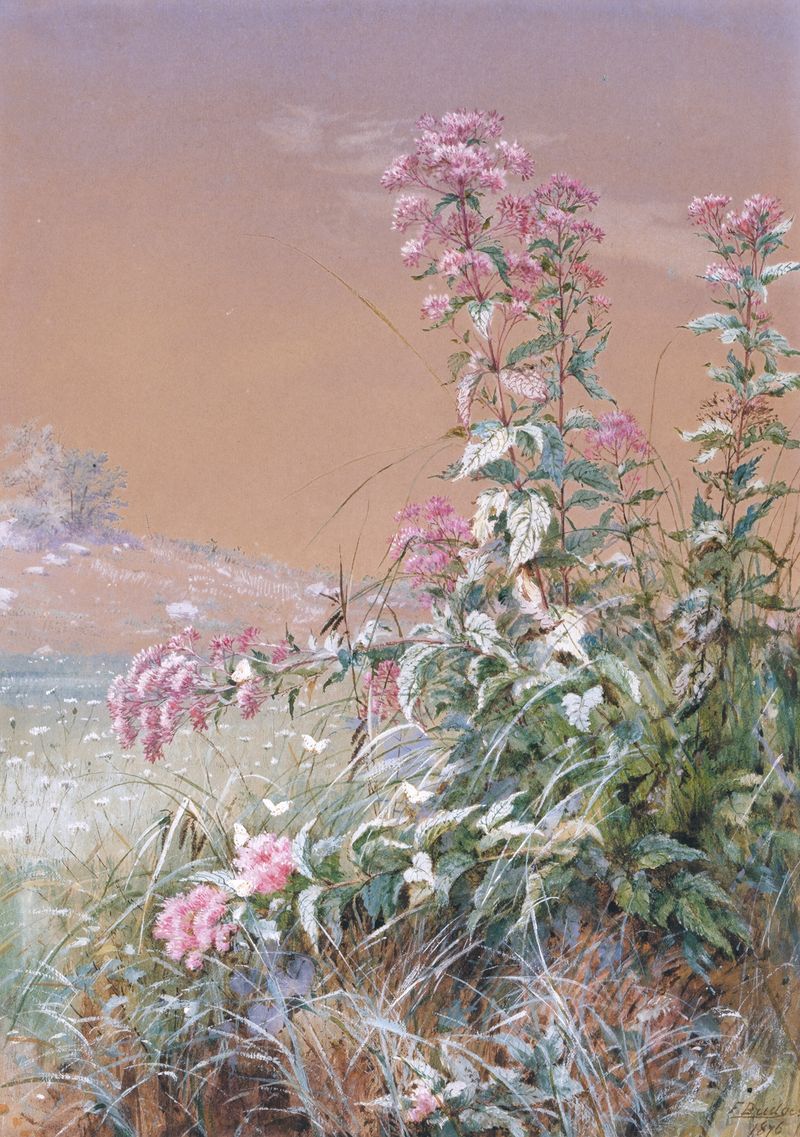
In the frozen stillness of winter, the heartache of solitude hangs in the air, waiting to be acknowledged. Focus on the foreground, where delicate flowers, their colors muted by frost, stand resilient against the biting cold. The artist's palette, dominated by soft whites and gentle blues, encapsulates the icy tranquility while infusing the scene with a sense of melancholic beauty. Notice how the light plays across the surface of the flowers, casting subtle shadows that deepen the emotional resonance of the piece.
Each petal seems to quiver with the weight of unvoiced sorrows, creating a poignant contrast with the starkness of the surrounding landscape. Hidden within this serene composition is a world of unspoken grief. The stark winter landscape may symbolize loss, while the fragile flowers represent hope, struggling for life in a season that seems to demand their demise. This dichotomy invites contemplation on the cycles of nature and emotion, suggesting that even in the coldest moments, beauty and resilience persist, waiting to be discovered. In 1877, amid the evolving landscape of American art, Fidelia Bridges created Out in the Cold (December) during a time when realism began to assert itself against the backdrop of romanticism.
Living primarily in Massachusetts, she found inspiration in nature’s subtleties, reflecting her inner experiences in her artwork. This painting emerges as an exploration of both the exterior world and her personal feelings, a testament to her ability to transform grief into beauty through art.