Out of Whistler’s Window — History & Facts
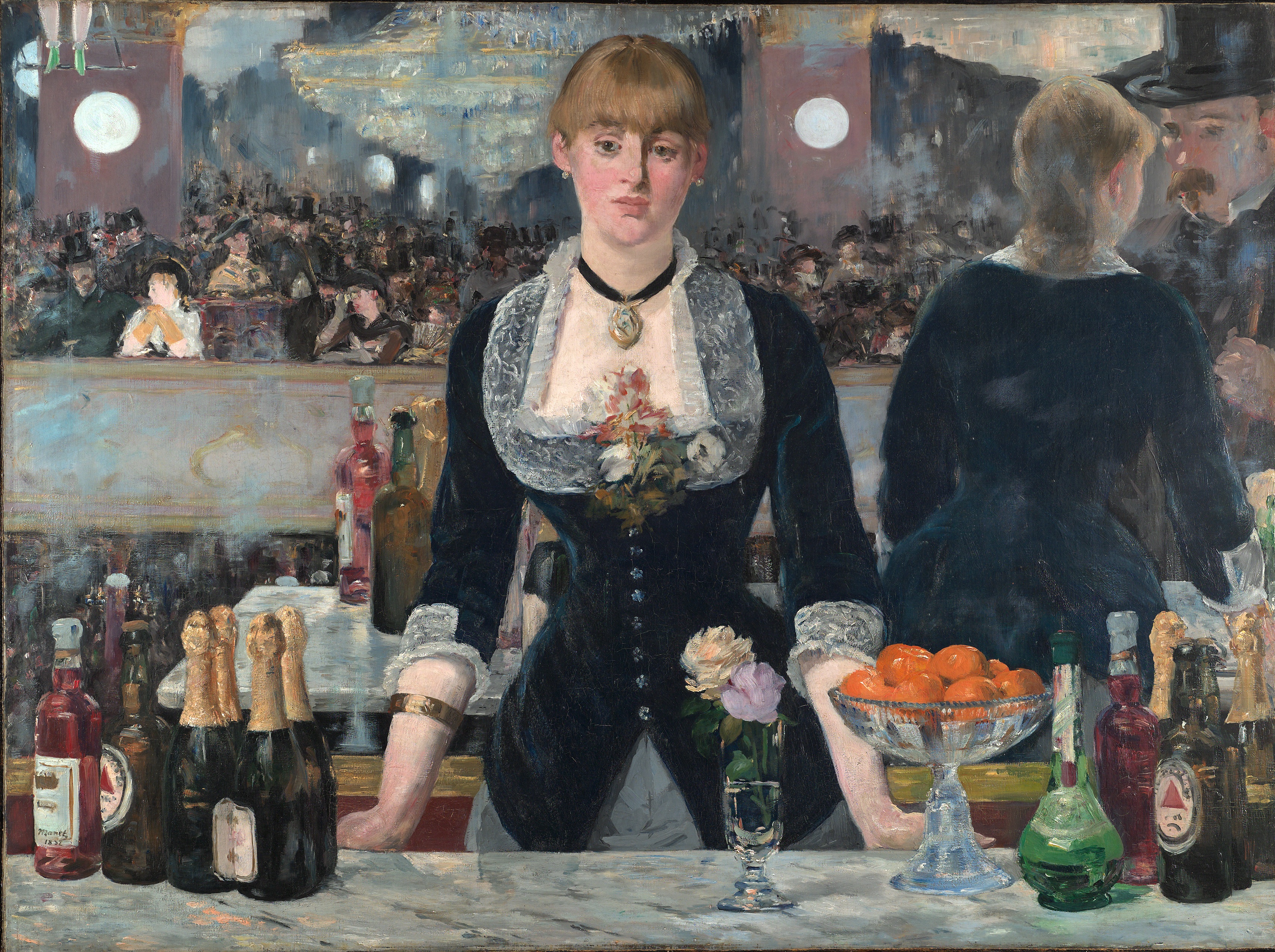
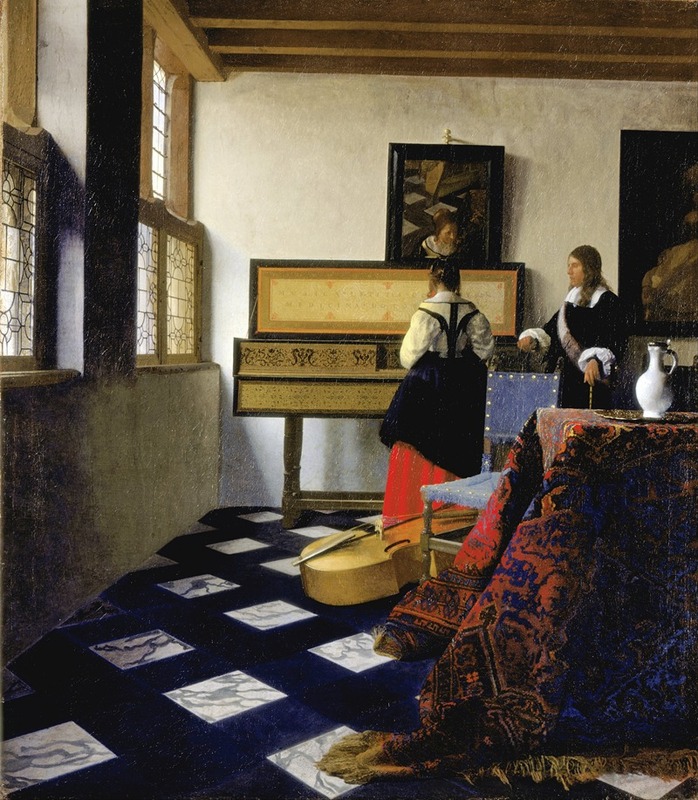
The canvas doesn’t lie — it simply waits. Each stroke is a heartbeat, capturing the essence of rebirth amidst the stillness of an ordinary moment. Look toward the center, where the window frame beckons with inviting light, a portal to the world beyond. The diffuse glow spills softly across the muted colors of the room, illuminating the delicate curtain that billows slightly, as if breathing in rhythm with the air.
Notice how the artist employs a masterful interplay of shadow and light, enhancing the sense of depth and intimacy, inviting us to peer into a moment suspended in time. Beneath the surface, the painting conveys a profound sense of transition. The light spilling through the window symbolizes hope, suggesting a world filled with possibilities, while the stillness of the interior evokes a moment of introspection. The contrast between the interior’s subdued hues and the vibrancy outside hints at a longing for renewal, a juxtaposition of safety and the unknown that echoes our own life experiences. In 1863, Haden was immersed in the art scene of London, navigating his role as an etcher and printmaker.
This era marked a time of artistic exploration, where the boundaries between traditional mediums began to blur. His work, reflecting a desire for innovation and a connection to the Impressionist ideals sprouting in Europe, resonated with the themes of change and rebirth, capturing both personal and universal narratives within the frame of everyday life.
More Artworks by Francis Seymour Haden
Browse all →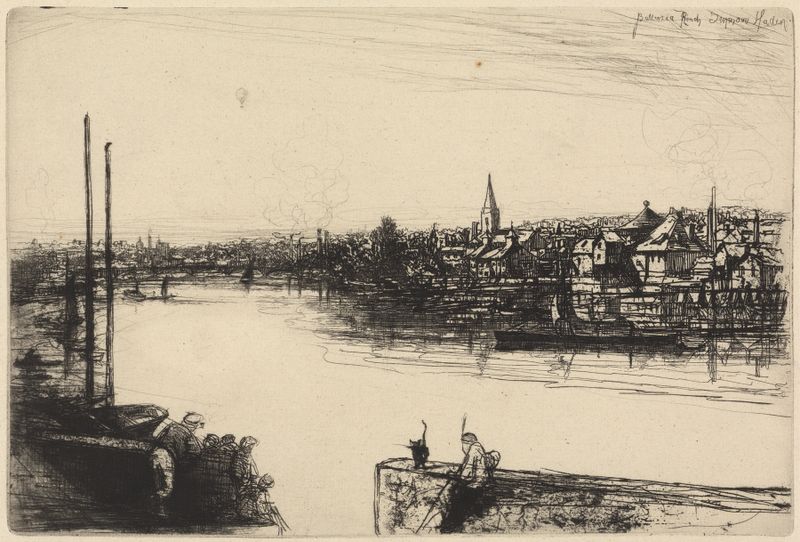
Battersea Reach
Francis Seymour Haden

Nine Barrow Down
Francis Seymour Haden
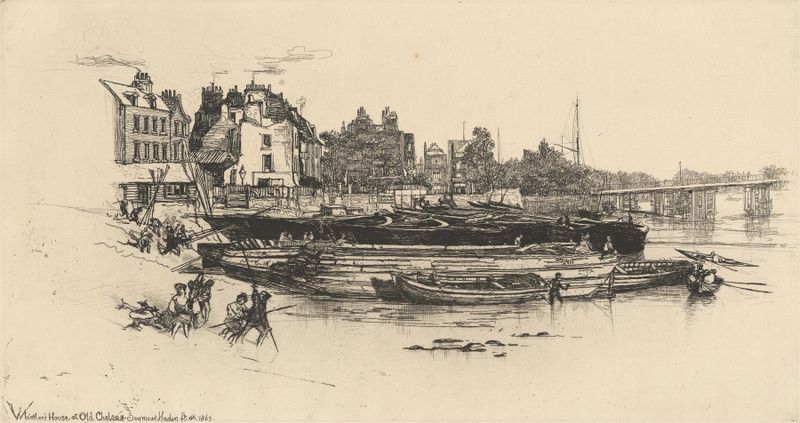
Whistler’s House at Old Chelsea
Francis Seymour Haden

The Mill-Wheel
Francis Seymour Haden
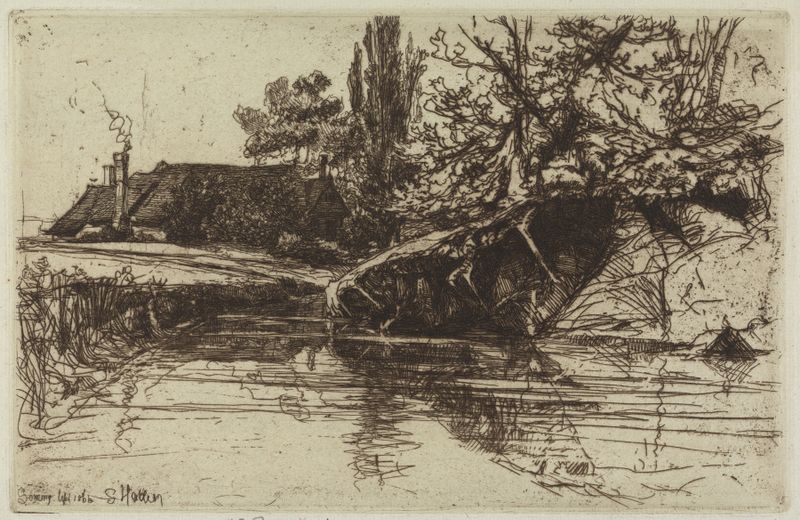
The Moat House
Francis Seymour Haden

By Twickenham
Francis Seymour Haden

Newcastle Emlyn
Francis Seymour Haden
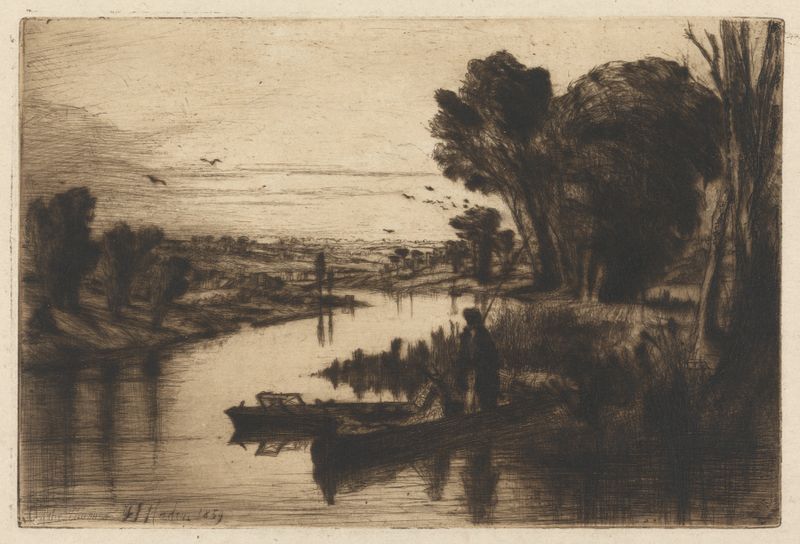
On the Thames
Francis Seymour Haden

Kidwelly Castle
Francis Seymour Haden
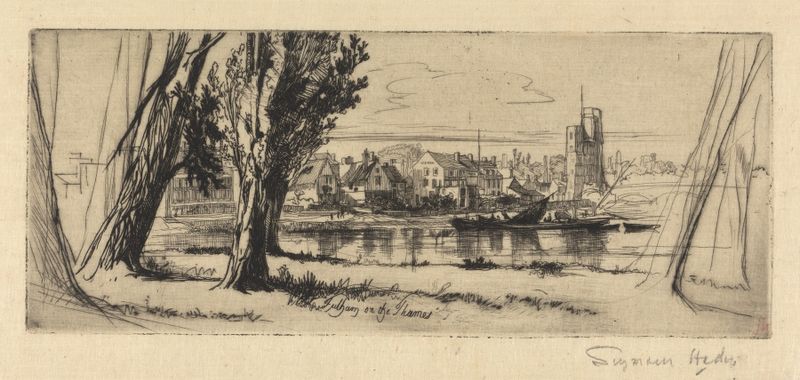
Fulham on the Thames
Francis Seymour Haden