
Overhaal en een molen buiten Amsterdam — History & Facts
In a world where moments slip away like sand through fingers, the interplay of light in a painting can suspend time itself. Focus on the radiant beams cascading from the upper left, dancing over the weathered mill and the tranquil waters below. Notice how the artist employs delicate brushstrokes to capture the rippling reflections on the surface, creating a harmonious conversation between nature and structure. The muted earth tones contrast with the vibrant sky, suggesting a fleeting moment at dusk, where the day’s warmth lingers in the air. Delve deeper into the scene, and you’ll uncover an emotional tension between the serenity of the landscape and the industriousness of the mill.
The windmill, a towering symbol of human ingenuity, juxtaposes the calm of the waterway, reminding us of the ceaseless passage of time. Look closely, and you’ll see tiny figures at work, their silhouettes embodying the subtle coexistence of labor and nature, the human narrative intertwined with the landscape. In the mid-17th century, during the height of the Dutch Golden Age, Anthonie van Borssom created this piece in a flourishing artistic environment. He lived in Amsterdam, where the intricacies of light and shadow were pivotal to his contemporaries.
This period saw a growing interest in landscape painting, reflecting an evolving appreciation for the natural world, and van Borssom was at the forefront, drawing beauty from both the familiar and the ephemeral.
More Artworks by Anthonie van Borssom
Browse all →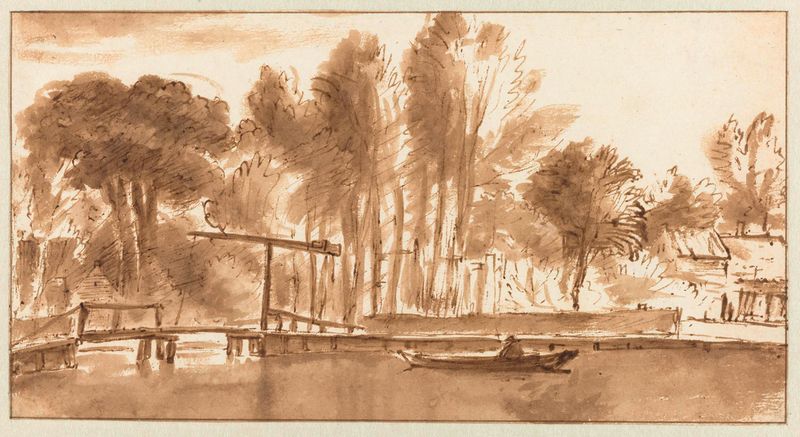
Bebost rivierlandschap met ophaalbrug
Anthonie van Borssom

De windmolen aan het water
Anthonie van Borssom
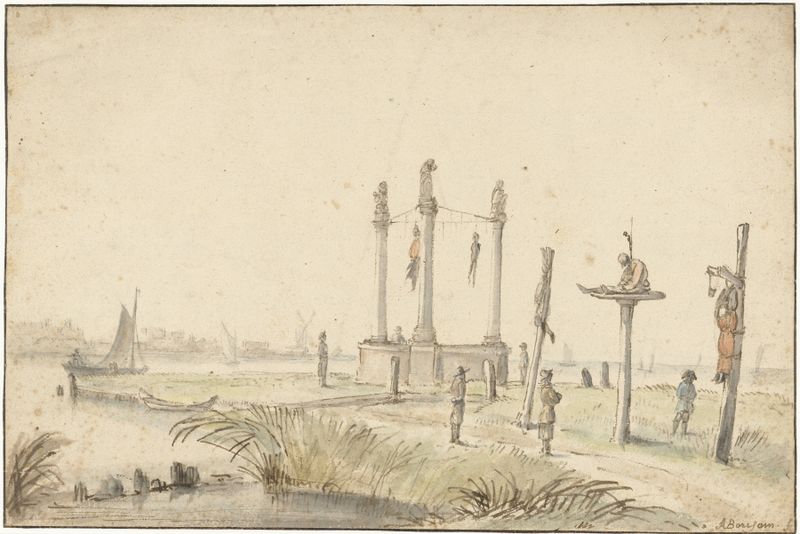
Galgenveld aan de rand van de Volewijk
Anthonie van Borssom

De windmolen aan het water
Anthonie van Borssom

Kerk te Soest
Anthonie van Borssom
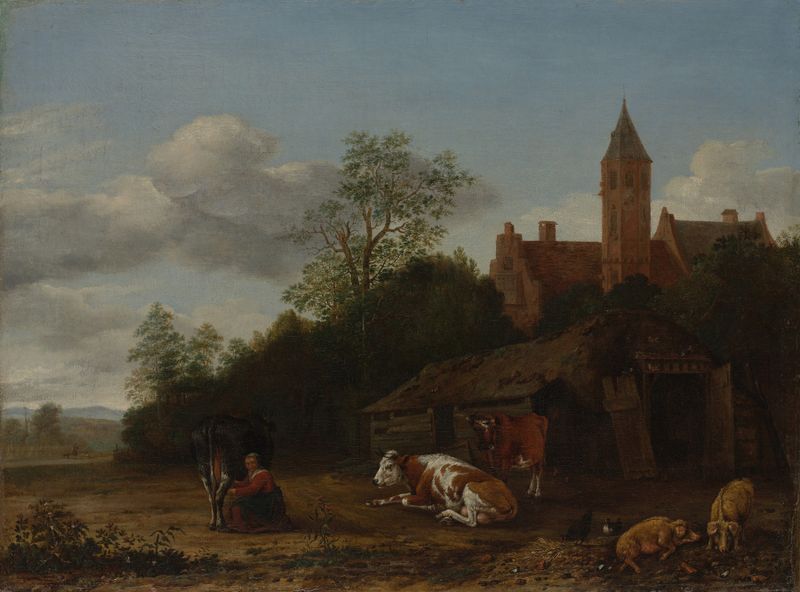
Barnyard Scene
Anthonie van Borssom
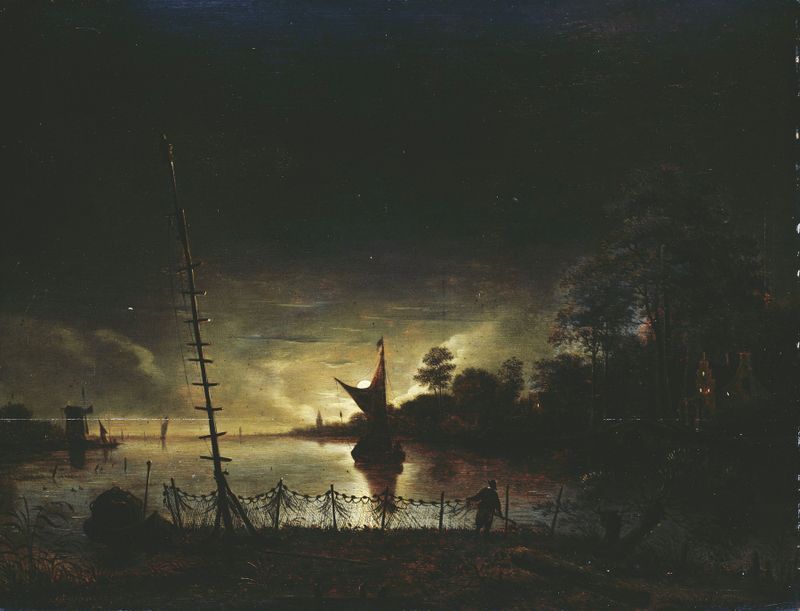
Moonlit Landscape
Anthonie van Borssom
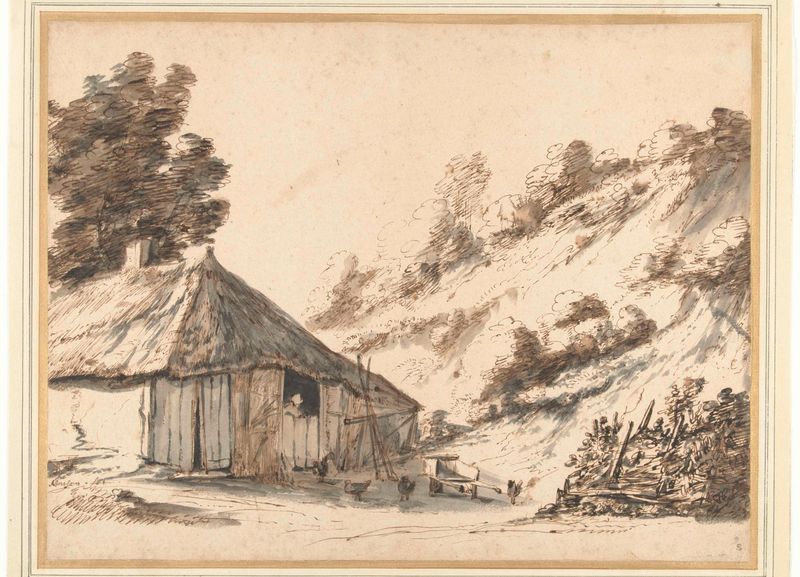
Boerderij bij een zandheuvel
Anthonie van Borssom
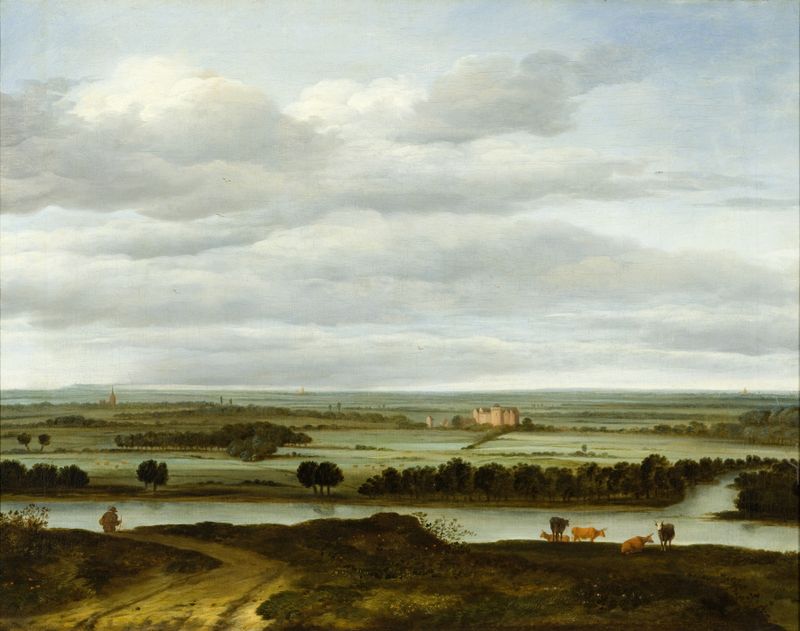
Panoramic Landscape near Rhenen with the Huis ter Lede
Anthonie van Borssom

Boerderij en een hooiberg tussen bomen
Anthonie van Borssom





