
Part of Old London Bridge, St. Magnus and the Monument — History & Facts
What if beauty was never meant to be finished? In the heart of London, where time flows like the river below, the remnants of an iconic bridge invite contemplation and serenity. Look to the left at the meticulously rendered arches, their weathered stones whispering tales of centuries gone by. The warm hues of ochre and sienna harmonize with the cooler blues of the river, creating a balanced palette that evokes both nostalgia and calm. Notice how the gentle ripples in the water reflect the delicate interplay of light and shadow, guiding the eye toward the towering Monument that stands sentinel in the background, its silhouette a testament to resilience amidst change. The composition reveals a juxtaposition of the old and the new, where the bridge signifies a connection to history even as the modern world looms in the distance.
Small details, such as the boats drifting lazily on the water and the figures walking along the banks, serve to emphasize the continuity of life, suggesting that even in decay, there is a beauty that flourishes. This serene yet dynamic environment encapsulates the spirit of a city that evolves without losing its essence. In 1831, Cooke was immersed in the burgeoning art scene of Victorian England, fascinated by the interplay of urban life and nature. At this time, the city was undergoing rapid industrialization, and the artist sought to capture both the historic and contemporary aspects of London.
His approach reflects a desire to document change while celebrating the enduring beauty found in even the most humble of structures.
More Artworks by Edward William Cooke
Browse all →
Demolition of the Great or Chapel Pier of Old London Bridge
Edward William Cooke

New London Bridge from Billingsgate
Edward William Cooke
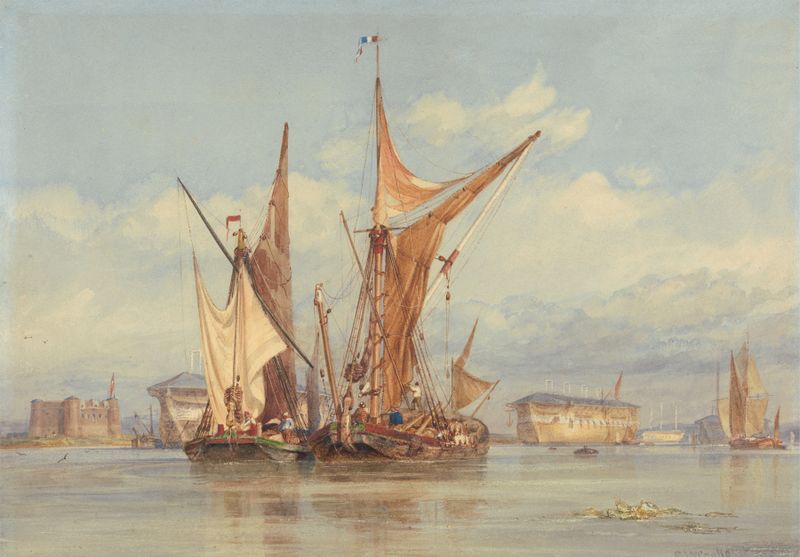
Bomb Proof Battery near Gillingham, on the Medway….
Edward William Cooke
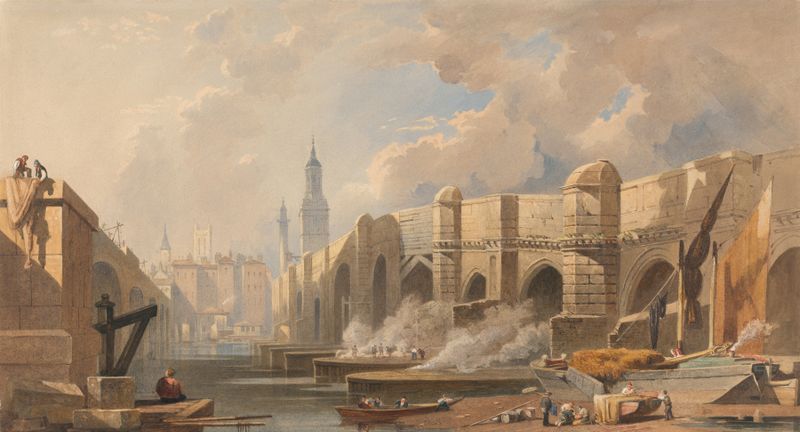
Old and New London Bridge
Edward William Cooke
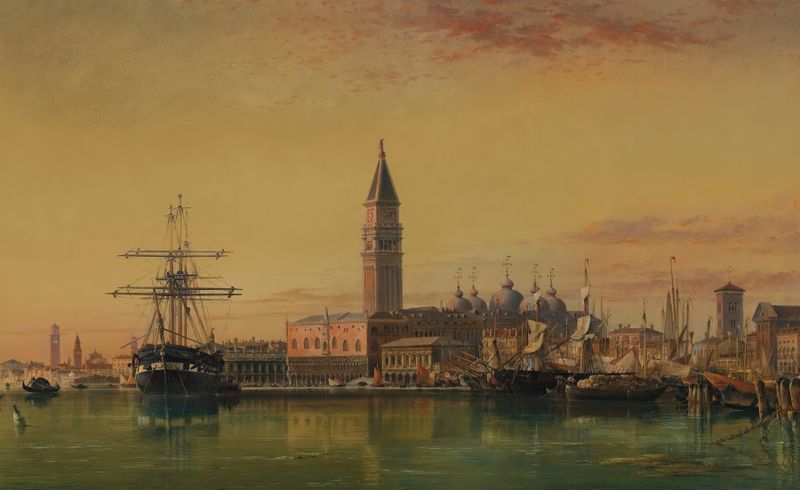
Venice
Edward William Cooke

Bridge of Sighs, Venice
Edward William Cooke

Off the Needles, Isle of Wight
Edward William Cooke
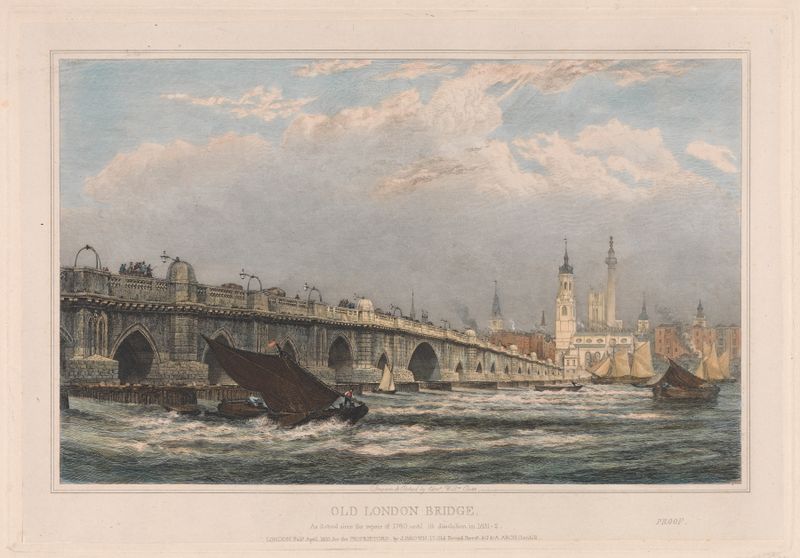
Old London Bridge after the Repair of 1700 until 1831
Edward William Cooke

The Old and New London Bridge
Edward William Cooke
The Rocky Beach and Cliffs at Fécamp
Edward William Cooke





