
Paysage — History & Facts
The delicate interplay of light and color in this painting whispers of fleeting moments, each brushstroke a fragment of memory tied to the past. It invites reflection on the ephemeral nature of beauty, suggesting that behind the lush scenery lies an untold story of longing or loss. Look to the center, where soft greens and sunlit yellows blend seamlessly, creating a vibrant landscape that draws the eye. The gentle curves of the hills cradle the horizon, while wisps of clouds drift lazily above, evoking a sense of serenity.
Notice how the dappled light envelops the trees, giving them an almost ethereal quality, and pay attention to the subtle variations in texture that evoke the sensation of walking through this tranquil world. Yet, within this idyllic scene lies a complexity of emotions. The juxtaposition of the serene landscape with the looming shadows hints at an underlying tension, suggesting the fragility of such moments. The soft pastels and warm hues contrast the deeper shades, symbolizing the coexistence of joy and melancholy, as if each stroke of color captures both the beauty of nature and the weight of nostalgia. Created in 1917, this work reflects Renoir's later years, during a time when he faced physical challenges due to arthritis.
Despite his struggles, he continued to produce remarkable paintings, exploring themes of tranquility and joy in nature. The post-war period influenced many artists, prompting a deepening exploration of personal and collective memory, which resonates profoundly in this piece.
More Artworks by Pierre-Auguste Renoir
Browse all →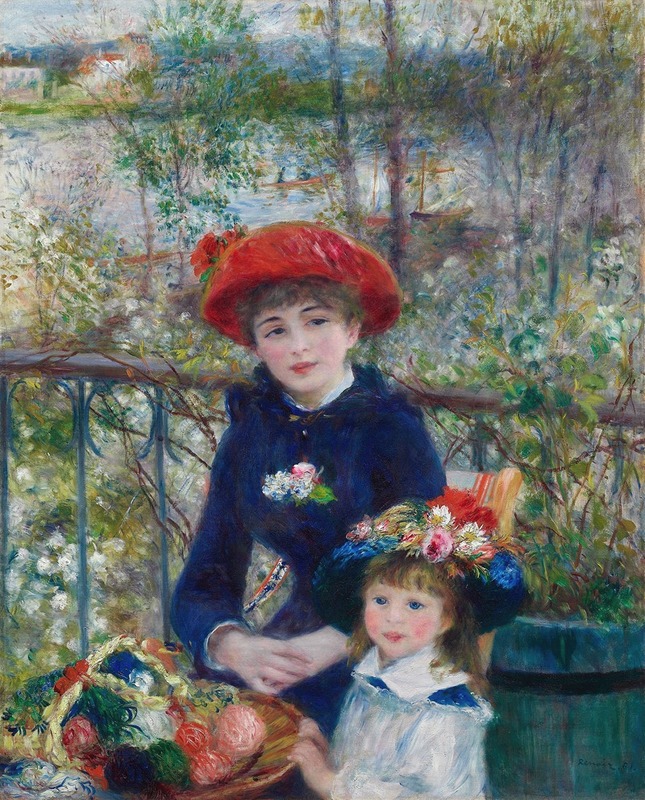
Two Sisters (On the Terrace)
Pierre-Auguste Renoir
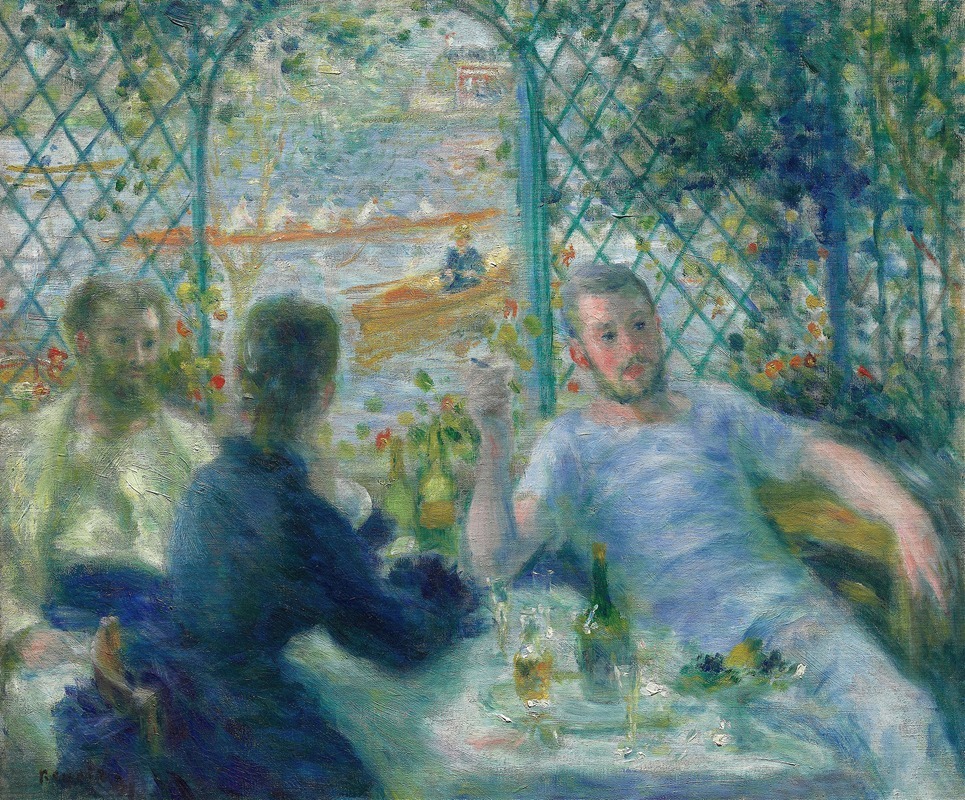
Lunch at the Restaurant Fournaise (The Rowers' Lunch)
Pierre-Auguste Renoir
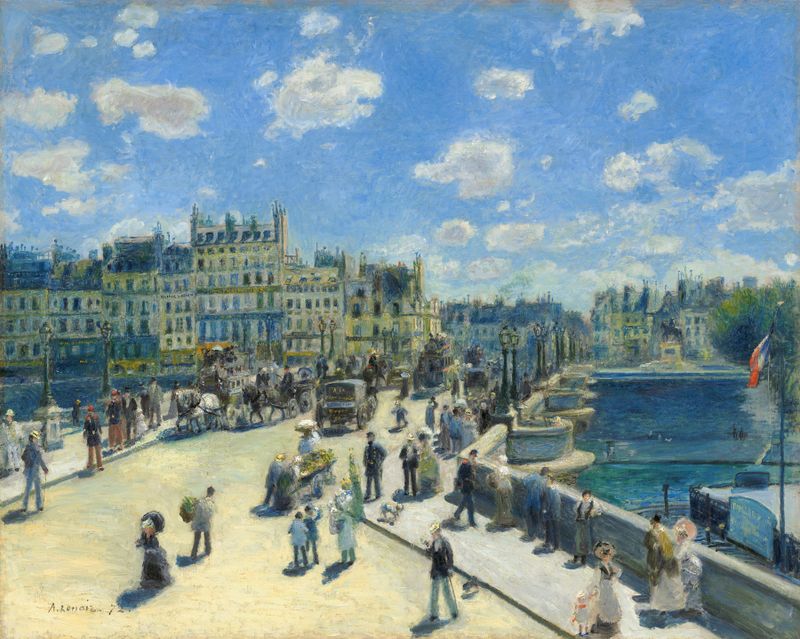
Pont Neuf, Paris
Pierre-Auguste Renoir
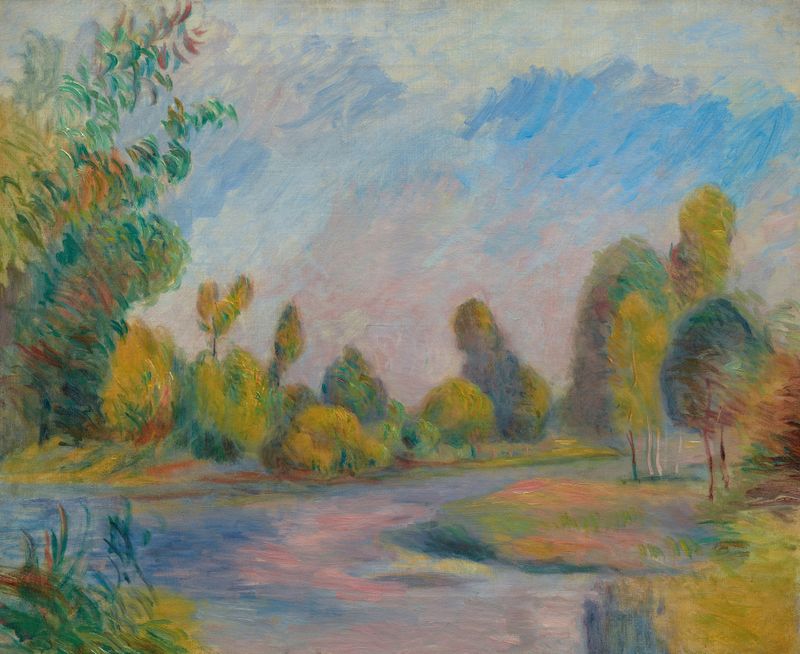
Au bord de la rivière
Pierre-Auguste Renoir

Near the Lake
Pierre-Auguste Renoir
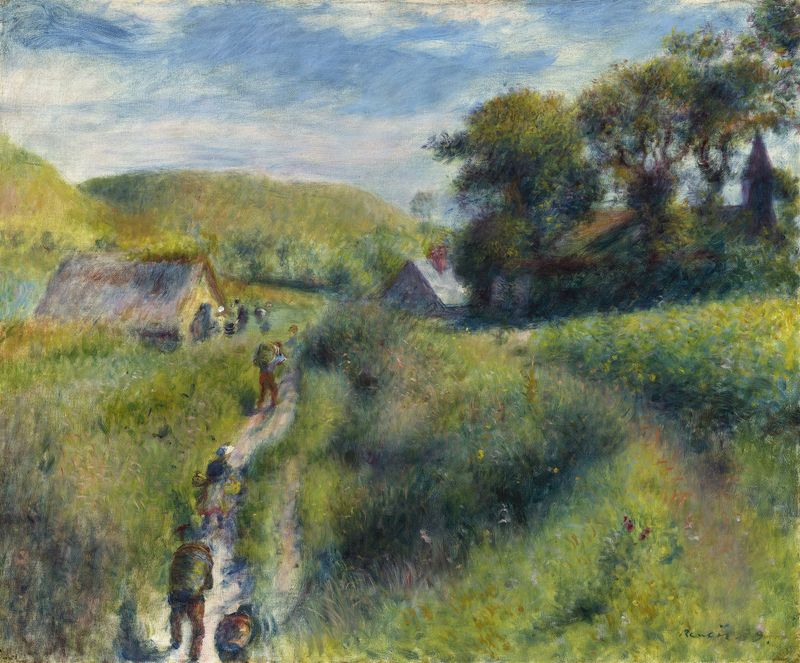
The Mussel Harvest
Pierre-Auguste Renoir

The Seine at Chatou
Pierre-Auguste Renoir
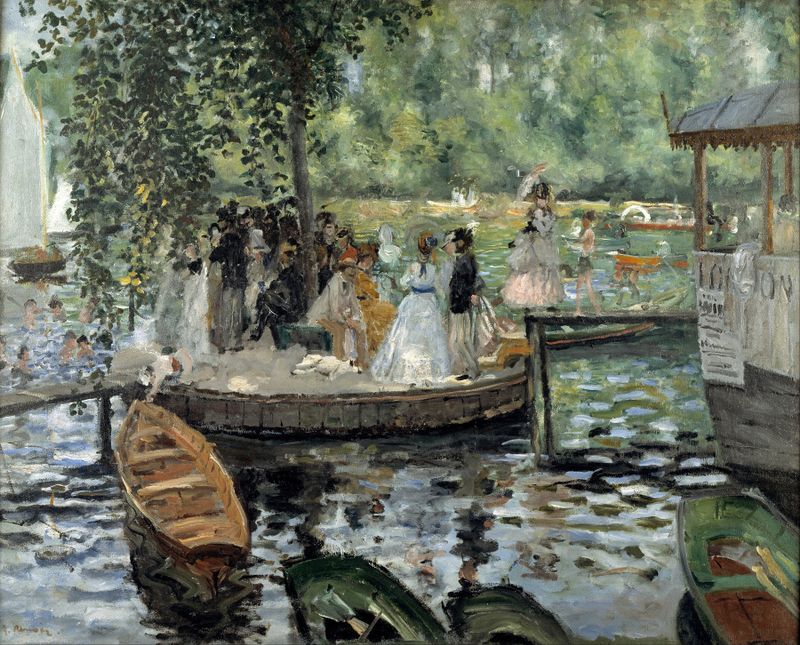
La Grenouillère
Pierre-Auguste Renoir
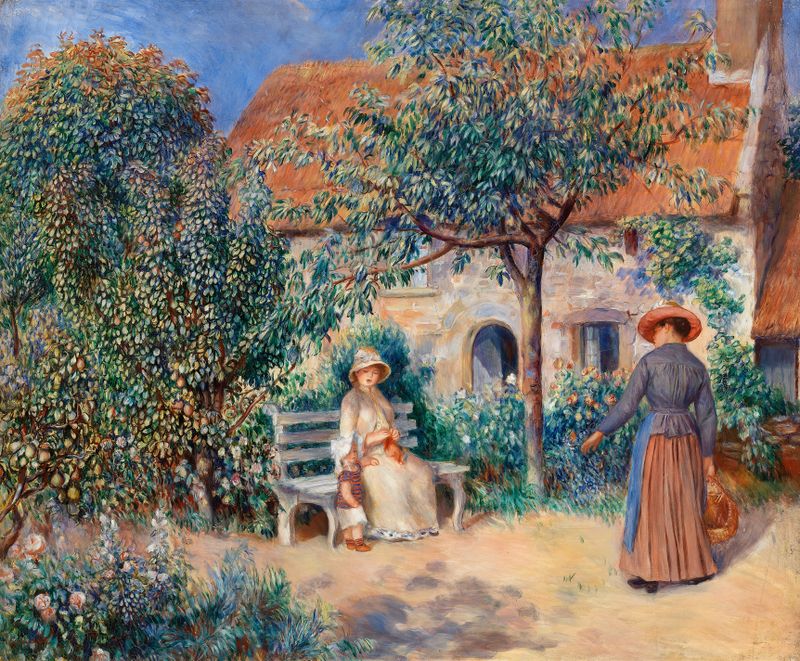
In Brittany (En Bretagne)
Pierre-Auguste Renoir
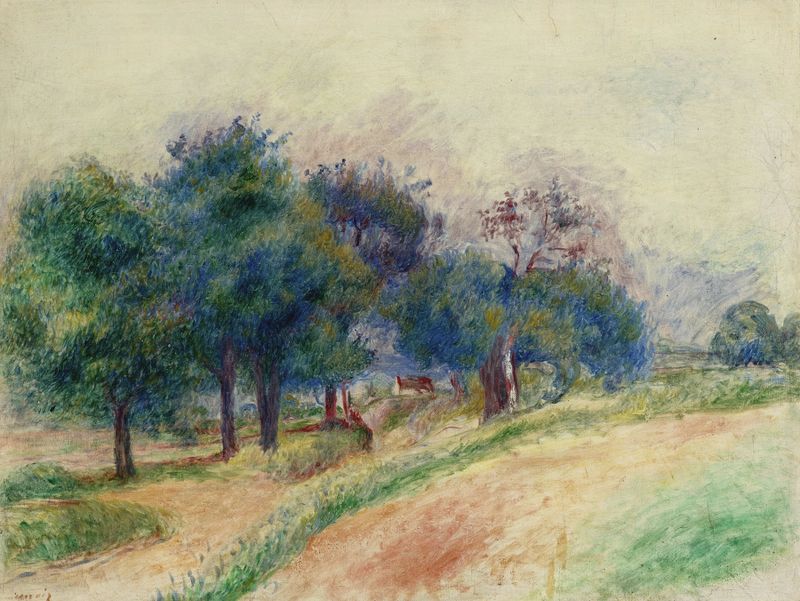
Paysage d’Essoyes
Pierre-Auguste Renoir





