
Paysage arboré — History & Facts
Is this a mirror — or a memory? In Paysage arboré, silence hangs heavy in the air, inviting contemplation and reflection. The lush foliage envelops the viewer in a serene embrace, while vibrant hues resonate with the warmth of a sun-drenched afternoon. Focus first on the interplay of light and shadow, where dappled sunlight filters through the verdant canopy. Look to the left, where the rich greens of the trees contrast with the soft browns of the earth below, creating an inviting pathway that beckons exploration.
The brushstrokes are fluid and confident, embodying both the spontaneity of nature and the artist’s desire to capture a moment that feels both timeless and transient. Amidst the riot of colors, notice the subtle hints of nostalgia woven into the fabric of the scene. Each tree stands as a testament to the passage of time, embodying a sense of permanence in a world that is ever-changing. The absence of human figures amplifies the emotional weight, inviting the viewer to project their own memories and experiences onto the landscape, evoking a sense of solitude that feels profoundly intimate. Created in 1916, during the later years of Renoir’s life, this work reflects the artist’s enduring connection to nature as a source of inspiration.
Living in Cagnes-sur-Mer, he faced both chronic illness and the shifting tides of the art world, as Impressionism evolved into new forms. Yet, in this painting, the artist's love for the landscape persists, inviting us to pause and immerse ourselves in the beauty that surrounds us, even amidst turmoil.
More Artworks by Pierre-Auguste Renoir
Browse all →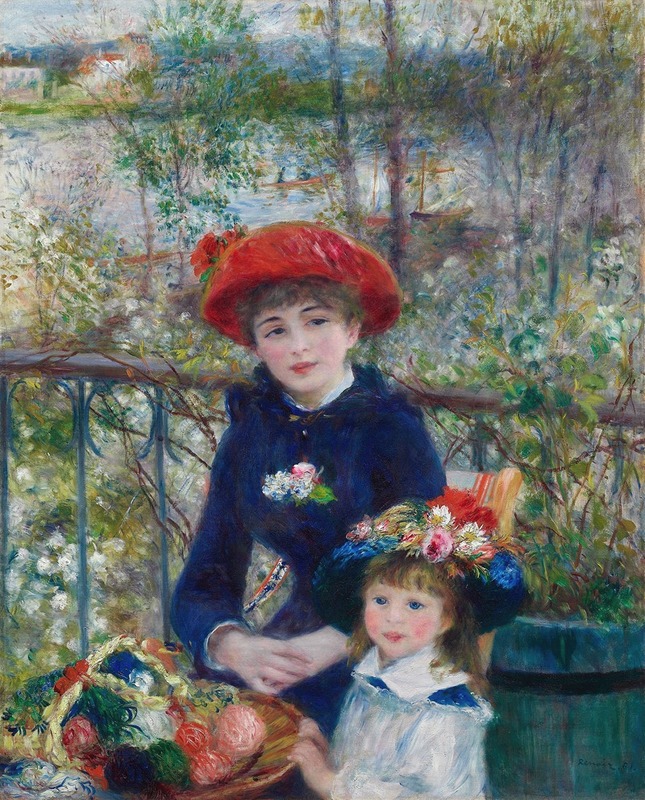
Two Sisters (On the Terrace)
Pierre-Auguste Renoir
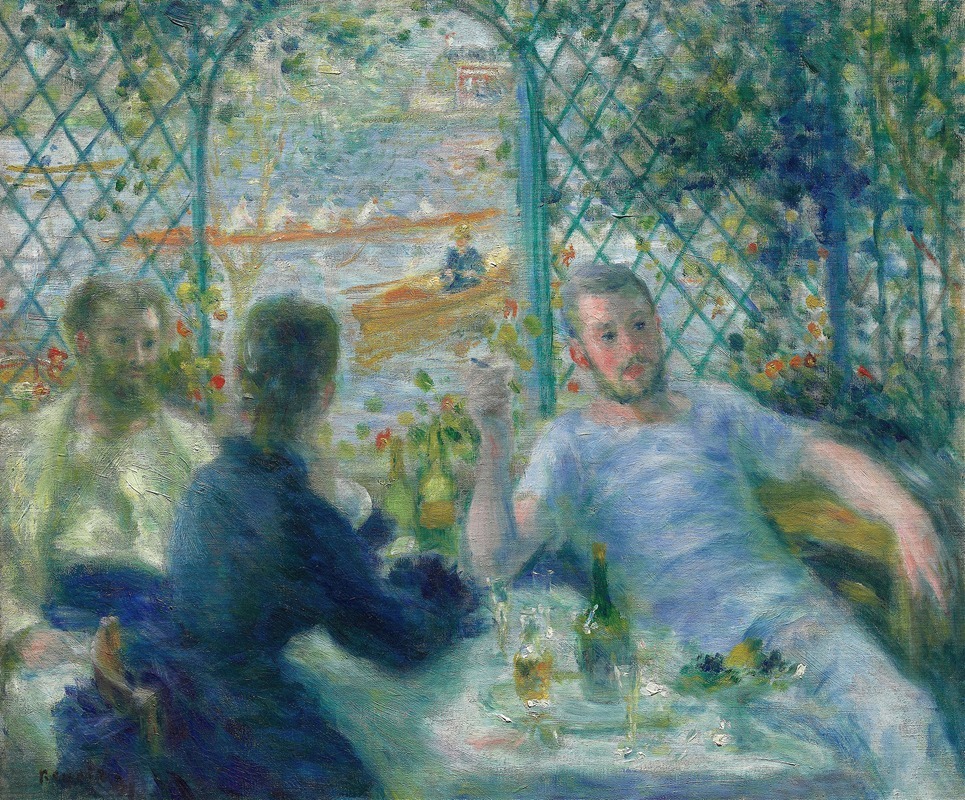
Lunch at the Restaurant Fournaise (The Rowers' Lunch)
Pierre-Auguste Renoir
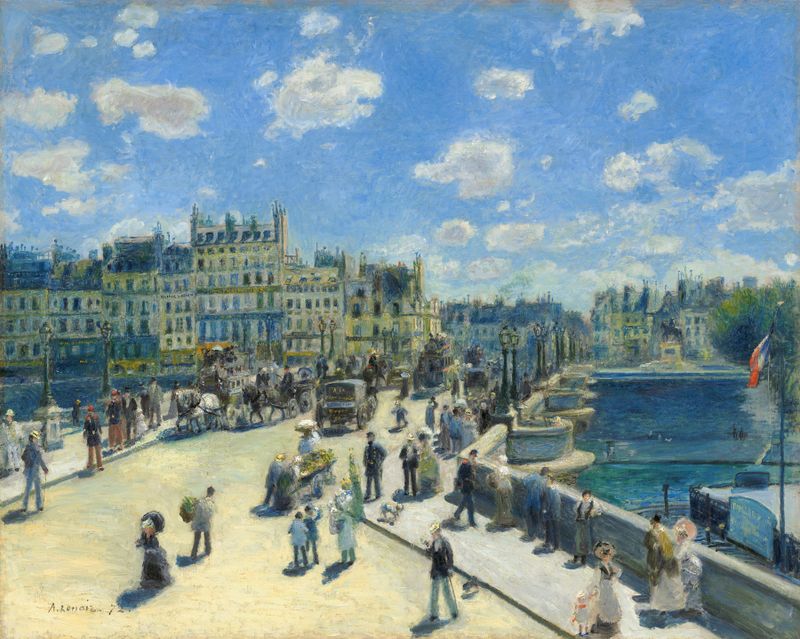
Pont Neuf, Paris
Pierre-Auguste Renoir
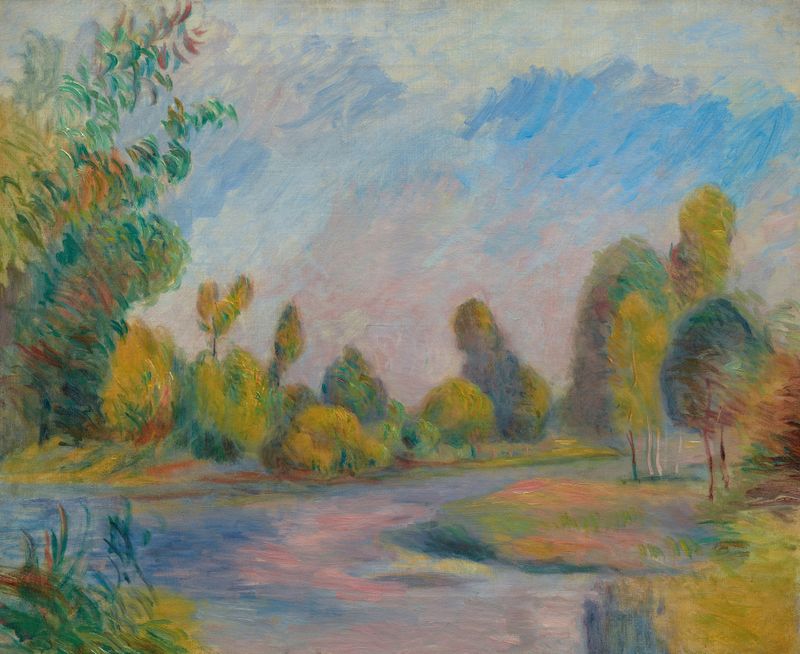
Au bord de la rivière
Pierre-Auguste Renoir

Near the Lake
Pierre-Auguste Renoir
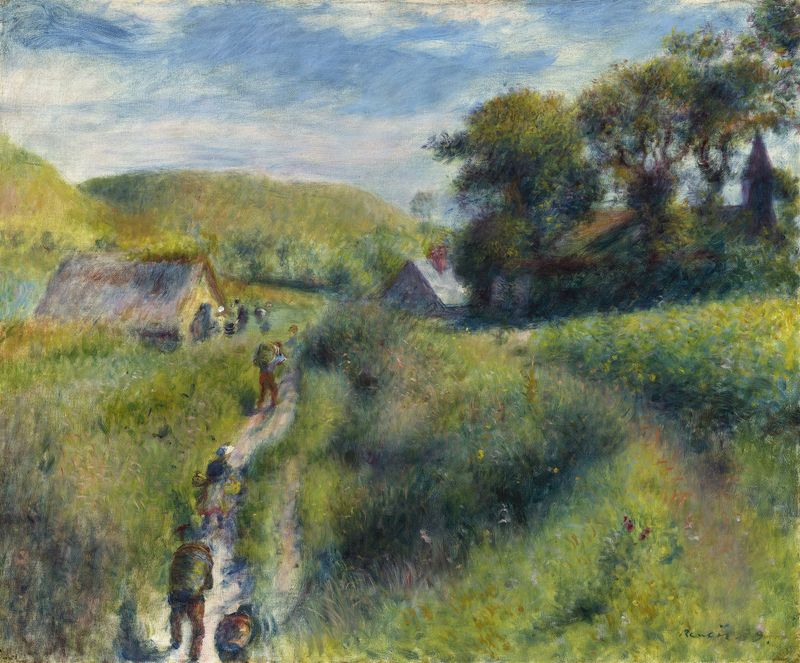
The Mussel Harvest
Pierre-Auguste Renoir

The Seine at Chatou
Pierre-Auguste Renoir
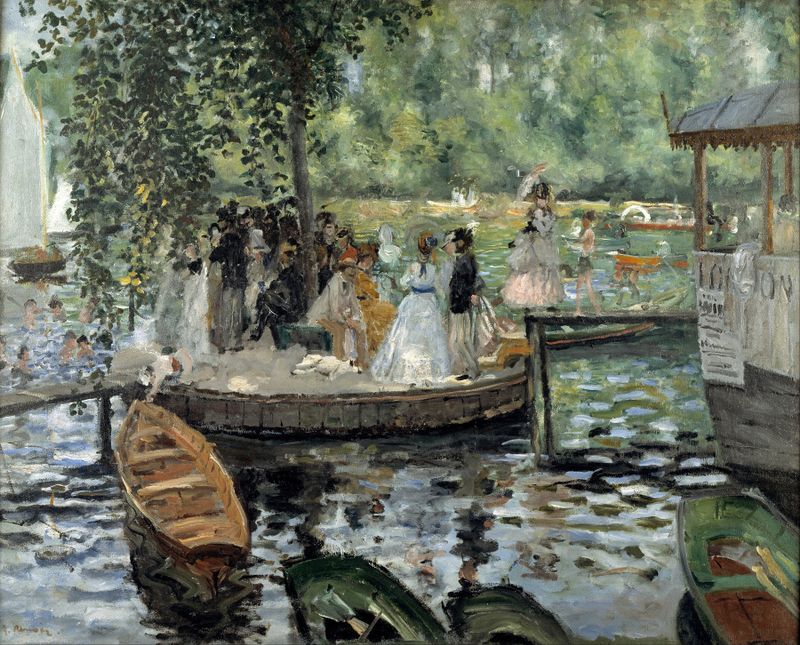
La Grenouillère
Pierre-Auguste Renoir
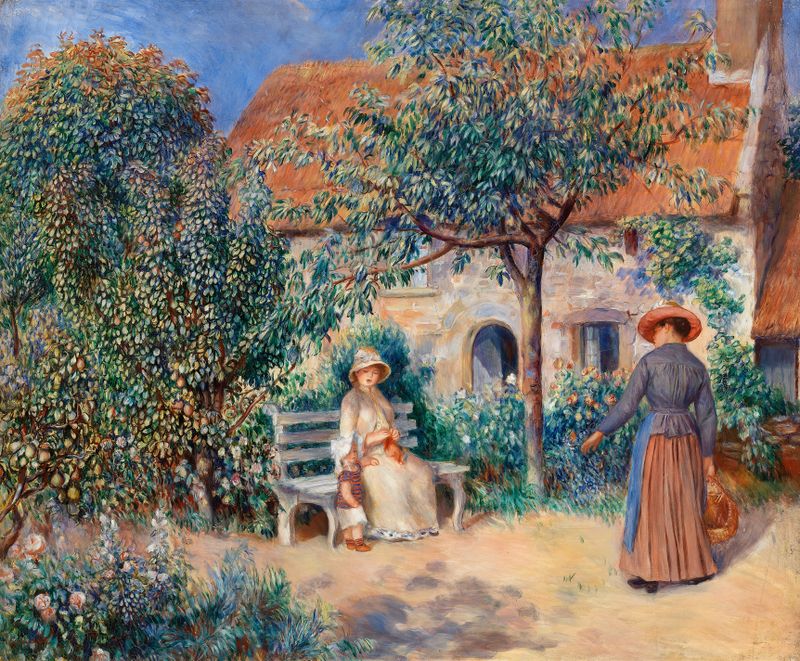
In Brittany (En Bretagne)
Pierre-Auguste Renoir
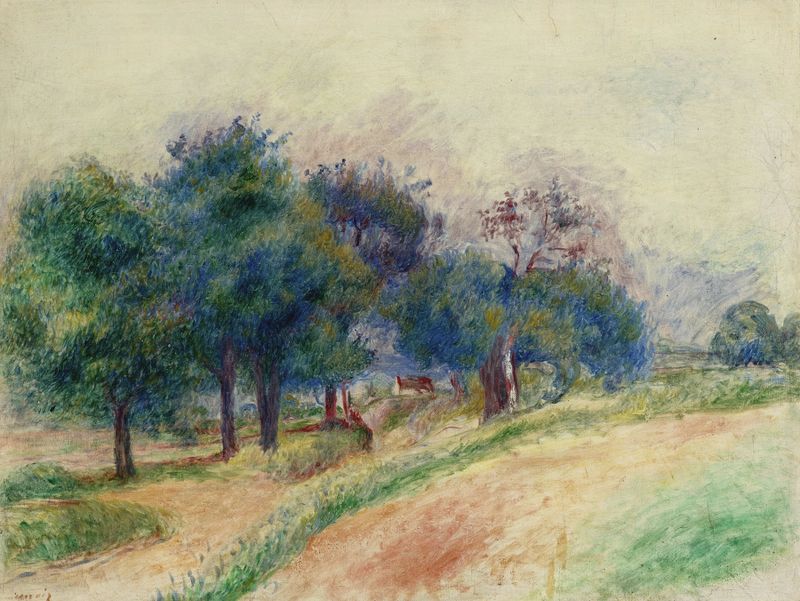
Paysage d’Essoyes
Pierre-Auguste Renoir





